

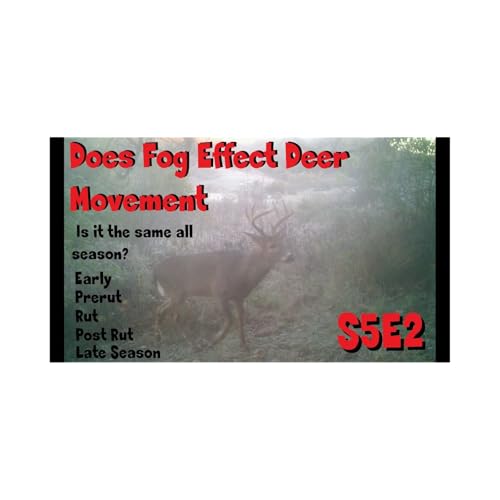
Fog and does it effect deer movement for your hunt s5e2 movie
Failed to add items
Add to cart failed.
Add to wishlist failed.
Remove from wishlist failed.
Follow podcast failed
Unfollow podcast failed

Fog and does it effect deer movement for your hunt s5e2 movie
-
Narrated by:
-
Written by:
About this listen
Mike and Karl, hosts of The Obsession Podcast, have discussed how fog can influence deer movement, noting that the condition of the fog—its density and duration—plays a role in hunting success. They and other hunters have observed both positive and negative scenarios for buck movement depending on the fog's characteristics. Findings on Fog and Deer Movement Here is a summary of the points discussed by Mike and Karl, supported by general hunting consensus: Positive Scenarios (Good Fog): Increased Sense of Security: Many hunters, including those sharing opinions on Facebook, believe deer feel safer and more likely to move in the fog due to reduced visibility, which they use to their advantage. Delayed Morning Movement: Deer may move later into the morning, especially as the fog begins to lift or "burn off," providing opportunities for hunters who stay in their stands longer. Enhanced Scenting Conditions: The high humidity and dampness associated with fog can increase a deer's ability to smell, potentially making them move more cautiously but also providing advantages to a hunter who manages their wind effectively. Negative Scenarios (Bad Fog): Extremely Diminished Visibility: Very dense fog significantly limits a hunter's visibility, making it difficult to spot or take a clean shot at a distance, which can decrease confidence. Secretive Behavior: Some research suggests that whitetails become more secretive and movement can be minimal during periods of dense, unsettled weather associated with low-pressure fronts that bring fog. Scent Pooling: The dense air in foggy conditions can cause scent to "pancake" or hug the ground, making wind direction crucial and increasing the risk of a deer smelling the hunter and spooking. Summary of Best Practices Based on their experiences and documented findings, the guys suggest: Stay in the stand longer, past first light, as movement may occur later in the morning. Be meticulous with scent control and pay strict attention to wind direction, as scent behaves differently in dense, humid air. Set up in locations where you anticipate deer movement once the fog begins to clear, such as field edges or transition areas, as movement often increases right after the fog lifts. What specific type of terrain do you typically hunt in when faced with foggy conditions, and would you like some tips for setting up in that environment?