

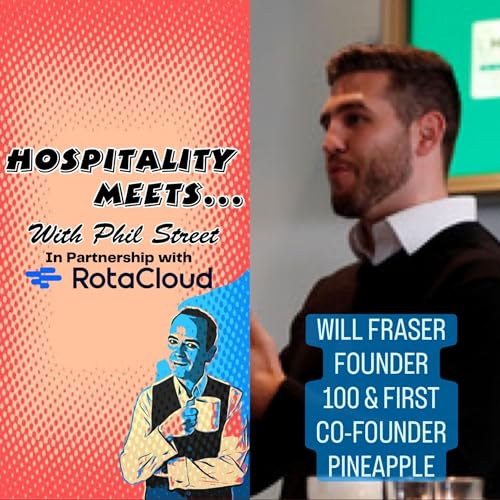
#241 - Hospitality Meets Will Fraser - Why Understanding Drives Performance
Failed to add items
Add to cart failed.
Add to wishlist failed.
Remove from wishlist failed.
Follow podcast failed
Unfollow podcast failed

#241 - Hospitality Meets Will Fraser - Why Understanding Drives Performance
-
Narrated by:
-
Written by:
About this listen
Why Understanding Drives Performance
This week on Hospitality Meets, Phil is joined by Will Fraser, co-founder of Pineapple, founder of 100 & First, and former professional rugby player.
What begins as a conversation about people data quickly becomes something deeper, a clear eyed look at why teams struggle, why talent alone isn’t enough, and why most performance problems come down to misunderstanding, not ability.
This is a calm, thoughtful episode about clarity, context, and why better conversations beat better strategies.
In This Episode
- Why performance is a by-product, not something you can force
- The difference between thinking you know something and actually knowing it
- Why misunderstanding (not laziness) drives most workplace issues
- What elite sport gets right about teams that business often gets wrong
- The hidden cost of constant change and short term thinking
- Why stability can be a genuine competitive advantage
- How people data should start conversations, not end them
From Elite Sport to Hospitality
Will’s thinking was shaped during his time at Saracens, where a strong focus on people and culture transformed performance under pressure.
After injury ended his playing career, Will began applying those lessons in business, and quickly noticed a gap between how elite teams operate and how most organisations try to drive results.
The biggest difference?
Shared understanding
What the Data Shows
Through Pineapple, Will now works with hospitality businesses to understand patterns around:
- Attrition
- Internal progression
- Team stability
One consistent insight stands out:
Greater stability and internal progression = lower turnover.
Simple. Powerful. Rarely acted on.
The Talent Myth
Will challenges the idea that great performers can simply be “moved” and expected to thrive.
Drawing on examples from football, including Brighton & Hove Albion and Brentford, he explains why performance is often owned by the system, not just the individual.
Change the context, and performance usually dips.
Stand-Out Thoughts
- “Most performance problems aren’t competence problems — they’re understanding problems”
- “If you think something rather than know it, you haven’t had the conversation”
- “Stability, not constant change, is often the real advantage”
Why Listen
This episode is for anyone who has: