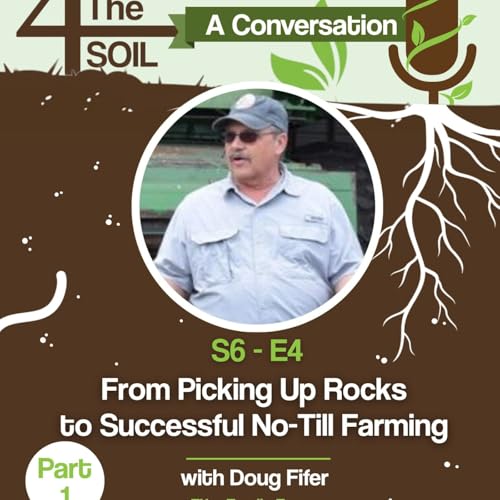
• S6 - E4: From Picking Up Rocks to Successful No-Till Farming with Doug Fifer of Fifer Family Farms, Pt. I
    Feb 17 2026
    Where do you need to go with your farming? Doug Fifer of Fifer Family Farms joins Jeff, Mary, and Eric to talk about his experience and journey with no-till crop farming over the past fifteen years. Doug raises turkeys and cash crops in Mount Solon, Virginia, and is the president of the Virginia No-Till Alliance (VANTAGE).

    For Doug, his journey with no-till farming began in 2010 when he began questioning where his farm needed to go. As a youth, Doug remembers having to pick up rocks from the field after tilling and cultivating the soil for planting. He and his family eventually sent the moldboard plow to the scrap heap and stopped tilling the soil completely.

    In Doug's journey, he continues to learn, read, and experiment with vetch and more families of cover crops. He particularly enjoys meeting with and mentoring other farmers, and sharing his experience and lessons learned. One of Doug's regrets is that he did not start no-till farming sooner.

    To register for the VANTAGE Winter Conference scheduled for Wednesday, February 18, 2026, at the Rockingham County Fairgrounds, please visit https://www.virginianotill.com/winter-conference. You will benefit from hearing Dr. Ray Weil, James Hoorman, and the panel discussions with farmers.

    We can all be 4 The Soil, for the future! Here is how with four principles:

    1) Keep the soil covered -- with living plants and residue. Cover crops are our friends and allies; avoid leaving soil bare.
    2) Minimize soil disturbance -- Practice no-till or gentle tillage as much as possible in your field or garden.
    3) Maximize living roots -- for the longest time to improve biodiversity, soil structure, and life in the soil.
    4) Energize with diversity -- aboveground and belowground with high-quality food for soil and plants, and integration of livestock on cropland.

    If you are interested in art and framing the 4 The Soil posters for your office or home, the 16” by 20” posters are available for purchase and printing as single posters or a set of five posters.

    If you have questions about soil and water conservation practices, soil health principles, and starting your journey to restore the life in your soil, call or visit a USDA Service Center, a Virginia Soil and Water Conservation District office, or your local Virginia Cooperative Extension office.

    4 the Soil: A Conversation is made possible with funding support from the National Fish and Wildlife Foundation and The Agua Fund. Other partners include the USDA Natural Resources Conservation Service; Virginia Cooperative Extension; Virginia State University; Virginia Department of Conservation and Recreation; and partners of the Virginia Soil Health Coalition.

    Disclaimer: Views expressed on this podcast are those of each individual guest.

    To download a copy of this, or any other show, visit the website 4thesoil.org. Music used during today’s program is courtesy of the Flip Charts. All rights reserved. 4 the Soil: A Conversation is produced by On the Farm Radio in collaboration with Virginia Tech. The host and co-hosts are Jeff Ishee, Mary Sketch Bryant, and Eric Bendfeldt.
    Show More Show Less
    18 mins
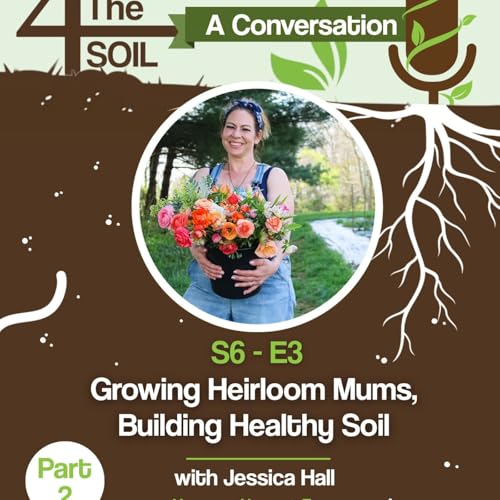
  • S6 - E3: Growing Heirloom Mums, Building Healthy Soil with Jessica Hall of Harmony Harvest Farm, Pt. II
    Feb 3 2026
    What priorities excite you? Heirloom Chrysanthemums, soil health, and contributing back to the community are exciting priorities for Harmony Harvest Farm. In the previous episode, we learned the vision of Harmony Harvest Farm and their overarching aim to help people live and experience a better life through fresh flowers. Our returning guest, Jessica Hall, talks with us about her passion for growing heirloom mums and building healthy soil, and how these are two essential ingredients for achieving their vision.Jessica emphasizes the importance of engaging your roots and making them stronger. For Jessica and her team, the farm business roots started with research, collection, and cultivation of heirloom mums. Mums are dear to Jessica's heart and are a phenomenal crop with great potential for small-acreage flower farmers in Virginia and beyond.To learn about their heirloom chrysanthemums, plan a pick-your-own flower trip, experience a virtual mum summit and on-farm educational events, or order a floral bouquet, please visit Harmony Harvest Farm's website. To register for the Virginia No-Till Alliance (VANTAGE) Winter Conference scheduled for Wednesday, February 18, 2026, at the Rockingham County Fairgrounds, please visit https://www.virginianotill.com/winter-conference. Speakers of note include Dr. Ray Weil and James Hoorman. We can all be 4 The Soil, for the future! Here is how with four principles:1) Keep the soil covered -- with living plants and residue. Cover crops are our friends and allies; avoid leaving soil bare.2) Minimize soil disturbance -- Practice no-till or gentle tillage as much as possible in your field or garden.3) Maximize living roots -- for the longest time to improve biodiversity, soil structure, and life in the soil.4) Energize with diversity -- aboveground and belowground with high-quality food for soil and plants, and integration of livestock on cropland. If you are interested in art and framing the 4 The Soil posters for your office or home, the 16” by 20” posters are available for purchase and printing as single posters or a set of five posters.If you have questions about soil and water conservation practices, soil health principles, and composting practices to restore the life in your soil, call or visit a USDA Service Center, a Virginia Soil and Water Conservation District office, or your local Virginia Cooperative Extension office. 4 the Soil: A Conversation is made possible with funding support from the National Fish and Wildlife Foundation and The Agua Fund. Other partners include the USDA Natural Resources Conservation Service; Virginia Cooperative Extension; Virginia State University; Virginia Department of Conservation and Recreation; and partners of the Virginia Soil Health Coalition.Disclaimer: Views expressed on this podcast are those of each individual guest.To download a copy of this, or any other show, visit the website 4thesoil.org. Music used during today’s program is courtesy of the Flip Charts. All rights reserved. 4 the Soil: A Conversation is produced by On the Farm Radio in collaboration with Virginia Tech. The host and co-hosts are Jeff Ishee, Mary Sketch Bryant, and Eric Bendfeldt.
    Show More Show Less
    20 mins
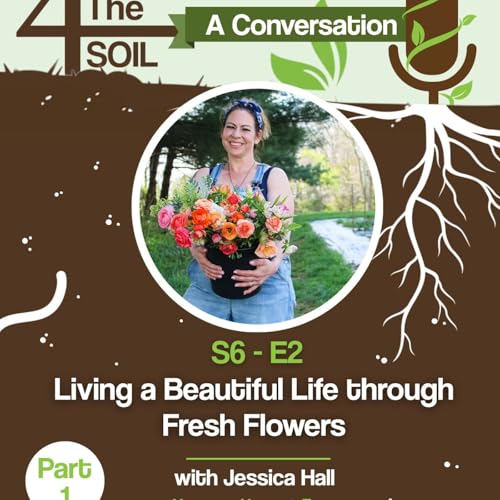
  • S6 - E2: Living a Beautiful Life through Fresh Flowers with Jessica Hall of Harmony Harvest Farm, Pt. I
    Jan 20 2026
    How can we live and enjoy a better life? Harmony Harvest Farm began with a lofty dream in 2011 and a vision of helping people to live and experience a better life through fresh flowers. Jessica Hall of Harmony Harvest Farm and Flower Genius joined Mary, Jeff, and Eric for a conversation about the farm business's vision, mission, values, and history.

    Jessica owns and operates the farm business with her mom and sister in Weyers Cave, Virginia. Jessica and her family believe Virginia-grown and American-grown flowers should be accessible to everyone, everywhere. To fulfill this vision and mission, they built up soil health and nourished their flowers from the start, while being mindful of good land management, soil erosion, irrigation needs, and bed layout to fit the topography.

    Jessica emphasizes that a sustainable business that lives its values needs a complete toolbox with the right tools at the right time for the right application. For Jessica and Harmony Harvest Farm, the toolbox includes a strong, growing network of personal and business mentors.

    To learn about their heirloom chrysanthemums, plan a pick-your-own flower trip, experience a virtual mum summit and on-farm educational events, or order a floral bouquet, please visit Harmony Harvest Farm's website.

    We can all be 4 The Soil, for the future! Here is how with four principles:

    1) Keep the soil covered -- with living plants and residue. Cover crops are our friends and allies; avoid leaving soil bare.
    2) Minimize soil disturbance -- Practice no-till or gentle tillage as much as possible in your field or garden.
    3) Maximize living roots -- for the longest time to improve biodiversity, soil structure, and life in the soil.
    4) Energize with diversity -- aboveground and belowground with high-quality food for soil and plants, and integration of livestock on cropland.

    If you are interested in art and framing the 4 The Soil posters for your office or home, the 16” by 20” posters are available for purchase and printing as single posters or a set of five posters.

    If you have questions about soil and water conservation practices, natural resource concerns, and soil health principles and practices to restore the life in your soil, call or visit a USDA Service Center, a Virginia Soil and Water Conservation District office, or your local Virginia Cooperative Extension office.

    4 the Soil: A Conversation is made possible with funding support from the National Fish and Wildlife Foundation and The Agua Fund. Other partners include the USDA Natural Resources Conservation Service; Virginia Cooperative Extension; Virginia State University; Virginia Department of Conservation and Recreation; and partners of the Virginia Soil Health Coalition.

    Disclaimer: Views expressed on this podcast are those of each individual guest.

    To download a copy of this, or any other show, visit the website 4thesoil.org. Music used during today’s program is courtesy of the Flip Charts. All rights reserved. 4 the Soil: A Conversation is produced by On the Farm Radio in collaboration with Virginia Tech. The host and co-hosts are Jeff Ishee, Mary Sketch Bryant, and Eric Bendfeldt.
    Show More Show Less
    18 mins
  • S6 - E1: Rooted in a Passion for the Earth, Soil, and the Bioeconomy with Ms. Fatema Mohajir
    Jan 6 2026
    A desire and passion for caring for the earth, soil, and the natural environment can start at a young age.

    Fatema Mohajir and her family are from the Bamyan province in central Afghanistan. As a child, Fatema's family lived in Iran, where her father worked at a large-scale vegetable farm. Fatema's father and older brother inspired her interest in soil science and farming.

    Fatema studied at Kabul University and graduated in 2020. As a part of her studies, Fatema participated in a year-long Permaculture Program led by Rosemary Marrow from Australia. After graduating, Fatema received a scholarship to study in Uzbekistan, where she focused on bioeconomy and irrigation.

    Fatema moved to the United States in 2023 and has been working at the Farm at Willow Run in Harrisonburg for the past two seasons. Fatema shares about her interest in organic farming and her overall aim to be a role model for others in caring for the earth, soil, and the bioeconomy.

    To learn about Virginia Mennonite Retirement Community's farm-to-table initiative and the Farm at Willow Run, please visit https://www.vmrc.org/the-farm. You can listen to Rosemary Morrow's Journey to Permaculture on The Permaculture Podcast.

    We can all be 4 The Soil, for the future! Here is how with four principles:

    1) Keep the soil covered -- with living plants and residue. Cover crops are our friends and allies; avoid leaving soil bare.
    2) Minimize soil disturbance -- Practice no-till or gentle tillage as much as possible in your field or garden.
    3) Maximize living roots -- for the longest time to improve biodiversity, soil structure, and life in the soil.
    4) Energize with diversity -- aboveground and belowground with high-quality food for soil and plants, and integration of livestock on cropland.

    If you are interested in art and framing the 4 The Soil posters for your office or home, the 16” by 20” posters are available for purchase and printing as single posters or a set of five posters.

    If you have questions about soil and water conservation practices, natural resource concerns, and soil health principles and practices to restore the life in your soil, call or visit a USDA Service Center, a Virginia Soil and Water Conservation District office, or your local Virginia Cooperative Extension office.

    4 the Soil: A Conversation is made possible with funding support from the National Fish and Wildlife Foundation and The Agua Fund. Other partners include the USDA Natural Resources Conservation Service; Virginia Cooperative Extension; Virginia State University; Virginia Department of Conservation and Recreation; and partners of the Virginia Soil Health Coalition.

    Disclaimer: Views expressed on this podcast are those of each individual guest.

    To download a copy of this, or any other show, visit the website 4thesoil.org. Music used during today’s program is courtesy of the Flip Charts. All rights reserved. 4 the Soil: A Conversation is produced by On the Farm Radio in collaboration with Virginia Tech. The host and co-hosts are Jeff Ishee, Mary Sketch Bryant, and Eric Bendfeldt.
    Show More Show Less
    18 mins
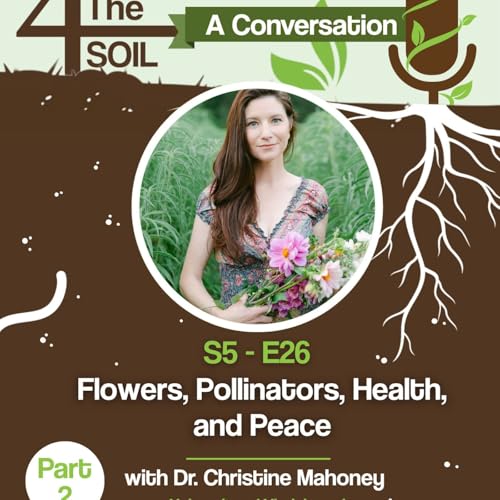
  • S5 - E26: Flowers, Pollinators, Health, and Peace with Dr. Christine Mahoney, Pt. II
    Dec 23 2025
    How can we care for the soil and farm for better health outcomes? Dr. Christine Mahoney of the University of Virginia's Frank Batten School of Leadership and Public Policy and Wayflowering Flower Farm joins Mary and Eric for a conversation about soil health, regenerative farm design, and organic flower farming. Dr. Mahoney shares how better outcomes, such as health, peace, and tranquility, can be achieved through enriching the soil, enhancing biodiversity, sequestering carbon, strengthening local ecosystems, and supporting pollinator habitats. For Dr. Mahoney, caring for the soil and creating an incredible place for flowers, bees, butterflies, and other pollinators is foundational and inspirational. Please visit https://www.wayflowering.com/ to learn more about cut-your-own flower opportunities and immersive experiences at Wayflowering Flower Farm. For details about the flower farming course and podcast that inspired and influenced Dr. Mahoney's thoughts on farm design and organic no-till flower farming, please visit Floret Flowers and The No-Till Flowers Podcast. We can all be 4 The Soil, for the future! Here is how with four principles:1) Keep the soil covered -- with living plants and residue. Cover crops are our friends and allies; avoid leaving soil bare.2) Minimize soil disturbance -- Practice no-till or gentle tillage as much as possible in your field or garden.3) Maximize living roots -- for the longest time to improve biodiversity, soil structure, and life in the soil.4) Energize with diversity -- aboveground and belowground with high-quality food for soil and plants, and integration of livestock on cropland. If you are interested in art and framing the 4 The Soil posters for your office or home, the 16” by 20” posters are available for purchase and printing as single posters or a set of five posters.If you have questions about soil and water conservation practices, natural resource concerns, and soil health principles and practices to restore the life in your soil, call or visit a USDA Service Center, a Virginia Soil and Water Conservation District office, or your local Virginia Cooperative Extension office. 4 the Soil: A Conversation is made possible with funding support from the National Fish and Wildlife Foundation and The Agua Fund. Other partners include the USDA Natural Resources Conservation Service; Virginia Cooperative Extension; Virginia State University; Virginia Department of Conservation and Recreation; and partners of the Virginia Soil Health Coalition.Disclaimer: Views expressed on this podcast are those of each individual guest.To download a copy of this, or any other show, visit the website 4thesoil.org. Music used during today’s program is courtesy of the Flip Charts. All rights reserved. 4 the Soil: A Conversation is produced by On the Farm Radio in collaboration with Virginia Tech. The host and co-hosts are Jeff Ishee, Mary Sketch Bryant, and Eric Bendfeldt.
    Show More Show Less
    19 mins
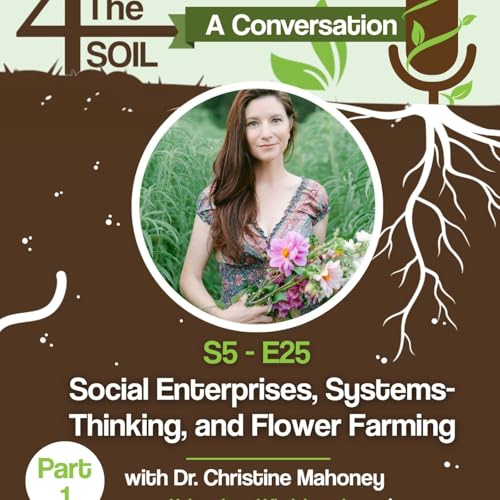
  • S5 - E25: Social Enterprises, Systems-Thinking, and Flower Farming with Dr. Christine Mahoney, Part I
    Dec 9 2025
    How can social entrepreneurship help build soil health and achieve ecological goals?

    Mary and Eric explore this question with Dr. Christine Mahoney of the University of Virginia's Frank Batten School of Leadership and Public Policy and Wayflowering Flower Farm. Dr. Mahoney shares her own experiences with social enterprises, systems thinking, and regenerative organic flower farming in this episode.

    Dr. Mahoney reflects on the catalytic effect organizations and businesses can have on innovation and change, such as enriching the soil, enhancing biodiversity, sequestering carbon, strengthening local ecosystems, and supporting pollinator habitats.

    To learn more about cut-your-own flower opportunities and immersive experiences at Wayflowering Flower Farm, please visit https://www.wayflowering.com/.
    If you want to become a member of the Central Virginia Flower Collective, send an email inquiry to CVAFlowers@gmail.com.

    If you are interested in impact investing, specifically related to displaced people and refugees, please visit the Refugee Investment Network that Dr. Mahoney helped found at https://refugeeinvestments.org/

    As always, we encourage you to cooperate with other farmers, graziers, and gardeners for peer-to-peer learning and to follow the four core soil health principles:

    1) Keep the soil covered -- Cover crops are our friends and allies; avoid bare fallows;
    2) Minimize soil disturbance -- Practice no-till or gentle tillage as much as possible in your field or garden;
    3) Maximize living roots year-round -- to improve biodiversity, soil structure, and life in the soil; and
    4) Energize with diversity -- through crop rotation, high-quality food for soil and plants, farm enterprises, and livestock integration.

    If you have questions about soil and water conservation practices, natural resource concerns, and soil health principles and practices to restore the life in your soil, call or visit a USDA Service Center, a Virginia Soil and Water Conservation District office, or your local Virginia Cooperative Extension office.

    4 the Soil: A Conversation is made possible with funding support from the National Fish and Wildlife Foundation and The Agua Fund. Other partners include the USDA Natural Resources Conservation Service; Virginia Cooperative Extension; Virginia State University; Virginia Department of Conservation and Recreation; and partners of the Virginia Soil Health Coalition.

    Disclaimer: Views expressed on this podcast are those of each individual guest.

    To download a copy of this, or any other show, visit the website 4thesoil.org. Music used during today’s program is courtesy of the Flip Charts. All rights reserved. 4 the Soil: A Conversation is produced by On the Farm Radio in collaboration with Virginia Tech. The host and co-hosts are Jeff Ishee, Mary Sketch Bryant, and Eric Bendfeldt.
    Show More Show Less
    18 mins
  • S5 - E24: Health and Nutrition Start with the Soil with Dr. Robin "Buz" Kloot, Part II
    Nov 25 2025
    Health and nutrition start with caring for the soil. Food can and should be our medicine. Dr. Robin "Buz" Kloot of the University of South Carolina's Arnold School of Public Health and Soil Health Labs shares his perspective on connections with soil health and public health with Eric, Mary, and Jeff in this episode.

    Buz reflects on his own research but also points out what he has heard from farmers and ranchers he has worked with through the years. Building on the idea that eating is an agricultural act and food can be medicine, Buz would like health professionals, agronomists, soil scientists, farmers, and ranchers to collaborate more on soil and public health research and education.

    In addition to your own research and study of soil and human health, Buz recommends reading Fred Provenza's book Nourishment: What Animals Can Teach Us about Rediscovering Our Nutritional Wisdom.

    As always, we encourage you to cooperate with other farmers, graziers, and gardeners for peer-to-peer learning and to follow the four core soil health principles:

    1) Keep the soil covered -- Cover crops are our friends and allies; avoid bare fallows;
    2) Minimize soil disturbance -- Practice no-till or gentle tillage as much as possible in your field or garden;
    3) Maximize living roots year-round -- to improve biodiversity, soil structure, and life in the soil; and
    4) Energize with diversity -- through crop rotation, high-quality food for soil and plants, farm enterprises, and livestock integration.

    The 4 The Soil team recently commissioned a new set of art posters to help people remember the four principles of soil health and celebrate that “We Are 4 the Soil!”. If you are personally or professionally interested in printing and framing the soil health artwork, the 16” by 20” posters are available for purchase and printing as single posters or a set of five posters.

    If you have questions about soil and water conservation practices, natural resource concerns, and soil health principles and practices to restore the life in your soil, call or visit a USDA Service Center, a Virginia Soil and Water Conservation District office, or your local Virginia Cooperative Extension office.

    4 the Soil: A Conversation is made possible with funding support from the National Fish and Wildlife Foundation and The Agua Fund. Other partners include the USDA Natural Resources Conservation Service; Virginia Cooperative Extension; Virginia State University; Virginia Department of Conservation and Recreation; and partners of the Virginia Soil Health Coalition.

    Disclaimer: Views expressed on this podcast are those of each individual guest.

    To download a copy of this, or any other show, visit the website 4thesoil.org. Music used during today’s program is courtesy of the Flip Charts. All rights reserved. 4 the Soil: A Conversation is produced by On the Farm Radio in collaboration with Virginia Tech. The host and co-hosts are Jeff Ishee, Mary Sketch Bryant, and Eric Bendfeldt.
    Show More Show Less
    17 mins
  • S5 - E23: A Fundamental Overhaul and Paradigm Shift in Soil Science with Dr. Robin "Buz" Kloot, Part I
    Nov 11 2025
    Changing course is never easy, especially if the change requires a complete overhaul at the most basic, fundamental level. Dr. Robin "Buz" Kloot of the University of South Carolina's Arnold School of Public Health and Soil Health Labs talks with Eric, Mary, and Jeff about this paradigm shift among farmers and within the soil science community.

    Buz explains how the shift in thinking and paradigms occurred. In many cases, people were focused more on the symptoms rather than the cause, for instance, soil loss through erosion or poor water infiltration. Understanding the underlying cause required a whole-system approach. For Buz, an open mind to farmers' stories and experiences, and "a beginner's mindset" as a scientist were required to truly grasp the dynamic nature of soil.

    If you are beginning your journey with soil health and cover cropping systems, the featured length Under Cover Farms video, Buz and his team produced, provides a good introduction and uplifts the initial experiences of farmers in South and North Carolina.

    As always, we encourage you to cooperate with other farmers, graziers, and gardeners for peer-to-peer learning and to follow the four core soil health principles:

    1) Keep the soil covered -- Cover crops are our friends and allies; avoid bare fallows;
    2) Minimize soil disturbance -- Practice no-till or gentle tillage as much as possible in your field or garden;
    3) Maximize living roots year-round -- to improve biodiversity, soil structure, and life in the soil; and
    4) Energize with diversity -- through crop rotation, high-quality food, farm enterprises, and livestock integration.

    The 4 The Soil team recently commissioned a new set of art posters to help people remember the four principles of soil health and celebrate that “We Are 4 the Soil!”. If you would like to learn about the history of the art posters and access a link to purchase an individual poster or the set of five 4 The Soil posters, please visit our recent blog post: Spreading the Message for Healthy Soil with Posters!

    If you have questions about soil and water conservation practices, natural resource concerns, and soil health principles and practices to restore the life in your soil, call or visit a USDA Service Center, a Virginia Soil and Water Conservation District office, or your local Virginia Cooperative Extension office.

    4 the Soil: A Conversation is made possible with funding support from the National Fish and Wildlife Foundation and The Agua Fund. Other partners include the USDA Natural Resources Conservation Service; Virginia Cooperative Extension; Virginia State University; Virginia Department of Conservation and Recreation; and partners of the Virginia Soil Health Coalition.

    Disclaimer: Views expressed on this podcast are those of each individual guest.

    To download a copy of this, or any other show, visit the website 4thesoil.org. Music used during today’s program is courtesy of the Flip Charts. All rights reserved. 4 the Soil: A Conversation is produced by On the Farm Radio in collaboration with Virginia Tech. The host and co-hosts are Jeff Ishee, Mary Sketch Bryant, and Eric Bendfeldt.
    Show More Show Less
    18 mins