Episodes

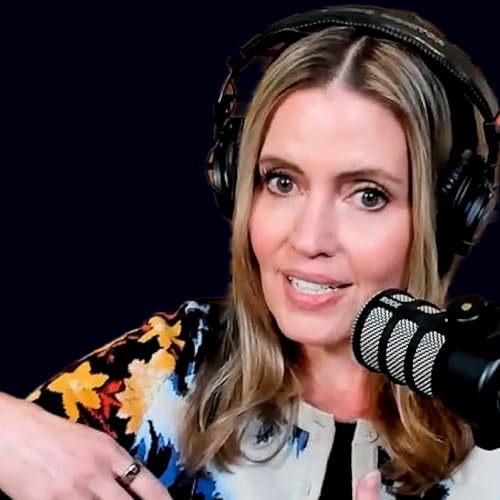
  • Isn’t that every busy mom? Emotional dysregulation and ADHD (Kim Holderness’ story)
    May 12 2026

    ADHD symptoms can be easy to miss — even when you’re someone who knows a lot about ADHD. Kim Holderness shares her adult ADHD diagnosis and the complicated feelings that came with it.

    Kim felt embarrassed and like a fraud. For years, she assumed her anxiety and emotional ups and downs were simply part of the very real load many busy moms carry.

    Kim and Penn Holderness — creators, authors, and the couple behind the Holderness Family — have long been surrounded by ADHD in their life and work. In a quick, sweet cameo, Penn (who also has ADHD) shares how he supports Kim in practical ways, like handling paperwork and day-to-day logistics.

    For more on this topic

    • Listen: ADHD and emotional dysregulation
    • Read: 3 surprising skills ADHD affects
    • Watch: Are people with ADHD oversensitive?

    For a transcript and more resources, visit ADHD Aha! on Understood.org. You can also email us at adhdaha@understood.org.

    Understood.org is a nonprofit organization dedicated to empowering people with learning and thinking differences, like ADHD and dyslexia. If you want to help us continue this work, donate at understood.org/give


    Hosted by Simplecast, an AdsWizz company. See pcm.adswizz.com for information about our collection and use of personal data for advertising.

    Show More Show Less
    22 mins
  • The voice in my head said “You’re stupid”: ADHD and negative self-talk (Carla Ciccone’s story)
    Apr 28 2026

    Carla Ciccone, author of Nowhere Girl: Life as a Member of ADHD’s Lost Generation, shares what it’s like to grow up thinking you’re the problem. She talks about learning to mask when she was just 6 years old and living with constant negative self-talk. Like many girls with ADHD, Carla hid her struggles and felt like a lost cause.

    Carla opens up about her inner voice — the one that says “you’re stupid” — and how fear, failure, and pressure from others can build deep self-doubt. Motherhood became a turning point, pushing her to change the way she spoke to herself so her daughter wouldn’t continue the cycle. Also in this episode: Carla draws parallels between her experiences with asthma and ADHD.

    For more on this topic

    • Listen: ADHD and self-medicating
    • Read: 3 things I’m learning as a new mom with ADHD
    • Watch: How to combat negative self-talk with ADHD

    For a transcript and more resources, visit ADHD Aha! on Understood.org. You can also email us at adhdaha@understood.org

    .

    Understood.org is a nonprofit organization dedicated to empowering people with learning and thinking differences, like ADHD and dyslexia. If you want to help us continue this work, donate at understood.org/give


    Hosted by Simplecast, an AdsWizz company. See pcm.adswizz.com for information about our collection and use of personal data for advertising.

    Show More Show Less
    23 mins
  • “Mom rage,” sensory overload, and shame (Kaitlin Soulé’s story)
    Apr 14 2026

    Marriage and family therapist Kaitlin Soulé shares her story and expertise. She opens up about rage — especially “mom rage” — and the sensory overload and shame that often come with it. Kaitlin and Laura talk about what rage actually feels like (it’s more than just yelling), and how constant noise at home can push them past their limits. They also look at how “rage” is often framed as a women’s issue. (Have you ever heard anyone talk about “dad rage”?)

    Kaitlin shares practical ways to come down from intense moments and repair things with loved ones. The conversation also touches on masking — why it can be easier to hold it together at work, but not at home. ADHD and mood swings come up too, and why some women are misdiagnosed with bipolar disorder.

    For more on this topic

    • Listen: She broke the silence on ADHD shame in women (Sari Solden’s story)
    • Read: ADHD and emotions
    • Watch: ADHD and mood spirals: How to calm down fast

    For a transcript and more resources, visit ADHD Aha! on Understood.org. You can also email us at adhdaha@understood.org.

    Understood.org is a nonprofit organization dedicated to empowering people with learning and thinking differences, like ADHD and dyslexia. If you want to help us continue this work, donate at understood.org/give


    Hosted by Simplecast, an AdsWizz company. See pcm.adswizz.com for information about our collection and use of personal data for advertising.

    Show More Show Less
    24 mins
  • Recovering perfectionist, no longer a martyr (Kim Tran’s story)
    Mar 31 2026

    Kim Tran spent years chasing perfection: a high achiever who believed struggle wasn’t an option. As an Asian American woman raised with the pressures of the model minority myth, asking for help felt like failure.

    But after being encouraged three separate times to get evaluated for ADHD, Kim finally said yes — after becoming a mom and realizing she wanted something different for her child.

    In this conversation, Kim talks about perfectionism, cultural expectations, and why martyrdom isn’t a badge of honor. She shares how learning to ask for help reshaped her life, and how she’s modeling a healthier path for the next generation.

    For more on this topic

    • ADHD and perfectionism
    • ADHD and model minority mask (Emily’s story)

    For a transcript and more resources, visit ADHD Aha! on Understood.org. You can also email us at adhdaha@understood.org

    .

    Understood.org is a nonprofit organization dedicated to empowering people with learning and thinking differences, like ADHD and dyslexia. If you want to help us continue this work, donate at understood.org/give


    Hosted by Simplecast, an AdsWizz company. See pcm.adswizz.com for information about our collection and use of personal data for advertising.

    Show More Show Less
    25 mins
  • Something felt off: ADHD, depression, and slow processing speed (Matt Klein’s story)
    Mar 17 2026

    Matt Klein thought he was dealing with depression. After a job change and the arrival of a new baby, he found himself in a fog. Listless. Unmotivated. And vaguely “off.” He just didn’t want to do anything. His wife noticed the shift, too. But the depression diagnosis never fully explained it. It wasn’t until he was evaluated as an adult that inattentive ADHD and slow processing speed brought his story into focus.

    Matt, a software engineer, shares a story about a door that hung slightly askew — and how intensely it bothered him. He couldn’t stop thinking about it. That crooked door became a metaphor for his experience with undiagnosed ADHD: the mental friction, the fixation, the sense that something was out of alignment.

    For more on this topic

    • Read: What is slow processing speed?
    • Listen: ADHD and emotions in men (Marc’s story)

    For a transcript and more resources, visit ADHD Aha! on Understood.org. You can also email us at adhdaha@understood.org

    .

    Understood.org is a nonprofit organization dedicated to empowering people with learning and thinking differences, like ADHD and dyslexia. If you want to help us continue this work, donate at understood.org/give


    Hosted by Simplecast, an AdsWizz company. See pcm.adswizz.com for information about our collection and use of personal data for advertising.

    Show More Show Less
    17 mins
  • Adult ADHD, perfectionism, and soft productivity (Fellisia Robinson’s story)
    Mar 3 2026

    When Fellisia Robinson was diagnosed with ADHD as an adult, everything started to make sense.

    In this episode, she talks with Laura about what it was like to finally get answers later in life. For years, she struggled with burnout. She felt relentless pressure to achieve — like she always had to prove herself. Her diagnosis helped her understand herself in a new way and then rethink what productivity even means.

    Fellisia shares what it was like growing up as a first-generation eldest daughter and navigating corporate spaces as a Black woman. She talks about perfectionism, masking, and choosing soft productivity over constant hustle. Along the way, she’s learning to slow down and give herself grace. And she’s seeing ADHD as a doorway to self-awareness and strength, not a limitation.

    Fellisia is the founder of Brown Girl ADHD, which provides education and community for Black women and women of color with ADHD.

    For more on this topic

    • Listen: Masking ADHD to go above and beyond (René Brooks’ story)
    • Listen: Breaking the burnout cycle
    • Read: ADHD and perfectionism
    • Follow: Fellisia on IG and TikTok

    For a transcript and more resources, visit ADHD Aha! on Understood.org. You can also email us at adhdaha@understood.org

    .

    Understood.org is a nonprofit organization dedicated to empowering people with learning and thinking differences, like ADHD and dyslexia. If you want to help us continue this work, donate at understood.org/give


    Hosted by Simplecast, an AdsWizz company. See pcm.adswizz.com for information about our collection and use of personal data for advertising.

    Show More Show Less
    21 mins
  • The ADHD symptom I can’t explain away (Andrea Jones-Rooy’s story)
    Feb 17 2026

    Andrea Jones-Rooy — data scientist, comedian, and fire-eating acrobat — talks candidly about feeling like a failure even when all evidence points to the contrary. With sharp humor and vulnerability, she describes having “no self-esteem” (not low — none), limited willpower, and a reliance on fear and external pressure to get things done.

    Andrea, who hosts the podcast Behind the Data, gives herself very little grace. She remains skeptical of her ADHD diagnosis. But one ADHD challenge feels impossible to dismiss: time blindness. Together, Andrea and Laura explore what it means to be present — and why that presence often comes more easily at work or on stage, where the stakes feel high, than with the people we love most.

    For more on this topic

    • Read: ADHD and time blindness
    • Listen: Behind the Data podcast

    For a transcript and more resources, visit ADHD Aha! on Understood.org. You can also email us at adhdaha@understood.org.

    Understood.org is a nonprofit organization dedicated to empowering people with learning and thinking differences, like ADHD and dyslexia. If you want to help us continue this work, donate at understood.org/give


    Hosted by Simplecast, an AdsWizz company. See pcm.adswizz.com for information about our collection and use of personal data for advertising.

    Show More Show Less
    24 mins
  • ADHD, big dreams, and the struggle to finish projects (Brandon Hogstad’s story)
    Feb 3 2026

    Brandon Hogstad — a scientist, musician, big thinker, and co-host of a dream interpretation podcast — talks about how ADHD showed up in his adult academic life. As challenges emerged, finishing projects became a persistent struggle.

    A high school valedictorian, Brandon entered college with confidence and a strong academic track record. College didn’t derail him. But it brought him down to earth. For the first time, he realized he’d never really learned how to study — and that raw intelligence only goes so far. The experience reshaped his ego and deepened his understanding of his ADHD brain.

    Brandon reflects on working with, not against, his ADHD. And the conversation turns when, right on the spot, he interprets a dream that host Laura Key shares.

    For more on this topic:

    • Read: ADHD and the brain
    • Watch: ADHD and: Overachieving
    • Listen: Brandon’s “Let’s Talk About Dreams” podcast

    For a transcript and more resources, visit ADHD Aha! on Understood.org. You can also email us at adhdaha@understood.org.

    Understood.org is a nonprofit organization dedicated to empowering people with learning and thinking differences, like ADHD and dyslexia. If you want to help us continue this work, donate at understood.org/give


    Hosted by Simplecast, an AdsWizz company. See pcm.adswizz.com for information about our collection and use of personal data for advertising.

    Show More Show Less
    18 mins