• Faith-Fueled Climate Action: Mwangaza Light's Holistic Approach to Energy Poverty and Environmental Stewardship
    Aug 22 2025

    Faith-Fueled Climate Action: Mwangaza Light's Holistic Approach to Energy Poverty and Environmental Stewardship

    In this episode, we hear from Pauline Mwangi, the Deputy CEO of Mwangaza Light a dynamic faith-based social enterprise driving climate action since 2018 across multiple Kenyan counties.

    Pauline illuminates their unique strategy of partnering with churches and mosques to embed climate solutions directly within religious communities.

    She explains their vision to eradicate energy poverty by integrating climate action into existing faith structures through a powerful three-pronged approach: "Preach Green," "Going Green," and "Growing Green."

    "Preach Green" involves training clergy in Eco-theology, empowering them to deliver sermons that connect spiritual teachings with environmental stewardship."Going Green" champions the adoption of clean cooking solutions and solar-powered backups within churches and households, directly reducing reliance on polluting biomass fuels and noisy generators. "Growing Green" actively advocates against deforestation, promoting sustainable alternatives like electric cooking to mitigate harmful emissions and preserve natural resources.

    Pauline details the tangible benefits of their initiatives, emphasizing customer-friendly costs and flexible payment systems that make clean energy accessible.

    She highlights the immense potential of faith networks as catalysts for societal change. She underscores patience as a crucial lesson in fostering behavior change, noting the positive shift in congregants' willingness to contribute to environmental conservation.

    Pauline also identifies a significant opportunity for climate mitigation within church-affiliated institutions like schools and hospitals, which can transition from biomass to more efficient energy methods.

    She addresses critical policy gaps, pointing out the ambitious yet currently unmet goals of Kenya's Clean Cooking Strategy 2020-2028, and calls for greater awareness and supportive policies to accelerate universal access to clean cooking.

    Show More Show Less
    33 mins
  • Kibra's Green Guardians: A Nubian Youth Initiative Re-Greening Kibra for Climate Action
    Aug 19 2025

    Kibra's Green Guardians: A Nubian Youth Initiative Re-Greening Kibra for Climate Action

    We hear from Khalid Munir Mohamed of the Salama Youth CBO, a passionate leader from Kibra's Nubian community. He shares the history of his forefathers, who were resettled in Kibra after fighting for the British in World War II, establishing a community largely of Nubian origin in what was once a lush forest.

    Khalid narrates the transformation of Kibra, an Arabic name for "forest," from a leafy extension of Ngong Forest into an informal settlement, with its trees tragically wiped out, bordering the serene Karen suburb.

    Kibra faces severe environmental challenges, including Nairobi River now tragically replaced by raw sewage and overwhelmed by garbage due to a lack of proper waste management. The Salama Youth CBO, is working to reverse this degradation through ambitious re-afforestation efforts and river clean-ups.

    Khalid details their innovative climate adaptation and mitigation strategies. They collect organic waste from local kiosks, practice modern farming methods by utilizing greenhouses and hanging gardens to promote food security within the slum.

    Their initiatives extend to dairy goat farming, rabbit keeping (valuable for manure and urine as plant nutrients), and crucially, bee-keeping. The bees, feeding on nectar from newly planted trees, contribute to pollination, creating a vital ecological and economic cycle.

    Khalid stresses the importance of involving local residents, particularly the Nubian community, in government-led river clean-up efforts and highlights support from KEFRI, who have pledged bamboo for planting.

    He admits the difficulty of relocating residents who have built along riverbeds, they conduct public forums to educate on the risks. Khalid passionately appeals for government and partner support for these crucial mitigation measures, urging everyone to cherish and protect our one Earth.

    Show More Show Less
    21 mins
  • Beyond Kibera: How Community Action is Regenerating Rivers and Empowering Women
    Aug 15 2025

    Beyond Kibera: How Community Action is Regenerating Rivers and Empowering Women

    In this second part, Malassen Hamida, describes their use of vertical gardens to boost food security in urban areas.

    She shares a fascinating technique of recycling grey water, including washing water, for farming, often with the addition of ash to further aid in this recycling process.

    She also narrates their successful partnerships with various institutions. With higher learning institutions, they collaborate on research and innovating new climate adaptation techniques and raising awareness. They also partner with secondary and primary schools, planting trees within school grounds, aligning with the environmental studies found in the CBC curriculum for children. She mentions that they have planted fruit trees in various Nairobi County hospitals.

    Hamida explains how these activities are changing perceptions of gender roles, with women moving beyond traditional kitchen roles to become key players in waste management through collection, sorting, and recycling.

    She details their crucial partnership with the Nairobi River Commission to clean rivers and waterways. They aim to regenerate these vital resources and create new green spaces. This work also involves coordinating with communities living along riparian lands to prevent environmental catastrophes.

    She acknowledges that existing environmental policies are generally adequate and align with international standards.

    Hamida points out the availability of funding opportunities for environmental activities through organizations like Flocker and NEMA green funds, encouraging others to access these resources.

    Show More Show Less
    20 mins
  • Kibera's Green Heroes: How Women are Adapting to Climate Change
    Aug 12 2025

    Kibera's Green Heroes: How Women are Adapting to Climate Change

    In this episode, we hear from Malassen Hamida, the founder and chairperson of the Mazingira Women Initiative. The initiative focuses on environmental issues.

    Born in Kibera, Nairobi's informal settlement, Hamida narrates how she's deeply inspired by Wangari Maathai, a strong woman leader who campaigned for environmental care.

    She reminds us that Kibera was once a very green area, an extension of Ngong Fores. Due to rural-urban migration the settlement is over populated and has many challenges including lack of green spaces, clogged drains, poor waste management and poor hygiene.

    Hamida describes their work in Kibera, which includes making charcoal briquettes from community waste materials and planting fruit trees that offer both environmental and economic benefits. Interestingly, sorting waste led them to collect many avocado seeds, which then sparked the idea for tree nurseries.

    She explains how they recycle waste. For example, they use egg shells for organic manure, and create regenerative bags and duvets from old clothes.

    For food security, the group practices urban hydroponic farming. She describes how they dry surplus vegetables, an indigenous adaptation, to help build resilience during dry periods.

    Hamida highlights one of their achievements, noting that their volunteer street clean-up model was so successful that the county government adopted it and used it in other areas.

    She also explains that women in the initiative are reliable and committed. This is contrast to some youth who might leave for other jobs. She also mentions their efforts in e-waste collection.

    Show More Show Less
    23 mins
  • Inclusive Resilience: Policy, Practice, and Community in Climate-Smart Agriculture
    Aug 7 2025

    Inclusive Resilience: Policy, Practice, and Community in Climate-Smart Agriculture

    In this episode Wanjiru Mambo continues her discussion on climate change mitigation within the potato value chain, emphasizing the critical need for inclusivity for youth, people with disabilities, and women. She underscores the significant role women play, highlighting their active participation in farmer training workshops and their invaluable contributions to gathering information essential for effective climate change mitigation.

    To combat hunger, a challenge exacerbated by climate change, she proposes that schools and institutions reintroduce agriculture as a subject in education and establish demonstration farms, effectively challenging the misconception of farming as an undesirable profession. She advocates for the the expansion of urban vegetable gardens and leveraging social media platforms to provide training, particularly for young people.

    Wanjiru also addresses the pressing issue of substantial post-harvest losses and the urgent need to extend the shelf life of food products. She recommends drying surplus vegetables and herbs for use during dry spells, advocating for the utilization of community solar dryers and dehydration as effective preservation methods.

    She outlines the vital role of the government would play in providing communal storage facilities to enhance the value of agricultural produce, regulating the farm inputs sold to farmers to prevent soil degradation, and ensuring the widespread dissemination of research findings to eliminate redundant research efforts.

    Show More Show Less
    29 mins
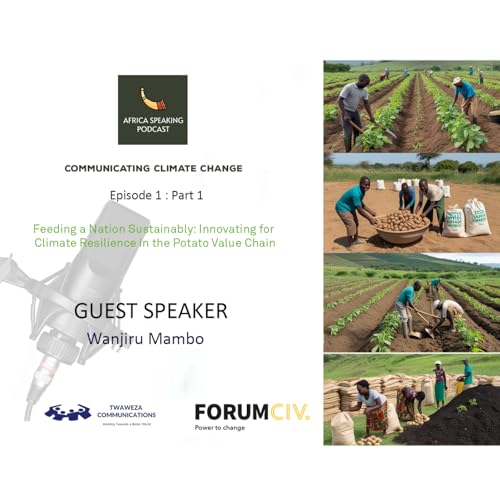
  • Feeding a Nation Sustainably: Innovating for Climate Resilience in the Potato Value Chain
    Aug 4 2025

    Feeding a Nation Sustainably: Innovating for Climate Resilience in the Potato Value Chain

    This episode features Wanjiru Mambo, a successful entrepreneur in the potato food chain and the driving force behind Wedgehut Foods Limited, a thriving post-COVID business.

    Wanjiru discusses the potato industry's significant contribution to the Kenyan economy, approximately Kshs 50 billion, and its impact on the livelihoods of 3.5 million people in the value chain.

    As the second most popular staple food in Kenya, the potato industry boasts a wide variety of products, including crisps, chips, and mashed potatoes, supported by a diverse network of farmers with Wedgehut alone signing up over 3,000 farmers.

    Wanjiru highlights the challenge of post-processing losses in the range of 15-20%, within the potato value chain and the impressive existence of 60 potato varieties in Kenya.

    Wanjiru emphasizes the importance of climate-smart interventions to ensure the sustainability of the potato industry. She advocates for farmers to adopt practices such as soil testing, especially in areas degraded by chemical use, the use of certified seeds, proper farming techniques, and advanced technology, including allowing the soil to rest periodically.

    She reflects on the improved irrigation systems, such as solar-powered irrigation, that are also crucial for mitigating the effects of unpredictable rainfall.

    Wanjiru notes the demographic challenges within the farming community, including the prevalence of older farmers and a gender imbalance skewed towards men.

    Show More Show Less
    30 mins
  • Beyond Reintegration: How Formerly Incarcerated Women are Leading Waste-to-Energy Solutions
    Jul 30 2025

    Beyond Reintegration: How Formerly Incarcerated Women are Leading Waste-to-Energy Solutions

    In this episode, we hear from Cedric Alusa, Communications Manager at Clean Start Africa, and Jane Kiio, a remarkable rehabilitated woman who is now a 'Trainer of Trainers' with the organization.

    Cedric introduces Clean Start Africa as a social enterprise dedicated to rehabilitating and reintegrating formerly incarcerated women who face challenges including the absence of good conduct certificates, societal stigma and poverty.

    He explains that vulnerable women often resort to odd jobs that lead to them to jail on account of petty offenses due to their inability to afford legal representation or fines.

    Jane, a mother of four, shares her experience of six years in prison. She explains that Clean Start Africa provides intensive, two-month training covering economic activities, crucial life skills, and business acumen, empowering these women for successful reintegration and livelihood.

    One of their core economic activities, relevant to climate change mitigation, is the making of charcoal briquettes. Jane explains the process which involves utilizing charcoal dust and carbonized potato peels, materials sourced from waste, thus managing environmental impact. These are compressed into briquettes using machines, which the women have innovatively improved for better burning results and efficiency, moving beyond manual compression.

    The briquettes offer numerous eco-friendly advantages, including longer burning times and reduced smoke, addressing health concerns.

    This initiative not only provides income for the women but also helps manage organic waste and reduces deforestation by offering an alternative to traditional charcoal.

    They hope to expand this model to other counties, leveraging on locally available waste like sugarcane waste in Nyanza, rice husks in Kirinyaga, and banana peels in Meru. They are advocating for partnerships to help spread these sustainable practices and empower more women.

    They also call for a revision of petty offense laws. They recommend alternative corrective measures, including engaging women found to have committed petty offences in climate-related responses like tree planting and waste collection. This approach would address both social justice and environmental sustainability.

    Show More Show Less
    31 mins
  • From Gangs to Green Solutions: How Youth are Driving Climate Adaptation in Mukuru kwa Reuben
    Jul 25 2025

    From Gangs to Green Solutions: How Youth are Driving Climate Adaptation in Mukuru kwa Reuben

    We meet Mitchel Wanja Kamau, a trained water engineer and a vital member of Kwa Reuben Ubuntu Community Based Organization in Mukuru kwa Reuben informal settlement.

    Mitchel explains how this CBO emerged from reformed gang members who sought to counter the exploitative use of youth for political goals.

    She highlights Mukuru kwa Reuben's climate-related challenges such as severe water scarcity and rampant poor waste disposal. To address these, the group has pioneered an innovative Black Soldier Fly (BSF) initiative.

    She meticulously explains their process which includes collecting and sorting organic waste from hotels, schools, and households, sometimes for very low pay, then feeding it to BSF larvae.

    She details the entire BSF lifecycle, from eggs to adult flies, and the resulting protein-rich feed being used to sustain their own chicken and much more available for sale.

    Mitchel emphasizes the ease of implementing BSF farming and encourages more youth to engage in this climate-smart venture for economic benefits.

    Beyond BSF, she describes their crucial waste water management efforts, including unblocking drainages and sewer lines to reduce health risks, particularly for children. The CBO also creatively recycles old tires into gardens, promoting urban greening.

    While lamenting the continued dumping of waste into the Ngong River, which they strive to clean, Mitchel suggests that the government should lead initiatives to ensure industries safely drain their wastewater away from rivers.

    She proudly shares that over 60% of the community participates in their clean-ups, noting the positive impact of engaging youth who might otherwise turn to crime and drugs. She also touches on gender roles within the CBO, where men typically handle physical tasks like cart-pulling, and women lead the waste sorting.

    Despite resource limitations, she remains optimistic. She encourages schools to establish environmental clubs to foster early engagement in climate action.

    Show More Show Less
    25 mins