• Widowed at 33: The Caregiving, The Grief, & Everything in Between
    Apr 1 2026

    Send us Fan Mail

    Summary

    This conversation delves into the profound journey of caregiving, grief, and loss experienced by a young widow. The speaker shares her personal story of navigating the challenges of caregiving for her husband, diagnosed with a brain tumor, the emotional toll it took, and the societal perceptions of young widows. The discussion highlights the importance of support, understanding, and patience from the community during such difficult times, as well as the ongoing struggle of managing grief after loss.

    Takeaways

    • Caregiving often begins unexpectedly and at a young age.
    • Society tends to judge young widows without understanding their struggles.
    • The emotional burden of caregiving can lead to feelings of numbness.
    • Support systems are crucial for caregivers, yet often lacking.
    • Life in remission can still be filled with anxiety and uncertainty.
    • The return of illness can shatter the sense of normalcy.
    • Marriage and family planning can be complicated by health issues.
    • Grief does not end with death; it evolves and requires time.
    • Community support is vital during the grieving process.
    • Self-care is essential for caregivers, but often neglected.

    About Melissa

    Melissa Little is a devoted mother and resilient woman who faced profound loss as a widow at only 33, following nearly a decade of caregiving for her husband, Josh. She finds her greatest joy and purpose in her 3 1/2-years old daughter, Adalyn Rose, whose love and laughter guide her forward each day. Through strength, grace, and deep compassion, Melissa continues to build a meaningful life—honoring the past while embracing the future with unwavering love at the center of it all.

    Support the show

    Show More Show Less
    47 mins
  • Home Modifications Are NOT A Weekend Project: The Reality of Aging in Place
    Mar 15 2026

    Send a text

    Summary:

    In this conversation, Pooja A. Patel and Dawn Heiderscheidt discuss the complexities of aging in place and the importance of proactive planning for home modifications. They explore the misconceptions surrounding home modifications, the need for financial planning, and the generational differences in attitudes towards aging. The discussion emphasizes the importance of collaboration between healthcare professionals and contractors, as well as the need for aesthetic considerations in home modifications to maintain dignity and comfort for aging individuals.

    Takeaways:

    • Aging in place requires thoughtful planning and preparation.
    • Home modifications are often underestimated in terms of complexity & cost.
    • Proactive care planning is essential to avoid crisis management.
    • Generational attitudes towards aging influence planning behaviors.
    • Financial planning should start early to accommodate future needs.
    • Collaboration between healthcare and construction professionals is crucial.
    • Aesthetics play a significant role in home modifications for aging individuals.
    • There are affordable options for home modifications that do not require extensive construction.
    • Understanding the difference between home modifications and environmental adaptations is key.
    • The dignity of aging in place can be preserved with early planning.

    Chapters:

    00:00 Finding Balance in a Chaotic World
    06:25 Proactive Planning vs. Crisis Management
    14:23 The Importance of Financial Planning for Aging
    19:07 Navigating Family Dynamics and Aging
    23:57 Collaboration Between Professions
    29:14 Home Modifications for Aging in Place

    About Dawn:

    Dawn Heiderscheidt, OTR/L, ECHM, CAPS, is an occupational therapist and the founder of Aurora Independence, a home safety and accessibility consulting practice serving the Philadelphia area. She helps older adults and caregivers make smart, practical home modifications that support independence and dignity.

    After years of working in traditional healthcare settings, Dawn saw how often people were discharged home without the environment truly set up for success. She now works directly with families, contractors, and healthcare professionals to bridge that gap, offering in-home evaluations, clear written plans, and renovation guidance that prioritizes function.

    As both a clinician and a former family caregiver, Dawn brings clinical expertise and lived experience to conversations about aging in place, urgent home modifications, and how to make thoughtful changes without overwhelm.

    Support the show

    Show More Show Less
    40 mins
  • We're Guilt-Tripping Families Into Dementia Care: A Systems Issue
    Mar 1 2026

    Send a text

    Summary

    In this conversation, Pooja A. Patel and Rachel Wiley discuss the systemic challenges in dementia care, emphasizing the unrealistic expectations placed on families and the inadequacies of memory care facilities. They explore the importance of communication between caregivers and families, the need for early diagnosis, and the role of occupational therapy in supporting individuals with dementia. The discussion also highlights positive changes in dementia care and the growing community awareness surrounding the issue.

    Takeaways

    • Dementia care systems often place undue pressure on families.
    • Memory care facilities frequently lack adequate support for residents.
    • Effective communication between families and care providers is crucial.
    • Early diagnosis of dementia is often delayed, impacting care options.
    • Occupational therapy can play a significant role in dementia care.
    • Community initiatives are increasing awareness and support for dementia.
    • The healthcare system needs to better support caregivers and families.
    • There is a growing recognition of the importance of specialized dementia care.
    • Positive changes in dementia care are emerging, but more is needed.
    • Families often bear the financial burden of additional care needs.


    Chapters

    • 00:00 Introduction to Dementia Care Challenges
    • 02:56 The Gaps in Memory Care Facilities
    • 05:59 Communication Breakdowns in Care
    • 08:58 The Burden on Families
    • 12:01 The Importance of Early Diagnosis
    • 14:57 The Role of Occupational Therapy
    • 17:58 Positive Changes in Dementia Care
    • 20:59 Community Awareness and Support
    • 24:02 Conclusion and Resources

    About Rachel Wiley, MS, OTR/L, CDP

    Rachel Wiley is an occupational therapist, educator, and founder of the Dementia Collaborative, where she provides evidence-based training and consulting to help clinicians and care partners better support people living with dementia. She is the creator of the Certified Dementia Clinician Program, the Dementia Squad Learning Community, and the Care Checklist for navigating consent and autonomy in dementia care. Rachel serves on the Advisory Council for the Dementia Society of America, and is the membership chair for the Vermont Occupational Therapy Association. Through her teaching, writing, and advocacy, Rachel is passionate about translating research into practical, compassionate strategies that promote dignity, meaningful engagement, and person-centered care for individuals and families navigating dementia.

    • Follow or Connect on LinkedIn
    • Website: https://www.rachelwileyot.com/
    • Website: https://www.dementiacollaborative.com/
    • IG: @dementiacollaborative & @dementia_ot
    Dementia-Friendly Activities
    Looking for activities for someone with dementia? Find puzzles, games, & more at Assistex.

    Disclaimer: This post contains affiliate links. If you make a purchase, I may receive a commission at no extra cost to you.

    Support the show

    Show More Show Less
    39 mins
  • Too Poor to Afford Care, Too Rich for Medicaid: The Forgotten Middle of Aging
    Feb 15 2026

    Send a text

    Summary

    In this conversation, Pooja A. Patel and Dr. Brandy Archie discuss the challenges faced by the 'forgotten middle' in elder care, particularly regarding Medicare's limitations and the lack of resources available for those who do not qualify for Medicaid. They explore the importance of health literacy, the role of technology in providing solutions, and the necessity of involving occupational therapists in planning for aging in place. The discussion emphasizes the need for better access to information and resources, as well as the importance of planning ahead to ensure safety and support for seniors.

    Takeaways

    • Most families aren't choosing between luxury care and no care.
    • Medicare only covers 80% of healthcare bills.
    • The forgotten middle is misrepresented in elder care.
    • Health literacy is crucial for accessing resources.
    • Technology can bridge the gap in elder care.
    • Occupational therapy is essential for aging in place.
    • Planning ahead can prevent crises in elder care.
    • Home modifications are often overlooked in planning.
    • Access to information is a right, not a privilege.
    • AskSAMIE aims to democratize access to clinical information.

    Chapters

    • 00:00 Introduction to the Forgotten Middle in Elder Care
    • 02:26 The Role of Technology in Bridging Care Gaps
    • 05:06 Understanding Health Literacy and Its Impact
    • 07:47 Innovative Solutions for Elder Care
    • 10:19 The Challenges of Resource Accessibility
    • 13:08 The Importance of Provider Advocacy
    • 15:33 Future Directions in Elder Care Solutions
    • 18:44 The Importance of Health Literacy
    • 20:28 Elder Care and the Forgotten Middle
    • 21:07 Barriers to Home Modifications
    • 22:38 The Role of Occupational Therapists
    • 25:14 Planning for Aging in Place
    • 27:35 The Need for Tailored Solutions
    • 29:05 Long-Term Planning for Aging
    • 30:30 Accessing Community Resources
    • 32:23 The Importance of Early Planning
    • 34:07 Finding Occupational Therapists

    About Dr. Brandy Archie, OTD, OTR/L, CLIPP:

    Dr. Brandy Archie is an occupational therapist who is certified in Living in Place and is the founder of AskSAMIE—a digital platform designed to make daily living safer, easier, and more affordable for older adults and people with disabilities. With over 17 years of experience in home health and elder-focused care, Dr. Archie built AskSAMIE to bridge the gap between clinical guidance and real-world solutions by combining AI-powered recommendations, adaptive equipment, and virtual OT support. Her work is grounded in the belief that accessibility should be a right—instead of a privilege.

    • FB, IG, & LinkedIn: @AskSAMIE
    • Twitter @Ask_SAMIE
    • Youtube @Ask-SAMIE

    Support the show

    Show More Show Less
    37 mins
  • When Care Is an Hour Away: The Reality of Aging in Rural America
    Feb 1 2026

    Send us a text

    In this episode, Dr. Pooja A. Patel and Dr. Sydney Marshman delve into the critical issue of healthcare access in rural communities, emphasizing how geographical location significantly impacts the quality of care individuals receive as they age. They discuss the disparities in access to primary care, specialty services, and the challenges faced by families in rural areas when seeking medical attention. Dr. Marshman shares her experiences as an occupational therapist working with older adults in Iowa, highlighting the importance of home assessments and therapy services that cater to the unique needs of rural populations. The conversation also touches on the complexities of healthcare funding, the role of telehealth, and the implications of recent legislative changes on rural healthcare systems.

    Key Takeaways

    • Access to care is not equal across different regions.
    • Rural residents often face significant travel distances for healthcare services.
    • Engagement with local communities and legislators is crucial for improving healthcare access.

    Chapters

    • 00:00 Introduction to Rural Healthcare Access
    • 01:50 Understanding the Disparities in Care
    • 07:57 Challenges in Expanding Services
    • 12:04 The Role of Data and Interoperability
    • 20:02 Managed Care vs. Traditional Medicare
    • 26:03 Rural Health Transformation Program
    • 29:56 Impact of Medicaid Cuts on Rural Healthcare
    • 35:04 The Importance of Telehealth
    • 39:00 Call to Action: Community Engagement

    Learn more

    • About Sydney: https://www.linkedin.com/in/sydney-marshman/
    • About Sydney's Company: Happy at Home Consulting
    • CMS: Rural Health Transformation (RHT) Program
    • Iowa HHS: Iowa's RHT Plan
    • Talk of Iowa: What a $209M federal boost means for rural hospitals and what's still at risk in these communities

    Support the show

    Show More Show Less
    35 mins
  • Season 5 Trailer
    Jan 27 2026

    Send us a text

    We don’t need more polished narratives right now.
    We need honesty, especially in healthcare.

    Caregiving, aging, access to care, dementia, systems that fail quietly—these realities are already heavy. Sugarcoating them doesn’t protect anyone. It just delays the conversations families are forced to have anyway.

    Season 5 of Aging Together is unfiltered by design.

    More direct. Less comfortable. Willing to name what’s actually happening, especially in the context of current events that continue to expose how fragile our care systems really are.

    This season holds space for the truths families are expected to manage quietly, and the questions we avoid because they don’t have easy answers.

    🎧🎥 Subscribe today wherever you listen or watch.

    Support the show

    Show More Show Less
    1 min
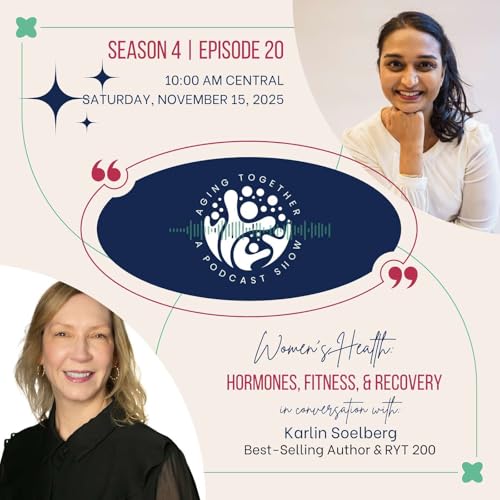
  • S4E20: Women's Health - Hormones, Fitness, & Recovery | Karlin Soelberg
    Nov 15 2025

    Send us a text

    Summary

    In this conversation, Karlin D. Soelberg shares her personal journey of navigating health challenges after turning 40, particularly focusing on her experience with hormonal changes and the difficulties in finding appropriate medical care. She emphasizes the importance of patient advocacy and education in addressing women's health issues, especially when faced with dismissive attitudes from healthcare providers.

    Takeaways

    • Patient advocacy is crucial in healthcare.
    • Women need to be heard and taken seriously.
    • You are the owner of your health.
    • Be proactive in understanding your hormones.

    About the Guest

    Karlin D. Soelberg is the founder and CEO of Empowered Fitness & Recovery LLC, a premier wellness club in Arlington Heights, Illinois. Known for her bold, science-meets-soul approach, Karlin helps women break through burnout, balance their hormones, and rediscover their strength — inside and out.

    As a best-selling author of Get The Edge: Hormone Health for Women, Karlin guides readers to understand the real story behind their changing bodies and reclaim their energy through smarter movement, recovery, and mindset. Her work blends the intensity of fitness with the power of restoration, showing that sustainable results come from harmony, not hustle.

    As a Yoga Alliance Registered Yoga Teacher (RYT 200) and passionate advocate for women’s health, Karlin’s mission is to help women thrive through every decade — not just survive them. Through Empowered Fitness & Recovery, she’s redefining what it means to age strong, live vibrant, and feel unstoppable.

    • Socials: @empoweredfitnessrecovery
    • Website: https://empoweredfitnessrecovery.com


    Support the show

    Show More Show Less
    53 mins
  • S4E19: Navigating Grief - from SIL to Mother to Husband | Leslie Frank
    Nov 8 2025

    Send us a text

    Summary

    In this conversation, Leslie Frank shares her extensive experience as a caregiver for her husband, mother, and sister-in-law, highlighting the emotional and logistical challenges of navigating long-term care. She discusses the importance of finding the right care setting, the complexities of grief, and the necessity of self-care for caregivers. Leslie emphasizes the value of support systems, patient advocacy, and the need for ongoing communication with care providers. Her insights provide a roadmap for others facing similar situations, encouraging them to focus on what truly matters for their loved ones while managing their own emotional well-being.

    Takeaways

    • Being a caregiver for a spouse is deeply personal.
    • Finding the right fit for care is crucial.
    • Engagement in care settings is more important than aesthetics.
    • Grief can manifest in unexpected ways during caregiving.
    • Having a support system is essential for caregivers.
    • Creating a care plan can alleviate stress.
    • It's important to ask the right questions when seeking care.
    • Self-care is vital for effective caregiving.
    • Navigating long-term care requires ongoing adjustments.
    • Emotional detachment can help in making objective decisions.


    About the Guest

    Leslie Frank is a serial entrepreneur and has a successful track record of developing customized, sustainable business solutions to drive growth. Her diverse background includes design, merchandising, manufacturing, business development, and licensing. But that’s not why she’s here today.

    Through the various stages of her successful career, Leslie has spent the majority of her life being a caregiver–first for her mom and sister-in-law, and now for her husband. While navigating grief, Leslie has also had to navigate long-term care needs. Today, she’s joining us to share her story and some words of wisdom on how to find the right fit for your loved one.

    Support the show

    Show More Show Less
    45 mins