Berkeley Voices cover art

Berkeley Voices

Berkeley Voices

Written by: UC Berkeley
Listen for free

About this listen

Berkeley Voices explores the work and lives of fascinating UC Berkeley faculty, students, staff, and visiting scholars and artists. It aims to educate listeners about Berkeley’s advances in teaching and research, spark curiosity about the deeper layers of American history and to build community across our diverse campus. It's produced and hosted by Anne Brice in the Office of Communications and Public Affairs.


Hosted on Acast. See acast.com/privacy for more information.

All rights reserved
Art Social Sciences
Episodes
  • How CRISPR 'supercells' cured her sickle cell disease
    Jan 8 2026

    At 3 months old, Victoria Gray wouldn’t stop crying. Blood tests brought devastating news: she had sickle cell disease, a genetic blood disorder that blocks blood flow and oxygen delivery to the body. It causes unbearable pain that Victoria describes as “getting struck by lightning and hit by a truck.”

    As she got older, Victoria felt increasingly isolated and hopeless. She often spent her kids’ birthdays at the hospital, where she received regular blood transfusions. “I felt like I was cheating my children out of their childhood,” she says. “I didn’t look forward to a long life. I stopped dreaming. I gave up on school or doing anything … I thought that I was close to dying.”

    But at age 34, Victoria got a new chance at life.

    In 2019, she became the first person in the world to receive a revolutionary new treatment for the disease — a gene-editing tool called CRISPR discovered in a UC Berkeley lab, which would go on to win a Nobel Prize just one year later.

    “It felt like an answered prayer for me,” says Victoria. “CRISPR not only freed me, it freed my children.”

    This is the third episode of our latest Berkeley Voices season, featuring UC Berkeley scholars working on life-changing research — and the people whose lives are changed by it.

    Listen to the episode and read the transcript on UC Berkeley News (news.berkeley.edu/podcasts/berkeley-voices).

    Music by Blue Dot Sessions.

    Photo courtesy of Victoria Gray; illustration by Neil Freese/UC Berkeley.

    Hosted on Acast. See acast.com/privacy for more information.

    Show More Show Less
    35 mins
  • Wikipedia as resistance
    Dec 4 2025

    After Wikipedia made its debut in 2001, some trends quickly emerged. Most editors were male, topics tended to skew toward geek culture interests like computing and gaming, and only a small fraction of biographies were about women.

    More than two decades later, biases and knowledge gaps on Wikipedia of all sorts remain, especially for marginalized communities. But a UC Berkeley professor and her students are working to change that.

    Since 2016, ethnic studies professor Juana María Rodríguez has partnered with Wiki Education to teach a range of courses in which students create and edit Wikipedia articles about the contributions of LGBTQ people, especially queer and trans people of color.

    “Wikipedia is a public-facing project — it’s the largest encyclopedia in the world,” says Rodríguez. “In a political moment where these histories are actively being erased from public view, having students work on a platform like Wikipedia becomes even more important.”

    This is the second episode of a new Berkeley Voices season, featuring UC Berkeley scholars working on life-changing research and the people whose lives are changed by it.

    Listen to the episode and read the transcript on UC Berkeley News (news.berkeley.edu/podcasts/berkeley-voices).

    Music by Blue Dot Sessions.

    UC Berkeley photo by Brandon Sánchez Mejia.

    Hosted on Acast. See acast.com/privacy for more information.

    Show More Show Less
    13 mins
  • How a Pomo elder's recordings are helping this student reclaim his culture
    Nov 6 2025

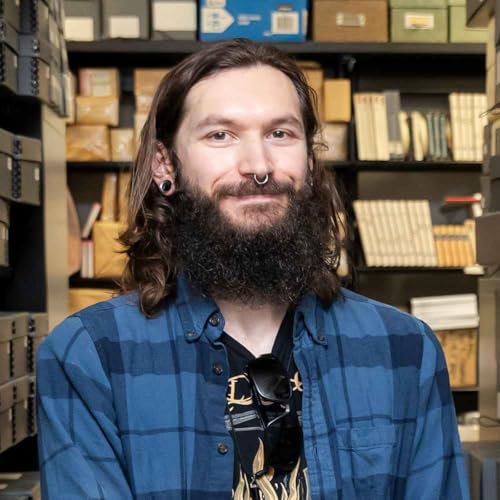
    Tyler Lee-Wynant grew up hearing stories about his great-great aunt, Edna Campbell Guerrero. Born in 1907 in Mendocino County, she was a native speaker of Northern Pomo, one of seven languages spoken by the Pomo people who are Indigenous to Northern California.

    “She was a no-nonsense person,” says Lee-Wynant, a UC Berkeley Ph.D. student in linguistics. “She was an amazing individual. She cared so deeply about passing on what she knew.”

    For more than 50 years, Guerrero worked with Berkeley linguists to document her language and culture. These recordings are part of the campus’s California Language Archive. In them, she tells stories, describes cultural practices, says vocabulary and conjugates verbs. Whenever Lee-Wynant hears his aunt’s voice, strong and determined, he knows it’s his responsibility to carry on her work.

    As a graduate student researcher for the archive, Lee-Wynant is cataloging and analyzing a new collection that includes hours of recordings of his aunt, among other materials. “It's such a trove of information about ... my family's history,” he said. “I always get the chills whenever I listen to it because you never know what story is gonna come up.”

    In this episode of Berkeley Voices, Lee-Wynant shares how his aunt's recordings have opened a portal to his family’s history and led him to teach their language to new generations.

    And in this UC Berkeley News companion piece, learn more about the linguist who created the archive's newly acquired collection, her lifetime of research with Indigenous communities and how her collection of tapes and notebooks found their way to the archive.

    This is the first episode of a new Berkeley Voices season, featuring UC Berkeley scholars working on life-changing research and the people whose lives are changed by it. New episodes come out on the first Thursday of every month, from November through April.

    Listen to the episode and read the transcript on UC Berkeley News (news.berkeley.edu/podcasts/berkeley-voices).

    Music by Blue Dot Sessions.

    UC Berkeley photo by Brittany Hosea-Small.

    Hosted on Acast. See acast.com/privacy for more information.

    Show More Show Less
    23 mins
No reviews yet