Episodes

  • Life in the Solar System
    Jan 12 2026
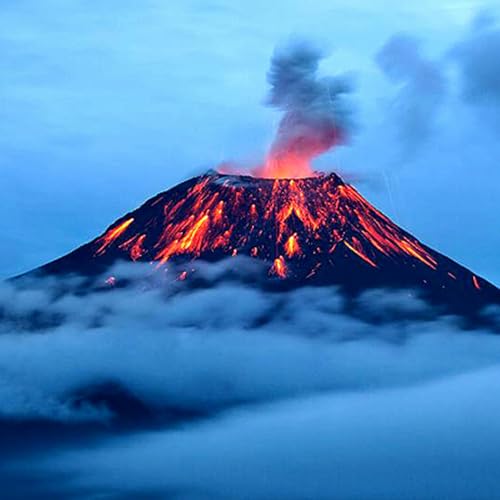
    Spewing lava and belching noxious fumes, volcanoes seem hostile to biology. But the search for life off-Earth includes the hunt for these hotheads on other moons and planets, and we tour some of the most imposing volcanoes in the Solar System. Plus, a look at how tectonic forces reshape bodies from the moon to Venus to Earth. And a journey to the center of our planet reveals a surprising layer of material at the core-mantle boundary. Find out where this layer was at the time of the dinosaurs and what powerful forces drove it deep below. Guests: Samantha Hansen – Geologist at the University of Alabama Paul Byrne – Associate professor of Earth and Planetary Sciences at Washington University in St. Louis Robin George Andrews – Science journalist and author of “Super Volcanoes: What They Reveal about Earth and the Worlds Beyond” Originally aired May 29, 2023 Featuring music by Dewey Dellay and Jun Miyake Big Picture Science is part of the Airwave Media podcast network. Please contact advertising@airwavemedia.com to inquire about advertising on Big Picture Science. You can get early access to ad-free versions of every episode by joining us on Patreon. Thanks for your support! Learn more about your ad choices. Visit megaphone.fm/adchoices
    Show More Show Less
    54 mins
  • Skeptic Check: Hypnosis
    Jan 5 2026
    You are getting sleeeepy and open to suggestion. But is that how hypnotism works? And does it really open up a portal to the unconscious mind? Hypnotism can be an effective therapeutic tool, and some scientists suggest replacing opioids with hypnosis for pain relief. And yet, the performance aspect of hypnotism often seems at odds with the idea of it being an effective treatment. In our regular look at critical thinking, Skeptic Check, we ask what part of hypnotism is real and what is an illusion. Plus, we discuss how the swinging watch became hypnotism’s irksome trademark. Guests: David Spiegel – Professor of Psychiatry and Behavioral Sciences at the Stanford University School of Medicine Devin Terhune – Reader in the Department of Psychology, Goldsmiths University of London Originally aired June 27, 2002 Graphic by Shannon Rose Geary Featuring music by Dewey Dellay and Jun Miyake You can get early access to ad-free versions of every episode by joining us on Patreon. Thanks for your support! Big Picture Science is part of the Airwave Media podcast network. Please contact advertising@airwavemedia.com to inquire about advertising on Big Picture Science. Learn more about your ad choices. Visit megaphone.fm/adchoices
    Show More Show Less
    54 mins
  • Beyond the Periodic Table
    Dec 29 2025
    You interact with about two-thirds of the elements of the periodic table every day. Some, like carbon, oxygen, and nitrogen, make up our bodies and the air we breathe. Yet there is also a class of elements so unstable they can only be made in a lab. These superheavy elements are the purview of a small group stretching the boundaries of chemistry. Can they extend the periodic table beyond the 118 in it now? Find out scientists are using particle accelerators to create element 120 and why they’ve skipped over element 119. Plus, if an element exists for only a fraction of a second in the lab, can we still say that counts as existing? Guests: Mark Miodownik – professor of materials and society at the University of College London and the author of “It’s a Gas: The Sublime and Elusive Elements That Expand Our World.” Kit Chapman – Science historian at Falmouth University, author of “Superheavy; Making and Breaking the Periodic Table.” Jennifer Pore – Research Scientist of Heavy Elements at Lawrence Berkeley National Laboratory. Featuring music by Dewey Dellay and Jun Miyake Big Picture Science is part of the Airwave Media podcast network. Please contact advertising@airwavemedia.com to inquire about advertising on Big Picture Science. You can get early access to ad-free versions of every episode by joining us on Patreon. Thanks for your support! Learn more about your ad choices. Visit megaphone.fm/adchoices
    Show More Show Less
    56 mins
  • Movie Mayhem
    Dec 22 2025
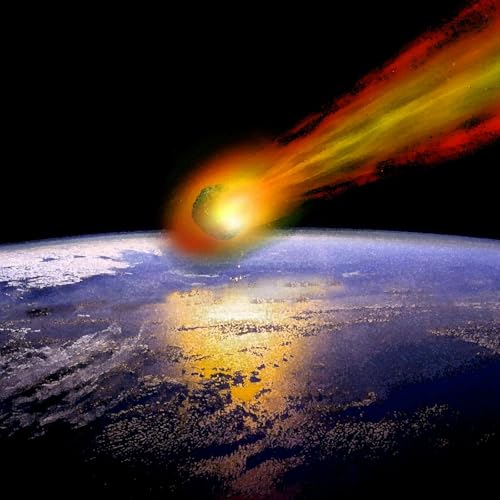
    Science fiction movies force us to face a multitude of end-of-the-world scenarios. Whether the final curtain is dropped by rampaging aliens, killer rocks from space, or virus-infected zombies, these big screen glimpses of a dystopian future are as tantalizing as they are frightening. But one American city seems to be a favorite backdrop for stories of mass destruction. We speak with a cultural critic about why New York City is often the chosen setting for disaster films, and what dystopian fiction reveals about our shifting anxieties about humanity’s future no matter where we live. Movies discussed include Deep Impact, Escape from New York, Planet of the Apes, King Kong, Cloverfield, Deluge, Failsafe, The Day After Tomorrow, AI: Artificial Intelligence, Contagion, I Am Legend, and Seth’s very own short film: The Turkey that Ate St. Louis Guest: Dan Saltzstein – Deputy Editor for Projects and Collaborations, New York Times Featuring music by Dewey Dellay and Jun Miyake Big Picture Science is part of the Airwave Media podcast network. Please contact advertising@airwavemedia.com to inquire about advertising on Big Picture Science. You can get early access to ad-free versions of every episode by joining us on Patreon. Thanks for your support! Learn more about your ad choices. Visit megaphone.fm/adchoices
    Show More Show Less
    56 mins
  • The Best Things in Life are Tree(s)
    Dec 15 2025
    While humans were leaving the Stone Age and entering the Bronze, some Bristlecone pine trees grew from seeds to sprouts. They’ve been growing ever since. These 5,000-year-old pines are among the oldest organisms on Earth. Superlatives are also appropriate for the towering redwoods. Trees are amazing in many ways. They provide us with timber and cool us with shade, they sequester carbon and release oxygen, and are home to countless species. But they are also marvels of evolutionary adaptation. We consider the beauty and diversity of trees, and learn why their future is intertwined with ours. Guests: Kevin Dixon - Naturalist at The East Bay Regional Park District, Oakland, California Daniel Lewis - Environmental historian and senior curator for the History of Science and Technology at the Huntington Library, art museum and botanical gardens in Pasadena, California, professor of the natural sciences and the environment at Caltech, and author of “Twelve Trees: The Deep Roots of our Future” Featuring music by Dewey Dellay and Jun Miyake Originally aired January 25, 2025 Big Picture Science is part of the Airwave Media podcast network. Please contact advertising@airwavemedia.com to inquire about advertising on Big Picture Science. You can get early access to ad-free versions of every episode by joining us on Patreon. Thanks for your support! Learn more about your ad choices. Visit megaphone.fm/adchoices
    Show More Show Less
    58 mins
  • A Real Gas
    Dec 8 2025
    Just because something is invisible doesn’t mean it isn’t there. We can’t see gases in our atmosphere, such as carbon dioxide, oxygen, and nitrogen, but we benefit from their presence with every breath we take. From the bubbles that effervesce in soda to the vapors that turn engines, gases are part of our lives. They fill our lungs, give birth to stars, and… well, how would we spot a good diner without glowing neon? In this episode, a materials scientist shares the history of some gaseous substances that we don’t usually see, but that make up our world. Guest: Mark Miodownik – Professor of materials and society at the University College London and the author of “It’s a Gas: The Sublime and Elusive Elements That Expand Our World.” Featuring music by Dewey Dellay and Jun Miyake Originally aired December 9, 2024 Big Picture Science is part of the Airwave Media podcast network. Please contact advertising@airwavemedia.com to inquire about advertising on Big Picture Science. You can get early access to ad-free versions of every episode by joining us on Patreon. Thanks for your support! Learn more about your ad choices. Visit megaphone.fm/adchoices
    Show More Show Less
    57 mins
  • Amazing Amazonia
    Dec 1 2025
    The Amazon is often described as an ecosystem under dire threat due to climate change and deliberate deforestation. Yet there is still considerable hope that these threats can be mitigated. In the face of these threats, indigenous conservationists are attempting to strike a balance between tradition and preserving Amazonia. Meanwhile, two river journeys more than 100 years apart – one by a contemporary National Geographic reporter and another by “The Lewis and Clark of Brazil”— draw attention to the beauty and diversity of one of the world’s most important ecosystems. Guests: Cynthia Gorney – Contributing writer at the National Geographic Society, former bureau chief for South America at The Washington Post Larry Rohter – Reporter and correspondent in Rio de Janeiro for fourteen years for Newsweek and as The New York Times bureau chief. Author of Into the Amazon: The Life of Cândido Rondon, Trailblazing Explorer, Scientist, Statesman, and Conservationist João Campos-Silva – Brazilian researcher and conservationist, and cofounder of Instituto Jura, a conservation organization. His work, along with that of other conservationists, is featured in the National Geographic issue devoted to the Amazon. Featuring music by Dewey Dellay and Jun Miyake Big Picture Science is part of the Airwave Media podcast network. Please contact advertising@airwavemedia.com to inquire about advertising on Big Picture Science. You can get early access to ad-free versions of every episode by joining us on Patreon. Thanks for your support! Learn more about your ad choices. Visit megaphone.fm/adchoices
    Show More Show Less
    1 hr and 13 mins
  • Flu the Coop
    Nov 24 2025
    The worry about whether H5N1 will trigger a human pandemic has concealed a startling reality. Avian influenza has already taken an enormous toll on the lives of other animals. Since 2005, the number of wild and domesticated birds killed is greater than the combined human populations of the United States and Russia. Bird flu is burning through wild flocks, poultry farms, and mammal populations, including those of sea mammals. We look at the places where the virus can recombine and mutate, and why this version is not simply dying out as it has in years past. At a squawking live poultry market in Brooklyn, and on a Long Island duck farm, we hear about the difficult experience of euthanizing 100,000 birds and whether a farm can recover from such a devastating loss. And finally, we ask, why poultry vaccines that could curb the spread of H5N1 aren’t being used. But we begin our episode with descriptions of the soaring global migrations of birds whose feats of endurance help us understand why H5N1 is widespread in birds worldwide. Guests: Scott Weidensaul – Ornithologist, bird migration researcher, and author of "A World on the Wing: The Global Odyssey of Migratory Birds" David Swayne – Bird flu veterinarian Doug Corwin – Farmer and owner of Crescent Duck Farm, Aquebogue, New York Jon Cohen – Senior correspondent with Science Magazine, where you can find his recent article, “The Pandemic Next Time,” and author of "Planning Miracles: How to Prevent Future Pandemics" Featuring music by Dewey Dellay and Jun Miyake You can get early access to ad-free versions of every episode by joining us on Patreon. Thanks for your support! Big Picture Science is part of the Airwave Media podcast network. Please contact advertising@airwavemedia.com to inquire about advertising on Big Picture Science. Learn more about your ad choices. Visit megaphone.fm/adchoices
    Show More Show Less
    1 hr and 5 mins