Black College Achievers: Metropolitan State University cover art

Black College Achievers: Metropolitan State University

Black College Achievers: Metropolitan State University

Written by: Mr. Lucky — Social Studies Teacher M.A. M.S. Urban Education Student
Listen for free

About this listen

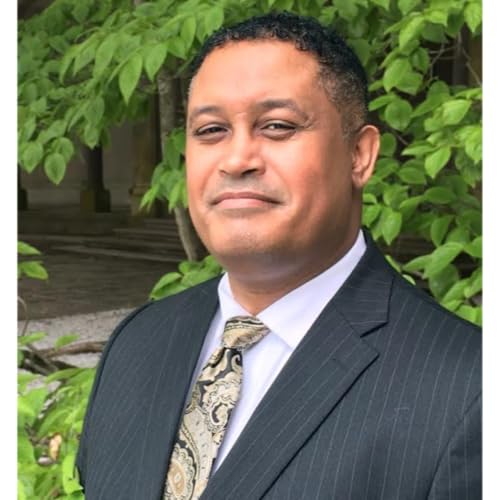
Mr. Lucky

M.A., Master of Advocacy and Political Leadership (MAPL)

M.S., Graduate Student, School of Urban Education

See My Book: www.weusoursluckybooks.com

The Metro State Black Student Achievers Podcast was created to reach Black youth in charter schools, churches, recreation centers, barbershops, hair salons, and community spaces where many have been led to believe higher education is not for them. The mission is to bring real stories of Metro State students and graduates directly into these environments so young people hear voices that reflect their identities, experiences, and potential. The podcast also functions as an instructional tool, with select episodes paired with lesson plans highlighting Black innovators including the Black nurse who invented the home security system, the Freedom House Ambulance Service—the first modern EMS—and the Black nurses who served in every major American war. These materials help students collaborate with peers, complete activities at home, and allow educators to integrate the content into their courses. The mission also models self‑determination by showing this podcast was created without begging for money, without seeking validation, and by embracing the mindset of asking “What can I do?” instead of “What can’t I do?” The vision is to cultivate a generation of Black youth who see themselves as scholars, innovators, and leaders, transforming community spaces into learning spaces, elevating overlooked Black excellence, and building a culture where young people pursue goals with confidence, dignity, and purpose. Black students do not need permission to achieve—they need opportunity, representation, and courage. The podcast stands as an example of what is possible when students lead with purpose and institutions support authentic student voice. It advances the university’s commitments to student leadership, equity, culturally responsive engagement, community partnership, academic access, and the amplification of historically marginalized voices.

Lucky is an award‑winning educator and community leader with 15+ years of experience in secondary education, juvenile justice, and public service. He has developed culturally responsive curricula, mentored educators, and taught Leadership, Race in America, and Community Organizing. His work has increased student achievement, reduced disciplinary incidents, and supported legislative efforts that secured over $355,000 for student programs. His leadership has earned recognition across Minnesota and beyond, including induction into the National Society of Leadership and Success, the Pillsbury United Communities Service Award, and commendations from Ramsey County Corrections, the U.S. Army, and state civic institutions. He chaired the Governor’s Legacy Committee, overseeing $240,000 in arts grants with a perfect audit. His background includes roles as Juvenile Probation Officer, Paralegal, Veterans Case Manager, Urban Elder Teacher Coach, Park Police and Military Police Officer. He has authored four books and released a gospel album produced by Numero Records. He holds advanced degrees in Advocacy, Leadership, Social Sciences, Counseling Psychology, Paralegal Studies, and Law Enforcement, and is completing a second master’s in education. “When people talk behind your back, remember—they’re behind you for a reason.” “During struggles, always ask what I can do—never what can’t I do.”

This podcast is student‑run and operates under the First Amendment.

radiotalklr@gmail.com Phone: 773-809-8594

Politics & Government
Episodes
  • Using Opposition to Succeed
    May 19 2026

    Order My Book: weusoursluckybooks.com

    LOGIC MODEL: Using Opposition to Succeed

    Program Goal: Equip students, graduates, and emerging leaders to convert opposition—negative people, “isms,” doubt, and resistance—into motivation, strategy, and personal advancement.

    Inputs

    • Personal experiences with opposition
    • Supportive peers and mentors
    • Leadership frameworks (task, transformational, servant, adaptive)
    • Historical examples (Tubman, Hamer, Malcolm X, Dr. King)
    • Self‑reflection and discipline
    • Awareness of haters, prejudices, and systemic barriers

    Activities

    • Identify sources of opposition and categorize them (ignore vs. use)
    • Reframe negative messages into action questions (“What CAN I do?”)
    • Practice leadership strategies that anticipate resistance
    • Study historical leaders who turned pressure into purpose
    • Convert critics’ words, jealousy, and actions into strategic fuel
    • Teach students to transform discouragement into momentum

    Outputs

    • Examples showing how opposition becomes usable
    • Student‑created strategies for responding to haters and “isms”
    • Leadership plans built around resistance
    • Reflection statements on how opposition reveals potential
    • Tools for turning negativity into progress

    Short‑Term Outcomes

    • Students recognize opposition as material, not a barrier
    • Increased confidence when facing discouragement
    • Ability to ignore unproductive critics
    • Ability to convert negative messages into strategic action

    Long‑Term Outcomes

    • Stronger leadership identity
    • Greater resilience in college, career, and entrepreneurship
    • Ability to build more from opposition than from agreement
    • Strategic use of resistance to amplify goals and message
    • Transformation of opposers into unintentional contributors to success

    Impact

    Learners adopt the mindset that opposition is not the enemy—it is the material. Motivation is the builder. Strategy is the result. They grow from supporters but rise by converting resistance into power.

    Assumption

    This model assumes that students and leaders are willing to reflect honestly, confront discomfort, and apply disciplined action. It also assumes that opposition—whether rooted in jealousy, prejudice, or fear—can be reframed and repurposed into constructive energy when guided by intentional leadership.

    Contact: 773-809-8594 0r radiotalklr@gmail.com

    Show More Show Less
    24 mins
  • LIES MY TEACHERS TOLD ME-About Black Americans
    May 6 2026

    DO NOT ALLOW COLLEGE INSTRUCTORS TO DO THE SAME

    See My Lesson Plan Below

    Comments call: 773-809-8594

    Black Americans: Nothing But the Truth All parents, teachers, and fellow Americans must listen to this episode. Share it with someone—then ask them to share it with someone else. Keep it moving. Keep the truth alive.

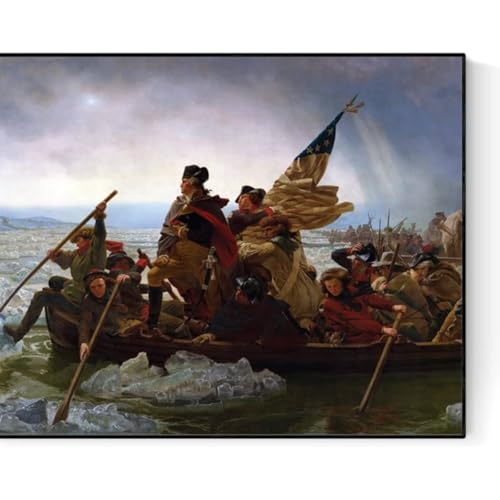
    "We were never told the full story about Black Americans and the American Revolution. Pull up images of the Battle of Bunker Hill and Washington’s crossing of the Delaware. Look closely. Find the Black patriots. Learn the truth." Mr. Positive.

    🧭Lesson Plan to Be Used with This Podcast: Reclaiming Black Patriots of the American Revolution

    Presented by the Positive People USA Podcast

    🎯 Learning Objectives (with Examples)

    Students will:

    • Identify and explain the contributions of Black patriots in the Revolutionary War, such as:
      • Wentworth Cheswell, the first Black elected official in U.S. history, who rode north in 1774 to warn of British troop movements.
      • James Armistead Lafayette, a double agent whose intelligence helped secure victory at Yorktown in 1781.
    • Analyze how post-Civil War political forces erased Black contributions from historical narratives, using:
      • David Barton’s claim that Southern Democrats rewrote textbooks between 1870–1890 to support segregation and suppress Black patriotism. "Verbal Presentation."
    • Evaluate primary sources to restore historical truth, including:
      • William Cooper Nell’s 1855 book, The Colored Patriots of the American Revolution, which documents figures like Crispus Attucks and Salem Poor.

    📈 Learning Outcomes

    By the end of the lesson, students will be able to:

    • Name and describe at least five Black patriots, including:
      • Peter Salem, who killed British Major Pitcairn at Bunker Hill (June 17, 1775).
      • Phillis Wheatley, who corresponded with George Washington in 1775–76, praising his leadership through poetry.
    • Explain the mechanisms of historical erasure, such as:
      • The removal of Black figures from post-Reconstruction textbooks to justify Jim Crow policies and white supremacy.
    • Create a civic restoration message that reclaims a forgotten legacy, such as:
      • A podcast script honoring Lemuel Haynes, the first Black ordained Protestant minister, who preached liberty and pastored churches in Massachusetts and New York.

    🧪 Assessment

    Formative:

    • Quick write: “Why was Wentworth Cheswell’s election in 1768 historically significant?”
    • Group discussion: Analyze Prince Whipple’s symbolic presence in Washington Crossing the Delaware and its implications for visual legacy.
    • Draw a picture and explain the significance of any part of the podcast that strikes you as important.

    Summative:

    • Civic Restoration Project: Students will produce a mini-podcast script, PSA, or infographic that reclaims one Black patriot’s legacy and critiques the mechanisms of historical erasure.
    • Rubric will assess:
      • Historical accuracy (dates, locations, roles)
    Show More Show Less
    45 mins
  • Dr. Walter D. Greason: African American Life and History
    May 18 2026

    See My Book: www.weusoursluckybooks.com

    Contact Dr. Greason; wgreason@macalester.edu

    The Graphic History of Hip Hop

    https://www.graphichistorycompany.com/graphichistoryofhiphop

    Lesson Plan: Reimagining Communities through Afrofuturism and Economic Justice

    (Based on themes from WalterDGreason.com)

    Overview

    Dr. Walter D. Greason’s work blends history, economics, Afrofuturism, and digital innovation to show how communities can rebuild themselves through cultural preservation and creative problem‑solving. His projects demonstrate how understanding the past helps us design a more just future.

    Learning Objectives

    1. Students will analyze how Afrofuturism and historic preservation can transform vulnerable communities. Example: Students review Greason’s Eatonville preservation work and explain how protecting cultural history strengthens community identity.
    2. Students will evaluate how digital innovation can promote racial and economic equity. Example: Students explore The Graphic History of Hip Hop and identify how technology communicates social justice messages.

    Learning Outcomes

    1. Students will demonstrate understanding of interdisciplinary approaches to community uplift. Example: Students create a short presentation connecting Afrofuturism to a local urban renewal effort.
    2. Students will apply Greason’s model of cultural preservation to propose solutions for modern issues. Example: Students design a mini‑plan to revitalize a local landmark using digital storytelling.

    5E Learning Model (Student‑Friendly Version)

    Engage — Get Curious

    Students watch a short clip or explore images from Greason’s Eatonville project. They discuss: “Why does preserving history matter for our future?”

    Explore — Investigate the Ideas

    Students work in small groups to explore one of Greason’s projects (Eatonville, Gallier House, Graphic History of Hip Hop). They take notes on how history, art, and economics connect.

    Explain — Make Meaning

    The teacher breaks down how Afrofuturism, economics, and cultural design work together. Students share what they discovered and connect it to real‑world community issues.

    Elaborate — Apply What You Learned

    Students create a digital poster, short essay, or mini‑proposal showing how they would preserve or redesign a local space using Greason’s principles.

    Evaluate — Show What You Understand

    Students reflect on how creative history can inspire social change. They share their ideas with peers and give feedback.

    Formative Assessment

    Reflection Journal Prompt:

    • How does Afrofuturism help us imagine better communities?
    • What lessons from Dr. Greason’s work could help improve your city or school?

    To Be a Guest on This Podcast Email: radiotalklr@gmail.com

    Show More Show Less
    35 mins
adbl_web_anon_alc_button_suppression_c
No reviews yet