Episodes

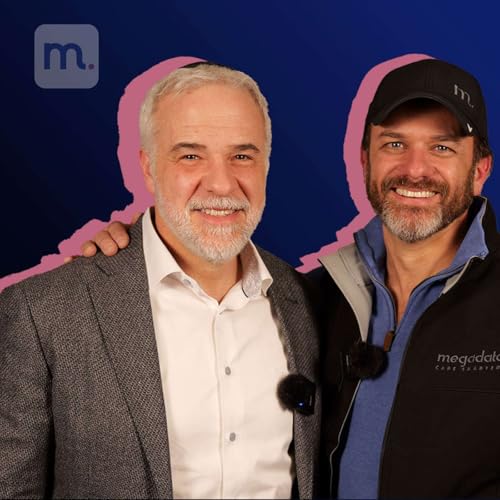
  • The Art of Calculated Risk and Intentional Scaling with Abe Gutnicki
    Apr 13 2026
    ‍What does it take to build a 30-lawyer boutique firm from scratch, starting with three clients and a handshake? In this episode of Care Code Capital, host Dan Brody sits down with Abe Gutnicki, founding partner of Gutnicki LLP, to trace one of the more quietly remarkable careers in healthcare law. Abe's story isn't a straight line — it winds through big law layoffs, a pivot to bankruptcy work he never wanted, a calculated leap into solo practice, and a slow but deliberate expansion into one of the most specialized corners of the healthcare industry: skilled nursing facility transactions.What makes Abe's perspective worth an hour of your time isn't just the resume. It's the philosophy underneath it. He's thought carefully about risk, optionality, relationships, and what it actually means to build something that lasts. And he's unusually willing to say the quiet parts out loud.‍From LA Law to Long-Term CareAbe Gutnicki didn't grow up dreaming of nursing home transactions. He grew up dreaming of courtrooms — the suits, the closing arguments, the drama. LA Law was the inspiration, which he'll tell you with a straight face before breaking into a grin. He went to Washington University School of Law in St. Louis, won moot court competitions, and set his sights on litigation.Reality, as it tends to do, had other plans. His first job out of law school landed him in a conference room the size of a closet, surrounded floor-to-ceiling with documents, searching for a proverbial needle in a haystack. That's litigation in the real world. Meanwhile, the corporate associates down the hall were negotiating deals for dot-com startups flush with VC money. Abe asked to switch. They let him.Within six months he was closing deals. Within fifteen months, the dot-com bust had arrived — and with it, his layoff notice, alongside ten other first-year associates. The firm, in its own way, was trying to do him a favor: they told him that because he was already building a client base, he'd land on his feet easier than the others. He wasn't sure whether to thank them or argue.What followed was a stint doing the bankruptcy work he'd specifically said he didn't want to do, while quietly cultivating a relationship with a young operator in the nursing home space — someone from his community whose parents were already in the business and who wanted to do his own deals. Abe brought that client into his firm. As a second-year associate, he billed over $75,000 on that relationship alone. The firm wasn't thrilled. They had a slot they needed filled with bankruptcy work. They let him go.He landed at Ross and Hardy, a midsize Chicago firm with a hundred-year history and an entrepreneurial identity. That firm eventually merged into McGuire Woods. By that point, Abe knew he didn't want another large firm. He knew he had enough clients. He sat down, calculated what he could realistically bill, decided he could feed his family, and went out on his own in late 2003.‍The Leap That Didn't Feel Like a LeapDan asks the question every entrepreneur gets asked: what was going through your mind when you made that jump? Wasn't it terrifying?Abe's answer is more interesting than the usual "you just have to take the leap" response. For him, it wasn't a leap. It was a logical next step — because he'd done the work to make sure the stepping stone was firm before he put his weight on it."I've always been a big believer in trying to keep options open as much as possible," he explains, "and not making decisions where you're heading down a path until you're forced to. If you can push that fork a little bit further down the road, and stay on the path where you have optionality — that's the path that makes more sense."This is a thread that runs through everything Abe does. He didn't leave his firm without clients. He didn't pursue real estate investments without a law practice as a safety net. He didn't expand into banking relationships without his core operator clients already stable. Every move has a floor underneath it.He also offers a counterintuitive reframe on job security. Having been laid off at a prestigious firm through no fault of his own — along with ten colleagues who had done nothing wrong — he stopped believing in the myth of the safe employer. "As safe as it might feel working in a large setting, you're not really safe. This assumed safety — it just feels better because you're getting a paycheck and you have a 401k. But it's really not." If the clients walk or the business softens, it doesn't matter whether you're a solo practitioner or one of 500 employees. You're subject to the same uncertainty. The difference is that as a solo, you have more control.‍Building the Book: Relationships as StrategyBy 2006, Abe had his first associate. By 2011 or 2012, he was firmly established as a boutique firm doing nursing home transactional work. The question becomes: how did that happen? The honest answer is relationships, but Abe's ...
    Show More Show Less
    45 mins
  • AI Innovation in Healthcare with Randi Zuckerberg
    Mar 27 2026
    In this episode of Care, Code, and Capital, Randi Zuckerberg joins the conversation to share how her journey from consumer tech and Silicon Valley marketing evolved into a deep commitment to health technology, longevity, and supporting the next generation of entrepreneurs.Blending insights from investing, advising startups, endurance athletics, and leadership in tech, Randi offers a wide-ranging perspective on how innovation — particularly AI — is reshaping healthcare, and why the biggest opportunities may still lie ahead.‍From Consumer Tech to Health InnovationRandi began her career in marketing and consumer technology, working at the forefront of Silicon Valley’s growth era. But over time, her interests began shifting toward a different application of technology — one focused not just on connectivity or scale, but on measurable impact.A longtime self-described “data nerd,” she had already been personally tracking health metrics and exploring longevity practices years before the topic became mainstream. What ultimately sparked her professional move into health tech was witnessing how emerging technologies were starting to produce real-world medical outcomes.Virtual reality was no longer just for entertainment — it was enabling surgeons to practice complex procedures. AI was no longer theoretical — it was helping detect cancer patterns in medical imaging and saving lives.For Randi, this marked a turning point: technology could be used not just to connect people, but to materially improve human health.‍The Investment That Opened Her Eyes to Women’s HealthHer first major entry into the healthcare space came through angel investing.Shortly after becoming a new mother, she was approached by a founder building a smart breast pump. At the time, very few women worked in venture capital, and the entrepreneur explained that male investors often felt uncomfortable even discussing the product.Randi immediately understood both the product’s importance and the overlooked market behind it.The company was acquired quickly by Medela, one of the largest global breast pump manufacturers — an outcome that reinforced a key realization:Women’s health remains one of the most underserved and highest-potential markets in healthcare innovation.From reproductive technology to fitness, longevity, and preventive health, she sees enormous entrepreneurial opportunity still untapped in this space.‍Why Women’s Health Is Still a Wide-Open FrontierRandi points out that many aspects of women’s health and athletic performance are relatively recent fields of serious research and innovation.Women were only officially allowed to compete in marathons starting in the 1970s, and even basic equipment like the modern sports bra wasn’t widely available until around 1980.This historical gap means the industry is still catching up — creating what she describes as a trillion-dollar opportunity for founders willing to innovate in women’s health, performance, and longevity.For entrepreneurs, the message is clear: some of the largest healthcare opportunities ahead may come from solving problems that were historically ignored.‍Supporting Founders Through the Full Startup JourneyBeyond investing, Randi has spent years advising and mentoring startup leaders, including early involvement with Adam Lewis and the hiring technology company Apploi.For her, the most rewarding moments in business aren’t tied to product launches or headlines — they’re tied to people.Watching a company grow from its earliest stage through scaling and eventual acquisition is, in her words, similar to nurturing a child into independence. She jokingly describes herself as “a professional mom to entrepreneurs,” emphasizing that strong support systems behind founders often determine whether companies ultimately succeed.This perspective highlights a recurring theme throughout her career: innovation may start with ideas, but it succeeds because of people.‍Endurance Running and the Power of ConsistencyOutside of technology and investing, Randi has also pursued an intense personal athletic journey.Just three years before the interview, she couldn’t run a single mile. Recently, she completed a 250-mile ultramarathon.Her takeaway from this transformation is not about elite athleticism, but about consistency and self-commitment.In her view, many people spend their lives showing up for their jobs, families, and responsibilities — but rarely show up for themselves. Running became a space where effort, discipline, and results were entirely her own.Even completing a single mile, she argues, creates that same sense of ownership.This philosophy reflects a broader leadership mindset: sustained progress rarely comes from dramatic bursts of effort, but from repeated small commitments over time.‍The Future of AI in HealthcareLooking forward, Randi sees artificial intelligence becoming one of the most transformative forces in healthcare — not ...
    Show More Show Less
    10 mins
  • Welcome to the Care, Code, and Capital Podcast
    Feb 20 2026

    Introducing Care, Code & Capital: Exploring the Forces Shaping the Future of Healthcare

    Episode 0 launches Care, Code & Capital, a new podcast dedicated to exploring the intersection of healthcare delivery, technological innovation, and the capital decisions that determine which ideas ultimately scale.

    Hosted by Dan Brody, the series begins by framing the massive transformation currently underway across the healthcare landscape. Artificial intelligence is rapidly moving from theoretical promise into practical clinical use.

    Digital health companies are redefining how care is delivered, accessed, and managed. Meanwhile, operational data is becoming the foundation for decision-making across health systems, providers, and healthcare organizations.

    Yet despite this rapid innovation, the central question remains the same: which organizations are successfully aligning clinical care, technological capability, and investment strategy — and why?

    The premise of the podcast is that true innovation in healthcare rarely happens within a single domain. Meaningful change occurs when three essential forces work together:

    Care — the real-world clinical environments where patients and providers operate
    Code — the technology platforms, analytics, AI tools, and digital infrastructure supporting those environments
    Capital — the investment, funding, and strategic backing that determines whether solutions can scale

    When these forces align, transformation accelerates. When they do not, even promising ideas often fail to move beyond pilot programs.

    Through conversations with founders, investors, operators, and healthcare leaders, the show aims to move beyond headlines and hype to examine what actually works inside one of the world’s most complex industries.

    Rather than focusing on theoretical innovation or pitch-deck optimism, the podcast centers on practical implementation — what survives regulatory pressure, operational realities, and the high stakes of patient care.

    Healthcare remains one of the hardest sectors to modernize. Regulatory complexity, entrenched workflows, and mission-critical outcomes make adoption of new technology uniquely challenging.

    At the same time, the potential for meaningful impact is enormous. Improvements in operational efficiency, clinical support systems, patient engagement, or financial visibility can directly influence outcomes for organizations and the people they serve.

    Care, Code & Capital positions itself as a platform for authentic discussions with leaders navigating this transformation in real time. Each episode will explore current market realities, emerging technologies delivering measurable value, areas where expectations may be outpacing execution, and the strategic priorities healthcare leaders must consider as the industry continues evolving.

    Whether listeners are healthcare executives modernizing their organizations, founders building within the health tech ecosystem, investors evaluating emerging opportunities, or professionals interested in the future of healthcare innovation, the podcast aims to provide grounded, practical insight into how real change happens.

    Show More Show Less
    3 mins