Episodes

  • Why Sustainable Buildings Still Underperform | Hidden Systems with Umesh Atre
    May 12 2026

    Why do so many buildings begin with strong sustainability goals… yet struggle to deliver long-term performance?

    In this episode of Clear Haze Exchange, Marcus Hazelwood speaks with Umesh Atre, a sustainability leader with over two decades of experience across LEED, WELL, energy modeling, lifecycle cost analysis, and building performance strategy.

    Currently Sustainability Lead at Parkhill, Umesh has worked on more than 200 high-performance building projects and brings a systems-level perspective to sustainable design, occupant wellbeing, and operational success.


    This conversation explores:

    • why project location and building orientation matter more than many teams realize
    • where sustainability intent often breaks down during design and construction
    • why lifecycle cost analysis is frequently introduced too late
    • the role of commissioning and performance verification in protecting design intent
    • how invisible operational systems shape occupant wellbeing
    • why certifications alone don’t guarantee real performance
    • and how long-term thinking must become part of project culture

    Umesh also discusses the importance of integrated design, stakeholder alignment, and designing buildings that continue performing long after the project team leaves.

    A powerful conversation for architects, engineers, owners, operators, sustainability professionals, and anyone interested in the future of high-performance buildings.

    🎧 Listen now on Apple Podcasts, Spotify, YouTube, and all major platforms.

    Show More Show Less
    43 mins
  • Mass Timber Beyond the Hype: Systems, Tradeoffs, and Real-World Constraints with Vaughn Horn
    Apr 28 2026

    Mass timber is gaining momentum across the built environment—but how much of the conversation is grounded in reality?

    In this episode of Clear Haze Exchange, Marcus Hazelwood speaks with architect Vaughn Horn about the hidden systems behind mass timber design, decision-making, and performance.


    Together, we explore:

    • Why mass timber is gaining traction in higher education and research environments
    • The role of life cycle analysis, embodied carbon, and long-term value
    • Structural limitations and the importance of building modules
    • Fire rating requirements and the impact of code on design feasibility
    • MEP coordination challenges and why early integration is critical
    • Supply chain realities, procurement timelines, and schedule risks
    • How architects and owners should think about tradeoffs between cost, carbon, and performance

    This conversation highlights a key theme of Season 2:
    Sustainability decisions are only as strong as the systems behind them.

    Whether you’re an architect, engineer, owner, or investor, this episode will challenge assumptions and provide a clearer understanding of what it actually takes to deliver high-performance, sustainable buildings.

    Show More Show Less
    36 mins
  • The Hidden Risk Behind the Data Center Boom: Why Operations Matter More Than You Think
    Apr 14 2026

    The data center boom is accelerating faster than most industries can keep up with.

    But behind the headlines around AI, cloud growth, and billion-dollar investments, there’s a critical question that often gets overlooked:

    Who is actually operating these facilities and are we prepared?


    In this episode of Clear Haze Exchange, host Marcus Hazelwood sits down with Tom Melton, a facilities and operations engineer with over 30 years in the trades and 15+ years in mission-critical data center environments.


    Tom shares a candid, ground-level perspective on:

    • The growing shortage of skilled engineers in data centers
    • Why understaffing creates hidden operational risk
    • The gap between training programs and real-world readiness
    • Misconceptions about data centers, power, and public impact
    • Why trades and hands-on expertise are critical to sustaining AI infrastructure

    As data centers scale from 24 MW to 300+ MW facilities, the challenge is no longer just design or capital, it’s execution, operations, and people.


    This conversation is a must-listen for:

    • Architects and design professionals
    • Owners and developers
    • Investors and policymakers
    • Engineers and operators

    Because the future of AI infrastructure depends on more than innovation, it depends on the people who keep it running.

    Show More Show Less
    39 mins
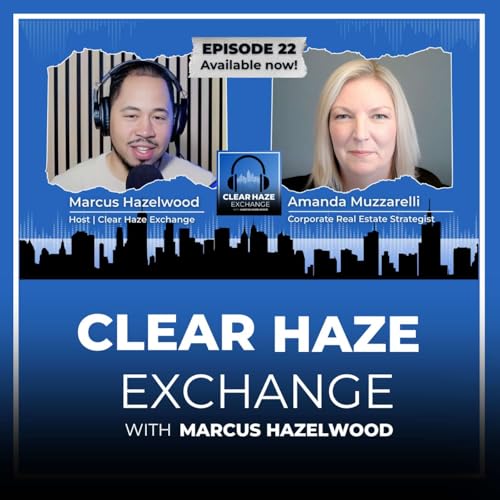
  • Why Workplace Strategy Fails Even When the Plan Looks Right | Amanda Muzzarelli
    Mar 31 2026

    What really drives workplace performance and sustainability outcomes inside an organization?

    In this episode of Clear Haze Exchange, Marcus Hazelwood speaks with Amanda Muzzarelli, an advisor in corporate real estate and facility strategy who helps organizations uncover the hidden systems shaping workspace performance, trust, and decision-making. Amanda developed the concepts of invisible architecture and narrative architecture to explain how people, process, incentives, leadership, and communication influence what actually happens inside buildings and organizations.

    This conversation explores why workplace and sustainability strategies often fail even when the technical solution is sound, and why leaders need to look beyond dashboards, PowerPoints, and surface-level metrics if they want real change.


    In this episode, we discuss:

    • What invisible architecture means inside organizations
    • Why behavior follows structure, not just intention
    • How narrative architecture helps leaders create buy-in
    • Why many sustainability programs become cosmetic instead of operational
    • Why FM should be seen as a strategic intelligence function
    • The leadership gap developing inside facilities management
    • What gives hope for the future of FM, workplace strategy, and the built environment

    👉 To learn more about Amanda’s work and her concept of Invisible Architecture, visit www.amandamuzzarelli.com

    If you enjoy Clear Haze Exchange, please follow the show, share the episode, and leave a review on Apple Podcasts to help support growth and discoverability.

    Show More Show Less
    42 mins
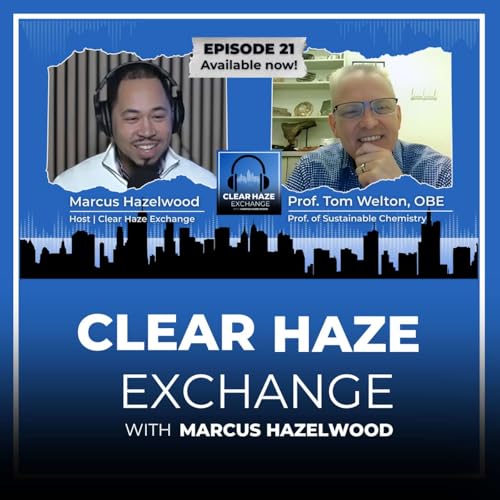
  • What Sustainable Chemistry Actually Means with Professor Tom Welton
    Mar 17 2026

    What does sustainable chemistry really mean and why does it matter far beyond the lab?

    In this episode of Clear Haze Exchange, Marcus Hazelwood speaks with Professor Tom Welton, OBE, Emeritus Professor of Sustainable Chemistry at Imperial College London and the world’s first professor of sustainable chemistry.

    Professor Welton shares how sustainable chemistry evolved as both a field and a mindset, why the gap between theory and application is often larger than people expect, and how words like green and sustainable can sometimes mislead more than they clarify.

    This conversation explores the hidden systems behind sustainable science and innovation, including product development, lifecycle analysis, behavior change, research incentives, and the long road from lab discovery to real-world deployment.


    In this episode, we discuss:

    • The difference between green chemistry and sustainable chemistry
    • Why sustainability is often best understood as a mindset
    • How “green” ideas can fail under operational or financial pressure
    • Why life cycle analysis matters when evaluating products and materials
    • What universities get right, and wrong, about innovation
    • Why sustainable technologies often take decades to scale
    • What gives hope for the future of sustainability in science and education

    If you enjoy Clear Haze Exchange, please follow the show, share this episode, and leave a review on Apple Podcasts. Those actions help grow visibility and improve discoverability across podcast platforms.

    Show More Show Less
    42 mins
  • Sustainability as ROI: How Facility Decisions Drive Long-Term Building Value (Dave Ray)
    Mar 3 2026

    Season 2 kicks off with Dave Ray — sustainability & ESG strategist and longtime leader in Nevada’s green building community.

    Dave breaks down the gap between sustainability intent and operational follow-through, and why the best “sustainability” strategy often starts with the basics: understanding your data, aligning teams, and treating efficiency like a long-term investment discipline.

    In this episode:

    • Why code compliance & certifications are often just the minimum
    • The overlooked power of benchmarking energy + water
    • How organizations miss incentives (and why you should check every year)
    • Why software dashboards fail without data verification + ownership
    • The fastest mindset shift: walk your building when it’s occupied AND unoccupied

    Guest: Dave Ray
    Host: Marcus Hazelwood

    Subscribe to Clear Haze Exchange for Season 2 as we explore the hidden systems, blind spots, and perspectives shaping sustainable investment and facility decisions.

    Show More Show Less
    42 mins
  • Clear Haze Exchange — Season 2 Trailer | Making the Invisible Visible
    Jan 13 2026

    Most sustainability strategies don’t fail because of bad technology.
    They fail because of things leaders can’t see.


    Season 2 of Clear Haze Exchange explores the hidden systems, decisions, and assumptions that shape building performance, workplace outcomes, and long-term value.


    This season goes beyond dashboards and checklists to focus on clarity, alignment, leadership, and the invisible forces that determine whether sustainability efforts succeed or stall.


    🎧 Season 2 launches March 3rd, 2026.

    Show More Show Less
    2 mins
  • Why Green Buildings Need Youth Outreach | Julia Pooler (Buildy Green)
    Dec 16 2025

    If the green building movement wants to grow, it has to start early. In this episode of Clear Haze Exchange, Marcus Hazelwood talks with Julia Pooler, founder of the Carbon Zero Youth Initiative (CZYI) and author of the children’s book “Buildy Green: It Takes a Team, a Better Building Story.”

    Julia explains why youth outreach isn’t just “future workforce development”, kids can influence decisions today at home, in schools, and in communities. She shares why the best “tool” to spark curiosity is often the building you’re already standing in, and how professionals can make youth engagement easier than they expect using simple tours, scavenger-hunt style questions, and hands-on activities.

    You’ll also hear how Buildy Green highlights the people behind better buildings, engineers, architects, trades, life cycle analysts, and more, so kids can understand that sustainability is a team effort.

    Key topics:

    • Why youth outreach matters right now (not 20 years from now)
    • Easy ways to explain buildings to kids (HVAC vents, walls, materials)
    • How kids naturally understand reuse, deconstruction, and materials life cycles
    • The story behind Buildy Green and the outreach tools that come with it
    • Free, ready-to-use resources for professionals who want to get involved

    Links / CTAs:

    • Learn more + free resources: https://www.carbonzeroyouth.org/
    • Follow Julia Pooler: Julia Pooler | LinkedIn
    Show More Show Less
    37 mins