Episodes

  • Biology: Eukaryotic Cells
    Jan 13 2026

    What's it like to dive into a cell? In Part 2 of our exploration of eukaryotes, we get up close and personal.


    Hosted by Michael McNeil.


    Guest voices: Tiffany Aleman, Deja Fleming, Adrianna Graulau, Josee Ishimwe, Grace Odondi, and Jordan Reid.


    Cover art: "Chloroplast, 2011" by David S. Goodsell. doi: 10.2210/rcsb_pdb/goodsell-gallery-010


    To explore the cell even more, check out the work of the Allen Institute at https://alleninstitute.org/division/cell-science/. View David Goodsell's illustrations at https://pdb101.rcsb.org/sci-art/goodsell-gallery.


    Follow Curiosity on Instagram (www.instagram.com/newwaytowonder) and YouTube (youtube.com/@curiosityeducation) and share your thoughts and burning science questions with our host by emailing contact@mdmcneil.com.


    0:00 - Part 0: Introduction


    1:14 - Part 1: The Nucleus, Nucleolus, and Nuclear Bodies


    5:28 - Part 2: Ribosomes and Ribosome Biogenesis


    8:26 - Part 3: The Endomembrane System (Endoplasmic Reticula, Golgi Bodies, Lysosomes, Vesicles, and Vacuoles)


    31:22 - Part 4: The Cytoskeleton (Microtubules, Microfilaments, Intermediate Filaments, Centrosomes, and Transport Proteins)


    46:15 - Part 5: Peroxisomes and Reactive Oxygen Species


    48:53 - Part 6: Chloroplasts, Mitochondria, and the Endosymbiotic Theory

    Show More Show Less
    1 hr and 4 mins
  • Minisode: Biological Macromolecules
    Jul 23 2025

    Welcome to Curiosity Minisodes—where we tackle high-order questions from high-yield topics in 10 minutes or less.

    Today, we’re exploring a few features of the four classes of biomolecules.


    Hosted by Michael McNeil.


    Follow Curiosity on Instagram (www.instagram.com/newwaytowonder) and YouTube (youtube.com/@curiosityeducation) and share your thoughts and burning science questions with our host by emailing contact@mdmcneil.com.

    Show More Show Less
    10 mins
  • Minisode: Elements of Life
    Jul 20 2025

    Welcome to Curiosity Minisodes—where we tackle high-order questions from high-yield topics in 10 minutes or less.

    Today, we’re digging into basic biological functional groups.


    Hosted by Michael McNeil.


    Follow Curiosity on Instagram (www.instagram.com/newwaytowonder) and YouTube (youtube.com/@curiosityeducation) and share your thoughts and burning science questions with our host by emailing contact@mdmcneil.com.

    Show More Show Less
    10 mins
  • Minisode: Properties of Water
    Jul 16 2025

    Welcome to Curiosity Minisodes—where we tackle high-order questions from high-yield topics in 10 minutes or less.

    Today, we’re digging into the properties of water.


    Hosted by Michael McNeil.


    Follow Curiosity on Instagram (www.instagram.com/newwaytowonder) and YouTube (youtube.com/@curiosityeducation) and share your thoughts and burning science questions with our host by emailing contact@mdmcneil.com.

    Show More Show Less
    9 mins
  • Minisode: Biological Classification
    Jul 4 2025

    Welcome to Curiosity Minisodes—where we tackle high-order questions from high-yield topics in 10 minutes or less.

    Today, we’re digging into biological classification.


    Hosted by Michael McNeil.


    Follow Curiosity on Instagram (www.instagram.com/newwaytowonder) and YouTube (youtube.com/@curiosityeducation) and share your thoughts and burning science questions with our host by emailing contact@mdmcneil.com.

    Show More Show Less
    10 mins
  • Biology: Eukaryotes
    Jun 6 2025

    Why does taxonomy matter—and what can it teach us about our place among life on Earth? In Part 1 of our two-part exploration of eukaryotic cells, we unpack the history of classification, from Aristotle to Linnaeus to us, and take a closer look at how emergence supports the intricacy and complexity of our experience of life.


    Hosted by Michael McNeil. Special thanks to T. Aleman, A. Graulau, J. Ishimwe, and J. Reid.


    Cover art: "Autophagy, 2011" by David S. Goodsell and Daniel Klionsky. doi: 10.2210/rcsb_pdb/goodsell-gallery-012


    Follow Curiosity on Instagram (www.instagram.com/newwaytowonder) and YouTube (youtube.com/@curiosityeducation) and share your thoughts and burning science questions with our host by emailing contact@mdmcneil.com.


    0:00 - Part 0: Introduction


    1:50 - Part 1: Biological Emergence


    7:07 - Part 2: History of Biological Classification


    25:13 - Part 3: Eukaryotic Taxonomy

    Show More Show Less
    43 mins
  • Biology: Prokaryotes
    Apr 20 2025

    Earth is home to an estimated 10 million forms of life, but we can't see most of them with our own eyes. In today's episode, we'll take a peek behind the curtain. We'll explore the bizarre structures, lethal defenses, and fascinating mating habits of bacteria. And we'll finally get introduced to archaea, the newest, oddest, and least understood members of the family tree.


    0:00 - Part 0: Introduction

    5:56 - Part 1: General Prokaryotic Features

    • Prokaryotes vs. Eukaryotes
    • Morphological Diversity
    • Cell Wall Characteristics
    • Cell Membranes, Lipopolysaccharide, and Lipid A


    26:02 - Part 2: Gram Staining

    • The Gram Stain Protocol
    • Gram Staining Insights


    34:23 - Part 3: Additional Prokaryotic Structures

    • Capsules and Tonicity
    • Endospores
    • Fimbriae
    • Pili
    • Non-Flagellar Locomotive Structures
    • Flagella and Taxis


    51:30 - Part 4: Prokaryotic Growth and Metabolism Considerations

    • Autotrophs, Heterotrophs, Chemotrophs, and Phototrophs
    • Aerobes vs Anaerobes


    53:32 - Part 5: Prokaryotic Reproduction and Gene Exchange

    • Binary Fission
    • Transduction
    • Transformation
    • Conjugation


    1:04:34 - Part 6: Bacteria vs Archaea

    • The First Archaebacteria
    • Difficulties in Studying Archaea


    Correction

    - At 34:49, Michael misspoke. Capsules connect to peptidoglycan in Gram-positive bacteria and to the outer cell membrane in Gram-negative bacteria, not the other way around.


    Special Thanks

    - University of Wisconsin-Madison

    - U.S. National Park System

    - T. Aleman, J. Ishimwe, J. Wilson, and A. Graulau


    Cover Art

    "Escherichia coli Bacterium, 2021" by David S. Goodsell, RCSB Protein Data Bank. doi: 10.2210/rcsb_pdb/goodsell-gallery-028

    Show More Show Less
    1 hr and 14 mins
  • Biology: Viruses and Subviral Particles
    Mar 14 2025

    What is life? What makes something alive? And how do viruses fit into those criteria?

    In this episode, we'll explore the structure, diversity, and behavior of viruses. We'll also discuss the pathology of subviral particles like prions and viroids.


    0:00 - Part 0: Introduction


    2:29 - Part 1: The History of Viral Discovery

    • Viral Size
    • Adolf Mayer and the Tobacco Mosaic Virus
    • Dmitri Ivanovsky and the Filter Experiment
    • Martinus Beijerinck and the 'Contagium Vivum Fluidum'


    8:40 - Part 2: Viral Structure

    • Basic Virion Structure
    • Structural Diversity
    • Bacteriophage Structure


    13:00 - Part 3: Bacteriophages

    • Attachment and Penetration
    • The Lytic Cycle
    • Regulation of Infection Sequence
    • The Lysogenic Cycle
    • Lysogenic Conversion


    28:06 - Part 4: Bacterial Defenses

    • Bacterial Capsules
    • Binding Failure
    • Superinfection Exclusion
    • Abortive Infection
    • Restriction Enzymes
    • The CRISPR/Cas9 System


    37:44 - Part 5: Animal Viruses

    • Variations in the Lytic Approach
    • Variations in Lysogenic Terminology


    42:38 - Part 6: Animal Virus Classification

    • The ICTV System
    • Baltimore Classification
    • Retroviruses


    53:26 - Part 7: Prions

    • Protein Infections
    • Transmissible Spongiform Encephalopathies


    57:57 - Part 8: Viroids

    • Viroid Structure
    • Viroid Pathology


    Correction

    - At 16:55, Michael misspoke. He said "lysosome" but meant to say "lysozyme." Both these structures carry out reactions that degrade cellular components, but bacteriophages specifically mobilize the lysozyme (in this context) to degrade the bacterial cell wall.


    Cover Art

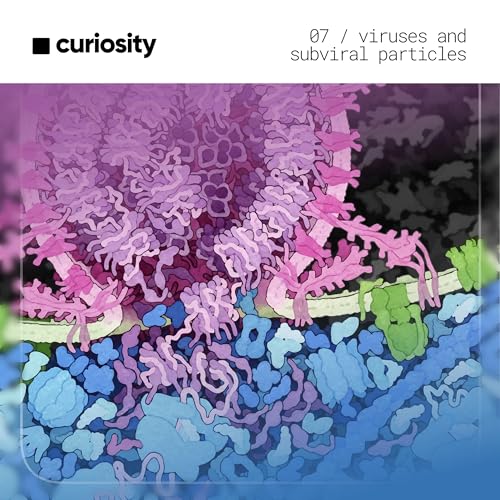
    "SARS-CoV-2 Fusion, 2020" by David S. Goodsell, RCSB Protein Data Bank; doi: 10.2210/rcsb_pdb/goodsell-gallery-026

    Show More Show Less
    1 hr and 2 mins