• I Built an Identity "Service." It Became Infrastructure. Here's How I Know the Difference
    May 15 2026

    This story was originally published on HackerNoon at: https://hackernoon.com/i-built-an-identity-service-it-became-infrastructure-heres-how-i-know-the-difference.
    Authorization is no longer just a service. At scale, it needs local state, async propagation, and infrastructure-level resilience.
    Check more stories related to cybersecurity at: https://hackernoon.com/c/cybersecurity. You can also check exclusive content about #identity-and-access-management, #iam, #aws, #cloud, #database-administration, #identity-infrastructure, #microservices, #runtime-dependencies, and more.

    This story was written by: @abhisheknagpal48. Learn more about this writer by checking @abhisheknagpal48's about page, and for more stories, please visit hackernoon.com.

    Authorization is no longer just a service. At scale, it needs local state, async propagation, and infrastructure-level resilience.

    Show More Show Less
    8 mins
  • Why API Engineering Is the Backbone of Modern Mobile Apps
    May 14 2026

    This story was originally published on HackerNoon at: https://hackernoon.com/why-api-engineering-is-the-backbone-of-modern-mobile-apps.
    Why API design is the backbone of modern mobile apps covering contract stability, latency, idempotency, caching, and security across intermittent connections.
    Check more stories related to cybersecurity at: https://hackernoon.com/c/cybersecurity. You can also check exclusive content about #mobile-api-security, #ios, #android, #api-design, #mobile-engineering, #mobile-backend-as-a-service, #api, #api-engineering, and more.

    This story was written by: @mugunth. Learn more about this writer by checking @mugunth's about page, and for more stories, please visit hackernoon.com.

    Mobile API engineering isn't backend plumbing it defines freshness, compatibility, resilience, and trust for a client that's always intermittent, battery-constrained, and running multiple versions at once.

    Show More Show Less
    9 mins
  • 163 Blog Posts To Learn About Personal Data
    May 14 2026

    This story was originally published on HackerNoon at: https://hackernoon.com/163-blog-posts-to-learn-about-personal-data.
    Learn everything you need to know about Personal Data via these 163 free HackerNoon blog posts.
    Check more stories related to cybersecurity at: https://hackernoon.com/c/cybersecurity. You can also check exclusive content about #personal-data, #learn, #learn-personal-data, and more.

    This story was written by: @learn. Learn more about this writer by checking @learn's about page, and for more stories, please visit hackernoon.com.

    Show More Show Less
    58 mins
  • 1970 exploitable findings later.
    May 13 2026

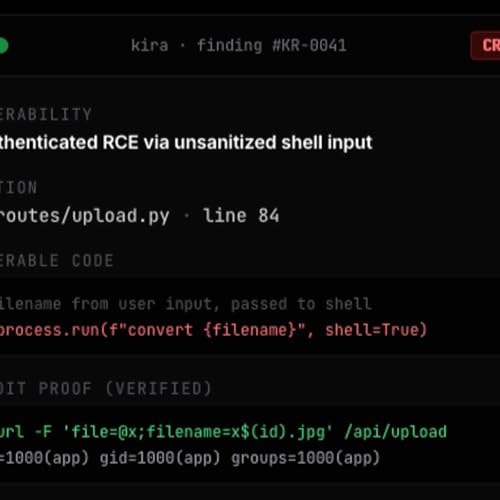
    This story was originally published on HackerNoon at: https://hackernoon.com/1970-exploitable-findings-later.
    Modern vulnerabilities live in the seams between systems. Here's how reasoning-based AI security catches what static analysis misses, and where it gets wrong.
    Check more stories related to cybersecurity at: https://hackernoon.com/c/cybersecurity. You can also check exclusive content about #application-security, #ai-security-agent, #static-analysis, #vulnerability-research, #compositional-vulnerabilities, #devsecops, #code-review-security, #appsec, and more.

    This story was written by: @aditibhatnagar. Learn more about this writer by checking @aditibhatnagar's about page, and for more stories, please visit hackernoon.com.

    Modern vulnerabilities live in the seams between systems. Here's how reasoning-based AI security catches what static analysis misses, and where it still gets it wrong.

    Show More Show Less
    8 mins
  • AI Is Making Crypto Wallet Deanonymization Much Cheaper
    May 13 2026

    This story was originally published on HackerNoon at: https://hackernoon.com/ai-is-making-crypto-wallet-deanonymization-much-cheaper.
    Pseudonymity used to be crypto's quiet superpower. Now AI agents can connect a wallet to a real human for under four bucks.
    Check more stories related to cybersecurity at: https://hackernoon.com/c/cybersecurity. You can also check exclusive content about #crypto-privacy, #ai-agents, #crypto-wallet-deanonymization, #ens-privacy, #zero-knowledge-proofs, #crypto-opsec, #crypto-threat-models, #hackernoon-top-story, and more.

    This story was written by: @dishitamalvania. Learn more about this writer by checking @dishitamalvania's about page, and for more stories, please visit hackernoon.com.

    Crypto was never anonymous, just pseudonymous, and the "privacy" people actually felt was really just the high labor cost of connecting a wallet to a human. New research shows AI agents can now do that connecting for under $4 per attempt by scraping social media, which flips the economics of mass surveillance on its head. The on-chain side was solved years ago; AI just cracked the off-chain side at scale, and companies like Arkham have already productized it. Even the SEC chair is now warning crypto could become a "financial panopticon." The fix isn't one thing — it's stopping address reuse, treating your ENS like PII, leaning on ZK tools and privacy coins, assuming your OPSEC is already broken, and fighting for privacy code to stay legal where you live.

    Show More Show Less
    15 mins
  • Gates’ 50-in-5 Initiative Is Turning the Digital Public Infrastructure Debate Political
    May 12 2026

    This story was originally published on HackerNoon at: https://hackernoon.com/gates-50-in-5-initiative-is-turning-the-digital-public-infrastructure-debate-political.
    An opinion-driven critique of the UN-backed 50-in-5 Digital Public Infrastructure initiative and the global debate around digital identity systems.
    Check more stories related to cybersecurity at: https://hackernoon.com/c/cybersecurity. You can also check exclusive content about #digital-identity, #digital-public-infrastructure, #50-in-5, #un-digital-governance, #mosip, #programmable-money, #digital-public-goods-alliance, #africanenda, and more.

    This story was written by: @thesociable. Learn more about this writer by checking @thesociable's about page, and for more stories, please visit hackernoon.com.

    This opinion piece critiques the 50-in-5 Digital Public Infrastructure initiative, a global campaign supported by organizations including the United Nations and the Gates Foundation to accelerate adoption of digital identity systems, payment rails, and interoperable public digital infrastructure. The article frames DPI as a potential mechanism for centralized technocratic control and argues that the expansion of digital identity and data-sharing systems raises broader concerns about governance, surveillance, and individual autonomy.

    Show More Show Less
    6 mins
  • Building a Production-Grade CI/CD Pipeline — Part 2: Adding AI-Powered Security Scanning
    May 12 2026

    This story was originally published on HackerNoon at: https://hackernoon.com/building-a-production-grade-cicd-pipeline-part-2-adding-ai-powered-security-scanning.
    Learn how to build an AI-powered CI/CD security pipeline using Trivy, Semgrep, Gitleaks, GPT-4o, and Slack alerts.
    Check more stories related to cybersecurity at: https://hackernoon.com/c/cybersecurity. You can also check exclusive content about #devsecops, #devops-security, #github-actions, #cicd-pipelines, #cicd-security, #container-scanning, #ai-security-analysis, #static-app-security-testing, and more.

    This story was written by: @cloudsavant. Learn more about this writer by checking @cloudsavant's about page, and for more stories, please visit hackernoon.com.

    This tutorial extends a production-grade GitHub Actions pipeline by adding layered security scanning with Gitleaks, Semgrep, and Trivy, followed by an AI synthesis stage powered by GPT-4o. Rather than overwhelming engineers with raw scanner output, the pipeline consolidates findings into structured Slack incident reports that prioritize exploitability, remediation effort, and deployment risk.

    Show More Show Less
    7 mins
  • Defense-in-Depth in a Tiny Supabase App: 5 Patterns I Baked Into Altair Before Open-Sourcing It
    May 11 2026

    This story was originally published on HackerNoon at: https://hackernoon.com/defense-in-depth-in-a-tiny-supabase-app-5-patterns-i-baked-into-altair-before-open-sourcing-it.
    Before I flipped my Supabase PSA tool public, I had to convince myself a fork couldn't ship a security hole. Here are the five patterns that made me trust it.
    Check more stories related to cybersecurity at: https://hackernoon.com/c/cybersecurity. You can also check exclusive content about #row-level-security, #jwt-authentication, #typescript-security, #authorization-architecture, #ci-enforcement, #defense-in-depth, #auth-middleware, #supabase, and more.

    This story was written by: @drh. Learn more about this writer by checking @drh's about page, and for more stories, please visit hackernoon.com.

    I open-sourced a Supabase PSA tool last week. To trust the click, I layered five auth patterns — middleware JWT check, withAuth wrappers, role-scoped column whitelists, CI-enforced architecture, and RLS — so any single layer failing wouldn't matter. Plus the one mistake I almost shipped: a service-role key in client code.

    Show More Show Less
    8 mins