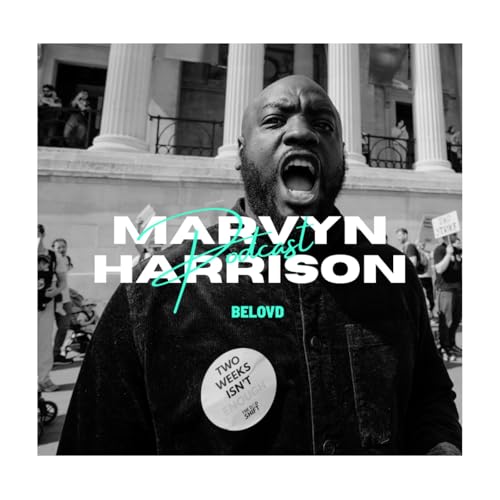
Dope Black Dads Podcast cover art

Dope Black Dads Podcast

Dope Black Dads Podcast

Written by: Dope Black Dads Podcast
Listen for free

About this listen

The Dope Black Dads Podcast is an adult-only podcast for all parents or adults preparing for parenthood. Led by Marvyn Harrison with contributions from the Dope Black Dads leadership as well as a host of special guests from the world of healing, media, parenting, TV/film, music, and beyond. We discuss everything from co-parenting, masculinity, and the Black experience all the way to our favourite Netflix show. Don't listen if you're expecting conversations about nappies!

Hosted on Acast. See acast.com/privacy for more information.

Dope Black Dads Podcast
Hygiene & Healthy Living Parenting Relationships Social Sciences
Episodes
  • Love Isn’t Mechanical: Stop Dating Like a Checklist
    Feb 15 2026

    Most people say they want love, then date like they’re configuring a device: height, income, politics, trauma level, texting cadence, therapy status, “emotional intelligence,” travel appetite—tick, tick, tick. It feels safe. It feels efficient. It feels like control.


    But love isn’t mechanical. People aren’t programmable. They have grey areas: prickly parts, warm parts, avoidant parts, tender parts, contradictions, history. A checklist can’t measure inner world alignment, truth-telling, repair ability, or whether two people can actually build safety together.


    I unpack how romantic idealism can make you naïve—especially when you grew up in warmth and assume everyone else did too. Then reality hits: people don’t always tell the truth, not always under pressure, and if you don’t interrogate someone’s inner world you end up in cycles that feel “mystical” but are actually predictable scripts.


    The shift is simple: keep your values, drop the robot requirements. Choose moment-to-moment evidence. Build the skill of doing things well with people—clarity, repair, accountability, warmth. Then create a vehicle for connection that’s alive, consistent, and real.

    Hosted on Acast. See acast.com/privacy for more information.

    Show More Show Less
    27 mins
  • I’m Not “Exposing” Anyone — Here’s The Line I Won’t Cross
    Feb 13 2026

    This episode sets the rules of the room.

    This podcast is committed to protecting the dignity, safety, and wellbeing of anyone whose stories, experiences, or submissions may be referenced. We don’t publish allegations as fact without appropriate verification, context, or public record. We anonymise, change details, reframe, or decline stories to reduce harm—especially when other people didn’t choose public exposure.


    I also explain why listeners sometimes feel “that’s my story”: because many experiences are cyclical and universal—especially when you’re trying to be yourself inside a difficult environment. That doesn’t make the story “about you.” It makes it common.


    Then we widen out: Britain’s collapsing care reflex (a post office moment that says everything), why I refuse to “chat people’s business,” why men need to lead with repair when harm exists, and why I’m building a show that’s present and unscripted—without turning vulnerability into entertainment.

    Hosted on Acast. See acast.com/privacy for more information.

    Show More Show Less
    40 mins
  • GAME Went Bust… So I Rebuilt It Into Britain’s Home of Gaming Culture
    Feb 11 2026

    An old workplace game brand went bust—not because people stopped gaming, but because retail changed: downloads replaced discs and the UK high street kept shrinking. The fix isn’t “sell more games.” The fix is rebuilding the purpose.

    In this episode I lay out the full turnaround blueprint:

    1. Accept traditional retail is over.
    2. Redesign stores around play: arcades, competitive setups, racing simulators, mini-arenas. Experience, not product.
    3. Build a national grassroots league through every location: after-school and after-work tournaments, city championships, national finals streamed online.
    4. Wrap it in a membership model: monthly access to play/compete/status, points and perks, predictable recurring revenue.
    5. Keep retail only where digital can’t compete: controllers, headsets, chairs, collectibles—physical identity, higher margin, real demand.
    6. Turn flagship locations into creator studios + live event spaces where UK talent is discovered and broadcast.

    Outcome: footfall returns for belonging, not shopping. Membership stabilises revenue. A national competitive pathway attracts sponsors and media. GAME becomes Britain’s gaming culture infrastructure—not a struggling retailer from the past.

    Hosted on Acast. See acast.com/privacy for more information.

    Show More Show Less
    3 mins
No reviews yet