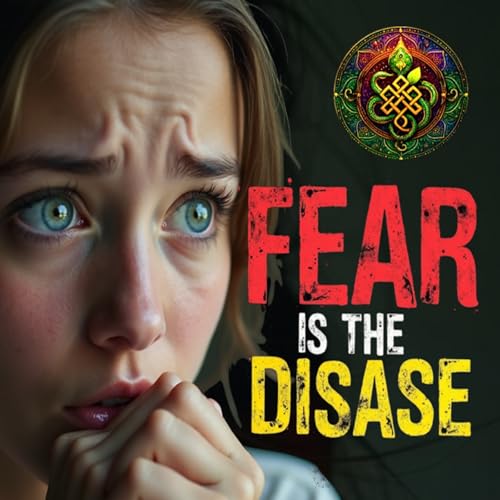
Fear Is the First Infection that Spread and Kill, and Not the Virus during Post-Antibiotic Era. cover art

Fear Is the First Infection that Spread and Kill, and Not the Virus during Post-Antibiotic Era.

Fear Is the First Infection that Spread and Kill, and Not the Virus during Post-Antibiotic Era.

Written by: Kadiyali Srivatsa
Listen for free

LIMITED TIME OFFER | Get 2 Months for ₹5/month

About this listen

Our brain cannot distinguish real from imagined fear. When we imagine fears of poverty, the Law, illness or infection, relationships or death, the thought spiral spirals out of control, diving deep into an emotional black hole, resulting in fear.

We experience fear, and the body reacts instantly. Heart rate rises. Breathing becomes laboured, making us tired. Body temperature fluctuates. Palms sweat. Some experience abdominal pain, tingling in the fingers or dizziness from hyperventilation. The brain cannot easily distinguish between a genuine life-threatening emergency and a fear-amplified sensation.

Neuroscience confirms that the amygdala activates before rational evaluation occurs. The stress response releases adrenaline and cortisol. Chronic or intense stress has been shown to suppress immune function, increasing vulnerability to infection.

In the United States, studies estimate that 30–40% of emergency department visits are non-urgent. NHS analyses have shown that up to one-third of hospital visits could be managed outside hospital settings. Globally, inappropriate emergency utilisation significantly increases healthcare costs and exposure risks.

Most patients who rush to the hospital in fear do not have a life-threatening illness. Yet once inside the system, doctors must examine, investigate, document, prescribe, and protect themselves legally. Medicine becomes defensive. The intention is good, but the system becomes overloaded.

The majority of hospitals are colonised with antimicrobial-resistant bacteria and fungi.

83% of people in hospitals, including doctors, nurses, and staff, are said to be colonised with AMR in India. Hospitals are now high-risk environments for the transmission of these infections.

The WHO estimates that 7–10% of hospitalised patients globally acquire healthcare-associated infections (HAIs). Antimicrobial resistance (AMR) is already responsible for over 1 million direct deaths annually worldwide, with projections rising sharply if behaviour does not change.

Increased, unnecessary contact increases the spread of infections — both viral and bacterial.

When fear drives unnecessary hospital visits:

Exposure increases, antibiotic prescribing and costs rise. AMR accelerates, and vulnerable families suffer most — especially those facing poverty, language barriers, and limited access to follow-up care. Fear is now a public health multiplier.

We help manage Fear Before It Becomes Harm. Personal Resourceful Empowering Fear Management Advice is not a symptom checker or diagnostic machine. It is a fear-management and triage-empowerment system.

Why This Matters Now?

In an era of rising AMR and fragile health systems, we cannot afford fear-driven utilisation.
We cannot afford unnecessary exposure or hospital overload.

Doctor-centred care remains essential for true emergencies, but not every fear warrants emergency care. We must reduce the spread of infection by managing fear at the front door — before hospital entry. It restores balance, because hospitals are for the critically ill.
Communities need tools for clarity.
Families need confidence.
Vulnerable populations need access without exposure.

PREMA is a behavioural public health intervention powered by AI. It addresses the single greatest barrier to rational healthcare-seeking behaviour. Maya AI is not challenging doctors, nor claiming to save lives.

By 2028, when AMR infections in hospitals or doctors’ clinics reach 48%, treatment success drops to 40%. The only option is to empower yourself to conquer fear, use knowledge and experience, and make an informed decision to protect your family, children, and community.

kadiyalisrivatsa
Hygiene & Healthy Living Parenting Relationships
Episodes
  • Superbug holocaust in Tandom with the Iran, israel and USA conflict that will bring humanity to its knees Killing Millions by 2030
    Mar 3 2026

    Just imagine one sailor in the Abraham Lincoln aircraft carrier sustains an injury, or gets a sore throat, gastroenteritis, or flu-like symptoms, and gets an AMR infection, the lives of 5000 sailors will be at risk. The sailor will need to be quarantined and treated with a very expensive drug (in short supply) for 14 days and will be bedridden. This is not scaremongering, but based on published statistics.

    We're facing an unseen, terrifying threat that the World Health Organisation highlighted back in 2017, with a stark warning about 12 bacteria and fungi that are difficult to treat. If 84% of people in India in hospitals carried AMR in their nose and skin, then I am sure the number of people in Abraham Lincoln is also colonised.

    Some people are even calling it a potential superbug holocaust, though it sounds extreme, but it is framed as an imminent threat; it could genuinely push us into what they call a post-antibiotic era, which sounds apocalyptic.

    I mean, challenging our survival potential changes the way we fund medicine as we know it. What's really unsettling is how often our traditional healthcare models, you know, the ones designed mostly to treat individual illnesses one by one, seem to fall short when they're up against these huge issues, instead of feeling like we're empowered. We can take charge of our own health. Sometimes, these systems can actually foster a doctor-centred approach, where all the knowledge and authority lie solely with the doctor.

    You can leave the patient feeling well, one that fundamentally challenges this conventional wisdom, and, importantly, this isn't about some new tech giant suddenly appearing to monetise your health data. The key distinction is that this vision actually started long before that whole rush, and it was driven by a really deep ethical compass, a sense of responsibility.

    So we're gonna unpack how one physician, Dr Kadiyali Srivatsa, has had a pretty extraordinary journey, filled with personal struggles, professional challenges, and profound insights, that has led to the creation of this revolutionary colour-coded symptoms system.

    Now being ingeniously enhanced by AI, the system isn't just about improving your individual check; it's positioned as a bold move to tackle some of the biggest health challenges. We are facing the superbugs we just mentioned; it's really about a fundamental shift, isn't it, moving away from doctor-centred care towards a system that genuinely empowers you.

    To really get our heads around the foundational flaws in our traditional healthcare system, maybe the best place to start is with a really personal story. This turning point shaped this particular doctor's entire view of medicine.

    He predicted 2028 as the year when the AMR Crisis would be experienced by people and healthcare professionals. No, the war in the Gulf is going to help the AMR spread faster, and criple life all over the world. The people in power have ignored Dr Srivatsa's warning, created barriers to protect "Doctor Centered Care".

    Show More Show Less
    55 mins
  • Laws of the Universe compared with the Laws created by Humans . Why is it important in the 21st Century?
    Mar 3 2026

    LAWS OF THE UNIVERSE: DHARMA

    Hindu Dharma (often referred to as Sanātana Dharma, meaning the “eternal way” or “eternal Law”) is an ancient, diverse, and highly pluralistic tradition. Rather than prescribing a single, rigid code of behaviour, it offers multiple teachings, texts, and philosophical schools that guide individuals in how to live ethically and pursue spiritual goals. Below is an overview of some widely recognised principles and concepts in Hindu thought that influence human conduct and moral decision-making.

    The majority of people in India associate their actions with dharma, not knowing the true meaning. They spend their whole life performing poojas and listening to people who declare themselves Guru, Bhagavan, Vidwan, or Spiritualist, not knowing that anyone who monetises their knowledge accumulates bad karma. A true Hindu is one who will not surrender their free will and does not inflict physical or mental pain and suffering on another soul because we are all connected.

    1. Dharma (धर्म)

    • Core Meaning: Dharma is often translated as righteousness, duty, moral order, or virtue. It encompasses one’s responsibilities and the ethical principles that uphold cosmic and social harmony.
    • Application:
      • Personal Duties: Vary by individual, depending on one’s role in family and society.
      • Social Harmony: Encourages actions that support communal well-being and ethical living.
      • Universal Values: Truth (satya), non-violence (ahiṃsā), and compassion are widely considered part of universal dharma.

    Dharma is a cornerstone of Hindu ethics and acts as a moral compass, guiding individuals toward actions that maintain balance (ṛta) in oneself, society, and the cosmos.

    2. Karma (कर्म)

    • Definition: Literally means “action.” In Hindu thought, it represents both the action and the moral Law of cause and effect: every intentional deed (physical, verbal, or mental) has consequences that shape one’s future experiences.
    • Implications for Behaviour:
      • Encourages responsibility for one’s actions, as harmful deeds generate negative consequences (and vice versa).

    • • Influences character and life circumstances across one’s current and future existences (through saṃsāra, the cycle of rebirth).

    • Emphasises ethical living and self-awareness, knowing that all deliberate actions “plant seeds” that eventually bear fruit (good or bad).

    A Holistic Ethical Vision

    Rather than a single set of rigid “laws,” Hindu Dharma provides a holistic moral and spiritual framework grounded in:

    • Dharma: Righteous duty and ethical living.
    • Karma: Understanding the consequences of one’s actions.
    • Purushārthas: Balancing worldly and spiritual aims.
    • Yamas and Niyamas: Practical guidelines for ethical and personal discipline.
    • Devotion, Knowledge, and Service: Paths that transform inner character and guide outward conduct.

    At its heart, Hindu Dharma emphasizes responsibility, compassion, and the pursuit of higher truth, encouraging individuals to align their actions with cosmic harmony (ṛta) and progress toward both worldly well-being and ultimate liberation (mokṣa).

    Show More Show Less
    43 mins
  • My mother, saw something I did not — innovative, creative, focused and determined. She believed I would not simply follow, question and reduce the disparities in healthcare..
    Feb 25 2026

    Every Doctor, healthcare worker, and anyone who cares about the future of medicine and the life of our children must Pause and reflect. We must stop assuming that every intervention automatically alleviates suffering or saves lives. Good intentions are not enough. Listening, humility, and pattern recognition matter just as much as prescriptions and procedures.

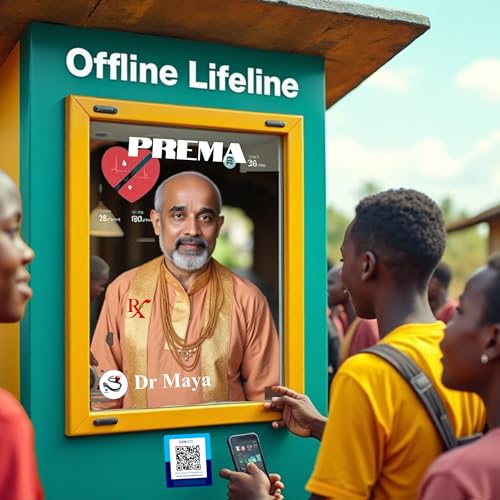
    I did not originally want to become a doctor. As a child, I did not trust doctors. When I was 12 years old, a doctor nearly cost me my life because he failed to listen. He ignored the story of a serious illness I had experienced at the age of six — a story I had lived through, remembered clearly, and tried to explain. My voice was dismissed. The past was overlooked because the pattern was missed. I created Maya based on Charaka's Principle "Prevent, Protect and Heal., and created "Prema Kiosk" to honor my mother."

    That experience stayed with me.

    It was my mother who insisted that I pursue medicine. She saw something I did not yet see in myself — innovation, creativity, focus, and determination. She believed that if I entered the system, I would not simply follow it. I would question it. I would improve it. I would find a way to help people who suffer in silence — especially the poor, who are often unheard, unseen, and afraid.

    Medicine should not silence stories. It should listen to them.

    The future of healthcare will not be saved by ego or authority. It will be saved by those willing to admit where the system fails — and courageous enough to redesign it.

    .This podcast explains the logic of modern life, really. It's the water we swim in, right? The logic goes something like this. Freedom is good. Choice is the ultimate Expression of that freedom. Therefore, the more choices we have, the freer we are, and you know, the happier we should be. That's the standard operating procedure. In the modern world, more is better. It has to be. If I walk into a store and there are 50 types of breakfast cereal, I should be thrilled to find the exact one that meets my specific crunch-to-sugar ratio requirements. You can optimise. Ioptimizeimise. Ioptimize 100 health insurance plans to pick from, I should be able to engineer my coverage perfectly.

    This precision, this ability to select exactly what I want, should theoretically make me the happiest human in history, heretically. And that is the assumption that drives our entire economy, our healthcare system, and, you know, our daily lives. But, and here's where the record scratches. We have this stack of research here, centred on a concept called the tyranny of choice. It suggests that this logic is completely backwards.

    #PremaKiosk. #DrMayaAI, #DigitalHealthIndia, #HealthcareInnovation, #CommunityHealthcare, #FutureOfHealthcare,

    #PreventiveHealthcare, #AIinHealthcare, #SmartHealthcare, #HealthTechIndia, #InfectionPrevention, #StopTheSpread, #PandemicPreparedness, #AntimicrobialResistance, #PublicHealthInnovation, #EarlyDetection, #HealthSecurity,, #DiseasePrevention, #OutbreakPrevention, #HealthcareSafety, #CareForParents, #ElderlyCareIndia, #ProtectYourFamily, #HealthForAll #DignityInHealthcare, #FamilyFirstHealth, #CaregiverSupport, #HealthyCommunities, #ApartmentLivingIndia, #CommunitySafety, #SmartSociety, #ResidentialWellness, #SafeLivingSpaces, #ApartmentLivingIndia, #CommunitySafety, #SmartSociety, #ResidentialWellness, #SafeLivingSpaces, #ImpactInvesting, #SocialInnovation, #PurposeDrivenBusiness, #HealthcareStartup, #SocialEnterprise, #HealthEquity, #InclusiveInnovation, #ArtificialIntelligence, #AIForGood, #DigitalTransformation, #FutureTechnology, #TechForHumanity, #MadeInIndia, #IndiaHealthcare, #NewIndiaHealth, #DigitalIndia, #AI, #AIinHealthcare, #DrMayaAI, #DrMayaGPT, #Drkadiyalisrivatsa, #MayaMeditation, #Aashapath, #AMR, #Antibiotics #doctors, #Doctor, #MayaAI

    Show More Show Less
    41 mins
No reviews yet