• Ralph McQuarrie: Painting the Long, Long Time Ago Future We All Remember
    May 6 2026

    Ralph McQuarrie didn’t just imagine the future, he grounded it in dirt, wear, and function, making it believable in a totally new way. In the 1970s, as audiences moved past campy or sterile sci-fi, McQuarrie partnered with George Lucas to create a visual language for Star Wars that felt worn, lived-in, and emotionally real. His designs, X-wings patched together, Darth Vader’s industrial menace, and the Death Star’s authoritarian scale, grounded fantasy in function and history. McQuarrie’s art convinced studios to fund an entire universe, proving that artists don’t just illustrate the future, they can truly bring it to life.

    Join McKay, Ian, and Greg as we explore the life and work of the visual futurist who created a universe that is still expanding today.

    Show More Show Less
    45 mins
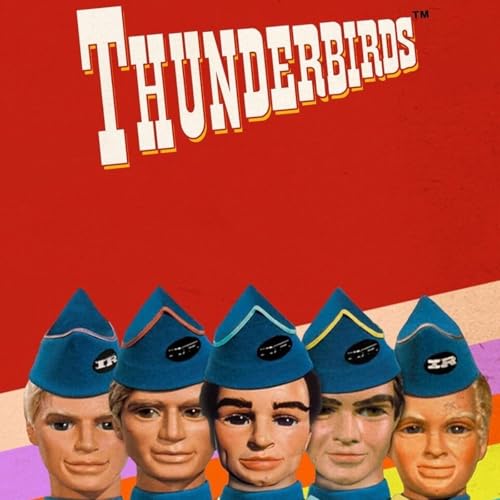
  • The Thunderbirds, Saving the Future One Disaster at a Time
    Apr 22 2026

    Before superheroes ruled the screen, there were the Thunderbirds.

    Debuting in the mid-1960s, Thunderbirds imagined a future where technology wasn’t built for war or profit, but for rescue. With impossibly advanced machines, calm professionalism, and a belief that humanity’s biggest problems could be solved through preparation and cooperation, the show offered a surprisingly optimistic vision of the future at the height of Cold War anxiety.

    https://www.rottentomatoes.com/tv/thunderbirds/s01

    Please join Greg, Ian, and McKay as we as we explore a future where saving the day is just another scheduled launch. 5-4-3-2-1, Thunderbirds are Go!

    Show More Show Less
    45 mins
  • Star Trek (The Original Series) and Gene Roddenberry’s Blueprint for a Better Humanity
    Apr 8 2026

    What if the future wasn’t about conquering the galaxy, but about exploring it for the betterment of all?

    When Star Trek premiered in 1966, Gene Roddenberry offered something radical: a future that was hopeful, orderly, and worth striving for. In a genre dominated by fear, invasion, and conquest, Star Trek imagined humanity surviving its worst instincts and choosing cooperation, ethics, and exploration instead. Roddenberry wasn’t just building a sci-fi show, he was outlining a vision of social evolution.

    Please join Greg, Ian, and McKay as we explore whether Gene Roddenberry’s vision of the future was naïve idealism or a roadmap for the future of humanity.

    Show More Show Less
    48 mins
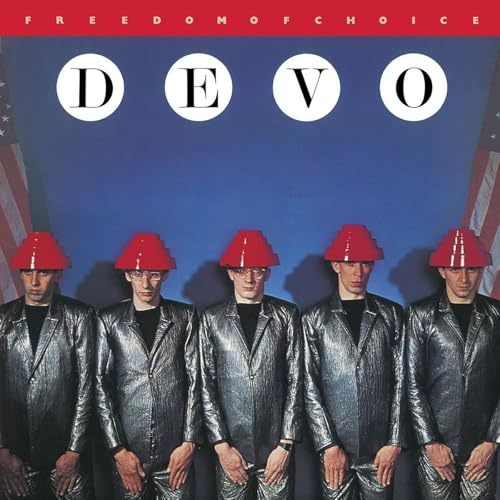
  • De-Evolution: When Progress Goes Backward
    Mar 25 2026

    “We dreamed of flying cars and moon colonies. Instead, we got influencers and two-factor authentication.”

    What if progress didn’t stall, but reversed? This episode explores de-evolution, the idea that societies can regress intellectually, morally, or culturally even as technology advances. De-evolution isn’t about going backward in time; it’s about losing the drive to move forward at all.

    The modern belief in inevitable progress is surprisingly recent. History and science fiction suggest something less comforting: progress is cyclical, fragile, and reversible, especially when technology outpaces wisdom.

    Show More Show Less
    43 mins
  • Space Stations, Living Between Earth and the Stars
    Mar 11 2026

    Space stations are humanity’s first true off-world homes, floating laboratories, political symbols, and testing grounds for the future. Long before we could build bases on the Moon or dream seriously about Mars, we learned to live in orbit. In this episode, we trace how space stations moved from science fiction to reality, what they were meant to prove, what they actually taught us, and why they still matter as the backbone of human spaceflight.

    Show More Show Less
    37 mins
  • Moonbases, Why We Thought We’d Live on the Moon by Now
    Feb 25 2026

    Moonbases have long symbolized progress, ambition, and national identity, and suddenly they’re back in the conversation. From retro-futuristic sci-fi visions to real NASA blueprints, humanity has imagined permanent lunar outposts for nearly a century. In this episode, we explore where those ideas came from, what it actually takes to build a home on another world, and why we’re still not there ye

    Show More Show Less
    42 mins
  • H.G. Wells — The Man Who Invented Tomorrow
    Feb 11 2026

    Throughout history, people have imagined what the future might look like, sometimes in bold visions, and sometimes in outlandish predictions. Dreams of a Future Past is a podcast that explores how humanity has dreamed of the future through movies, technology, philosophy, and design.

    Before there was science fiction, there was H.G. Wells. A futurist of the industrial age, Wells imagined atomic bombs, genetic engineering, space travel, and even early concepts of the internet decades before they existed. His work blends wonder with warning, using speculative technology as a lens to explore human responsibility and society’s moral evolution.

    Show More Show Less
    44 mins
  • The Atomic Age: Dreams, Dread, and the Nuclear Age
    Jan 28 2026

    Throughout history, people have imagined what the future might look like, sometimes in bold visions, and sometimes in outlandish predictions. Dreams of a Future Past is a podcast that explores how humanity has dreamed of the future through movies, technology, philosophy, and design.

    What if the atom could power everything from your home to your car? The Atomic Age blended retro-futurism, midcentury modern design, and Cold War anxiety, inspiring sleek gadgets, bold architecture, and stories of both optimism and destruction.

    The Atomic Age emerged in the wake of the bombings of Hiroshima and Nagasaki, when the world realized the atom could be both a weapon and a source of boundless energy. Governments, corporations, and pop culture embraced nuclear power with a mix of hope and fear, inspiring futuristic design, cartoons, sci-fi films, and ambitious visions of atomic-powered cities and vehicles that resonate with today's modern resurgence of AI and data center nuclear power.

    Show More Show Less
    44 mins