• God Designed the Church to Work Together in Mission | Paulo Feniman
    Jul 14 2026

    Paulo Feniman, a Brazilian leader with Africa Inland Mission (AIM), describes his transition from 26 years serving AIM Brazil/South America—20 as executive director focused on mobilizing churches to send missionaries—to becoming AIM International’s collaboration director, building connections with the African church and mission movement. He recounts an early calling to mission and pastoral ministry shaped by local service, later using his marketing/media background in mission communications. Feniman explains COMIBAM as a Latin American mission movement launched with a 1987 São Paulo congress that reframed the region as a “mission force,” leading to major growth, including about 35,000 cross-cultural missionaries (22,000 from Brazil), many among unreached peoples and Muslim contexts. He emphasizes partnership—setting aside “ego and logo”—training through collaboration, perseverance amid economic challenges, and the Great Commission as a privilege for the whole church.

    01:29 Meet Paulo Feniman
    02:00 AIM Brazil to Global Role
    02:52 Called Into Missions
    04:29 Leadership Shift and Pandemic
    06:38 Passions Mobilization Partnership
    08:16 Teenage Calling and Mentors
    11:20 Design Career Back to Mission
    13:01 COMIBAM Origins and Growth
    15:53 Latin America Mission Stats
    16:13 Collaboration Principles
    18:56 Unity Takes Effort
    20:55 Humility In Teamwork
    21:52 Training Through Partnerships
    23:28 Redefining True Riches
    25:02 Called To Connect Others
    28:02 Prayer Card Breakthrough
    31:27 Latino Missions Perseverance
    35:43 Capacity And Heart Check
    37:23 Great Commission Invitation
    40:05 Final Thanks And Blessing

    Show More Show Less
    43 mins
  • Lives Full of Questions: Reaching Africa’s Next Generation | Andy Mburu
    Jul 7 2026

    In Nairobi, Gordon interviews Andy Mburu, leader of Litmus Africa, about engaging Africa’s overwhelmingly young population and why many churches struggle to connect with Gen Z, who face countless information sources and often question the Bible’s authority. Andy explains that in shame-honor cultures, questioning can be seen as rebellion, leaving issues like sexuality, gender identity, and whether Christianity is “good news” for Black Africans—amid renewed interest in ancestral practices—largely unaddressed in church. Litmus creates spaces for apologetics and critical thinking, welcoming questions and emphasizing that truth is ultimately a person, Jesus. Andy shares examples, his own journey after his first wife Priscilla died in a traffic accident soon after their wedding, his training at the Oxford Centre for Christian Apologetics, reflections on the Ravi Zacharias scandal, and his hope to equip Kenyan youth as “undercover missionaries,” especially those studying abroad.

    01:33 Meet Andy Mburu
    02:01 Swahili Youth Greetings
    03:22 Africa Is Young
    06:00 Gen Z Worldview Shift
    07:25 Questions Seen As Rebellion
    10:51 Why Litmus Exists
    14:05 Truth Is A Person
    15:34 Real Questions Teens Ask
    18:59 Faith And African Identity
    23:22 Called Into Ministry
    24:39 Accident Details
    26:02 Was It Gods Will
    27:58 Pain Suffering Questions
    28:47 Discovering Apologetics
    30:44 Training At Oxford
    32:39 Ravi Scandal Fallout
    35:09 Truth And Coverups
    36:52 Comforting Victims
    38:37 Grief Ten Years Later
    42:24 Hope For Kenyan Youth
    44:21 Undercover Missionaries
    47:09 Final Thanks Farewell

    Show More Show Less
    48 mins
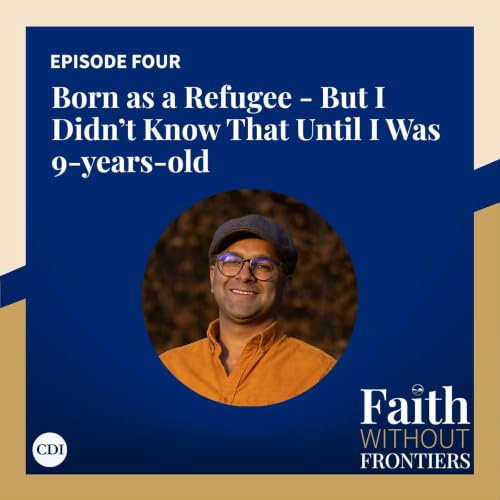
  • Born As A Refugee - But I Didn’t Know That Until I Was 9 Years Old | Javad Bakhtiari
    Jun 30 2026

    In an interview, Javad (born in Iran to Afghan parents, later living in Norway, Germany, Afghanistan, and now Austria) describes how his family fled Afghanistan during the Soviet war, and how at age nine he first learned he was a refugee when UNICEF aid was distributed at school, leading him to hide his identity and resent his parents’ choice of Iran. As an adult and Christian, he later understood his father’s decision as a practical move to provide quickly due to shared language and culture. Javad recounts discovering Christianity after watching The Passion of the Christ, being welcomed by churches in Norway and Germany, and then being deported to Afghanistan due to lack of documentation, where he secretly followed Jesus, connected with an underground church, and faced Taliban violence, including the killing of a YWAM teacher and his children. He escaped via Iran–Turkey–Greece and gained asylum in Austria, where he married and serves refugees, emphasizing Jesus as his true identity, the prodigal son’s themes of shame and restoration, and the need for “hamyar” companionship in church, while acknowledging the cost of putting Jesus first, including separation from family.

    01:06 Where Is Home
    02:05 Family Flees To Iran
    02:46 Languages Of Afghanistan
    03:51 Finding Out He's A Refugee
    05:46 Second Class In Iran
    07:30 Faith Reframes His Past
    11:05 Dreams For Afghanistan
    11:54 First Trip Back
    14:02 Discovering Jesus
    19:21 Asylum Struggles In Europe
    21:39 Deported to Afghanistan
    22:07 Secret Faith and Shame
    23:01 Underground Church Connections
    24:33 Taliban Threat and India Escape
    25:49 Back to Europe as Refugee
    27:23 Dangerous Border Crossing
    29:16 Asylum and New Purpose
    31:08 Norwegian Pastor Hospitality
    33:53 Prodigal Son Through Honor
    37:33 Identity Found in Jesus
    39:29 Hamyar Companions for Life
    41:55 Cost of Following Christ
    42:59 True Belonging Conclusion

    Show More Show Less
    44 mins
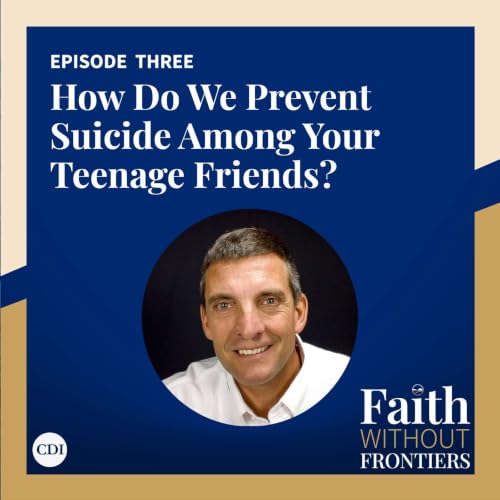
  • How Do We Prevent Suicide Among Your Teenage Friends? | Geordon Rendle
    Jun 23 2026

    Geordon Rendle is a Canadian raised in Colombia whose parents served with Prison Fellowship International and who has lived mostly in Latin America (including Argentina, Venezuela, and Costa Rica) while serving with Youth for Christ (YFC). Rendle describes Venezuela’s danger, diaspora, and natural beauty, then argues YFC’s answer is to reset a generation through integrity/holiness, the fear of God, and giving teenagers agency and mission. He recounts being sent at age 12 to share the gospel with “sicarios” in a Medellín prison, and explains YFC’s juvenile justice work, including being called to sit with youth offenders. Rendle advocates “upstream leadership,” applied listening, and equipping, endorsing, and entrusting youth, sharing examples like an eight-year-old leading a church in prayer and his daughter leading YFC social media. He also discusses five Ironmans, two cerebral aneurysms and surgeries, and his message that there is always hope in Jesus, with an ultimate hope that two billion teenagers know God loves them.

    01:11 Reconnecting With Geordon
    02:26 A Global Citizen Story
    03:36 Life Across Latin America
    04:17 Venezuela Under Chávez
    05:23 Why Venezuela Captivates
    07:33 Integrity Holiness And Youth
    08:24 Agency For Teenagers
    09:57 Meeting Marilyn On Mission
    11:33 Integris People And Imago Dei
    15:08 Medellín Prison Ministry Origins
    16:32 Sharing The Gospel At 12
    18:47 Juvenile Justice Ministry
    20:51 Advocating Teen Leadership
    22:02 Kids Leading in Prayer
    24:34 Upstream Listening on Suicide
    26:35 Passing the Baton Well
    30:07 Applied Listening to Leaders
    32:30 Equipping and Entrusting Teens
    34:59 Scripture Fueled Mission
    36:35 Ironman and Body Stewardship
    37:26 Aneurysm Scare and Recovery
    41:32 Always Hope in Jesus

    Show More Show Less
    44 mins
  • Life Jacket: A Filmmaker's Journey Into the Refugee Crisis | Faten Alfaraj
    Jun 16 2026

    In this episode, host Gordon Showell-Rogers speaks with Jordanian-Canadian filmmaker Faten Alfaraj, the producer and director of the award-winning documentary Life Jacket. Faten shares her journey from Jordan to Canada — a leap of faith that left her well-established life behind — and how that experience of chosen displacement gave her unexpected empathy for those who had no choice.


    She takes us to the island of Lesbos, Greece, where she spent two weeks filming inside the notorious Moria refugee camp, one of the most overcrowded camps on earth. Through conversations with Syrian, Iraqi, and Afghan refugees, she encountered stories of unimaginable loss, extraordinary resilience, and a deep, cross-cultural trust in God as the ultimate "life jacket."


    We hear about the film's three-layered title, a woman who witnessed her entire village massacred by ISIS, children who smiled despite trauma, and the missionaries and organisations quietly sharing hope on the ground. Faten also reflects on what fifteen years in Canada have taught her about belonging, identity, and the citizenship that matters most.

    Show More Show Less
    39 mins
  • There is Hope for Kenya | Bp. Dr. David Oginde
    Jun 9 2026

    What does it take to lead with integrity in a culture where leadership is often viewed as a pathway to power, status, and personal gain?

    In this episode, we sit down with Bishop Dr David Oginde—former bishop, leadership scholar, consultant, and now Chairperson of Kenya's Ethics and Anti-Corruption Commission.

    David shares his remarkable journey from studying architecture to spending decades in student ministry, church leadership, leadership development, and eventually stepping into one of the most challenging public roles in Kenya.

    We explore why leadership begins with self-awareness, how identity shapes integrity, and what happens when leaders pursue influence for what they can get rather than what they can give. David also offers practical insights from his leadership training work, including his powerful framework: Know Yourself. Accept Yourself. Appreciate Yourself.

    The conversation then turns to corruption, ethics, and public service. David reflects on the realities of combating corruption, the risks involved, and why he still believes transformation is possible.

    01:01 Introduction and Background
    01:23 From Architecture to Ministry
    02:31 Eleven Years with FOCUS
    03:01 Becoming a Bishop
    03:25 Transition During the Pandemic
    04:12 Academic Journey in Leadership
    05:18 Life Lessons in Leadership
    06:54 Training the Next Generation
    08:07 The Catalead Consultancy
    08:50 High Impact Leader Program
    10:13 Building Leadership Muscles
    10:29 Growing Leadership Capital
    11:28 Leadership Without a Title
    12:39 Changing the Tide in Africa
    13:38 Leadership for Impact Not Gain
    14:27 Sacrificing Status for Service
    16:55 Leadership Crisis in the Church
    18:13 Empowering Through Self Confidence
    19:01 Biblical Foundation of Leadership
    19:40 Know Accept Appreciate Yourself
    22:21 Identity and Material Possessions
    23:02 Corruption and Self-Worth
    24:13 Leading the Anti-Corruption Commission
    26:09 From Leadership Studies to Government
    27:59 The Appointment Process
    29:14 Parliamentary Vetting on Live TV
    29:35 Inside the Fight Against Corruption
    30:28 Global Corruption Networks
    31:28 Dangers of the Role
    32:15 Recent Attack on Staff
    33:25 Why Take This Risk
    34:22 Life with Bodyguards
    35:02 Committed Young Investigators
    37:43 Hope for Kenya's Future
    38:13 Prayer and Divine Intervention
    39:39 The Jericho Strategy
    40:34 David Facing Goliath
    41:00 Closing Prayers and Gratitude

    Show More Show Less
    42 mins
  • Living With Grief in Everyday Life | Adrian Blenkinsop
    Jun 2 2026

    Gordon interviews Adrian Blenkinsop of Access the Story in Adelaide, which runs the Junction cafe op shop and supports scripture engagement and youth mental health, and also houses Converge Oceania. Adrian describes the “Your Story” nationwide Australian research (439 respondents aged 16–20 connected to Christian contexts) exploring influences shaping young people’s experience of God, highlighting that faith is complex and non-linear. He reports churches help most when they welcome young people, respect their agency, and allow doubts and questions, and harm when they misuse power or act coercively; he shares examples including a same-sex attracted young person welcomed by a small church. Reports are free at convergeoceania.com, with schools and churches applying findings (e.g., longer home groups, mapping relational ecosystems, and eight faith trajectories). Adrian also recounts his daughter Imogen’s death from brain cancer at 13, his anger and lament toward God, grief as waves where joy and sorrow coexist, and his critique of Christians offering simplistic “God’s plan” answers instead of presence and practical support.

    00:40 Reconnecting in Goa
    01:42 What Access the Story Does
    02:33 Junction Cafe Op Shop
    03:10 Converge Oceania Overview
    03:52 Your Story Research Origins
    05:38 Church at Its Best
    09:08 Beyond In or Out Faith
    10:14 Young People Stepping Away
    13:47 Who Was Surveyed
    15:20 Negative Influences Power
    19:21 Reports Without Prescriptions
    20:29 Early Responses in Schools
    21:00 Home Groups After Lunch
    22:29 Faith Grows Relationally
    23:04 Eight Faith Trajectories
    24:00 Discipling With Small Teams
    25:08 Imogen’s Cancer Story
    27:54 Anger Lament and Faith
    30:44 Grief and Joy Together
    33:43 When Christians Get It Wrong
    37:36 Jesus the Alongsider
    40:50 Staggering Forward

    Show More Show Less
    42 mins
  • Children Are the Hope of the Nation | Michelle Tolentino
    May 26 2026

    Michelle Sheba Tolentino explains her middle name’s origin from the biblical Queen of Sheba and discusses her work with vulnerable children through the Global Children’s Forum and as catalyst for the Lausanne Movement’s Children at Risk Issue Network, which since 2010 has emphasized children as co-laborers in God’s mission. She defines “children at risk” as those under 18 exposed to poverty, war, exploitation, child labor, trafficking, and online sexual exploitation, noting a 2015 study that eight in ten Filipino children experienced violence and an IJM estimate of 500,000 children impacted by online sexual exploitation. Tolentino shares growing up in Metro Manila slums amid poverty, abuse, and community drug addiction, and founding Made in Hope in 2011 to support women survivors of sex trafficking and their children through livelihood, leadership, spiritual formation, child support, prevention training, prayer practices, and government partnerships, while advocating for churches to welcome survivors with patience.

    00:51 Origin of Sheba
    01:55 Global Children’s Forum
    02:17 Lausanne Children at Risk
    03:45 Defining Vulnerable Children
    05:35 Calling and Early Ministry
    07:13 Growing Up at Risk
    10:34 Violence and Exploitation Stats
    12:43 Made in Hope Programs
    15:24 Breaking the Cycle for Kids
    17:55 Radio Show by Children
    20:12 Kids On Corruption
    20:52 Called To The Work
    22:54 Restoring Voice And Power
    24:37 Why Churches Feel Unsafe
    26:43 Becoming A Welcoming Church
    28:32 Culture Pets And Affluence
    29:24 Signs Of Hope And Prevention
    31:41 Prayer Practices For Resilience
    34:11 Mobilizing Government And Policy
    36:32 Lament Perseverance And Emmanuel
    39:28 Let The Children Come

    Show More Show Less
    41 mins