Episodes

  • NoSQL Databases: Modern Architecture and FalkorDB Implementation
    Mar 11 2025

    NoSQL databases offer flexible alternatives to traditional relational databases for managing large, diverse, and rapidly changing data. The article highlights the limitations of SQL databases in modern, high-velocity data environments and introduces NoSQL databases as a solution for scalability and flexibility. FalkorDB is presented as a specific NoSQL graph database designed for high-performance applications, AI, and knowledge graph management. The document outlines how FalkorDB optimizes NoSQL database performance with features like distributed architecture, multi-model support, and enterprise-grade security. The article includes a tutorial using the FalkorDB SDK to demonstrate how to insert data, create relationships, and query the database, and how to create a cluster for scalability and fault tolerance. Finally, it mentions the GraphRAG-SDK solution which leverages the underlying low-latency, scalable graph database technology to build fast and accurate GenAI applications at scale.

    Show More Show Less
    26 mins
  • GraphRAG-SDK: Simplifying Knowledge Graph Integration with LLM
    Jan 30 2025

    https://www.falkordb.com/news-updates/graphrag-sdk-0-5-knowledge-graph-integration/


    These sources detail FalkorDB, a graph database, highlighting its performance advantages over Neo4j, particularly in aggregate expansion operations. They also introduce GraphRAG-SDK 0.5, which simplifies knowledge graph integration with LLMs by automating ontology loading. Furthermore, FalkorDB's v4.6 update includes a CSV loader for streamlined data import, and its integration with TrustGraph facilitates agentic knowledge extraction from unstructured data using autonomous agents. The overall focus is on FalkorDB's capabilities and ease of use in building and utilizing knowledge graphs for Retrieval Augmented Generation (RAG) applications.

    Show More Show Less
    18 mins
  • Ontologies and Knowledge Graphs: A Comprehensive Guide
    Jan 8 2025

    https://www.falkordb.com/blog/understanding-ontologies-knowledge-graph-schemas/


    This article explains ontologies and knowledge graphs, emphasizing their interconnectedness. Ontologies are defined as conceptual blueprints that structure data by specifying entities, relationships, and hierarchies, acting like a schema. Knowledge graphs, conversely, are the concrete implementations of these ontologies, representing real-world information in a structured, interconnected format. The article uses examples, such as a library system and a business context, to illustrate the components and functionalities of both, highlighting their importance for data integration, semantic reasoning, and AI applications. Finally, it details how ontologies enable efficient querying and inference within knowledge graphs.

    Show More Show Less
    18 mins
  • AI Agents: Memory, Graphs, and Autonomous Decisions
    Dec 2 2024

    Read: ⁠https://www.falkordb.com/blog/ai-agents-memory-systems/


    This article explores AI agents, autonomous systems capable of making decisions and completing tasks. It details the evolution of AI agents, from reactive to self-aware, and examines crucial components like memory systems (short-term and long-term) and knowledge graphs. The text also discusses the role of data, different types of agents, and their applications across various industries, alongside challenges such as data privacy and ethical concerns. Finally, it looks at future advancements and the potential for increased automation through multi-agent systems.


    Show More Show Less
    15 mins
  • LlamaIndex RAG: Build Efficient GraphRAG Systems
    Dec 1 2024

    Ref: ⁠https://www.falkordb.com/blog/llamaindex-rag-implementation-graphrag/


    This article explains how to build efficient Retrieval Augmented Generation (RAG) systems using LlamaIndex and FalkorDB.

    LlamaIndex is an open-source framework that simplifies connecting LLMs to various data sources, while FalkorDB is a high-performance knowledge graph database.

    The combination allows for the creation of GraphRAG systems, enhancing LLM responses with real-time, contextually relevant information retrieved from the knowledge graph. The article provides a step-by-step guide, including code examples, for setting up the environment, ingesting data, building the index, and querying the system.


    Best practices for maintaining these pipelines are also discussed, emphasizing the benefits of FalkorDB for scalability and performance.


    Show More Show Less
    15 mins
  • Vector Database vs Graph Database: Key Technical Differences
    Nov 15 2024

    Ref: ⁠https://www.falkordb.com/blog/vector-database-vs-graph-database/


    This document explains the technical differences between vector databases and graph databases. It discusses how each type of database stores and manages data, highlighting their strengths and limitations in handling complex datasets.


    The document also explains key use cases for both databases and offers insights into choosing the best solution for specific applications. In addition to comparing these databases, the document promotes FalkorDB, a database that combines both vector and graph capabilities for advanced data management.


    Show More Show Less
    22 mins
  • Poll results: What is the biggest challenge using RAG in production?
    Nov 2 2024
    Quick review of a poll who asked attendees to identify their top priorities when developing machine learning based applications. The results show that the most important priority for the attendees was ensuring high accuracy in domain-specific tasks. Managing real-time data updates efficiently, reducing latency, and balancing cost with scalability were also identified as priorities, but were considered less important than accuracy.
    Show More Show Less
    6 mins
  • Announcement: New autonomous agents scale your team like never before - (Microsoft Blog)
    Oct 22 2024

    Ref: ⁠https://blogs.microsoft.com/blog/2024/10/21/new-autonomous-agents-scale-your-team-like-never-before/


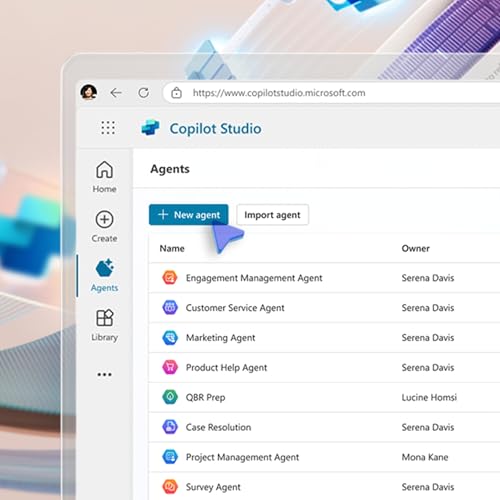
    Microsoft is announcing new autonomous agents that can be used to automate business processes. These agents are powered by AI and are designed to work on behalf of individuals, teams, or functions. Copilot Studio, a tool that allows users to create and manage agents, is being made publicly available next month.

    The blog also highlights ten new autonomous agents being released for Dynamics 365, designed to help sales, service, finance, and supply chain teams. Microsoft is using these agents internally across their own organization, resulting in increased revenue, faster case resolution, and improved conversion rates.


    Show More Show Less
    19 mins