Episodes

  • How One Farmer Rebuilt Soil Health and Tripled Lamb Revenue in Victoria
    Apr 22 2026

    What happens when a sixth-generation farmer inherits degraded land with a soil pH of 4.5 - and decides to fix it without a single bag of synthetic fertiliser? John Stewart of Macedon Ranges Lamb shares the full story: from a superphosphate addiction that was slowly bankrupting the land, to a thriving regenerative lamb business selling 900 animals a year at three times commodity value, direct to consumers at farmers markets across Victoria.

    In this conversation, John unpacks the science behind soil recovery, the economics of vertical integration, and the very practical decisions - rotational grazing, multi-species pasture mixes, biological inputs, low-stress animal handling - that transformed a struggling 202-hectare property in the Macedon Ranges into one of the most compelling regenerative lamb businesses in Australia.

    This isn't theory. John talks about real numbers: what going backwards looked like ($100K+ in extra feed costs during the worst drought in 150 years), what recovery looked like (soil pH from 4.5 to 6.5–7 without lime applications in recent years), and how the direct-to-consumer model changes everything about farm economics.

    Whether you're a farmer considering a regenerative transition, someone dreaming about leaving the city for a rural property, or simply a curious eater who wants to understand where premium lamb actually comes from - this episode is full of hard-won, practical wisdom.

    Key topics covered include: why superphosphate is like a drug for soil; how biological inputs (fish, kelp, worm juice, bacteria) unlock dormant nutrients; rotational grazing with smaller paddocks; Coopworth composite breeding for fertility and meat quality; the White Suffolk and Charolais terminal cross system; lamb survival rates of 95-96% vs an industry average in the 70s; pricing lamb at $700-$750 per animal vs $250-$300 at the livestock market; and why the Macedon Ranges is one of Victoria's best-kept secrets for anyone wanting a working farm close to Melbourne.


    John's farm: https://www.mrlamb.com.au/
    Farm Change Substack: https://farmchange.substack.com

    Subscribe to Farm Change for more conversations with farmers, growers, and land stewards doing things differently across Australia.

    #RegenerativeFarming #LambFarming #MacedonRanges #FarmChange

    Show More Show Less
    1 hr and 17 mins
  • From Food Company CEO to Regenerative Farmer: Stuart Granger's Story
    Apr 19 2026

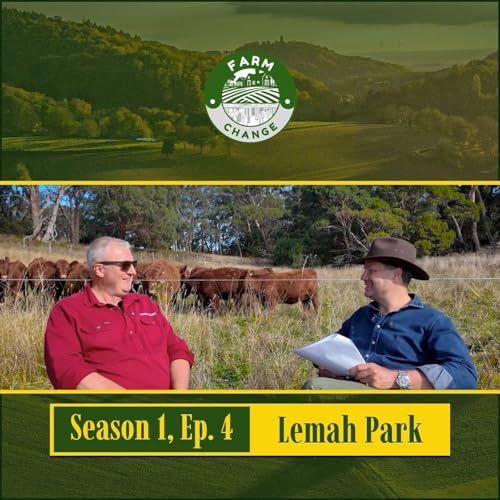
    Stuart Granger spent 35 years at the top of the food industry - including as CEO of George Weston Foods, one of Australasia's largest food manufacturers. Then he walked away to move cattle three to five times a day on a regenerative property in Victoria's Macedon Ranges. This is why he did it, and what he's learned.

    In this episode, we sit down with Stuart at Lemah Park, a 150-acre regenerative farm nestled between the Macedon and Cobaw Ranges, about an hour northeast of Melbourne. Stuart runs Red Angus cattle and Ryeland sheep using adaptive multi-paddock grazing - no pesticides, no artificial fertilisers. The results are measurable: thriving insect diversity, healthy soils, and cattle with coats that, as our host puts it, simply glow.

    Stuart talks candidly about what a career feeding millions of Australians taught him about the food system - and what it didn't prepare him for when he arrived on the land. He reflects on why profitability is the wrong first metric for a regenerative farm, what five-year average cash flow actually means in practice, and why soil carbon is the number he watches most closely.

    We also explore the research happening at Lemah Park: a completed Deakin University biodiversity study comparing regenerative versus conventional grazing across the fence, plus two long-term projects with Melbourne Water/RMIT and the federal government's national farm soil health assessment.

    For those dreaming of making a similar move, Stuart offers a clear-eyed take: know what you're getting into, start with humility, don't copy someone else's system, and - crucially - you don't need to own a farm to get started.

    🌱 Lemah Park: https://www.lemahpark.com.au
    🌱 GROW Regenerative Farming Festival: https://growfestival.au
    🌱 Farm Change on Substack: https://farmchange.substack.com

    Subscribe to Farm Change for more conversations with the people growing, raising, and reimagining food in Australia and beyond.

    #RegenerativeFarming #FarmChange #MacadonRanges

    Show More Show Less
    44 mins
  • From Brunswick Painter to Permaculture Farmer - Matt Daniele's 30-Year Journey to Peace Farm
    Apr 12 2026

    How does a working-class kid from Brunswick become a permaculture farmer in the Yarra Valley, with no farming background, no land, and no plan? Matt Daniele's answer spans 30 years, a shiatsu vision in Melbourne, solo hiking in Tasmania, WWOOFing on organic farms across England and Costa Rica, and co-founding Australia's first certified organic heirloom seedling nursery at CERES.

    This is one of the most honest, grounded conversations we've had on Farm Change. Matt doesn't romanticise the journey. He traces it step by step - the Italian family values that shaped his relationship with land and food, the trades career that funded his freedom, the moment a mountain ash tree hit him like a bolt of energy in a dark Tasmanian auditorium, and how a soccer game led to a career at CERES Brunswick that changed everything.

    If you're thinking about a tree change, a career pivot into farming, or just wondering whether it's possible to build a life around permaculture without a trust fund or a farming family - this one's for you.

    🌱 Topics covered:
    → Growing up Italian in Melbourne - backyard gardens, big families, Brunswick
    → Leaving school at 16, buying property at 25, the Italian family way
    → How CERES Brunswick sparked a life-changing interest in organic food
    → Solo hiking in Tasmania and the moment permaculture clicked
    → How The Alchemist by Paulo Coelho shaped his thinking
    → Completing a Permaculture Design Certificate at Southern Cross Permaculture Institute
    → WWOOFing in Devon, Wales and Costa Rica - learning by doing
    → Co-founding Australia's first certified organic heirloom seedling nursery
    → Teaching horticulture to people with disabilities at CERES
    → Finding Peace Farm in the Yarra Valley through a letterbox drop

    🔗 Links
    Peace Farm (Yarra Junction): https://peacefarm.com.au
    CERES Community Environment Park: https://ceres.org.au
    Yarra Valley ECOSS: https://ecoss.org.au
    Farm Change Substack: https://farmchange.substack.com

    📬 Subscribe to the Farm Change newsletter for stories, ideas and resources from people rebuilding Australia's food systems → https://farmchange.substack.com

    Show More Show Less
    1 hr and 2 mins
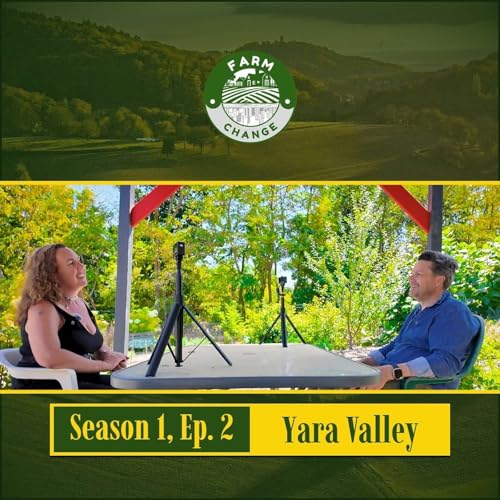
  • From Chicken Factory to Community Hub: Regenerative Living in the Yarra Valley
    Apr 5 2026

    Chelsea has been running ECOSS, a 17-acre community environment hub in Wesburn, Victoria, for over a decade. She also lives at Moora Moora Co-operative Community, one of Australia's oldest intentional communities. In this conversation, she shares what it actually takes to build regenerative community infrastructure: the failures, the grants, the asbestos, and the $50,000 nursery order that never got paid.

    This is one of the most honest conversations we've had about the business side of not-for-profit social enterprise, and what it means to build a life centred on ecological and social sustainability.

    🌱 In this episode you'll learn:

    • How ECOSS transformed a former industrial chicken farm into a thriving permaculture community hub
    • Why the $50,000 nursery order was a classic not-for-profit business mistake, and what the "Madagascar lesson" means for any purpose-driven organisation
    • How the ECOSS disability inclusion garden (funded through NDIS packages) creates a two-way model of community care
    • What 50 years of Moora Moora Co-operative Community teaches us about intentional living that lasts
    • Why farm resilience depends on diversification from Jean-Martin Fortier's intensive model to Joel Salatin's Polyface approach
    • Chelsea's take on why everyone in the city is quietly on a journey out of it

    👤 About Chelsea & ECOSS
    Chelsea is the Executive Officer of ECOSS (Ecological & Social Sustainability), a community environment hub at 711 Old Warburton Rd, Wesburn VIC. ECOSS runs food relief programs, disability inclusion gardens, First Nations cultural events, a weekly produce market, and much more.

    🔗 ECOSS website: https://www.ecoss.org.au

    📬 Subscribe to Farm Change on Substack for weekly posts:
    https://farmchange.substack.com

    Show More Show Less
    1 hr and 3 mins
  • Micro Abattoirs - Ethical Meat, Pastured Pigs | Tammi Jonas
    Mar 30 2026

    Micro abattoirs are a missing link in the global push for ethical meat, animal welfare, and resilient local food systems. In this long-form interview, Tammi Jonas of Jonai Farm (near Daylesford, Victoria, Australia) explains why access to slaughter and processing is the real bottleneck - and how farmer-led models like “community-supported slaughter” can change the game.

    This episode connects the dots between:

    • Micro abattoirs, mobile slaughter units, and on-farm slaughter (what they are and why they matter)
    • The meat processing bottleneck facing small farms
    • Pasture-raised pork, heritage pigs, and farming for animal welfare
    • “Enoughness” - building a viable farm without chasing infinite growth
    • Community resilience, fair labour, and shared infrastructure

    Resources:

    • Jonai Meatsmith Collective / community-supported slaughter: https://jonaifarms.com.au/blog/help-u...

    Subscribe for more real conversations on regenerative farming, ethical meat, and the systems that make small farms viable.

    Farm Change (newsletter): https://farmchange.substack.com/
    Cultured Estates (waitlist): https://www.culturedestates.com/#wait...

    Show More Show Less
    1 hr and 37 mins