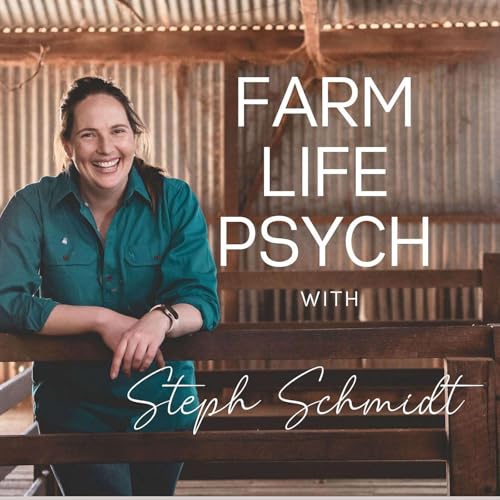
Farm Life Psych with Steph Schmidt cover art

Farm Life Psych with Steph Schmidt

Farm Life Psych with Steph Schmidt

Written by: Steph Schmidt
Listen for free

Navigate farm, family and life at "Farm Life Psych with Steph Schmidt" – it's all about the ups and downs of farming, but with a psychological spin.


I'm Steph Schmidt, juggling life as a psychologist, farmer, wife, and mum.


I'll be chatting about the nitty-gritty of farm life, how our brains handle it, and how to make it all a bit easier (when we can).


Think of this podcast as your go-to spot for stories and lessons from life on the land, accessible and do-able wellbeing tips, and chats with folks who get the farming life, sprinkled with insights on how to keep your head in the game. Whether you’re out in the fields, taking care of animals, or just curious about life on the farm with a mental health twist, you’ve found the right place.


Keen to join the ride and make farm life a bit brighter? Hit subscribe to "Farm Life Psych with Steph Schmidt" and let’s start this journey together. Ready to change the way you think about farming? Subscribe today


Connect with me:

www.stephschmidt.com.au/podcast

LinkedIn - https://www.linkedin.com/in/stephschmidtfarmlifepsych/

Instagram - https://www.instagram.com/stephschmidt.farmlifepsych/

Facebook -https://www.facebook.com/stephschmidtfarmlifepsych

© 2026 Farm Life Psych with Steph Schmidt
Hygiene & Healthy Living Psychology Psychology & Mental Health
Episodes
  • Supporting People Without Fixing Them
    Jun 3 2026
    Send us Fan MailHave you ever wanted to support someone you care about, but found yourself not knowing what to say, what to do, or how to stay in the conversation when things got heavy?In this episode, I’m talking about something that comes up constantly in rural communities and relationships. How do we keep showing up for each other during hard seasons when everyone is already carrying so much? Because the reality is, when people are struggling the most, they can also be the hardest to be around. And that’s not because they’re bad people. It’s because stress, pressure and overwhelm change how we see the world.I run through the four common responses we tend to fall into when someone is hurting. We either try to fix it, fuse with it, fluff it off, or flee from it altogether. And while all of these reactions are human, they don’t always help us or the other person move forward.I share a practical framework called SITT to help us support people in a steadier, more connected way without needing to rescue, solve or carry everything ourselves.This episode is about learning how to hold space for someone without getting swallowed by it. We talk about validation, invisible support, emotional capacity, and why sometimes simply sitting with someone in the hard stuff can be one of the most powerful things we do.I’d love to hear what resonated with you from this episode. What’s your default response when someone around you is struggling? Come and connect with me over on Instagram at @stephschmidt.farmlifepsych and let’s continue the conversation there.What we cover in this episodeSteph introduces the challenge of supporting people during high-pressure seasons Why struggling people can sometimes feel harder to be around Reflections from men’s mental health sessions in rural communities The tension between wanting to support others while protecting our own capacity How stress and overwhelm change the way people think and respond The role psychologists play in holding space without getting pulled into distress Introduction to the “Four Fs” response patterns What “Fixing” looks like in conversations Why jumping straight to solutions can feel invalidating Understanding “Fusing” and emotional contagion How people can get stuck co-ruminating together “Fluffing” things off through reassurance, jokes or minimising “Fleeing” conversations and avoiding discomfort Why all four responses are human and protective Introducing the SITT framework as an alternative “See”: validating and noticing someone’s distress The importance of reflecting without immediately fixing “Invite”: gently helping someone broaden perspective Asking better check-in questions “Take Action”: practical support and connection The power of invisible support in rural communities Everyday examples of invisible support “Tolerate”: sitting with discomfort without needing all the answers Recognising your own emotional capacity and limitations Steph’s farm-style analogy about “sitting in the shit” with someone Why support doesn’t mean fixing people Final reflections on supporting others with steadiness and careConnect with StephSteph's websiteDigital Hub for Farmers: farmlifehandbook.com.au Steph on FacebookSteph on LinkedInSteph on InstagramSteph's upcoming eventsThe Farm Life Psych podcast shares general information and personal reflections to support wellbeing — it isn't therapy, counselling, or personal advice, and it's not a substitute for support from a qualified professional. If something's sitting heavily with you, please reach out to your GP, a psychologist, or a trusted support service. If you're in crisis or need to talk to someone now, contact Lifeline on 13 11 14. You're not alone, and reaching out is a strength.
    Show More Show Less
    19 mins
  • Take the smallest step - Finding Your Way Through Heavy Seasons
    May 20 2026

    Send us Fan Mail

    Ever had one of those weeks where everything seems to go wrong, and you’re still expected to keep showing up anyway?

    This week I’m sharing a very real, very unpolished reflection on stress, overwhelm, and the pressure so many of us are carrying right now on the land. After recording this episode three times thanks to technology dramas, I decided to stop aiming for perfect and simply have an honest conversation about what helps when life feels heavy.

    I talk through some of the practical tools I’ve been sharing in my recent “What the F?” sessions with farmers across Australia, including the Circle of Control, moving towards rather than away from our values, and why sometimes the most important question we can ask is: What can I do in the next five minutes?

    We talk about how stress pulls us into autopilot, why tiny actions matter more than big fixes, and how giving ourselves a bit of grace can help us step out of shame spirals and back into what matters most.

    This episode is a reminder that you don’t have to hold it all perfectly. You can be exhausted AND still care deeply. You can feel overwhelmed AND keep taking the next small step. If you’re carrying a lot right now, I hope this conversation helps you feel a little less alone and gives you a couple of practical anchors to come back to.

    I’d love to hear what resonated with you from this episode. What’s one small thing helping you get through this season right now? Come and connect with me over on Instagram @stephschmidt.farmlifepsych

    What we cover in this episode

    • Steph shares the chaos of recording this episode three times
    • Reflections on pressure and overwhelm in agriculture right now
    • Overview of the “What the F?” online sessions
    • The Circle of Control explained
    • What’s in our control vs outside our control
    • Focusing on the next five minutes instead of the whole season
    • Practical examples from seeding, lambing and farm life
    • Moving towards values instead of away from discomfort
    • Stress, autopilot, and noticing unhelpful coping habits
    • Small steps that reconnect us with what matters
    • Giving ourselves grace when we don’t show up perfectly
    • Parenting, capacity, and realistic self-compassion
    • The tension between competing values and priorities
    • Final reflections on stress, imperfection, and next steps


    Connect with Steph

    • Steph's website
    • Digital Hub for Farmers: farmlifehandbook.com.au
    • Steph on Facebook
    • Steph on LinkedIn
    • Steph on Instagram
    • Steph's upcoming events

    The Farm Life Psych podcast shares general information and personal reflections to support wellbeing — it isn't therapy, counselling, or personal advice, and it's not a substitute for support from a qualified professional. If something's sitting heavily with you, please reach out to your GP, a psychologist, or a trusted support service. If you're in crisis or need to talk to someone now, contact Lifeline on 13 11 14. You're not alone, and reaching out is a strength.

    Show More Show Less
    18 mins
  • Navigating Farming Career Transitions & Ask Steph
    May 6 2026

    Send us Fan Mail

    Why do we know exactly what needs to change and still feel completely stuck?

    If you’ve ever had that thought of “if nothing changes, nothing changes” sitting in the back of your mind, but still can’t quite take the step forward, this episode will meet you right there. I talk through why change isn’t just about willpower. It’s about capacity. And when you’re already stretched thin on the farm, at home, or mentally, change can feel almost impossible.

    I walk you through what’s happening in your brain when you’re under stress, and why you might keep falling back into the same patterns even when you know they’re not helping. I also share a practical framework, the Stages of Change model, to help you understand where you’re at and what your next small step could look like.

    This episode isn’t about pushing harder. It’s about making sense of why things feel stuck and finding a way forward that fits your life right now.

    What’s one change you’ve been thinking about but haven’t quite made yet?


    I’d love to hear what came up for you in this episode. Come and share it with me over on Instagram @stephschmidt.farmlifepsych


    What we cover in this episode

    • The phrase “if nothing changes, nothing changes” and why it can feel frustrating
    • Why knowing what to do doesn’t mean we’ll do it
    • How habits form in the brain and why change feels effortful
    • The impact of stress and low capacity on behaviour change
    • “Limp mode” and how stress shuts down higher thinking
    • Why we default to autopilot under pressure
    • Giving yourself permission and grace when change feels hard
    • Introduction to the Stages of Change model
    • Pre-contemplation stage and lack of awareness
    • Contemplation stage and feeling stuck in indecision
    • Why many people sit in contemplation for long periods
    • Practical tools for the contemplation stage
    • Moving into preparation and setting realistic plans
    • Common mistake of skipping preparation
    • Action stage and maintaining behaviour change
    • Importance of reviewing what gets in the way

    Connect with Steph

    • Steph's website
    • Digital Hub for Farmers: farmlifehandbook.com.au
    • Steph on Facebook
    • Steph on LinkedIn
    • Steph on Instagram
    • Steph's upcoming events

    The Farm Life Psych podcast shares general information and personal reflections to support wellbeing — it isn't therapy, counselling, or personal advice, and it's not a substitute for support from a qualified professional. If something's sitting heavily with you, please reach out to your GP, a psychologist, or a trusted support service. If you're in crisis or need to talk to someone now, contact Lifeline on 13 11 14. You're not alone, and reaching out is a strength.

    Show More Show Less
    29 mins
adbl_web_anon_alc_button_suppression_t1
No reviews yet