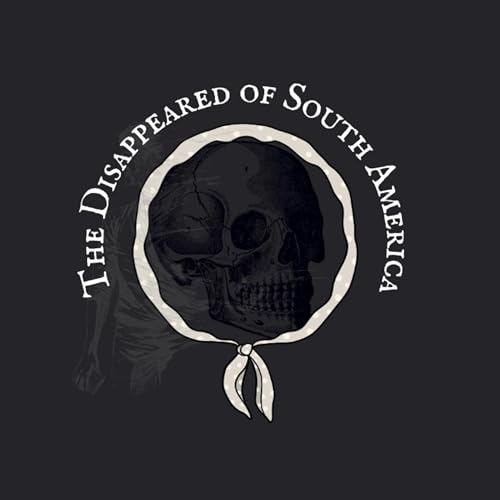
• When the Dead Speak: Memory, Forensic Anthropology, and Why Bearing Witness Still Matters
    Jan 19 2026

    This episode discusses disappearance, historical violence, and grief in a non-graphic but emotionally heavy context. Please take care of yourself while listening.Welcome to Field Notes from the Dead, a podcast exploring forensic anthropology, archaeology, and the human stories that shape how we understand death, memory, and dignity.


    In this episode, Ki Roberts examines the real-world origins of forensic anthropology through the history of the desaparecidos in South America, the Madres de Plaza de Mayo, and the emergence of forensic missions dedicated to truth and identification.


    This episode explores:

    • Disappearance as a historical and social reality

    • How families preserved memory when systems failed

    • The ethical responsibilities of forensic anthropologists

    • Why identification matters to the living

    • Why this work still matters in modern missing persons cases


    This is a trauma-informed, educational episode grounded in history and ethics, designed for curious learners, students, writers, and anyone interested in the human side of science.

    forensic anthropology
    desaparecidos history
    madres de plaza de mayo
    human rights anthropology
    memory studies
    forensic science and justice
    ethical true crime
    anthropology podcast
    forensic archaeology
    history of forensic science
    trauma-informed storytelling
    missing persons history
    field notes from the dead
    anthropology documentary
    death and memory


    Show More Show Less
    17 mins
  • How to Write Trauma Realistically
    Jan 12 2026

    Writing trauma realistically doesn’t mean being graphic.

    In this episode, we explore how trauma actually works, how it shows up in behavior and memory, and how writers and worldbuilders can portray it with care — without voyeurism or exploitation.

    This gentle, trauma-informed conversation focuses on:

    • The difference between the traumatic event and its aftermath

    • Common mistakes in trauma writing

    • Writing survivor agency and adaptation

    • How trauma shapes cultures, not just individuals

    A thoughtful episode for storytellers who want their work to feel real, respectful, and human.


    Fieldnotesofthedead.com

    Tiktock: Field Notes From The Dead

    Youtube: Field Notes From The Dead


    Join the email list for updates and exclusive free PDFS! #writingtrauma

    #traumainformedwriting

    #writerstips

    #worldbuilding

    #storytelling

    #writing #violence

    How to write trauma realistically

    #fantasyworldbuilding

    #dnd

    field notes from the dead

    Show More Show Less
    10 mins
  • Trepanation is the oldest known surgical procedure
    Jan 5 2026

    In this episode, we explore how ancient peoples across the world deliberately opened the skull, how we know many patients survived, and what trepanation reveals about healing, ritual, and community care.

    Using osteological evidence and archaeological context, this episode reframes trepanation not as madness or violence, but as effort, knowledge, and hope.

    Show More Show Less
    8 mins
  • Cannibalism in the Archaeological Record Survival, Ritual, and the Stories We Get Wrong
    Dec 30 2025

    Content Note:

    This episode discusses cannibalism in the archaeological record from an educational and anthropological perspective. The discussion is non-graphic and focuses on evidence, context, and ethics, but the topic may be distressing for some listeners. Please listen with care.

    Cannibalism is often portrayed as monstrous, but the archaeological record tells a more complicated story.


    In this episode, we explore cannibalism in the archaeological record, including survival cannibalism during famine, ritualized practices, and how archaeologists identify cannibalism through osteological evidence such as cut marks, percussion damage, and marrow extraction.


    Using examples like Gough’s Cave, this episode examines why cannibalism occurs under extreme conditions and why modern assumptions often misunderstand ancient behavior.


    An ethical, evidence-based exploration of one of archaeology’s most challenging topics.


    You can reach me at:

    YouTube: Field Notes From The Dead

    TikTok: Fieldnotedfromthedead

    website: fieldnotesfromthedead.com


    Show More Show Less
    13 mins
  • EP.4 How Bones Tell Time: A Writer’s Guide to Trauma & Decomposition
    Dec 22 2025

    How do bones reveal when something happened?


    In this episode, we break down how forensic anthropologists distinguish between antemortem, perimortem, and postmortem trauma and how the entire body acts as a clock through the decomposition process.


    A clear, friendly, writer-focused guide to:


    Healing vs fresh injuries


    Bone behavior at the moment of death


    Environmental damage after death


    The full decomposition timeline


    Taphonomy (insects, scavengers, soil, weather)


    How to use this knowledge in fiction, D&D, mysteries, and worldbuilding


    If you’re a storyteller who wants your scenes to feel real without being graphic, this episode is for you.

    Ethical, accessible, and grounded in forensic anthropology.

    Show More Show Less
    9 mins
  • Epi:3 DEVIANT BURIALS: WHAT THE DEAD TELL US ABOUT FEAR, POWER & TABOO
    Dec 15 2025

    Why were some people in the past buried with stones over their necks?
    Why were some pinned down, bound, or placed face down in graves?
    And were they really “witches,” “vampires,” or “criminals”… or something far more complicated?

    In this episode, we wander into the world of deviant burials: archaeological graves that break the “rules” of how people were normally buried. These unusual burials give us a window into fear, belief systems, social control, and the boundaries of community within ancient societies.

    From medieval “vampire burials” in Eastern Europe to face-down interments across the globe, to Iron Age bodies weighted with stones, and even colonial American burials with decapitation or “binding,” we explore what these choices really meant. Spoiler: it’s often less about “punishing monsters” and more about social anxiety, disease, marginalization, and ritual protection.

    Featuring insights for:

    • Writers and world-builders

    • Students of archaeology & anthropology

    • True crime fans

    • Horror creators

    • Anyone fascinated by how societies manage fear

    We’ll dive into what deviant burials actually tell us, and why the dead who break the rules continue to haunt our imagination today.

    You can reach me at:motherofwolves4@gmail.com

    Fieldnotesofthedead @ TikTok and Youtube

    feildnotesfromthedead.com

    Show More Show Less
    9 mins
  • Ep: 2 Cheddar Man: Race, Identity, and Ancient DNA
    Dec 9 2025

    Cheddar Man, one of the oldest nearly complete skeletons in Britain; became a cultural flashpoint when ancient DNA revealed he likely had dark skin, dark curls, and blue or green eyes. But what does his genome really tell us about identity, migration, and early post-Ice-Age Europe? And why did the public react so strongly to a scientific finding that surprised almost no anthropologist?

    In this episode, Ki explores:

    The discovery of Cheddar Man in Gough’s Cave

    How ancient DNA was extracted from the petrous bone

    What his traits actually mean (and don’t mean)

    How early European hunter-gatherers really looked

    Why ancient DNA challenges modern identity narratives

    The difference between ancestry and nationalism

    What this 10,000-year-old man teaches us about the human story

    Cheddar Man isn’t a symbol or a controversy; he’s a window into a world where race didn’t exist, borders hadn’t been imagined, and identity meant something very different than it does today.

    📧 Contact: motherofwolves4@gmail.com

    🌐 Website: Field Notes from the Dead

    🎥 YouTube: Field Notes from the Dead

    📱 TikTok: @FieldNotesFromTheDead


    Cheddar Man, ancient DNA, Mesolithic Britain, early European hunter-gatherers, skin pigmentation evolution, Gough’s Cave, British archaeology, race and identity, anthropology podcast, Field Notes from the Dead, forensic anthropology, ancient genomics, early Britain, Ki Roberts

    Show More Show Less
    5 mins
  • Epi 1: The Monk With the Healed Sword Wound
    Dec 4 2025

    In this debut episode of Field Notes from the Dead, we open the case file of a medieval monk whose skull carries the unmistakable mark of a sword strike, a blow he survived long enough for the bone to heal.


    This wound isn’t just evidence of violence.

    It’s evidence of care, survival, and community in a world far more dangerous and far more human than popular history suggests.


    Join Ki as she explores:


    what daily life inside a medieval monastery actually looked like


    why monks were not always sheltered scholars


    how forensic anthropologists identify sharp-force trauma


    what bone healing reveals about long-term survival


    the cultural and emotional meaning of a healed wound


    the ways violence and compassion coexist in the archaeological record


    Through the lens of one man’s skull, we dive into the science of trauma, the history of medieval conflict, and the deeply human stories bones carry through time.

    📧 Contact: motherofwolves4@gmail.com

    🌐 Website: fieldnotesfromthedead.com

    🎥 YouTube: Field Notes from the Dead

    📱 TikTok: @FieldNotesFromTheDead

    Show More Show Less
    9 mins