Episodes

  • Made From The Soil - Freya Mulvey On The Source Of Life
    Nov 17 2026

    Today’s guest is someone who’s paid and paying attention to one of the sacred elements of all life on this planet I and many others barely notice - soil. Freya Mulvey is a senior lawyer and environmental enthusiast, to put it mildly. She believes soil and landscape management are key to mitigating heat and stabilising our climate and is passionate about implementing better soil and landscape regulation into Australia’s policy and legal frameworks.

    What does that even mean? And what is soil? It’s everywhere, but how is there so little attention paid to the element that provides all of us with most of our nutrition, our health, our vitality. That every species - whether plant or animal relies upon. How can we know so little? How can we not care in comparison to water or air quality? That’s what I realised listening to Freya’s incredible, award-winning podcast series Soil: Rewilding The Underground, as well as her work as a Churchill Trust Fellow.

    Much is made of the slim envelope of atmosphere that keeps us safe on this planet from the solar systems ultraviolet radiation. Even slimmer though is the blanket of soil we and all other life relies upon. Freya’s work across the legal system, as an advocate and researcher and her brilliant content creation is changing that, and I’m sure after this you’ll be diving headfirst into her six part pod series and the magical and mysterious world of soil.

    In this episode we cover a fair bit of ground - from the nutrient density differences between the same carrots grown in different conditions, regen ag, emerging global changes in how soil is considered, soil as a necessary climate change mitigation strategy, the potential transformative role of landscape assessments as part of any land sale, and one of my favourite topics, funding nature.

    I'm heading to the Investor Group On Climate Change Summit on November 24 and 25. See you there. Use code SUMMIT26GRP for 10% off when you get three or more tickets.

    Naidiri Marine Biodiversity Park crowdfunding campaign - we can get them to $5,000!

    Support Dharawal Spirits. Drink country to save country.

    Enjoyed this conversation? Check out Altiorem for your episode companion guide.

    Pricing in resilience: The future of financial services for soil health

    The shrinking buffer: Climate change and the fragility of food

    Regenerative agriculture: Moving from ambition to credibility

    Send me a message

    Thanks for listening. Follow Finding Nature on Instagram

    Show More Show Less
    1 hr and 18 mins
  • Funding Destruction - Pablo Berrutti On Unwillingness To Change Even In The Age Of Consequences
    Nov 10 2026

    This week I am very excited to be bringing back onto the show one of my favourite people and someone’s been a tremendous teacher and guide to me professionally over the last few years. Pablo Berrutti was one of the first guests on the show back in early 2024 and he’s back today to share about the myriad projects and pieces of work he’s been involved with this year.

    Most notably, he’s been working with the Australian Conservation Foundation on their work in making visible the shocking but sadly not surprising work Australia’s banks - especially the Commonwealth Bank and ANZ - have been up to in terms of funding Australia’s world leading deforestation efforts. From the recent shareholder resolution asking CBA to only come up with a plan for how they would rule out deforestation to the more pernicious aspects of gaps in governance, decision making and a fundamental unwillingness to do what they espouse their purpose to be. We also chat about the depths of denial and delusion that is the current norm in Australia’s financial services sector over the lack of adequate insurance in the economy, the disinterest from investors and governments to address either of these issues, and how without willingness, despite now living in the age of consequences and all we have to lose, inaction remains the primary path of action on these two areas of systemic financial risk.

    I have an enormous respect and admiration for Pablo and this conversation was another gift for me in learning about his deep knowledge about systems thinking and leverage points. There is much in this episode for all us in understanding the current state of thinking and action around information disclosure, data collection and paradigm shifts. We chat about our shared need for connection, to re-discover our own careers in mid-life and the challenges and opportunities we’ve been afforded to pursue ventures of our making in recent years. For him Altiorem and for me Finding Nature, the joys and existential pangs of going for it, the necessity for community and ultimately, a willingness to be and make what you think is both needed and you’re passionate about.

    I'm heading to the Investor Group On Climate Change Summit on November 24 and 25. See you there. Use code SUMMIT26GRP for 10% off when you get three or more tickets.

    Naidiri Marine Biodiversity Park crowdfunding campaign - we can get them to $5,000!

    Support Dharawal Spirits. Drink country to save country.

    Enjoyed this conversation? Check out Altiorem for your episode companion guide.

    Risky business: How Australian financial institutions are managing nature-related risks and opportunities

    Corporate engagement guide: Addressing deforestation in Australia

    Integrating Nature into Finance: Laying the foundations to expand the Australian Sustainable Finance Taxonomy to drive positive environmental outcomes in the agriculture and land sectors

    Send me a message

    Thanks for listening. Follow Finding Nature on Instagram

    Show More Show Less
    1 hr and 56 mins
  • Why Everything Feels So Broken - Gary Gerstle On This Endless Political Order And How To Build The Next One
    Nov 3 2026

    Now today’s episode is timed somewhat perfectly. With the US midterms under way and the results unknown and their ramifications entirely unknown, today’s guest is someone who can help us all better appreciate the broader context and historical moment we are in, as well as how we got to now. Gary Gerstle is an American historian and Emeritus Paul Mellon Professor of American History at the University of Cambridge and an Emeritus Fellow of Sidney Sussex College. His work in studying and publishing a history of US labor and political economy has resulted in him publishing ten books and seen his writing appear in The Guardian, The New Statesman and The Atlantic.

    Gary is recognised as one of the most important voices in this field, and his work in defining political orders by studying the origins, evolution and collapse of the new deal and then neoliberalism is seminal in this moment. Gary’s most recent book - The Rise and Fall of Neoliberalism, sets out a detailed account that gives shape and context to this moment, and gave me a clarity for why now, and the years of the recent past, have felt so fractious and fraught. I know I lay claim to a new vital book to go out and get, but if you’re interested in why so much feels stuck, uncertain and confusing right now, I can’t recommend more highly getting yourself a copy of Gary’s latest book.

    This is a really wide ranging conversation, and deliberately so. With so much in our world - from inflation to addressing climate change to attitudes towards migrants and migration depending on US political outcomes - I wanted to delve deep into Gary’s expertise. From the conditions required to establish a new political order, what one even is and requires, how they shape cultural and society, the difficulty of seeing beyond electoral cycles, the potential for the US to slip into authoritarianism in coming years, the decades of time it often takes form and establish new ideas that move from the periphery to the role of all of us and institutions to reconstitute solidarity not just as a stated virtue but as a dedicated practice with meaningful, enduring structural support.

    I'm heading to the Investor Group On Climate Change Summit on November 24 and 25. See you there. Use code SUMMIT26GRP for 10% off when you get three or more tickets.

    Naidiri Marine Biodiversity Park crowdfunding campaign - we can get them to $5,000!

    Support Dharawal Spirits. Drink country to save country.

    Enjoyed this conversation? Check out Altiorem for your episode companion guide.

    Five Truths We Can No Longer Ignore

    Holding the Line: A Playbook for ESG Leadership in Hostile Terrain

    ESG in the Trump era: What’s next?

    Send me a message

    Thanks for listening. Follow Finding Nature on Instagram

    Show More Show Less
    1 hr and 40 mins
  • Manoa Duwai Is On A Mission - Restoring Pacific Coral Reefs One Day At A Time
    Oct 27 2026
    So what did you do when you met someone and you hear their story and it humbles you to your core? When you learn and feel firsthand the experience of another human that acts as a cattle prod to make clear that the path you’ve been on is no longer the path you can be on? That’s what today’s guest - Manoa Duwai - did to me when we spoke. Today I bring you a conversation that has unsettled and inspired me in a way none of the other 100 plus episodes of this show has. I am changed having met Manoa, and I’m proud to be sharing his story and remarkable work with you today.Manoa is a Fijian man who was recently in Sydney to spread the word of the work he has been and is doing in his village of Naidiri. To help set the scene for the episode, let me help you picture Manoa. He’s well over six feet tall and in his prime was on the cusp of representing one of the most incredible sporting teams on the planet - the Fijian Rugby 7s team. He’s big and he’s fit, and he’s also not the archetype of who I and probably many other imagine when you think about those who are making an outsized impact on the state of the planet’s environment. That’s my own bias speaking, and with some sporting background, it’s surprising as they are not two worlds that overlap too often. In Manoa those worlds do, and I suspect his athletic prowess and everything that comes with what’s required to be a top level sportsperson is what’s served him well over the last 17 years in building the Naidiri Marine Biodiversity Park - perseverance, discipline, a zealous commitment to a goal and the ability to lead and build a great team.So I’ve mentioned the Naidiri Marine Biodiversity Park and that is what this conversation focuses on - the 17 year quest Manoa has been on to regenerate the coral system that sits on the shore to his village. It traverses the night where he and his best mate came back from rugby to find only rice and tea for dinner and their subsequent failed effort to catch some fish. This was the spark that altered his trajectory, the village of Naidiri and has now seen the marine park recognised by both the Fijian Government and the UN as a site of environmental value. What started by blocking off a 30 by 40 metre area with noone’s knowledge nor permission to what is now a site measuring over 28,000 square kilometres of protected reef. We chat about seeking forgiveness instead of permission, the work this has involved and how climate change is upending this work far faster than he and others can keep up.The second part of today’s episode is with sibling duo Gauri and Akshay Salunkhe who for the last couple of years have been working with Manoa on his work in Fiji. That part of today’s show extends on how remarkable Manoa and the villagers work has been, the lack of resources they’ve had and the way all of us can get involved and help from afar.And on how you and we can all help, Gauri and Akshay are running a crowdfunding campaign to help support Manoa and others with their mission, and I highly encourage you to check it out and to give what you can. They’re seeking to raise $5000, and are currently sitting just below the one thousand mark. So Finding Nature listener, here’s my call to action and direct appeal to you. Over the next four weeks I’m going to be talking about this campaign here and on all the various social media places, and I think we can get to that $5000 figure. If you’re already sold - pause this, go to the link in the show notes, and donate. If you still need persuasion, hopefully after this episode you’re hitting the link and contributing to this community’s goal of getting Manoa, Gauri and Akshay $5000 that will go an enormous way to contributing to the work they have upcoming in transplanting corals that are going to be affected by huge El Niño heat, as well as the myriad youth programs they have going on. $5000 - we can do this.Ok Manoa, as well as Gauri and Akshay. The question I have to you is a simple one - how willing would you be to protect the place you love the most? Because the willingness of these three is nothing short of astonishing. I'm heading to the Investor Group On Climate Change Summit on November 24 and 25. See you there. Use code SUMMIT26GRP for 10% off when you get three or more tickets. Naidiri Marine Biodiversity Park crowdfunding campaign - we can get them to $5,000!Support Dharawal Spirits. Drink country to save country. Enjoyed this conversation? Check out Altiorem for your episode companion guide. Diving deep: Finance, ocean pollution and coastal resilienceSuper-duper El Nino and the bigger problemOcean investment protocol: 2026 revised draft for consultation: A multi-stakeholder plan to enable funding for the Sustainable Ocean EconomyCheck out everything Finding Nature. Send me a messageThanks for listening. Follow Finding Nature on Instagram
    Show More Show Less
    1 hr and 47 mins
  • Reclaiming Agency In An Age Of AI Boosterism - Aubrey Blanche On Where To Start, What To Do And Valuing Dignity
    Oct 20 2026

    This week on the show is Aubrey Blanche. Aubrey is somewhat of a professional enigma - she’s lived multiple careers already, from time inside big tech and early stage investing, and now she’s at the Ethics Centre, while she’s an expert in human resources, diversity and inclusion and ethical AI. Aubrey has also established one of Australia’s largest regular AI newsletters and her writing has been featured in publications like Wired, The Wall Street Journal and Australian Financial Review.

    I wanted to get Aubrey on the show to chat about her myriad professional and personal experiences, to try and chart a course to understand the thread that runs through the life of someone with such diverse perspectives and experiences, but also to chat about her work in recent years in advising organisations with their own artificial intelligence deployment and implementation. If any organisation in Australia who may have a clue how to do this - and not focussing on the false flag of productivity and hooked by the marketing spin of large language model AI - it’d be The Ethics Centre, an organisation I have a huge regard for. Aubrey’s work there, and her background more broadly, struck me as resonate considering it was framed as requiring design with the affected people, to question its value and understand how it could be useful, but also that conscientious objection and the right to opt out is a legitimate option too.

    So this is a conversation that I hope does justice to Aubrey’s personality and spirit - it traverses everything from pain and trauma to healthy relationships and the need to undertake ongoing honest self appraisal, this moment of deranged LLM AI tech bro bubblemaxxing and how organisations fixated on using it for short term productivitymaxxing benefits are likely in for a rocky future. Fundamentally though, this is a conversation about values and what we value - from ourselves in this moment of job uncertainty to how we uphold the dignity of humanity to reprise a spirit of custodianship and responsibility for life more broadly.


    Some extra reading relevant to this episode from our friends at Altiorem.

    AI systems at work: A changing psychosocial work environment

    AI-driven productivity gains enable more CO₂ emissions than they avoid in a global energy–economy model

    Top 10 principles for ethical artificial intelligence


    Welcome to Drinking Country To Save Country. Check out Dharawal Spirits, and grab yourself something - drink responsibly!!!


    Check out our upcoming events, get all the info and grab your tickets.

    Events

    Send me a message

    Thanks for listening. Follow Finding Nature on Instagram

    Show More Show Less
    1 hr and 36 mins
  • Impermanence And Uncertainty - Geoff Mann On Anticipating Futures
    Oct 13 2026

    Today’s guest is Geoff Mann. Geoff is a Canadian political economist who was recently in town and I loved having the opportunity to not only sit down and record this conversation, but to indulge in the breadth and depth of his unique background. His research, teaching and books have intersected around political economy, political theory and the history of ideas, with much of his writings in recent years delving into climate change, macroeconomic crisis, the far right and fascist politics, as well as how uncertainty underpins much of this. How do we make sense of what we don’t understand, or what has never happened before? What gives actual confidence to understand what could occur, what lessons do the past offer, how to identify false and fake confidence, what role does power play, how is our political system set up to deal with any form of complexity and uncertainty? These and much more were questions Geoff’s work has explored.

    What struck me though before and then meeting Geoff was how adamant he was in the necessity for humility in this moment. A climate crisis, wars, shifting geopolitical currents - yet many still stand up and let us know that they’ve seen the future, that they know - with a bizarre level of certainty - what all of this means. Chatting with Geoff I realised that the natural state of impermanence of living each day - which I do my best to ignore and hope to impose my own grand plans of control over regardless of how delusional that is - that impermanence is perhaps one of the most important concepts for our society to come to grips with today. How can we predict the impacts of climate change in economic models that weren’t built for that with any sense of certainty and think they give us the answer for what’s to come - when we have never in human history experienced anything like this climate ever, and when it will only become more volatile, unstable and unknown? Yet we try. And aren’t the consultants and lawyers enjoying that cash cow at the moment helping client after client deliver integrated climate assessment models that don’t in any way reflect the reality of disaster and creeping ecological changes underway in every corner of the planet.

    We cover so much in this conversation. The malady of mainstream economic theory and modelling to deal with a whole new reality, the role of story in beginning to imagine and anticipate potential futures, how to think about trade-offs, the potential for a climate leviathan or climate Mao, and the necessity for modesty, generosity and curiosity to be infused in any form of inquiry or action.

    Some extra reading relevant to this episode from our friends at Altiorem.

    The Climate Average Trap

    Prosperity without growth: The transition to a sustainable economy

    Rewiring finance – a new approach to financing a sustainable economy


    Check out our upcoming events, get all the info and grab your tickets.

    Events


    Send me a message

    Thanks for listening. Follow Finding Nature on Instagram

    Show More Show Less
    1 hr and 45 mins
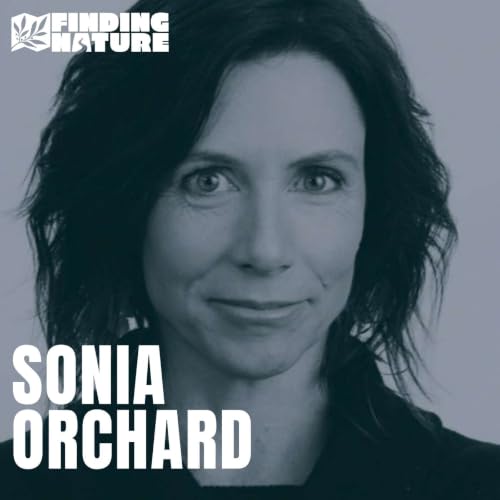
  • One Of Australia's Illnesses - Sonia Orchard On What Kids, And All People, Need
    Oct 6 2026

    Today I’m particularly honoured and humbled by today’s guest, Sonia Orchard. Now Sonia isn’t a name most people would recognise, but her story likely is, which is exactly why she’s on the show and why I wanted to speak with her. 60% of Australian kids are reported to experience some form of abuse or neglect. 1 in 10 Australian men admitted to committing a sexual offence against a child. NSW police are responding to an incident of domestic violence every three minutes. These are horrifying, harrowing, overwhelming statistics, just three of them too, and yet for the most part everything just carries on. What happened to children being the most important thing in our society? How can there be such a pervasiveness of something so awful? That’s why Sonia is on the show, to discuss these questions and much more.

    Sonia is the author of two books, her memoir Groomed, which tells the story of her own childhood sexual abuse by a man ten years her senior, as well as the most recent In The National Interest titled Before the Harm: Preventing Abuse, Protecting Children. The latter is an enlightening and shocking read, something I implore everyone out there to go and get a copy of. At the heart of her writing lies one simple question - we know how to prevent harm to children, and yet we don’t, so why not? As difficult as the book sounds, and as daunting as the subject matter is, the book is optimistic, determined by nature and a call to arms to every single one of us - as citizens, parents, colleagues, family members, voters, leaders - action prevents harm to kids. It’s available and it’s available now.

    There is much Sonia and I chat about here - from the current status of what is going on with how kids are harmed to the drivers of that, the behaviours of perpetrators, the victim victimiser paradigm, the need for moral courage in not waiting at the bottom of the cliff to try and rescue those being abused but go way upstream and examine the health of a society when 60% of its children are reported as abused or neglected. From what we can do everyday practically to the structural reforms and types of leadership needed. This was an incredibly powerful experience for me, and I was compelled to share a little of my own experience in the context of this topic too and how it’s affected me both as a child and now navigating life as a parent.

    Preventing harms to kids - we all want it. What do we need to change to do that? Everything.

    Some extra reading relevant to this episode from our friends at Altiorem.

    A roadmap for private investors: Investing to address gender-based violence

    Our Watch: Change the story and key frameworks

    Looking beyond traditional gender lens investing approaches using Access Impact Framework in support of SDG 5: Gender equality

    Send me a message

    Thanks for listening. Follow Finding Nature on Instagram

    Show More Show Less
    1 hr and 18 mins
  • We Are The Existential Risk - No-one Knows AI Like Toby Walsh
    Sep 29 2026

    If there is one topic that has come to dominate this moment, it is artificial intelligence. Is it going to wipe us out? Will I lose my job? Is a data centre going up in my neighbourhood? Why are all these tech bros so incapable of sounding anything like a normal, sane, relatable person? Why do I have to hear so much about AI? Can’t I just have my connection and attention and identity back, please?

    I’m an avowed cynic of the broad set of technologies AI represents, and I’ve been fortunate to learn from some of the best minds in the world on this show as to how these technologies are warping and distorting our relationship to ourselves, each other, work, identity, even reality itself. People like Emily M Bender and Nina Jankowicz have made clear the hazards and harms of a technology we seemingly have no innate capability to withstand - like the Wizard of Oz, it’s omniscient existence and self-proclaimed extraordinary potential has our society captured. Haven’t we seen this all before though? Weren’t there warnings about climate change in the 1960s we’ve ignored ever since? What’s that saying about power tending to corrupt, and absolute power corrupting absolutely? Aren’t we observing that with a tiny number of companies seemingly holding all the chips against us?

    Yes, yes, I sound like a luddite. I’m obviously extraordinarily anti-progress, anti jobs and anti growth. Also a hypocrite too as I get to enjoy the quality of life I do today because of the evolution of technology over all of human history. Well, I’d love to believe AI could be helpful and valuable so I was very excited to invite Toby Walsh onto the show.

    Just about all Australians probably recognise Toby now - he’s become not just a prolific author helping to make sense of this moment after decades working in and leading University of New South Wales’ AI Institute, but he’s featured regularly on traditional and digital media. He addressed the National Press Club earlier this year, was a featured expert in Channel Seven’s AI reporting, and is regularly popping up on the ABC, SBS the BBC, CNN, The Guardian, NPR and The New York Times.

    If there is anyone in Australia to learn and hear from about not just the current world of AI, but also its history and heritage and where this all may be going, it’s Toby. His most recent book, God AI; Boom or Doom? What to expect when machines outsmart us examines the existential risk of AI. As we’ve heard repeatedly in recent weeks, some techbrogods are foreshadowing the end of all human life by the end of this decade! What does that even mean, how could it even be possible, and what other extinctions have occurred over the course of history that offer precedent to understand if these apocalyptic warnings are even credible.

    We also get into much else - the history of AI to help understand this moment, the potential of ubiquitous intelligence, use cases where it is proving to be helpful, but also how humans are so ill-prepared to handle something so compelling and convenient and laden with potential - maybe the AI prompted to maximise paperclip production and ends up causing humanity’s extinction is all just a furphy, and we’ll end up degrading, eroding and eventually fracturing our ability to relate and cohere together in drastic and irreparable ways.

    Some extra reading relevant to this episode from our friends at Altiorem.

    Artificial intelligence and the future of finance: A framework for structural change

    Modeling ghost GDP: Macro-financial risk and diversified portfolios in the age of artificial intelligence, automation, and populism

    Artificial intelligence and human rights investor toolkit

    Check out Planet Protein and get 10% off when you sign up.

    Send me a message

    Thanks for listening. Follow Finding Nature on Instagram

    Show More Show Less
    1 hr and 22 mins