


Forecasting Impact
Failed to add items
Add to cart failed.
Add to wishlist failed.
Remove from wishlist failed.
Follow podcast failed
Unfollow podcast failed

Forecasting Impact
-
Narrated by:
-
Written by:
-
Forecasting Impact
About this listen
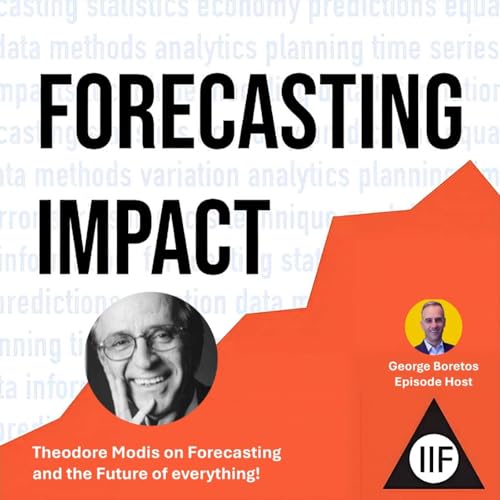
Forecasting Impact is a bimonthly podcast that aims to disseminate the science and practice of forecasting by introducing prominent academics, practitioners, and visionaries in the forecasting domain. Our vision is to help grow the forecasting community, foster collaboration between academia, industry, and governments, and promote scientific forecasting and good practices.
We will discuss a range of forecasting topics in economics, supply chain, energy, social goods, AI, machine learning, data analytics, education, healthcare, and more.
Forecasting Impact episodes are also available on the IIF YouTube Channel @IIForecasters.
Podcast Team
Chair and Co-host: Dr. Laila Ahadi-Akhlaghi, Senior Technical Advisor at JSI.
Additional co-hosts:
- Dr. Mahdi Abolghasemi, Lecturer in Data Science at The University of Queensland,
- George Boretos, Founder & CEO at FutureUP,
- Dr. Faranak Golestaneh, Data Science Senior Manager at Commonwealth Bank of Australia,
- Mariana Menchero, Senior Forecaster at Nixtla, and
- Arian Sultan Khan, Data Analyst at VAN
Co-hosts in the past have included: Michał Chojnowski, Shari De Baets, Elaine Deschamps, Dr. Sevvandi Kandanaarachchi, Bahman Rostami-Tabar, Anna Sroginis, and Sarah Van der Auweraer.
We welcome your feedback, questions, and suggestions. Please contact us at forecastingimpact@forecasters.org
-
Feb 19 202632 mins
Failed to add items
Sorry, we are unable to add the item because your shopping basket is already at capacity.Add to cart failed.
Please try again laterAdd to wishlist failed.
Please try again laterRemove from wishlist failed.
Please try again laterFollow podcast failed
Unfollow podcast failed
-
 Nov 12 202540 mins
Failed to add items
Sorry, we are unable to add the item because your shopping basket is already at capacity.Add to cart failed.
Please try again laterAdd to wishlist failed.
Please try again laterRemove from wishlist failed.
Please try again laterFollow podcast failed
Unfollow podcast failed
-
 58 mins
Failed to add items
Sorry, we are unable to add the item because your shopping basket is already at capacity.Add to cart failed.
Please try again laterAdd to wishlist failed.
Please try again laterRemove from wishlist failed.
Please try again laterFollow podcast failed
Unfollow podcast failed