Episodes

  • How to Raise VC Funding in India: Lessons from Stellaris
    May 8 2026

    Alok Goyal of Stellaris Venture Partners, the $600M fund behind Mamaearth, Whatfix, and Axtria, breaks down 13 years of lessons that every founder pitching VCs needs to hear.

    Alok co-founded Stellaris Venture Partners after a 'Brownian motion' career: a failed startup, eighteen months unemployed after the 2001 NASDAQ crash, and a decade running SAP India before venture found him.

    Today, the $600M fund backs Mamaearth, Whatfix, and Axtria, with over half of all cheques written before a founder has a single line of code. In this conversation with host Akshay Datt on Founder Thesis, Goyal reveals three anti-patterns that catch every VC at some point: market size estimates are almost always wrong; over-indexing on the market over the founder kills returns; and fearing Google or SAP will crush a startup is rarely justified, because incumbents have too much baggage to move. With agentic AI replacing entire job functions and a new US-India trade deal opening corridors for Indian software, this masterclass on early stage investing in India arrives at exactly the right moment.

    👉Why Alok Goyal stopped writing cheques for an entire year in 2024, and what he concluded about the AI shift that rewrote the Stellaris investment thesis.

    👉Why three predictable anti-patterns catch every VC at some point, from misjudging market size to fearing incumbents like Google will execute on obvious threats.

    👉Why the shift from AI co-pilot to autonomous agent changes software pricing from per-seat to per-outcome, and what every Indian SaaS founder must understand.

    👉What the Axtria story, where 22 employees used personal savings to buy out a top investor, reveals about the leadership quality Alok Goyal prizes above all else.

    👉Why cold emails have never, in 13 years and over 4,000 companies seen, produced a single Stellaris Venture Partners investment, and what founders must do to access India VC funding instead.

    Subscribe to Founder Thesis for weekly conversations with India's most consequential startup builders, and follow Akshay Datt on LinkedIn for daily insights on venture, AI, and the Indian startup ecosystem.

    00:00 - Why Most VCs Hide This Truth

    00:01:44 - From Broke Consultant to VC Founder

    00:11:46 - How Helion's Split Shaped India VC

    00:16:58 - The Dirty Secret of VC Returns

    00:27:04 - How 400 Companies Yield One Cheque

    00:36:09 - 40 Years of Software Evolution Explained

    00:42:20 - AI Co-Pilot to Agent Shift

    00:57:09 - Three Anti-Patterns Every VC Makes

    01:14:37 - Cold Emails Never Work in VC

    01:22:44 - The Leader You Follow to War

    #AlokGoyal #StellarisVenturePartners #VentureCapital #IndiaStartups #AkshayDatt #FounderThesis #IndiaVC #IndiaVCFunding #EarlyStageInvesting #AgenticAI #AIAgentsIndia #StartupInvestingIndia #HowToGetVCFunding #Whatfix #SaaSIndia #FounderJourney #IndianStartupEcosystem #startuppodcast

    Disclaimer: The views expressed are those of the speaker, not necessarily the channel

    Show More Show Less
    1 hr and 35 mins
  • From Zero Funding to India's Only Listed Cybersecurity Firm: Quick Heal
    May 4 2026

    In this conversation, Sanjay Katkar, Founder, Quick Heal Technologies, India's only listed cybersecurity firm, breaks down 30 years of fighting hackers, the real mechanics of ransomware, and why your Gmail password may already be for sale on the dark web. Sanjay Katkar started debugging viruses on floppy disks as a college student in Pune in 1990, eventually building Quick Heal Technologies into India's only publicly listed cybersecurity company with over 25,000 channel partners, a ₹350 crore revenue run rate, and an enterprise security brand, Seqrite, that competes directly with CrowdStrike and SentinelOne in the Indian mid-market. In this episode with host Akshay Datt on Founder Thesis, Sanjay reveals the counterintuitive truth that being a small business does not make you safe - it often makes you the easiest backdoor into a much larger organisation, a tactic called supply chain attacks that is reshaping India cybersecurity risk for every SMB. He explains how the AIIMS ransomware attack involved months of silent reconnaissance before a single file was locked, how North Korea's Lazarus Group stole ₹89 crore from Cosmos Bank using coordinated ATM withdrawals across multiple countries, and why ransomware gangs actively protect their own brand reputation to ensure victims keep paying. With India's DPDP Act now law and AI enabling 10,000 personalised phishing emails per second, this episode arrives at the most consequential moment in India's digital security history. 👉How Quick Heal bootstrapped to ₹100 crore in revenue before raising a single rupee, and why Sequoia Capital approached them, not the other way around 👉Why the AIIMS ransomware attackers spent months silently mapping the hospital's entire infrastructure before locking every system in a single night 👉How hackers use one stolen password from a food delivery app to reset your Gmail, and then use Gmail to break into your bank account 👉What the difference between EPP, EDR, and XDR actually means in plain language, and why even a 10-person company needs to care about endpoint security India 👉Why India's geopolitical moment, combined with bans on Russian and Chinese cybersecurity products, is opening a genuine global opportunity for Quick Heal Technologies in Southeast Asia and the Middle East 👉How AI is replacing L1 and L2 SOC analyst jobs entirely, and what Sanjay Katkar believes will be left for humans to do in cybersecurity operations Subscribe to Founder Thesis for weekly founder conversations and follow Akshay Datt on LinkedIn https://www.linkedin.com/in/akshay-datt for daily insights from India's most compelling builders 00:00 - India's Cybersecurity Problem Is Everyone's Problem 00:02:05 - What Quick Heal and Seqrite Actually Do 00:04:32 - Breaking Down the India Cybersecurity Market 00:14:07 - EPP vs EDR vs XDR Explained Simply 00:20:51 - How Ransomware Really Works in India 00:29:30 - The Quick Heal Origin Story: Floppy Disks to IPO 00:41:24 - Why Sequoia Came to Them, Not Vice Versa 00:46:22 - How Cyber Threats Evolved From Nuisance to Crime 00:53:55 - Inside the AIIMS Ransomware Attack 00:56:38 - The Cosmos Bank Heist and Lazarus Group 01:19:04 - AI Is Now the Attacker and the Defender 01:33:38 - Quick Heal's Global Expansion and 3X Growth Plan #IndiaStartups #QuickHeal #SanjayKatkar #CybersecurityIndia #RansomwareIndia #FounderThesis #AkshayDatt #EndpointSecurity #QuickHealTechnologies #Seqrite #DataProtectionIndia #DPDPAct #AIcybersecurity #IndianFounder #BootstrappedStartup #CyberattackIndia #SupplyChainAttack #StartupIndia #CybersecurityStartup #AIMLIndia Disclaimer: The views expressed are those of the speaker, not necessarily the channel

    Show More Show Less
    1 hr and 39 mins
  • Siddhant Jatia on Pickleball's Rise in India
    Apr 27 2026

    Picklebay Founder Siddhant Jatia walks Founder Thesis host Akshay Datt through the full pickleball business in India model - from rooftop conversions and court construction costs to tournament prize pools and the platform layer that no one has built yet.

    Siddhant Jatia grew up inside a 120-year-old Kolkata business family and started working at 16, but it took a single session of pickleball to set him on the path to building Picklebay, India's first end-to-end pickleball platform, which now lists 700 verified courts across six cities and has developed proprietary venue management and tournament software to solve what he calls a critical information asymmetry harming venue investors.

    In this conversation, Siddhant unpacks three counterintuitive ideas: that the explosive growth of the pickleball business in India is fundamentally a yield-per-square-foot real estate story, that in this sport the spectators are almost entirely the same people as the players - upending conventional sponsorship logic entirely - and that the largest gap in Indian sports tech is a channel management layer that aggregates all the booking aggregators, the same way hotel software syncs rates across MakeMyTrip and Booking.com.

    With the Indian Pickleball Association now officially recognised as a National Sports Federation and India actively bidding for the 2036 Olympics, this conversation sits at a genuine inflection point for the sport and the businesses being built around it.

    👉How a single tennis court footprint converts into four pickleball courts, multiplying player throughput and generating ₹9-10 lakh in gross monthly revenue at 60 percent occupancy across an 18-hour operating window

    👉Why the ₹20 lakh total investment required to build a four-court pickleball venue in India typically pays back in 8-10 months, making it one of the shortest real estate payback timelines in sports infrastructure today

    👉What Siddhant Jatia identifies as the single biggest missing layer in Indian sports tech - a channel management system equivalent to what hotels use, that aggregates all booking platforms into one unified inventory and pricing dashboard for venue owners

    👉Why Ahmedabad runs its 500-plus pickleball courts to full capacity past midnight every night, and what this demand signal reveals about where the next wave of venue investment in India's pickleball business should go

    👉How the Indian Pickleball Association's recognition as a National Sports Federation in 2024 is set to unlock government funding, standardised coaching certification, and a national ranking system for the first time in the sport's India history

    👉What separates a profitable pickleball venue from an expensive mistake - the specific location, construction, and community factors Jatia says most new operators overlook entirely

    #PickleballIndia #Picklebay #SiddhantJatia #FounderThesis #AkshayDatt #PickleballBusiness #SportsTechIndia #IndiaStartups #PickleballCourtInvestment #SportsInfrastructureIndia #IndianSports #StartupIndia #PickleballPlatform #IndiaOlympics2036 #PickleballCommunity #IndianPickleballAssociation #HowToStartPickleballBusiness #PickleballVenueIndia #FounderInterview #realestateindia

    Disclaimer: The views expressed are those of the speaker, not necessarily the channel

    Show More Show Less
    51 mins
  • The Uncomfortable Truth about your Wealth Management | Manu Awasthy(Centricity WealthTech)
    Apr 9 2026

    Manu Awasthy spent over two decades managing wealth for India's ultra-rich at Citibank, IIFL Wealth, and 360 ONE before founding Centricity WealthTech in 2022. In under three years, he has built one of India's fastest-growing wealth management platforms, crossing ₹10,000 crore in AUM, onboarding 17,000 financial advisors across 70 cities, and raising a $20 million seed round led by Lightspeed at a $125 million valuation.

    In this episode, Manu breaks down why India's wealth management industry is 20 years behind e-commerce, how most PMS and AIF products fail to beat a simple index fund, and why the laziest investors consistently win. He reveals the three levels of conflict of interest hiding inside India's most prestigious wealth firms, the structural reason why every wealth manager eventually becomes an asset manager, and why he has deliberately chosen not to. He shares Centricity's contrarian B2B2C model, his risk-first founder philosophy, and his bold vision for a single-window investment platform for India's global diaspora. He shared the full story in this candid, no-holds-barred conversation with host Akshay Datt.

    Here is what you will learn in this episode:

    👉Why 80 to 85% of PMS and AIF products underperform a basic index fund over 15 years, and what it means for every Indian investor

    👉How Manu grew Centricity WealthTech from ₹20 crore revenue in Year 1 to ₹100 crore in Year 3, with 60% recurring ARR

    👉The three hidden conflicts of interest inside India's biggest wealth management firms, and how Centricity is built to eliminate all three

    👉Why India's passive investing penetration is near zero compared to 55% in the US, and the massive opportunity this creates

    👉How Centricity's B2B2C model is turning 17,000 mutual fund distributors into full-spectrum wealth managers across tier-2 and tier-3 India

    👉Manu's risk-first operating philosophy - why he says markets and geopolitics are uncontrollable, but asset allocation always is

    If you found this episode valuable, subscribe to Founder Thesis for weekly conversations with India's most ambitious founders and investors. Follow host Akshay Datt on LinkedIn and X for real-time insights, episode drops, and founder stories you won't find anywhere else.

    00:00 - Manu Awasthy and Centricity WealthTech Introduction

    02:52 - India's Wealth Management Industry Explained Simply

    11:20 - 85% of Fund Managers Fail the Index Test

    34:50 - The Conflict of Interest Destroying Wealth Firms

    47:30 - Wealth Management Is 20 Years Behind E-commerce

    58:40 - India's Passive Investing Gap and the Opportunity

    01:08:00 - Lazy Investors Win, Here Is the Math

    01:13:00 - How Centricity's B2B2C Model Scales to 60,000 Advisors

    01:19:30 - The NRI Wealth Corridor, India's Biggest Untapped Market

    01:39:00 - Manu's Advice for Founders, Go Slow Grow Big

    01:47:55 - Risk First, the Philosophy Behind Centricity's DNA

    #ManuAwasthy #CentricityWealthTech #WealthTechIndia #IndiaWealthManagement #FounderThesis #AkshayDatt #PassiveInvestingIndia #IndexFundsIndia #PMSvsIndexFund #AIFIndia #WealthManagementStartup #IndianStartups #FintechIndia #HNIInvestingIndia #B2B2CStartup #IndiaWealthTech2025 #PrivateBankingIndia #MutualFundsIndia #FinancialAdvisorIndia #WealthTechFunding #LightspeedIndia #StartupFounderIndia #IndiaFintech #UHNIIndia #WealthManagementConflictOfInterest Disclaimer: The views expressed are those of the speaker, not necessarily the channel

    Show More Show Less
    1 hr and 54 mins
  • How EtherealX and Manu Nair Are Challenging SpaceX from India
    Mar 27 2026

    In this episode, Manu Nair, Co-Founder and CEO of EtherealX, breaks down the engineering breakthroughs, fundraising battles, and geopolitical forces reshaping the future of space tech in India and beyond.

    Over 85% of the world's commercial satellite launches depend on a single rocket from a single country. That's not a monopoly - it's a dependency, and Manu Nair believes it is one of the most dangerous structural flaws in global space infrastructure today. Manu is the Co-Founder and CEO of EtherealX, the Bengaluru-based deep tech startup building the Razor Crest Mk-1 - India's first fully reusable medium-lift launch vehicle that recovers both its booster and upper stage.

    In a conversation with host Akshay Datt, Manu traces the journey from bootstrapping on personal savings and a loan from his father, to closing a $20.5 million Series A co-led by TDK Ventures and Accel, to signing binding launch agreements with Japanese, Taiwanese, and European space agencies. He reveals the proprietary rocket engine cycle EtherealX developed, the first new feed cycle in six decades of rocketry, which harnesses re-entry plasma heat as a thermodynamic resource rather than fighting it with heavy ceramic shields.

    He also shares why the economics of partial reusability are a dead end, why super-heavy rockets make no commercial sense for everyday satellite deployment, and why EtherealX's long-term roadmap extends from orbital launch vehicles all the way to small modular nuclear reactors.

    A candid, technically rich, and deeply inspiring episode at the intersection of space tech, deep tech investing, India's policy renaissance, and civilisational ambition.

    Key Highlights

    👉Why 85% of global payloads riding one rocket is a civilisational risk, and how EtherealX is building the alternative the world needs

    👉The FFSCC breakthrough - how EtherealX invented a new rocket engine cycle that turns re-entry heat into fuel, enabling full upper-stage recovery for the first time in the medium-lift class

    👉How Manu and his co-founders bootstrapped for a year, raised a $360K milestone round, and eventually closed $26.3 million across four rounds to build India's highest pressure-rated private rocket engine test facility

    👉Why the economics of large rockets like Starship don't work for routine commercial LEO deployment, and why the medium-lift segment will remain the engine of the global space economy for the next decade

    👉India's regulatory renaissance - the FDI reforms, the Rs 1,000 crore IN-SPACe VC fund, and how ISRO's shift from gatekeeper to enabler created the conditions for EtherealX to exist

    👉Why EtherealX's long-term roadmap includes fusion-based small modular reactors to power AI data centres on Earth, and why putting data centres in orbit is a dangerous mistake

    #ManuJNair #EtherealX #EtherealExplorationGuild #FounderThesis #AkshayDatt #ReusableRocket #IndiaSpaceTech #SpaceTechStartupIndia #RazorCrestMk1 #DeepTechIndia #SpaceXAlternative #IndiaSpaceStartup #MediumLiftRocket #FFSCC #IndiaSpacePolicy #INSPACe #MultipolanSpaceAccess #SpaceFundingIndia #DeepTechFunding2025 #ReusableLaunchVehicle #FounderStoryIndia #IndiaStartupFunding #SmallModularReactors #SpaceTechPodcast #StartupPodcastIndia #ISROPrivateSector #IndiaDeepTech2025

    Disclaimer: The views expressed are those of the speaker, not necessarily the channel

    Show More Show Less
    1 hr and 32 mins
  • AI-Powered Village Clinics: Inside CureBay's Plan to Serve a Billion Patients
    Mar 20 2026

    In this episode, we uncover how Priyadarshi Mohapatra turned CureBay into one of India's most ambitious rural healthtech ventures, raising $37M and proving that Bharat will pay for quality care.

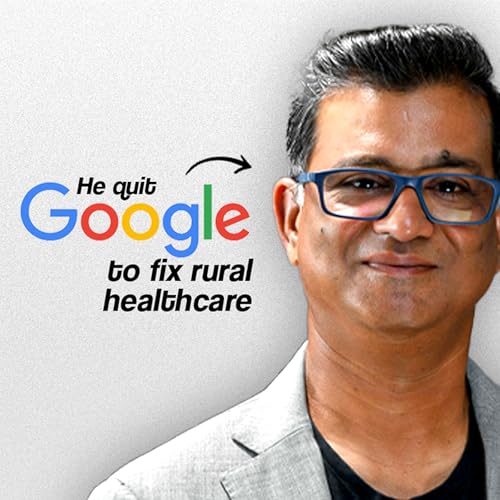
    Priyadarshi Mohapatra has spent 25 years building businesses that others said couldn't be built. From co-creating the Tanishq brand's iconic purity positioning to scaling Microsoft's consumer division and leading Google Cloud's India enterprise push, he has always found opportunity where others saw obstacles.

    Then COVID hit, and a broken Skype teleconsultation attempt for his wife ignited an idea that would become CureBay, a hybrid phygital platform delivering last-mile primary healthcare to rural India through a network of 200 AI-powered eClinics across Odisha, Chhattisgarh and Jharkhand.

    In a candid, wide-ranging conversation with host Akshay Datt, Priyadarshi unpacks the structural failures of India's rural healthcare system, the unit economics of the Kavach membership program, the Swasthya Mitra distribution model and why he believes 100 CureBays are needed to truly solve this problem. This episode is essential listening for anyone tracking India's $45 billion rural health market, the future of AI in healthcare, and the next wave of impact-driven startups reshaping Bharat.

    What you'll learn in this episode:

    👉Why India's rural healthcare crisis is not a funding problem but a trust and access problem, and how CureBay's hybrid eClinic model solves both at once

    👉How the Kavach membership program, priced at just Rs 499 per year, is built like an insurance product and is already seeing 60% renewal rates

    👉The real reason doctors refuse to serve rural India, and why no policy mandate has been able to fix the structural economics behind it

    👉How CureBay is training AI models on real patient data from 200 clinics to build diagnostics tools that outperform anything trained on synthetic data

    👉Why Priyadarshi believes partnering with government, not competing with it, is the only way to build healthcare at scale in India

    👉The "nodal point" strategy that replaced his early mistake of going too deep into single villages, and how speed of execution became his sharpest competitive weapon

    If this episode gave you a new lens on India's rural health opportunity, subscribe to Founder Thesis so you never miss a conversation like this one. And follow host Akshay Datt on LinkedIn and X for daily insights on India's most ambitious founders and the startups they are building.

    Chapters:

    00:00 - Why Rural India's Healthcare System Is Broken

    08:20 - The Doctor Shortage Nobody Can Fix

    14:00 - How CureBay's eClinic Model Actually Works

    24:30 - Kavach, The Rs 499 Plan Rewriting Rural Health Insurance

    37:45 - Funding CureBay, The $37M Journey

    43:00 - From Tanishq to Google to Village Clinics

    54:00 - AI and Data, CureBay's Secret Long Game

    1:03:00 - Why India Needs 100 CureBays

    #PriyadarshiMohapatra #CureBay #RuralHealthcareIndia #HealthtechIndia #IndiaStartups #FounderThesis #AkshayDatt #PhygitalHealthcare #RuralBharat #AyushmanBharat #AIinHealthcare #ImpactInvesting #IndiaHealthtech #StartupFunding #SeriesBFunding #SwasthyaMitra #KavachMembership #TeleconsultationIndia #LastMileHealthcare #BharatStartups #HealthtechDisruption #RuralIndiaHealthcare #IndiaHealthcareMarket #StartupIndia #ImpactStartupsIndia

    Disclaimer: The views expressed are those of the speaker, not necessarily the channel

    Show More Show Less
    1 hr and 8 mins
  • Pranav Pai (3one4 Capital) on Backing Licious, Darwinbox & India's Next Decade of Unicorns
    Mar 12 2026

    Pranav Pai, Founding Partner and CIO of 3one4 Capital, has spent a decade betting on Indian founders at the earliest possible stage, often when they are just two people on a laptop.

    From backing Licious when 50 investors said no, to spotting Darwinbox before enterprise HR software was considered a credible category in India, Pranav has built a track record that speaks for itself, including a 6x Fund I return, a single-digit loss ratio in a market where 30 to 45 percent of VC capital typically goes to zero, and five unicorns across a $570M portfolio.

    In a candid, wide-ranging conversation with host Akshay Datt, Pranav shares why he deliberately caps fund size, how he fires people for persistent poor judgment, and why AI can now write your investment thesis but can never replace genuine market instinct. He also delivers one of the sharpest takes on India's foundational AI debate, the myth of the vegetarian Indian consumer, and what it actually takes to build a performance culture inside a VC firm.

    What you will learn in this episode:

    👉How Pranav Pai and 3one4 Capital built India's highest-performing early-stage VC fund without an investment banking or IIT pedigree, by betting on operators over financiers

    👉Why 3one4 turned down capital to stay sub-$250M, and the precise mathematical logic that makes fund size a performance variable, not a vanity metric

    👉The real story behind the Licious and Darwinbox investments, two of India's most celebrated startup bets, both rejected by 50-plus investors before 3one4 said yes

    👉How Pranav evaluates founders using three non-negotiable criteria, including one he rarely admits publicly, and why pain and anger are features, not red flags

    👉Why AI can write a 90 percent accurate investment thesis today, what that means for the future of VC as a profession, and where the actual edge now lives

    👉Pranav's unfiltered view on India's AI sovereignty debate, the $10 trillion GDP trajectory, and the third path India must take between the US and China models

    If you found this conversation valuable, subscribe to the Founder Thesis Podcast so you never miss an episode. Follow host Akshay Datt on LinkedIn and X for sharp takes on Indian startups, venture capital, and the founders building India's next decade.

    Chapters

    00:00 - Pranav Pai's Journey Into Indian VC

    05:10 - Why 3one4 Capital Stays Sub $250M

    13:00 - The Math Behind Fund Size and Returns

    20:30 - How 3one4 Backed Licious Against All Odds

    31:00 - Prepared Minds: Luck vs Decision Quality

    37:00 - Darwinbox, Decision Logs and Firing for Bad Judgment

    47:00 - How to Judge Founders at the Seed Stage

    01:03:00 - Two Unicorns in Fund One: The Inside Story

    01:09:00 - What VCs Actually Need to Be Great At

    01:17:00 - Pain, Anger and the Fuel Behind Great Founders

    01:25:00 - Market Truth, AI and the New VC Edge

    01:39:00 - 3one4's Four Big Investment Themes for the Next Decade

    #PranavPai #3one4Capital #FounderThesisPodcast #IndianVentureCapital #VCIndia #IndiaStartups #EarlyStageVC #StartupFunding #Licious #Darwinbox #UnicornIndia #IndiaVC2025 #VentureCapitalIndia #StartupIndia #IndianFounders #FundingIndia #AIStartupsIndia #IndiaStartupEcosystem #VCFundStrategy #AkshayDatt #HomegrownVC #IndiaGDPGrowth #DecisionQuality #FounderEvaluation #SeedFundingIndia

    Disclaimer: The views expressed are those of the speaker, not necessarily the channel

    Show More Show Less
    1 hr and 46 mins
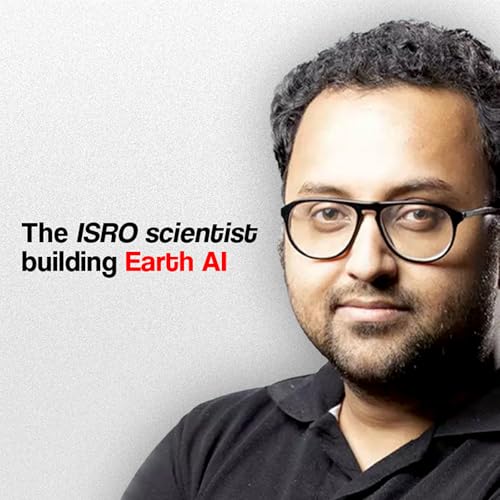
  • From ISRO Scientist to $25M Deep Tech Founder | Prateep Basu (SatSure)
    Mar 5 2026

    This episode with Prateep Basu, Co-founder and CEO of SatSure, is the deep-tech founder story India's startup ecosystem has been waiting for.

    Prateep Basu left a career building propulsion systems for India's GSLV MK-III rocket at ISRO to ask a deceptively simple question - why do urban Indians get 10 loan offers a day on WhatsApp while farmers wait a month for a single approval? The answer became SatSure, a Bengaluru-based Earth intelligence company that uses satellite imagery, AI, and government land records to deliver alternate credit scores for farmers, monitor crop health across bank portfolios, and help airports, insurers, and FMCG companies make smarter decisions from space. Bootstrapped for four and a half years before raising $25 million across multiple rounds, SatSure now monitors 1.95 lakh villages and has analysed over 2.1 million farmer plots.

    In this candid, wide-ranging conversation with host Akshay Datt, Prateep breaks down the physics of 40-pixel crop detection, explains why algorithms are never the moat, and reveals the strategic logic behind SatSure's audacious zero-bid for India's first private national satellite constellation. He also shares why AI is an accelerant, not a threat, for deep-tech companies that have built genuine domain depth.

    What you will learn in this episode:

    👉How SatSure built an alternate credit score for farmers using satellite crop imagery, land boundary data, and historical yield analysis, collapsing a 30-day loan process to under 30 minutes and creating a product that banks like ICICI and IDFC are paying for at scale

    👉Why Prateep believes the algorithm is never the moat, and how SatSure's real competitive advantage is the nuanced translation of banking business processes into product and model design, something no open-source GitHub repository can replicate

    👉The full story of SatSure's 4.5-year bootstrap, from a letter written by a young MP in Srikakulam to winning a Gates Foundation-backed challenge and securing a five-crore purchase order from the Andhra Pradesh government, all before raising a single rupee of institutional capital

    👉How India's Digital Public Infrastructure, including AgriStack, the Unified Lending Interface, and digital land records, is assembling the exact pipeline that makes SatSure's products commercially unstoppable at national scale

    👉The strategic logic behind Allied Orbits, the consortium of Pixxel, SatSure, Dhruva Space, and PierSight that won India's first private satellite constellation contract, and why the consortium chose to refuse government funding in exchange for full global commercialisation rights

    #DeepTechStartup #StartupIndia #EarthIntelligence #RemoteSensing #SatelliteImagery

    Disclaimer: The views expressed are those of the speaker, not necessarily the channel

    Show More Show Less
    1 hr and 35 mins