• Season III Episode 6 (Part 2) - Reparations for climate and biodiversity loss: Resistance and alternatives to market-based approaches
    May 7 2025

    Send us a text

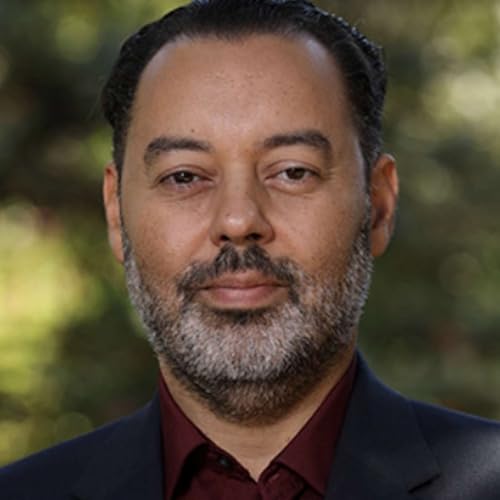
    In this episode of Future Perfect | Futures Antérieur, hosts Liliane Umubyeyi and Meghna Abraham welcome Ruth Nyambura, a Kenyan ecofeminist and organiser, to discuss the biodiversity crisis in Africa and its links to colonial and neo-colonial exploitation.

    Nyambura explains that biodiversity loss is not just an environmental crisis - it is a political and economic crisis driven by industrial agriculture, extractivism and trade policies that prioritize foreign interests over local communities. Biodiversity loss directly impacts food security, water resources and traditional livelihoods, disproportionately harming local communities, especially women, who are often the primary stewards of land and ecosystems. She highlights the fisheries crisis in Senegal, where EU policies are depleting marine resources and devastating food security and livelihoods.

    She criticizes false solutions such as carbon markets and biodiversity credits, which financialise nature while displacing indigenous and local communities. Instead of corporate-led conservation, she calls for anti-capitalist, anti-colonial and feminist approaches that empower communities to protect biodiversity on their own terms.

    The episode ends with a powerful message: there can be no biodiversity justice without systemic change. It is not enough to 'conserve' nature while maintaining economic systems that extract, exploit and destroy. For true biodiversity justice, she insists on radical change, including land rights, reparations and grassroots resistance to reclaim ecosystems from exploitative forces.

    ----------------------------------------------------------------

    Ruth Nyambura is a Kenyan feminist and organizer whose research interests are primarily on the agrarian political economy/ecology of Africa as well as other parts of the Global South. She has previously worked as the head of advocacy for the African Biodiversity Network (ABN).


    Nyambura has written extensively on various aspects of the current agrarian transformations in Africa with her overall work focusing on the ideological underpinnings of the ‘New Green Revolution in Africa’ and its ties to philanthrocapitalist organizations such as the Gates Foundation and the Alliance for a Green Revolution in Africa (AGRA).


    Nyambura’s research also analyzes the rapidly changing policy and legislative frameworks across the continent related to biosafety and Trade-Related Aspects of the Intellectual Property Rights (TRIPS) regime which are not only criminalizing the rights of small-holder/-peasant farmers to use their traditional/indigenous seeds but are also opening up the space for foreign agri-business companies on the continent.


    Nyambura is the founder and convenor of the African Ecofeminists Collective as well as the No REDD in Africa (NRAN) Collective which challenges forest-related carbon markets and documents the impacts of these schemes on local communities in Africa.

    She is also a board member of the Climate Justice Fund (CJF).


    Support the African Futures Lab and Future Perfect | Futur Antérieur! Click here for more details.

    Show More Show Less
    46 mins
  • Season III Episode 6 (Part 1) - Reparations for climate and biodiversity loss: Deep dive into challenges and solutions
    Mar 24 2025

    Send us a text

    In this episode of Future Perfect | Futures Antérieur, hosts Liliane Umubyeyi and Hélène Himmer welcome Meghna Abraham, an international human rights lawyer and expert on economic, social and cultural rights, to discuss the biodiversity crisis, its causes and possible solutions. Meghna explains that biodiversity loss is accelerating at an unprecedented rate, with up to one million species at risk. This threatens the resilience of ecosystems and their ability to mitigate climate change. The main drivers of this crisis are land-use change, deforestation and extractive industries, largely fuelled by overconsumption in high-income countries, which consume six times more resources than low-income countries.

    It highlights how colonial legacies and trade policies continue to exploit the Global South, perpetuating economic inequalities and reinforcing destructive agricultural and industrial models. Despite growing awareness, international frameworks favour market-based solutions such as 'bio-credits', which allow companies to offset environmental damage rather than stop harmful practices. Meghna argues that true accountability requires a justice-based approach, including legal responsibility, reparations and stronger protections for indigenous and most affected communities.

    Meghna Abraham calls on civil society to challenge corporate control of biodiversity policy and advocate for a fundamental shift in global economic structures. The conversation underscores the need to shift the narrative around biodiversity, reframing it as a justice issue rather than an environmental concern, and demanding change that prioritises conservation, equity and sustainability.

    -------------------------------------------------------------

    Meghna Abraham is an international human rights lawyer and expert on economic, social and cultural rights. She has led campaigns, investigations, and policy development to reform unjust economic policies and models and worked with communities for over two decades to challenge the negative impacts of these policies and models on their lives. She currently advises foundations and NGOs on strategic and policy issues and is also focusing on reparations for harms arising from the climate and biodiversity crises.

    She was formerly the Executive Director of the Center for Economic and Social Rights (CESR). Prior to joining CESR, she was employed by Amnesty International, including as the Director of Global Issues, Head of Economic, Social and Cultural Rights, and Senior Researcher on Corporate Crimes. Meghna has also worked at the Natural Resource Governance Institute, International Service for Human Rights, Centre on Housing Rights and Evictions, World Organisation Against Torture, Human Rights Centre, University of Essex, and Centre for Child and the Law at the National Law School. She has been an expert consultant for various NGOs and the Office of the High Commissioner for Human Rights.

    Meghna is the Chair of the Board of the Natural Resource Charter Limited, a member of the Advisory Council of the Bonavero Institute for Human Rights, and a Fellow of the Nottingham Human Rights Law Centre. She is a qualified Indian lawyer who holds a BA LLB (Hons) degree from the National Law School of India University, Bangalore, and BCL and MPhil in Law degrees from the University of Oxford.


    Support the African Futures Lab and Future Perfect | Futur Antérieur! Click here for more details.

    Show More Show Less
    56 mins
  • Season III Episode 5- Fadhel Kaboub: International Financial Institutions Rooted in the Intrinsic Link between Colonialism and Capitalism: How to End a System of Domination Through Climate Reparations?
    Nov 27 2024

    Send us a text

    This episode of Future Perfect | Futur Antérieur features Professor Fadhel Kaboub, who highlights the urgent need for decolonizing climate frameworks alongside a radical global economic transformation. He critiques the existing global financial system, in which $2 trillion flows annually from the Global South to the Global North, moving in the wrong direction while undermining development. Kaboub argues that the International Monetary Fund (IMF) and the World Bank exacerbate this imbalance by imposing conditionalities through loans, deliberately creating debt crises that keep the Global South trapped in cycles of dependency.

    Fadhel Kaboub highlights the lack of sovereignty over food, energy and technology in the Global South, which limits the ability of these nations to negotiate as equals. He calls for South-South cooperation to challenge these dynamics and build alternative financial architectures that prioritize just transition and sustainability.

    The conversation emphasizes that climate justice cannot be achieved without addressing the root causes of inequality—insisting that the global system must be decolonized to achieve decarbonization. Market-based approaches like carbon trading are dismissed as "pollution permits," designed to maintain the extractive colonial hierarchy through greenwashing. Kaboub advocates for transformative measures such as debt cancellation, unconditional grants, and the equitable transfer of green technologies.

    He stresses that Africa must no longer serve as a source of cheap labor and raw materials for the Global North. True economic and climate justice requires a radical transformation, rethinking of economic roles, not mere reforms. Kaboub concludes with a call for collective action among Global South nations to dismantle exploitative systems and create a new framework for sustainable development that ensures justice for all.

    Fadhel Kaboub is an Associate Professor of Economics at Denison University (on leave), and the president of the Global Institute for Sustainable Prosperity. He is the author of Global South Perspectives on substack. He is also a member of the Independent Expert Group on Just Transition and Development, an expert group member with the Global Solidarity Levies Task Force, a member of the Earth4All Economic Transformation Commission, a Steering Committee member with the Fossil Fuel Non-Proliferation Treaty Initiative, a member of the African Forum on Climate Change, Energy and Development, and serves as Senior Advisor with Power Shift Africa. He has recently served as Under-Secretary-General for Financing for Development at the Organisation of Southern Cooperation in Addis Ababa, Ethiopia. His most recent co-authored publication is Just Transition: A Climate, Energy, and Development Vision for Africa (May 2023). He is based in Nairobi, Kenya, and is working on climate finance and developme


    Support the African Futures Lab and Future Perfect | Futur Antérieur! Click here for more details.

    Show More Show Less
    56 mins
  • Season III Episode 4- Chenai Mukumba: How to Finance Climate Reparations: Does the Framework of International Financial Institutions Facilitate Healing from the Past for a Better Future?
    Nov 6 2024

    Send us a text

    This episode of Future Perfect | Futur Antérieur, co-hosted by African Futures Lab Director Liliane Umubyeyi and Program Assistant Helene Himmer, features a compelling discussion with Chenai Mukumba, Executive Director of Tax Justice Network Africa, on the urgent need to fund climate reparations.

    Mukumba unpacks the enduring economic impacts of colonialism, which have left African nations dependent on extractive industries and disadvantaged in global value chains. The current international financial structure, led by institutions like the IMF and World Bank, she explains, reinforces this dependency and lacks the democratic accountability needed to support meaningful economic reform.

    The conversation explores tax justice as a pathway for financing climate reparations. Mukumba details how African countries lose substantial revenue to tax evasion and corporate abuses, proposing that taxes on wealthy individuals, corporations, and fossil fuel industries could provide crucial resources for climate adaptation. Advocating for a democratized global tax framework under the United Nations, Mukumba argues that this shift would better serve Global South nations compared to the OECD-led model, which tends to prioritize wealthier nations’ interests.

    Chenai Mukumba is the Executive Director at the Tax Justice Network Africa (TJNA). She is based in Nairobi, Kenya and overall provides strategic leadership and direction to deliver on TJNA’s mission and vision in its various thematic areas. Chenai has a master’s in International Relations from Wits University, Johannesburg, and is currently pursuing a master's in Taxation at the University of Oxford.

    Tax Justice Network Africa (TJNA) is a research and advocacy organisation with a robust network of civil society organisations with the united effort of leading tax justice voices across the continent. Through its Nairobi Secretariat, TJNA collaborates closely with its member civil society organisations to curb illicit financial flows (IFFs) and promote progressive taxation systems. In partnership and collaboration with other regional economic governance institutions, TJNA advocates for tax policies with pro-poor outcomes and tax systems that curb public resource leakages and enhance domestic resource mobilisation. TJNA’s vision is to see a new Africa where tax justice prevails and ensures equitable, inclusive, and sustainable development.


    Support the African Futures Lab and Future Perfect | Futur Antérieur! Click here for more details.

    Show More Show Less
    43 mins
  • Season III Episode 3- Adrián Martinez Blanco: International Law, Regulations & Negotiations: Addressing the Inefficiency of Loss & Damages Fund and the Role of Litigation in Climate Reparations
    Oct 24 2024

    Send us a text

    This episode of Future Perfect | Futur Antérieur is co-hosted by Patrick Toussaint, an international environmental lawyer, and Helene Himmer, Program Assistant at African Futures Lab. Both welcomed the special guest Adrián Martinez Blanco, Director of La Ruta del Clima. The discussion finds roots in a recent case about the ongoing struggle of communities in Côte d'Ivoire against the Belgian multinational SIAT over allegations of land grabbing, deforestation and human rights violations related to its palm oil and rubber plantations. Martinez Blanco emphasizes the concept of "loss and damage," criticizing the newly established loss and damage fund for its lack of adequate support from developed countries. He also critiques Paragraph 51 of the Paris Agreement, which allows industrialized nations to evade accountability for climate-related harms, complicating efforts to secure reparations and address the realities of vulnerable communities.

    The conversation highlights the urgent need for a robust international legal framework to effectively address climate change and protect affected communities. Martinez Blanco stresses the importance of climate litigation as a tool for holding Global North states and corporations accountable for perpetrating environmental crimes and damages. He calls for unity amongst Global South countries to adopt a rights-based position in negotiations, focusing on specific reparations rather than diluting the conversation into broader concepts. Despite challenges such as limited resources, risks and threats faced by environmental defenders, Martinez Blanco advocates for pragmatic approaches rooted in human rights to address climate change impacts, underscoring that the lived experiences of affected communities should be central to climate justice negotiations.

    Adrián Martinez Blanco, MA, is the Director of La Ruta del Clima, a Costa Rican NGO that promotes public participation in climate and environmental decision-making and has been an observer, advocating at the United Nations Framework Convention on Climate Change (UNFCCC) climate summits since 2014. Adrián’s research areas include climate impacts, loss and damage, human rights, public participation and international climate law. He is a current PhD candidate at the University of Eastern Finland and holds a Master's degree in Environment, Development and Peace with a speciality in climate public policies.

    Patrick is an international lawyer, policy analyst, and researcher with over eight years of experience in international environmental law and policy. He specializes in critical areas such as climate change, biodiversity, and air pollution. In addition to his legal expertise, Patrick excels as a communicator and facilitator, demonstrating a strong commitment to promoting diversity, mediation, and conflict resolution in his work.


    Support the African Futures Lab and Future Perfect | Futur Antérieur! Click here for more details.

    Show More Show Less
    46 mins
  • Season III Episode 2- Ineza Umuhoza Grace: Activism, Narratives & Media Representation: What is the climate reparations movement missing to emerge and be a priority at the international agenda?
    Oct 9 2024

    Send us a text

    In this podcast episode, Hélène Himmer and Brigette Perenyi, storytelling manager at Reform Initiative host a discussion with Ineza Umuhoza Grace, CEO of the Green Protector and Co. and founder of the Loss and Damage Youth Coalition, about the need for climate reparations and the challenges faced by the Global South, particularly Africa, which bears the brunt of climate impacts despite contributing minimally to global emissions. This episode explores how youth activism is driving the climate justice and reparations movement, with a focus on amplifying the voices of vulnerable groups like women and indigenous communities in Africa. Ineza emphasizes the need for these frontline communities to tell their own stories, rather than having international media impose narratives, ensuring their stories are heard and effective solutions are pursued. Furthermore, this episode advocates for unity among African nations to amplify their voices in global climate negotiations and address the tokenization of women, youth, and marginalized groups in international forums. Ultimately, the podcast calls for an inclusive, justice-driven approach to climate action that centers the voices and needs of those most affected by the crisis.

    Ineza Umuhoza Grace is a passionate eco-feminist, climate activist, and environmentalist from Kigali, Rwanda. She is the CEO and Founder of The Green Protector, co-ordinator and co-founder of the Loss and Damage Youth Coalition, and a Research Assistant for the CCLAD project, which stands for The Politics of Climate Change Loss and Damage. In 2023, Ineza was awarded the Global Citizen Prize for her remarkable contributions to climate advocacy.

    Ineza holds a bachelor’s degree in water and environmental engineering from the University of Rwanda. Her research focuses on Loss and Damage responses in developing countries. She is interested in working to find gaps that can be turned into an opportunity area to ensure sustainable development for the global community. She also aims to support the sharing of community voices through blogging, storytelling and youth empowerment, especially of the youth in the Global South.

    Brigitte Perenyi is a documentary story gatherer, producer & advocate with special focus on ethical storytelling. She works with development, INGOs, nonprofits and humanitarian organisations, news agents, storytellers and communications’ team to co-create more equitable media collection with ethical considerations. Currently, she serves as the storytelling manager at Reform Initiative. Perenyi strongly believes participatory and collaborative storytelling can change how we view and relate to our world. She engages with people in communities to find the stories that will not only give them agency and ownership but that will also support the transformation of their communities and create sustainability and prosperity; the goal of the organisations. She has produced & directed stories from the most challenging environments in over ten countries across Africa, and England for media outlets, corporations and organisations including BBC, World Bank, Open Society Foundation, Connected Development, and Conciliation Resources, to name a few. Brigitte was listed in 100 Women BBC 2018.


    Support the African Futures Lab and Future Perfect | Futur Antérieur! Click here for more details.

    Show More Show Less
    43 mins
  • Season III Episode 1: From responsibility to reparations of the climate crisis: why the biggest polluters must pay up for climate damages?
    Sep 25 2024

    Send us a text

    In the first episode of the third season of the Future Perfect-Futur Antérieur podcast, Professor Joshua Castellino, the Co-Executive Director of Minority Rights Group International and Professor of International & Comparative Law at University of Derby, UK, discusses how marginalized racial groups, particularly in Africa, bear the heaviest burden of the global ecological crisis. This episode examines the colonial roots of the climate crisis, emphasizing that European colonialism established extractive systems that treat nature as a commodity, driving both wealth inequality and environmental destruction. He critiques current environmental policies, particularly those that prioritize corporate profit at the expense of vulnerable communities and ecosystems. He stresses that indigenous peoples should not bear the primary responsibility for solving a crisis they did not create. Instead, responsibility should fall on major polluters like corporations and industrialized nations. He also warns against "green colonialism," where conservation efforts further displace indigenous communities under the guise of environmental protection.

    Joshua Castellino is Co-Executive Director of Minority Rights Group International and Professor of International & Comparative Law at University of Derby, UK. He founded the School of Law at Middlesex and served as its Dean until 2018, stepping down to take on the role at Minority Rights Group full-time while retaining his Chair until 2022. Joshua holds Visiting Professorships at the College of Europe, (Poland), Oxford University (UK), & the Irish Centre for Human Rights, (Republic of Ireland) and serves pro bono on governing boards of civil society organizations in Germany, Netherlands, UK, Sweden, Uganda and Hungary. He is the current Chair of the Board of Trustees of Privacy International UK and Door Tenant at 25 Bedford Row.

    Born and raised in Mumbai, India, Joshua worked as a journalist for Indian Express Newspapers Group in the 1990s, before winning a Chevening Scholarship and completing his PhD in International Law in 1998. He has published ten books (one forthcoming in 2025) and over a hundred articles on international law & human rights over twenty-five years in academia, including the Minority Rights Series (Oxford University Press). His latest book is titled Calibrating Colonial Crime: Reparations & the Crime of Unjust Enrichment.

    Joshua participated in the European Union China Diplomatic & Expert Dialogue on Human Rights (2002-2006) and was appointed Chair, by the United Nations Office of the High Commissioner for Human Rights of the 8th Forum on Minority Issues (2015), an inter-governmental dialogue with civil societ


    Support the African Futures Lab and Future Perfect | Futur Antérieur! Click here for more details.

    Show More Show Less
    45 mins
  • S2 Episode 6: Juliette Nijimbere : “La montagne qui a accouché d’une souris” : espoirs et échec de la commission parlementaire belge sur le passé colonial
    Jul 5 2023

    Send us a text

    Dans cet épisode de Future Perfect | Futur Antérieur, Juliette Nijimbere, militante de longue date pour les droits humains, les droits de la femme et la lutte contre le racisme en Belgique, nous parle du déroulement et des résultats de la commission parlementaire belge sur le passé colonial du pays. Première en son genre, la commission chargée d'examiner le passé colonial de la Belgique au Congo, au Burundi et au Rwanda a été créée en juillet 2020, à la suite des manifestations Black Lives Matter. Juliette décrit les espoirs qui ont accompagné l'annonce du lancement de la commission, mais aussi les nombreux problèmes qui ont rapidement suivi dans sa mise en œuvre et qui ont peut-être présagé son échec. Elle nous parle notamment de consultations insuffisantes des populations concernées, tant en Belgique que dans les trois pays africains. Partageant sa vision de l'avenir avec nous, Juliette explique comment, malgré la déception de cette commission, elle reste engagée dans la lutte pour la reconnaissance des crimes du colonialisme et de leurs conséquences, ainsi que dans son combat pour la justice raciale et les réparations.

    Juliette Nijimbere est Administratrice Déléguée à la Gestion Journalière dans l'ASBL Ibirezi vy'Uburundi, association qui gère l'accueil, l'accompagnement et l'encadrement des migrants (Réfugiés ou demandeurs d'asile) par le biais de l'interculturalité, l'insertion socio-professionnelle, et le mentorat. Connaissant le contexte et les réalités du Nord comme du Sud pour y avoir vécu et travaillé, elle contribue activement à la lutte contre la pauvreté, les inégalités sociales, l'éducation pour tous et de qualité, la bonne santé pour tous, les droits humains et en particulier ceux des femmes et des enfants. D'où son engagement au sein d’organisations telles que Kira-Ukize, le Collectif des femmes pour la paix et la démocratie au Burundi, le MOC Brabant Wallon, et les Mutualités Chrétiennes du Brabant Wallon, où elle a exercé des rôles tels que Membre fondateur, Vice-Présidente, et Membre de l'Assemblée Générale. Juliette Nijimbere est membre de CaCoBuRwa, le Collectif des associations congolaises, burundaises, et rwandaises de Belgique.

    Lien vers les recommandations de la commission (novembre 2022, 24 pages; français, flamand)

    Lien vers les constats des experts de la commission (novembre 2022, 114 pages; français, flamand)

    Lien vers le rapport des experts de la commission (octobre 2021, 689 pages; français, flamand)


    Support the African Futures Lab and Future Perfect | Futur Antérieur! Click here for more details.

    Show More Show Less
    34 mins