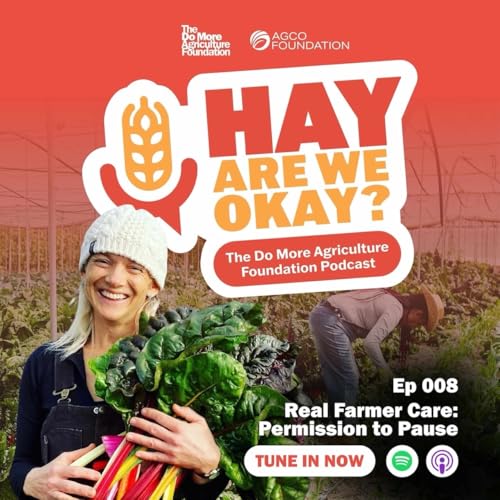
• Real Farmer Care: Permission to Pause
    May 1 2026

    In this episode, Merle talks with Clara Coleman, founder of Real Farmer Care, about something most farmers struggle with: taking care of themselves.. Coleman experienced burnout herself on a well-established family farm, and realized that grit and long hours weren't enough to sustain her or the people around her.


    From there, she tried something simple but powerful. She began crowdsourcing donations and sending farmers small, no-strings-attached cash for self-care.

    "Use this to take care of yourself," she'd say, mailing $100 gift cards to farmers across the continent.

    Those gift cards have gone toward everything from massage and new boots, to therapy, a hammock, date nights, or even just a night off the farm.

    While self-care can still feel uncomfortable or even unnecessary to some, Coleman believes that shame and stubbornness often keep people pushing until they reach a breaking point. Real Farmer Care challenges that mindset by offering farmers permission to rest—something she sees as essential if we want people to continue caring for the land and their communities.


    We love hearing your ideas, comments, and stories. Get in touch with Merle by sending your e-mail or audio message to feedback@domore.ag.

    Show More Show Less
    36 mins
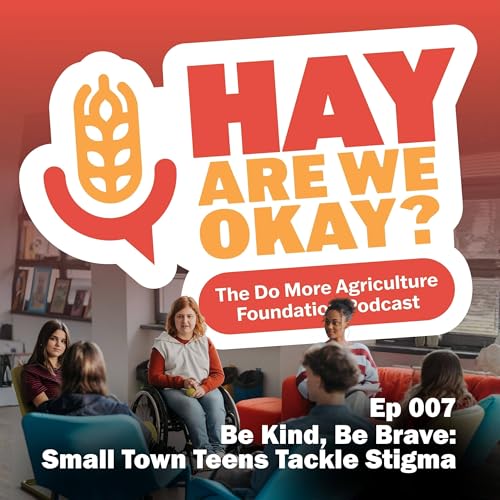
  • Be Kind, Be Brave: Small Town Teens Tackle Stigma
    Apr 1 2026

    In this episode, host Merle Massie connects with students at Queen Margaret's School on Vancouver Island, to hear how a group of small-town teens is quietly transforming their school culture.

    Student leaders, Oceana Jarvis, Delphine Koyote and Angela Feng, join Merle, along with former head of school David Robertson, to share how they lead the school's lunch-hour Stigma-free Club meetings as a lifeline for new students, a refuge from loneliness, and a launchpad for real conversations about mental health.

    These teens give talks on mental health and anti-bullying, fundraise for local charities, and build simple ways for students to feel seen and included. The idea is to set labels aside and build a school culture where difference is met with welcome and belonging.

    Later, Merle is joined by Andrea Paquette, president and co‑founder of the Stigma-Free Mental Health Society, to zoom out to the bigger picture. Students often feel crushing pressure to fit in, and face long-held stereotypes about mental health. Paquette created a Student Mental Health Toolkit for teens, parents and educators, along with a Rural Mental Wellness Toolkit designed for people living in small communities.

    This episode explores a simple but radical idea: when teens lead the way and decide to be kind, be curious, and be brave, a stigma-free school isn't just possible, it's already happening.

    How are things looking in your community? Whether you have thoughts on the show, or you'd like to be featured, let us know. Tell Merle what your community is doing for mental health – or, tell us about something you've done on your farm or ranch. Have you created something silly, fun, joyful, or built a place that brings people together on your land, send your e-mail or audio story to feedback@domore.ag.

    Show More Show Less
    33 mins
  • Why Is That Tree Blue?
    Mar 1 2026

    In this episode, host Merle Massie sits down with Kendall Whyte, the Australian founder of the Blue Tree Project. Kendall's brother Jayden pulled off a cheeky prank on the family's sheep farm: he and his friend painted a dead tree bright blue, then waited to see if their father noticed. Today, that blue tree has grown into a powerful symbol for mental health in rural and remote communities around the world.

    Note: This episode discusses suicide and its impact on families and communities. If you or someone you know is struggling, please reach out for support.

    Suicide Crisis Help Line: call 9‑8‑8, text 9‑8‑8, or visit 988.ca or contact the National Farmer Crisis Line: call 1‑866‑327‑6701 (1‑866‑FARMS01)

    When Jayden Whyte died by suicide in 2018, the story of the blue tree, shared during the funeral, prompted first one friend, then another, to pull out the blue paint. Soon, that shared energy became the Blue Tree Project, turning grief into hope and action, lightness and fun, and opening big conversations.

    The simple, hands‑on act of grabbing a few friends, firing up the barbecue, and slapping bright blue paint on a dead tree (or a stump, a power pole, or an old bit of machinery) opens up real, honest conversations about how people are actually doing. Kendall Whyte says the blue trees act as a conversation starter, prompting families, friends and communities to ask, "Why is that tree blue?" then talk about mental health.

    Throughout the episode, Merle and Kendall draw a clear line between awareness and the need for real action. If you've ever looked at a dead tree or a junk pile and thought, "I should do something with that," this episode may be the nudge you need to grab some blue paint, call a few friends, and use your own corner of the yard to start a life‑saving conversation. You can register your blue tree here, and use this link to spot the blue tree closest to you.

    Even it's not a blue tree, if you've built something cool on your farm, Merle wants to hear about it. Whether you have created something silly, fun, joyful, or simply a place that brings people together on your land, send your e-mail or audio story to feedback@domore.ag. Our thanks to Rob Stone and Joe Stone for theirs.

    Show More Show Less
    38 mins
  • Shoulder to Shoulder: Men's Sheds in Canada
    Feb 1 2026

    In this episode, we explore a simple idea with surprisingly deep impact: Men's Sheds. Across rural Canada and around the world, men can slip into loneliness: after moving to a new community, after retirement, after losing a spouse, or after moving off the farm. Most don't ask for help—they quietly retreat, isolate, and slowly disappear.

    Men's Sheds offer a different path; one that starts with coffee, a workbench, and an open door. We hear how the first Shed began in Australia, as a daughter watched her father slide into depression after losing his job, and decided to do something about it. Since then, the movement has grown to thousands of Sheds across Australia, Europe, and now Canada.

    Punch Jackson and Brian Sawyer, leaders in the Men's Sheds movement, tell host Merle Massie why men stand shoulder to shoulder, repairing tools, building picnic tables, sorting donated clothes, even working on giant jigsaw puzzles. These simple jobs help build a sense of purpose, connection, and belonging.

    Further north in Peace River, Alberta, community advocate Marc Boychuk shares how his town's Men's Shed formed as a response to what he calls a "sick" community — one where suffering is too common. He describes how this small, informal group of men, united by tools and a shared mission, has become a dose of fresh air: lifting moods, strengthening families, and showing that when men find a place to belong, everyone finds a reason to smile.

    As a bonus, Hay Are We Okay? listeners share moments or places of connection and joy on their farms. Want to share what works for you? Send your e-mail or audio story to feedback@domore.ag.

    Show More Show Less
    36 mins
  • Yellow Feathers: Courage at the Rodeo
    Dec 15 2025

    Whether it's bull riding, steer wrestling, or saddle broncs, rodeos rely on the pickup man: the person who keeps riders safe and helps them out of harm's way. In this episode, we hear about the fantastic Yellow Feather - Pickup Man campaign for mental health in rodeo - and how you can be part of it.

    Content Warning: this episode discusses suicide. If you are struggling, please check the resources we've compiled for you here.

    Morgan Lehmann grew up with cattle near Rosthern, Sask. In this episode she shares the heartbreak of losing her brother, Josh, to suicide. Lehmann and her family started the Josh Lehmann Memorial Team Roping Jackpot in her brother's memory. She then travelled to Cheyenne, Wyoming to see their Frontier Days rodeo, where she felt the profound effect of seeing hundreds of people wearing yellow feathers in their hat bands. Those small symbols open bigger conversations, as rodeo participants reach out for help, and reach out to help others.

    Tom Hirsig, CEO of Cheyenne Frontier Days, tells us the Pickup Man campaign started in 2022 when the long-running rodeo decided to showcase mental health and suicide awareness. The "Everybody Needs A Pickup Man" campaign was born.

    Lehmann knows firsthand the importance of talking openly about mental challenges, especially in a community that often values toughness over vulnerability. She brought the yellow feather campaign to her own memorial rodeo in memory of her brother Josh, and now brings yellow feathers — and mental health awareness — to rodeos and western events across Alberta and Saskatchewan. Her story shows how good ideas spread, building a culture of openness and transparency about mental health challenges, so we all can become "Pickup Men" for one another.

    Show More Show Less
    41 mins
  • Deep Rooted: Breaking Farm Silence for Connection and Hope
    Sep 29 2025

    In this episode, host Merle Massie speaks with director Kyle McDonnell and producer Van Wickiam about Deep Rooted — a 33-minute documentary tackling the mental health crisis in Canadian agriculture. Filmed in Saskatchewan, Quebec, and Ontario, the film profiles four farmers who speak openly, many for the first time, about their struggles with mental health. The result is raw, moving, and deeply powerful.

    We hear from farmers Darryl Boersma and Lynn Cronk (Ontario), rancher Kole Norman (Saskatchewan), and farmer Lesley Kelly (Saskatchewan). We also drop in on a Saskatoon screening at the Broadway Theatre, where the response is clear: suffering in silence is not the answer.

    Through Deep Rooted, McDonell and Wickiam aim to dismantle shame and silence, replacing it with connection, courage, and community support.

    Produced by Public Space Productions, the film is being screened at agricultural events across Canada and is available for business and community showings. As the filmmakers emphasize, farmers and their families are often quite isolated. They say the best way to experience Deep Rooted is by watching it together, in a room with other people. Find out how to bring a screening to your community.

    Show More Show Less
    29 mins
  • Three Oaks Cabin: A Quiet Place to Rest
    Sep 29 2025

    In this heartfelt conversation, hear how one family forged serenity and care from the shards of personal pain.

    When Diane Bergsma lost her son Dalles, her family chose to convert their woodlot into Three Oaks Cabin — a place of rest, healing, and restoration for farmers and first responders dealing with burnout, anxiety and depression. We hear firsthand from Dalles' best friend, Lucas Tamminga, why the process of building the retreat served as both a tribute and a healing journey.

    Note: this episode discusses suicide and its impact on families and communities.

    Most importantly, the family didn't do it alone. Contractors and community members from southern Ontario were soon on site, raising money, offering supplies and helping with construction. Jim Wierenga is an example: he admits that he isn't a mental health expert, but his shared values led him to support and lift up the idea. We also get a reality check on rural isolation with Lauren Van Ewyk, who leads the National Farmers Mental Health Alliance.

    Together, this community built a forest getaway in southern Ontario, creating a quiet space for farmers and first responders to decompress and retreat. With hope in their hearts, the people behind Three Oaks Cabin want to show how crucial it is to create places that unquestioningly support the people who most often suffer in silence. Here's the link to register that Merle mentioned in the show.

    Show More Show Less
    32 mins
  • I Am Enough: Theatre, Community, and Hard Conversations
    Sep 29 2025

    When Sherry Garner unraveled, she didn't know where to turn for help. No one talked about mental illness when she was growing up on a dairy farm in rural Ontario.

    As she rebuilt her life and story, she drew on her love of music and theatre to heal, and found the resources she needed for the journey. In the process, Garner became the visionary behind Coffee Talk Theatre Productions and the one-woman show I Am Enough.

    Using storytelling and song, Garner entertains while opening rural audiences to tough conversations. I Am Enough opens the floor to questions and connects the audience to support and resources.

    In this episode, Merle Massie speaks with Sherry Garner and travels to Embro, Ontario, where the community has embraced the show and built a whole weekend dedicated to mental health, connection, and hope.

    Show More Show Less
    30 mins