• Episode 76, Elizabeth Sullivan, Principal, Regional Co-Leader of Healthcare, Northeast HOK
    May 5 2026
    "Everything is shifting at once — our care models, technology, AI, capital pressures, workforce dynamics." — Elizabeth Sullivan on HID2.0 In this episode of Healthcare Interior Design 2.0, Cheryl Janis sits down with Elizabeth Sullivan, Principal and Regional Co-Leader of Healthcare Northeast at HOK and adjunct professor at The New York School of Interior Design for a deeply thoughtful conversation about healthcare architecture, lived experience, mentorship, and the future of humane healthcare environments. Elizabeth shares how she went from thinking healthcare architecture sounded "boring" to discovering that it is one of the most meaningful, complex, and human-centered areas of design. With experience spanning architectural practice, the owner side, teaching, and her own personal experiences as a patient, Elizabeth brings a rare and powerful lens to what healthcare spaces are — and what they still need to become. Together, Cheryl and Elizabeth explore the next wave of healthcare design, the importance of flexibility and adaptability, the emotional weight of hospitals, the role of respite spaces, and why small details — even the chair in a patient room — can have an enormous impact. In This Episode, Cheryl and Elizabeth Discuss Elizabeth's unexpected path into healthcare architecture Why healthcare design is far more creative, emotional, and complex than she first imagined How her experiences as a patient shaped the way she thinks about space The idea that healthcare architecture is on the edge of a major transformation Why future healthcare environments must be more adaptable and resilient How care models, AI, capital pressures, workforce dynamics, and sustainability are influencing design The importance of respite spaces for patients, families, and staff Why mentorship and apprenticeship still matter deeply in architecture What designers often misunderstand about the owner side of healthcare How curiosity can help young professionals find their place in healthcare design Why empathy is not abstract — it shows up in the questions designers ask The surprising importance of the chair in a patient room KEY TAKEAWAYS Healthcare design is deeply human. Elizabeth's early assumption that healthcare architecture would be overly technical changed when she realized the work is centered around people in some of life's most vulnerable moments. We are not waiting for transformation — we are already inside it. Elizabeth describes healthcare architecture as being on the cusp of a major shift, driven by care models, technology, AI, capital pressures, workforce dynamics, sustainability, infrastructure, and community health. Future healthcare environments need to behave less like static buildings and more like adaptable systems. One of Elizabeth's strongest points is that designers are no longer simply "building buildings." They are designing systems that must flex, evolve, and respond over time. Long-term healthcare planning has to become more flexible and realistic. Elizabeth challenges the idea of rigid 20-year master plans, pointing instead toward shorter planning horizons, modular thinking, strategic adaptability, and future-ready infrastructure. The owner's perspective changes everything. Her experience working on the owner side gave her a deeper understanding of capital constraints, operating budgets, shifting priorities, stakeholders, schedules, and why even strong projects can change direction. Mentorship is not extra — it is part of the profession. Elizabeth speaks beautifully about the mentors who shaped her and why she now feels called to teach what students and young professionals cannot always learn from books alone. Empathy shows up in the questions designers ask. For Elizabeth, empathetic design is not just a feeling; it is a process of listening carefully, asking people to walk through their day, understanding their pain points, and translating those insights into better environments. Healthcare design has many entry points. For people drawn to the field, Elizabeth emphasizes that healthcare design can include planning, research, furniture design, workplace strategy, operations, management, and more — not only traditional architecture. The most humane healthcare environments create comfort, safety, and emotional relief. Elizabeth imagines future healthcare spaces that help take people's minds away from the stress of being somewhere they may not have chosen to be. Small details carry enormous weight. Her reflection on "the chair" is a perfect example: a seemingly minor design choice can affect patients, family members, caregivers, clinicians, and staff for hours at a time. RESOURCES MENTIONED New York School of Interior Design — Master of Professional Studies in Design of Healthcare Environments A graduate program focused on healthcare interiors, including research methods, healthcare history and theory, environmental and behavioral studies, applied ...
    Show More Show Less
    50 mins
  • Episode 75, Brea E. Elles, Healthcare Design & Construction Leader, Owner of Plyhaus
    Apr 8 2026
    "Flexibility became our currency during COVID." –Brea E. Elles on HID2.0 In today's episode, Cheryl sits down virtually with Brea E. Elles, Healthcare Design & Construction Leader. Together they pull back the curtain on what owner-side leadership really looks like when capital planning meets real-world constraints: staffing shortages, reimbursement uncertainty, supply chain, and the relentless need to keep care moving. You'll hear her practical frameworks for designing "for flow," why standardization can reduce cognitive stress for clinicians, and how teams can protect performance when budgets tighten. And if you love the details, Brea goes delightfully nerdy on the behind-the-scenes decisions that make healthcare millwork and furniture succeed (or fail) over time — from seams and water intrusion to integrated sinks, chemical resistance, and specs written for performance. In this episode, we cover: What it actually means to sit at the intersection of finance + operations + design + construction—and why alignment is the job. The teaching mindset that carries into project leadership: if you can't explain why, you don't fully understand the decision. Lean healthcare design in one phrase: design for flow—patient flow, staff flow, equipment flow, information flow. A blunt truth: "Every unnecessary step is a cost"… and inefficient adjacencies compound into burnout. How policy/funding uncertainty (including the "Big Beautiful Bill") shows up as more disciplined revenue assumptions, phasing, and scope restraint. Why patient experience isn't just the lobby: staff experience drives patient experience through workflow and physical demands. The post-COVID shift that won't go away: conversion speed + flexibility as core performance. "Standardization is resilience": how standards reduce cognitive load and keep clinicians focused on care. Rural vs urban: durability, simplified infrastructure, and designing for a community asset that carries generational weight. Plyhouse and the millwork "nerd-out": infection prevention through seam minimization, integral sinks, edge protection, chemical resistance—and specs written for performance. Memorable quotes from Brea "I sit at the intersection of finance, operations, design, and construction." "I align people who think differently." "If you can't explain why a decision matters, you don't fully understand it." "Every unnecessary step is a cost. Every inefficient adjacency becomes burnout over time." "You're designing for the person that's moving through the space, not the person photographing it." "Standardization is resilience." "In urban systems, you manage complexity. In rural systems, you're managing vulnerability." "I saw a disconnect between specification and reality." "Specs should be designed for performance, not just by material type." "When you think about surfaces, you want to minimize your seams." "In order to have patient experience… it's also staff experience." "Design for flow… not just patient flow, but staff flow, equipment flow, information flow." Links & ways to connect Email: brea@plyhaus.com Plyhouse: https://plyhaus.com Brea on LinkedIn:https://www.linkedin.com/in/brea-e-elles-58776aa1/ If you liked this episode… Please share it with a nurse, designer, architect, engineer, or administrator who cares about building healthcare environments that feel more human—and more kind. Our Industry Partners The world is changing quickly. The Center for Health Design is committed to providing the healthcare design and senior living design industries with the latest research, best practices and innovations. The Center can help you solve today's biggest healthcare challenges and make a difference in care, safety, medical outcomes, and the bottom line. Find out more at healthdesign.org. Additional support for this podcast comes from our industry partners: The American Academy of Healthcare Interior Designers The Nursing Institute for Healthcare Design Learn more about how to become a Certified Healthcare Interior Designer® by visiting the American Academy of Healthcare Interior Designers at: https://aahid.org/. Connect to a community interested in supporting clinician involvement in design and construction of the built environment by visiting The Nursing Institute for Healthcare Design at https://www.nursingihd.com/ ------------ The world is changing quickly. The Center for Health Design is committed to providing the healthcare design and senior living design industries with the latest research, best practices and innovations. The Center can help you solve today's biggest healthcare challenges and make a difference in care, safety, medical outcomes, and the bottom line. Find out more at healthdesign.org FEATURED PRODUCT Porcelanosa are at the forefront of sustainable manufacturing – clients not only expect this of their suppliers but are increasingly asking to see the receipts. Let's unpack this, did you know that...
    Show More Show Less
    48 mins
  • Episode 74, Susan Suhar, NCIDQ, IIDA, LEED AP, WELL AP, Fitwel Amb, Design Principal – Interiors, Associate Vice President at HDR Architecture
    Mar 3 2026
    "The best way to think of it is like a do not use ingredient list, similar to checking a food label — but for buildings." — Susan Suhar on HID2.0 Today on the podcast, Cheryl sits down with Susan Suhar — Design Principal- Interiors and Associate Vice President at HDR Architecture in Los Angeles — to talk about what's changing (and what's timeless) in healthcare design. With 25+ years designing award-winning environments across healthcare, workplace, and life science, Susan brings a rare mix of creative vision and real-world rigor — designing for the whole ecosystem: patients and families, yes, but also the staff doing the caring every single day. Susan helps lead the vision and growth of HDR's LA interiors practice, and she's been deeply involved in major healthcare work including Cedars-Sinai's Marina del Rey Hospital and the UCSF Helen Diller Hospital project in San Francisco (part of a collaborative design team). In this conversation, Susan and Cheryl dig into the shifts shaping healthcare interiors right now — from behavioral health and outpatient growth, to sustainability, staff respite spaces, and why empathy still belongs at the center of every healing environment. WHAT WE COVER Why healthcare interiors serve "one of the broadest ranges of humans in human emotion" — all at onceSusan's origin story: how universal design shaped her purpose as a designerWhat's unique about designing healthcare in California (and specifically Los Angeles)Key shifts shaping healthcare design today: -behavioral health -the evolving patient + staff experience -outpatient growth and the rise of same-day proceduresHow shorter schedules are changing design + documentation — and where AI fits (supporting, not replacing)Cedars-Sinai Marina del Rey Hospital: designing a community hospital that feels sophisticated, elegant, and not like a hospitalThe "sea change for healing" concept: waves, journey, light-on-water (and an unforgettable chapel + meditation patio)UCSF Helen Diller Hospital: iconic architecture, fog-response interiors, and major investments in respite, sustainability, and health"Red list free" in plain language — and why it matters in a hospitalWhy staff spaces are not optional: sleep rooms, respite, and protecting caregiver wellbeingSusan's guiding principle: empathy, and the questions that make design better KEY TAKEAWAYS Design empathy isn't a vibe — it's a practice. It shows up in how we listen, what we prioritize, and what we protect in the program.Staff experience is patient experience. If we don't design for caregiver wellbeing, we quietly erode care quality.Sustainability + health transparency are converging. Materials aren't just about durability and aesthetics anymore — they're about human impact, too.The pace is changing. Faster schedules are pressuring teams to get more efficient without losing the design story or the details. RESOURCED MENTIONED PROJECTS + IMAGES • HDR – Cedars-Sinai Marina del Rey Hospital (project page) https://www.hdrinc.com/portfolio/cedars-sinai-marina-del-rey-hospital • HDR – UCSF Health Helen Diller Hospital (project page) https://www.hdrinc.com/portfolio/ucsf-health-helen-diller-hospital • UCSF Real Estate – Helen Diller Hospital project overview https://realestate.ucsf.edu/projects/ucsf-health-helen-diller-hospital-hdh • Herzog & de Meuron – UCSF Health Helen Diller Hospital (project page) https://www.herzogdemeuron.com/projects/547-ucsf-helen-diller-medical-center-2/ CEDARS-SINAI UPDATES • Cedars-Sinai Newsroom – "New Cedars-Sinai Marina del Rey Hospital Rises" (includes video/update) https://www.cedars-sinai.org/newsroom/new-cedars-sinai-marina-del-rey-hospital-rises/ • Cedars-Sinai Newsroom – "Construction Begins for New Cedars-Sinai Marina del Rey Hospital" https://www.cedars-sinai.org/newsroom/construction-begins-for-new-cedars-sinai-marina-del-rey-hospital/ • Cedars-Sinai – "An Upgrade to Medicine in the Marina" (construction progress story) https://www.cedars-sinai.org/stories-and-insights/advancing-our-mission/an-upgrade-to-medicine-in-the-marina HDR SITE / PORTFOLIO SEARCH (as mentioned on the episode) • HDR homepage https://www.hdrinc.com/ • HDR portfolio (search/browse) https://go.hdrinc.com/portfolio SUSTAINABILITY + MATERIAL HEALTH TERMS (RED LIST / EPD / HPD) • ILFI – Red List (Living Building Challenge) https://living-future.org/red-list/ • ILFI – Living Building Challenge overview https://living-future.org/lbc/ • EPD International – International EPD System (what an EPD is / program info) https://www.environdec.com/about-us/international-epd-system • HPD Collaborative (what an HPD is / material health disclosure) https://www.hpd-collaborative.org/ CALIFORNIA HEALTHCARE FACILITY OVERSIGHT (OSHPD / now HCAI) • HCAI – OSHPD became HCAI (official announcement) https://hcai.ca.gov/oshpd-becomes-the-department-of-health-care-access-and-information/ • HCAI – Building Safety (...
    Show More Show Less
    44 mins
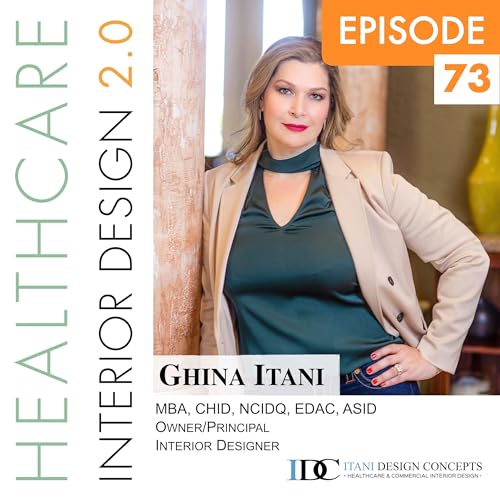
  • Episode 73, Ghina Itani, MBA, CHID, NCIDQ, EDAC, ASID, Owner/Principal Interior Designer of Itani Design Concepts (IDC)
    Feb 17 2026
    "Art is underutilized as a tool. We should ask: what's the intent behind this piece? Why this piece… and what is this going to do for patients?" —Ghina Itani on HID2.0 What if "beautiful" isn't just a nice-to-have — but a clinical tool? In this episode, Cheryl sits down with Ghina Itani, MBA, CHID, NCIDQ, ASID, EDAC — founder and principal designer of Itani Design Concepts (woman-owned, founded in 2007). Together they unpack how healthcare design decisions ripple outward: influencing everything from patient stress to staff retention, wayfinding, and even workplace culture. You'll hear Ghina's origin story — including the moment she rediscovered her portfolio in a box during her "little ones" season and realized her career was still waiting — and how one early hospital project helped raise expectations for what healthcare spaces could feel like. Then we will dive deep into neuroaesthetics (the brain's response to beauty and environment), why designers must avoid "paint-by-numbers" claims, and how color research can be shared without overpromising. Along the way, Ghina breaks down the famous Baker–Miller Pink story and what it teaches us about context, demographics, and why no single color is a universal prescription. Finally, you'll explore art as care — including the idea of museum prescriptions — and why art is often underutilized as a real tool for healing and connection (not just decoration.) What you'll hear in this episode A powerful origin story about timing, identity, and returning to ambition Why healthcare design is never just aesthetic — it's operational Neuroaesthetics: what it is, why it matters, and what it isn't Color guidelines: where they help… and where they fall apart The "pink prison" story — and what it teaches about context over clichés How designers can present research logically (especially with clinical leaders) Art as a care intervention, not an accessory — including museum prescription programs Why instinct still belongs in evidence-based work Key Takeaways Design has reach. A chair choice can affect not just comfort — but operations, loyalty, and even patient flow. Color isn't a magic button. It's about dose, placement, scale, lighting, and culture — not "blue = calm." Neuroaesthetics is a lens, not a guarantee. Designers can use research to guide decisions without promising outcomes. Inclusion builds trust. Bringing staff and stakeholders into the design process reduces resistance and improves buy-in. Art can be therapeutic. When chosen with intent, it can open conversation, reduce stress, and support care experiences. Memorable Quotes from Ghina Itani "I kind of realized that… my career is waiting. It's right here." "I took chances and I was gutsy." "Even if I didn't have an idea what I'm doing at the time, I always think: I'm going to figure it out." "When an opportunity comes, you have to seize it." "If I think too much about something, I probably won't do it." "Owning a business and being a designer are two different things." "Now we're affecting operation." "We cannot just say, this color gives you this outcome." "Neuroaesthetics is misunderstood… it's not a prescription that you put it and solve the problem." "Art is underutilized as a tool." "We still think of it as pretty and not pretty… but we shouldn't think that way." "We should think: what's the intent behind this piece? Why this piece… and what is this going to do for patients?" "We are the product of our environment." "We cannot make it ever robotic… it will always need the human." "At the end of the day… I would trust what I think of it and what my instincts tell me as well." Resources & Links ITANIA DESIGN CONCEPTS - Itani Design Concepts (website): https://itanidc.com/ - About Ghina Itani: https://itanidc.com/index.php/about/ - Contact page: https://itanidc.com/index.php/contact/ - Portfolio: https://itanidc.com/index.php/portfolio/ - ASID Design Finder listing (Ghina Itani): https://designfinder.asid.org/listing/ghina-itani CREDENTIALS & ORGANIZATIONS MENTIONED - AAHID (American Academy of Healthcare Interior Designers): https://aahid.org/ - CHID credential info (AAHID): https://aahid.org/certification/ - EDAC (The Center for Health Design): https://www.healthdesign.org/certification-outreach/edac/ - The Center for Health Design (home): https://www.healthdesign.org/ - CIDQ / NCIDQ Certification: https://www.cidq.org/ TOPICS FROM THE EPISODE - Neuroesthetics (overview): https://en.wikipedia.org/wiki/Neuroesthetics - Baker–Miller pink (overview): https://en.wikipedia.org/wiki/Baker%E2%80%93Miller_pink - Museum prescriptions (Montreal Museum of Fine Arts): https://www.mbam.qc.ca/en/news/museum-prescriptions/ - Penn Center for Neuroaesthetics: https://neuroaesthetics.med.upenn.edu/ Connect with Ghina Itani Email: gina@itanidc.com Phone: 661-549-5886 LinkedIn: https://www.linkedin.com/in/ghina-itani/ Our Industry Partners The ...
    Show More Show Less
    55 mins
  • Episode 72, Elizabeth Johnson, PhD, MS-CRM, RN, Assistant Professor, Montana State University Mark and Robyn Jones College of Nursing, Incoming President of the Nursing Institute for Healthcare Design
    Jan 13 2026
    "As a system scientist and a nurse, my patient is now the hospital." –Elizabeth Johnson on HID2.0 On today's podcast episode, Cheryl sits down with Dr. Elizabeth Johnson (PhD, MS-CRM, RN)—Assistant Professor at Montana State University's Mark & Robyn Jones College of Nursing, host of Designing Care On-Air, and incoming President of the Nursing Institute for Healthcare Design (NIHD). Elizabeth lives at the intersection of nursing, technology, and design, with a passion for designing healthcare systems—especially for rural, frontier, remote, and tribal communities where distance and infrastructure shape what care can look and feel like. In this conversation, Elizabeth shares the "permission" moment that changed her path into healthcare design, her research using mobile and wearable technology to support clinical trial participant safety, and the powerful insights coming from The Kind Room Project—where children use art to show what a healthcare space looks like when it helps them feel calm, safe, and brave. Along the way, she offers a reframe you won't forget: "My patient is now the hospital." In this episode, we cover The moment that changed everything: being asked (for the first time) what she thought—as a nurse—during a design challenge. The Kind Room Project: using art-based prompts so kids can show what "healthcare that feels kind" looks like. A surprising insight from children's drawings: many prefer softer, muted tones over the stereotypical "primary colors." Why rural hospitals are a "living, breathing apparatus" of community life—and what designers miss if they only visit during business hours. Wearables + clinical trials: how technology can help rural/remote participants stay safe and supported closer to home. "Day two design" (after the ribbon cutting): where latent errors show up—and how to ask great questions, not just good ones. The mindset shift she wants to normalize: making friends with the unknown. Memorable quotes "My patient is now the hospital." "Advocacy through vision and visibility." "Permission is granted. It's a yes—you belong." "Make friends with the unknown." Links & ways to connect Elizabeth Johnson's email: elizabeth.johnson37@montana.edu Elizabeth LinkedIn: https://www.linkedin.com/in/elizabeth-johnson-phd-ms-crm-rn-833590167/ Montana State University Nursing directory (Elizabeth): https://www.montana.edu/nursing/directory/bozeman/2344665/elizabeth-johnson MSU CAIRHE "Johnson Project" page: https://www.montana.edu/cairhe/other-investigators/johnson/ NIHD (Nursing Institute for Healthcare Design): https://nursingihd.com/ Elizabeth's NIHD bio: https://nursingihd.com/elizabeth-johnson-bio Join NIHD: https://nursingihd.com/join Designing Care On-Air (Apple Podcasts): https://podcasts.apple.com/us/podcast/designing-care-on-air/id1696746547 Kind Room / design tool site (as mentioned): https://designkind.art If you liked this episode… Share it with a nurse, designer, architect, engineer, or administrator who cares about building healthcare environments that feel more human—and more kind. Our Industry Partners The world is changing quickly. The Center for Health Design is committed to providing the healthcare design and senior living design industries with the latest research, best practices and innovations. The Center can help you solve today's biggest healthcare challenges and make a difference in care, safety, medical outcomes, and the bottom line. Find out more at healthdesign.org. Additional support for this podcast comes from our industry partners: The American Academy of Healthcare Interior Designers The Nursing Institute for Healthcare Design Learn more about how to become a Certified Healthcare Interior Designer® by visiting the American Academy of Healthcare Interior Designers at: https://aahid.org/. Connect to a community interested in supporting clinician involvement in design and construction of the built environment by visiting The Nursing Institute for Healthcare Design at https://www.nursingihd.com/ ------------ The world is changing quickly. The Center for Health Design is committed to providing the healthcare design and senior living design industries with the latest research, best practices and innovations. The Center can help you solve today's biggest healthcare challenges and make a difference in care, safety, medical outcomes, and the bottom line. Find out more at healthdesign.org. Additional support for this podcast comes from our industry partners: The American Academy of Healthcare Interior Designers The Nursing Institute for Healthcare Design Learn more about how to become a Certified Healthcare Interior Designer® by visiting the American Academy of Healthcare Interior Designers at: https://aahid.org/. Connect to a community interested in supporting clinician involvement in design and construction of the built environment by visiting The Nursing Institute for Healthcare Design at https://...
    Show More Show Less
    56 mins
  • Episode 71, Andrea Kingsbury,RID, CHID, LEED AP ID+C, 
Creative Director of Interior Design, e4h, Environments for Health Architecture
    Dec 9 2025
    "If I can make a terrifying experience a little calmer and a nurse's 12-hour shift less exhausting—that's my why." –Andrea Kingsbury on HID2.0. Today on the pod, Cheryl sits down—virtually—with Andrea Kingsbury, RID, CHID, LEED AP ID+C, Creative Director of Interior Design at e4h | Environments for Health Architecture.With 18+ years in healthcare interiors, Andrea shares how she elevates design across a multi-office practice. She co-creates with clinicians so operations don't get value-engineered out. And on the Roper St. Francis Replacement Hospital, e4h is partnered with SOM (Skidmore, Owings & Merrill)—SOM leads the exterior and first-impression spaces while e4h leads the clinical environments. Together, they're translating a modern Low Country sense of place into calming, resilient settings from curb to bedside. What We Cover Origin story & staying power: finding purpose where "every decision has a human consequence" Creative Director lens: mentorship, cross-pollination, and guiding principles that anchor projects over time Digital collaboration: whiteboards as living libraries (and bringing sketching energy back across offices) Clinician-led, patient-centered: turning design ideas into performance metrics (steps saved, time gained, errors reduced) so they survive VE Roper St. Francis with SOM: a curb-to-bedside thread; visioning early, system finish master plan, and "modern Low Country" as a unifying concept Arrival sequence by landscape: Tidelands → Dunes → Marshes (lobby, promenade, café) for orientation, calm, and nourishment Community over cliché: avoiding "postcard Charleston," engaging North Charleston's distinct neighborhoods and local artists Standardization vs. soul: prefabricated pods and modular systems without losing local materiality and identity Flexibility & resilience: designing for future unknowns (pandemics, hurricanes, seismic), right-sizing and pre-planning utilities Pathways for emerging designers: timing CHID/EDAC, why to test early, and the portfolio experiences that matter now Key Takeaways Guide, don't dictate. A Creative Director cultivates mindsets and methods more than a single "house style." Metrics protect design. When choices map to operational outcomes (steps/time/errors), they're harder to cut. Place > postcard. Authenticity comes from community engagement, not clichés. Prefab ≠ generic. Standardization can speed delivery while finishes and details keep local soul. Design for tomorrow. Flexibility and resilience are now baseline program requirements. Invest early in credentials. CHID/EDAC/LEED are great signalers—easier to earn closer to school—and experience remains the difference-makers Memorable Quotes from Andrea Kingsbury "We're designing the backdrop of some of our most vulnerable moments—birth, death, recovery, crisis. Every decision has a human consequence." "If I can make a terrifying experience a little calmer and a nurse's 12-hour shift less exhausting—that's my why." "Our role isn't to impose a singular style; it's to cultivate a mindset that leads to successful projects." "Guiding principles set early become the anchor when projects evolve—they hold the vision together." "When design choices map to time saved, steps reduced, and errors prevented, it's almost impossible to value-engineer them out." "We used the Low Country landscape—tidelands → dunes → marshes—to cue orientation, calm, and nourishment." "Prefab doesn't have to look generic. We keep the speed and quality without losing local soul." "The next phase is flexibility and resilience—designing for tomorrow when we can't predict it." Resources & Links e4h | Environments for Health Architecture — Andrea's firm (Charlotte studio; healthcare-focused). https://www.e4harchitecture.com/ Roper St. Francis Healthcare — Replacement Hospital updates, community newsletters, and media (including VR/renderings when available). https://www.rsfh.com/ S.O.M. — Skidmore, Owings & Merrill — Design partner on exterior and first-impression spaces. https://www.som.com/ CHID Certification (AAHID) — Certified Healthcare Interior Designer credential referenced in the episode. https://www.aahid.org/certification/ EDAC (The Center for Health Design) — Evidence-Based Design Accreditation & Certification. https://www.healthdesign.org/certification-outreach/edac/ Biophilic Design (Primer) — Background on nature-connected strategies that inform "tidelands → dunes → marshes" concepts. https://www.healthdesign.org/insights-solutions/biophilic-design Connect with Andrea Kingsbury Email: andrea.kingsbury@e4harchitecture.com LinkedIn: https://www.linkedin.com/in/andreahkingsbury/ Our Industry Partners The world is changing quickly. The Center for Health Design is committed to providing the healthcare design and senior living design industries with the latest research, best practices and innovations. The Center can help you solve today's ...
    Show More Show Less
    51 mins
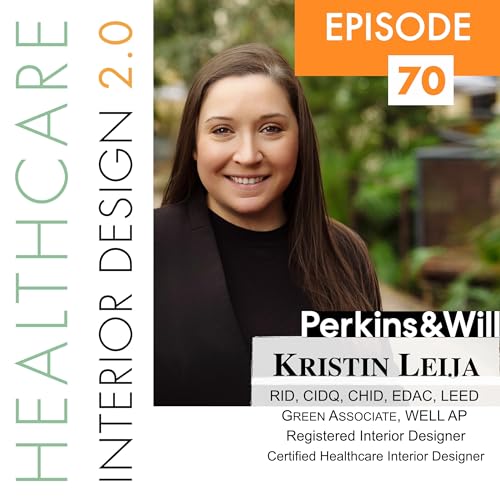
  • Episode 70: Kristin Leija, RID, CIDQ, CHID, EDAC, LEED Green Associate, WELL AP — Registered Interior Designer & Certified Healthcare Interior Designer at Perkins&Will (San Antonio, TX)
    Nov 12 2025
    "When one of us rises, all of us rise." –Kristin Leija on the Healthcare Interior Design 2.0 podcast Today on the pod, Cheryl sits down—virtually—with Kristin Leija, RID, CIDQ, CHID, EDAC, LEED Green Associate, WELL AP — Registered Interior Designer & Certified Healthcare Interior Designer at Perkins&Will in San Antonio, TX. Kristin brings big-firm reach with a startup spirit—supporting teams across Texas while anchoring in San Antonio's historic Pearl District. As a post-COVID entrant to healthcare design, she pairs digital fluency with CHID/EDAC rigor and a community-first mindset. We talk building credibility without 20 years on the clock, designing for a multicultural city, caregiver realities (including her own), and the rising focus on behavioral health and "living design" sustainability. What We Cover Post-COVID vantage point: translating six-foot spacing, touch reduction, and one-way flows into healthcare planning Earning trust early: leading with research, active listening, and co-authoring solutions with clients Community + culture → design: how San Antonio's "smallest big city" vibe shows up in wayfinding, lobbies, and public spaces Caregiver lens: where do you take sensitive calls, decompress, or bring a child while visiting? Behavioral health everywhere: why BH thinking is showing up across non-BH projects Futurism in practice: scanning signals, staying curious, and shaping what's next Living design: Perkins&Will's holistic take on health, wellness, sustainability, and poetics Key Takeaways Curiosity beats tenure. Showing up with relevant research and good questions builds credibility fast. Design the whole journey. Spaces that respect caregivers' needs (privacy, quiet, nooks) change the experience. Culture isn't décor. Authentic place-based cues support wayfinding, belonging, and ease. Behavioral health is universal. Small, thoughtful interventions can lower stress across all settings. Be a futurist. Track signals, share knowledge, and help clients prepare—not just react. Connect with Kristin Leija Email: kristin.leija@perkinswill.com LinkedIn: https://www.linkedin.com/in/kristin-leija/ Resources & Shout-outs Perkins&Will — San Antonio Studio — Kristin's team; community-rooted healthcare design. https://perkinswill.com/studio/san-antonio/ Perkins&Will Pearl District (San Antonio) — Historic brewery reimagined as a cultural hub where Kristin's studio is based. https://atpearl.com/ Pearl Culinary Institute of America — San Antonio (at Pearl) — Daily energy and inspiration right outside the studio. https://www.ciachef.edu/cia-texas/ Culinary Institute of America Fiesta San Antonio — The city's "party with a purpose," celebrating culture and community each April. https://fiestasanantonio.org/ Fiesta San Antonio UTSA — The University of Texas at San Antonio — Local research partner ecosystem Kristin references. https://www.utsa.edu/ UT San Antonio Wilford Hall Medical Center — Former USAF medical hub meaningful in Kristin's family story. https://www.army.mil/article/273984/wilford_hall_preserving_a_legacy_brick_by_brick Army Design frameworks & focus areas Perkins&Will — Living Design — Holistic health, sustainability, and poetics in practice. https://perkinswill.com/living-design/ Perkins&Will Behavioral Health Design — Kristin's recent work; principles that translate across care settings. (Overview article you can cite as needed.) https://healthcaredesignmagazine.com/news/perkinswill-opens-new-design-studio-in-san-antonio/64570/ HCD Magazine Foresight / Futurism in Design — Signal-scanning mindset to prepare clients for what's next. (Visitor guide to Pearl as a culture/innovation anchor.) https://www.visitsanantonio.com/plan-your-trip/neighborhood-guide/pearl-district/ Visit San Antonio Credentials & organizations CHID — Certified Healthcare Interior Designer (AAHID) https://aahid.org/certification/ AAHID EDAC — The Center for Health Design https://www.healthdesign.org/certification-outreach/edac/ Health Design LEED Green Associate — USGBC https://www.usgbc.org/credentials/leed-green-associate U.S. Green Building Council WELL AP — IWBI https://www.wellcertified.com/well-ap wellcertified.com NCIDQ / CIDQ https://www.cidq.org/ CIDQ Our Industry Partners The world is changing quickly. The Center for Health Design is committed to providing the healthcare design and senior living design industries with the latest research, best practices and innovations. The Center can help you solve today's biggest healthcare challenges and make a difference in care, safety, medical outcomes, and the bottom line. Find out more at healthdesign.org. Additional support for this podcast comes from our industry partners: The American Academy of Healthcare Interior Designers The Nursing Institute for Healthcare Design Learn more about how to become a Certified Healthcare Interior Designer® by visiting the American ...
    Show More Show Less
    37 mins
  • Episode 69: Corinn Soro, Interior Designer, CID, NCIDQ, CHID, EDAC, Senior Planner, Roswell Park Comprehensive Cancer Center
    Oct 21 2025
    "Another sign is not the answer—it dilutes the message." - Corinn Soro Today on the pod, Cheryl sits down—virtually—with Senior Planner and Interior Designer Corinn Soro of Roswell Park Comprehensive Cancer Center in Buffalo, NY for a deep dive into wayfinding that actually works: why "visual pollution" erodes attention, how de-crapification clarifies intent, and where evidence-based choices can transform the patient journey from disorientation to ease. Expect real examples—subway-style maps that set expectations at a glance, pictograms that land when words won't, and donor walls designed to evolve rather than date out—plus the small, cumulative tweaks that lower stress for visitors and staff alike. Today's conversation is about design as reassurance, translating research into decisions that cut through noise and hand back control the moment someone walks through the door. What We Cover A 17-year-old's spark: geriatric care, neuroplasticity, and the built environment London roots: learning research methods alongside OTs and PTs; universal design for all bodies Evidence-Based Design in action: NICU decisions (sound, circadian light, infection control) backed by research "Visual pollution" vs. visual cues: the case for ruthless editing ("de-crapification") before adding signs Wayfinding that works under stress: step-by-step instructions, few decision points, and reassurance cues Designing for low literacy: a color-and-letter "subway" system, line-of-travel markers, and proximity intuition Pictograms that actually communicate: testing, swapping out abstractions, and kid-friendly icons Measuring ROI: missed appointments, staff disruptions, and the real cost of poor wayfinding In-house rhythm at a research hospital: tight feedback loops, quick iterations, and process fixes Donor walls that age well: digital storytelling, magnetic plaques, and durable substrates Advocacy and pipeline: AMFP Upstate NY, craft labor realities, and manufacturing shifts ahead Big wish list: self-cleaning floors (for hospitals…and home) Why post-occupancy evaluations could prevent future design disasters (and why they rarely happen) Key Takeaways Edit before you add. Wayfinding succeeds when clutter is removed and destinations are made legible through architecture, lighting, and contrast—not just more signs. Design for the stressed brain. Fewer decision points + stepwise reassurance beat complex directions every time. Evidence accelerates approvals. EBD turns subjective taste debates into science-backed decisions leadership can green-light. Symbols > sentences. Tested pictograms improve comprehension across languages, ages, and literacy levels. Iterate in the wild. Being embedded with clinicians and patients surfaces quick wins you'll never catch from afar. Memorable Quotes from Corinn Soro "Another sign isn't the answer—it dilutes the message." "Wayfinding is about giving choice back to patients when so much else is out of their control." "If a space is 'too quiet' for the engineer, it's probably just right for the neonates." "Healthcare design is a team sport." Resources & Links Roswell Park Comprehensive Cancer Center — https://www.roswellpark.org/ AMFP Upstate New York Chapter — https://amfp.org/upstate-new-york Fiona Finer, the Interior Designer (ages 3–8) — https://www.amazon.com/Fiona-Finer-Interior-Designer-Corinn/dp/1720664889 EDAC Certification (Evidence-Based Design) — https://www.healthdesign.org/certification-outreach/edac Hablamos Juntos pictograms — https://www.theicod.org/resources/news-archive/segd-and-hablamos-juntos-introduce-new-universal-symbols-in-health-care Sisters of Charity Hospital (Buffalo, NY) — NICU project mentioned — https://www.chsbuffalo.org/sisters-of-charity-hospital/ Past HID2.0 episode featuring Tama Duffy Day — Episode 20 https://healthcareidpodcast.libsyn.com/2019/09 Connect with Corinn Soro Email: corinn.soro@roswellpark.org LinkedIn: https://www.linkedin.com/in/corinn-soro-14859ab/ Our Industry Partners The world is changing quickly. The Center for Health Design is committed to providing the healthcare design and senior living design industries with the latest research, best practices and innovations. The Center can help you solve today's biggest healthcare challenges and make a difference in care, safety, medical outcomes, and the bottom line. Find out more at healthdesign.org. Additional support for this podcast comes from our industry partners: The American Academy of Healthcare Interior Designers The Nursing Institute for Healthcare Design Learn more about how to become a Certified Healthcare Interior Designer® by visiting the American Academy of Healthcare Interior Designers at: https://aahid.org/. Connect to a community interested in supporting clinician involvement in design and construction of the built environment by visiting The Nursing Institute for Healthcare Design at https://...
    Show More Show Less
    1 hr and 1 min