Episodes

  • Asian History Unit 8: Mao, Chinese Revolution & Cultural Revolution
    May 2 2026

    Delve into Unit 8 of our Asian History and Culture series, exploring the seismic transformations of modern China under Mao Zedong. From the chaos following the Qing Dynasty's fall to the triumph of the Communist Revolution in 1949, the Great Leap Forward's devastating famine, and the Cultural Revolution's societal upheaval, this episode uncovers the triumphs, tragedies, and enduring legacy of communist rule. Discover how Mao's rural-focused adaptation of Marxism reshaped a nation and continues to influence global dynamics today.

    Key Topics Covered:
    • The power vacuum after the Qing Dynasty collapse in 1912 and the rise of Mao Zedong from rural Hunan.
    • The Chinese Civil War between the CCP and Nationalists (KMT), culminating in the 1949 founding of the People's Republic of China.
    • Early communist reforms: land redistribution, literacy drives, and improved life expectancy.
    • The Great Leap Forward (1958-1961): communes, falsified reports, and the deadliest famine in history (15-55 million deaths).
    • The Cultural Revolution (1966-1976): Red Guards, destruction of the "Four Olds," purges of rivals like Deng Xiaoping, and societal reset.
    • Mao's complex legacy: unification and sovereignty vs. mass deaths and terror, as per the CCP's "70% right, 30% wrong" verdict.
    Key Stories:

    hear Mao's iconic 1949 declaration from Tiananmen Square; the fragile WWII alliance shattered by civil war; peasants turned into industrial workers amid famine; students humiliating teachers and destroying cultural treasures; and China's post-Mao rebuild under leaders like Deng Xiaoping.

    This episode reveals why Mao's era matters: it explains modern China's rise as a superpower, U.S.-China tensions over Taiwan, and the balance between authoritarian control and economic miracle.

    Chinese Revolution, Mao Zedong, Cultural Revolution, Great Leap Forward, CCP history, modern China, Asian history, communism in China, Tiananmen Square, Red Guards, Deng Xiaoping, Chinese Civil War

    Subscribe to History No One Taught You for more untold stories!

    Show More Show Less
    39 mins
  • Asian History Unit 7: Sacred Art, Temples, Pagodas & Mosques
    Apr 30 2026

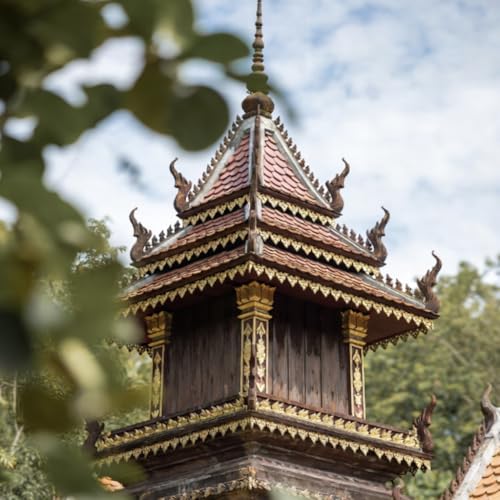
    Embark on a captivating journey through Unit 7 of Asian History and Culture, exploring the profound world of sacred architecture from stupas to mosques. Discover how temples, pagodas, and other monumental structures across South, East, and Southeast Asia serve as physical embodiments of cosmology, theology, and communal ritual. This episode reveals the evolution, symbolism, and cultural fusion in these timeless edifices that continue to inspire awe.

    Key Topics Covered:
    • Stupas: Ancient burial mounds turned cosmological diagrams, like the Great Stupa at Sanchi with its storytelling toranas.
    • Pagodas: The stupa's eastward evolution into tiered towers, exemplified by the Giant Wild Goose Pagoda in Xi'an and Horyuji Temple in Japan.
    • Hindu Temples: Mountain-like shikharas and womb-like garbhagrihas in Khajuraho and Brihadeeswara Temple, representing Mount Meru.
    • Mosques: Qibla-oriented designs blending geometry, calligraphy, and local styles from Xi'an's Chinese pavilion to Java's tiered roofs.
    • Common threads: How diverse architectures address the challenge of housing the infinite through stone, wood, and ritual movement.
    What You'll Learn:
    • The symbolic geometry of stupas and the ritual of pradakshina that makes pilgrims part of the cosmos.
    • How Buddhism's spread transformed stupas into pagodas, aligning with Chinese feng shui and Japanese refinement.
    • Regional Hindu styles—Nagara and Dravidian—and their recreation of sacred mountains.
    • Islam's adaptive mosque designs across Asia, prioritizing space, sound, and Mecca's direction without erasing local traditions.

    These sacred spaces offer timeless insights into how Asian cultures visualize the divine, influencing modern architecture and spirituality worldwide—essential listening for anyone fascinated by humanity's built legacy.

    Asian history, sacred architecture, stupas, pagodas, Hindu temples, mosques, Sanchi Stupa, Khajuraho, Brihadeeswara Temple, Giant Wild Goose Pagoda, Horyuji, Asian culture, Buddhism spread, Islamic architecture Asia, Mount Meru, qibla, feng shui architecture

    Subscribe to History No One Taught You for more untold stories!

    Show More Show Less
    39 mins
  • Asian History Unit 6: Buddhism's Theravada, Mahayana, Vajrayana
    Apr 28 2026

    Delve into Unit 6 of History No One Taught You's Asian History and Culture series, exploring the profound evolution of Buddhism from its origins in ancient India to its diverse traditions across Asia. This episode compares Theravada, Mahayana, and Vajrayana, revealing how one seed of wisdom grew into branches shaped by geography, culture, and philosophy. Uncover the shared foundations and striking differences that have influenced billions.

    Key Topics Covered:
    • The historical Buddha, Siddhartha Gautama, and the Four Noble Truths with the Eightfold Path
    • Theravada: The elders' path in Southeast Asia, emphasizing the arahant ideal and Pali Canon
    • Mahayana: The greater vehicle in East Asia, introducing the bodhisattva vow and schools like Madhyamaka and Yogacara
    • Vajrayana: The diamond vehicle in Tibet and the Himalayas, with tantric practices, mantras, and the tulku system
    • How Buddhism adapts across borders, from monastic life in Thailand to lama-guided rituals in Dharamsala
    What You'll Learn:
    • The common grammar uniting Buddhist dialects despite regional variations
    • Why Theravada isn't "selfish" but a lighthouse for communal merit
    • Mahayana's compassionate revolution delaying nirvana for all beings
    • Vajrayana's "helicopter" path using esoteric tools for rapid enlightenment
    • Buddhism's impact on art, philosophy, and society over 2,500 years

    Whether you're a history buff, spiritual seeker, or curious learner, this episode illuminates overlooked aspects of Asian intellectual traditions that continue shaping global culture today.

    Buddhism history, Theravada vs Mahayana, Vajrayana tantra, Asian philosophy, Four Noble Truths, bodhisattva ideal, Tibetan Buddhism, Pali Canon, Siddhartha Gautama, nirvana path

    Subscribe to History No One Taught You for more untold stories!

    Show More Show Less
    40 mins
  • Asian History Unit 5: Khmer Empire, Angkor Wat, Indianization
    Apr 26 2026

    Delve into Unit 5 of our Asian History and Culture series, exploring the majestic Khmer Empire of Southeast Asia. From the awe-inspiring Angkor Wat to the phenomenon of Indianization, discover how this medieval powerhouse blended Indian influences with local ingenuity to create a hydraulic marvel and cultural crossroads. Uncover the empire's rise, religious shifts, and enduring legacy in modern Cambodia and beyond.

    Key Topics Covered:
    • The Khmer Empire's dominance from the 9th to 15th centuries, spanning modern Cambodia, Vietnam, and the Malay Peninsula
    • Indianization: Cultural exchange via trade, not conquest, introducing Sanskrit, Hinduism, Buddhism, and sacred architecture
    • Angkor Wat as a cosmological map, built by Suryavarman II with moats, towers representing Mount Meru, and epic bas-reliefs
    • Ingenious water management systems enabling rice surplus and massive construction
    • Religious evolution from Hinduism to Mahayana Buddhism under Jayavarman VII and the Bayon temple
    • Decline due to climate, invasions, and instability, plus lasting influences on Thai, Balinese, and Vietnamese cultures
    What You'll Learn:

    Grasp how Southeast Asian kingdoms actively adapted Indian ideas into unique hybrid cultures, mastered environmental challenges for prosperity, and navigated fluid religious traditions blending Hinduism, Buddhism, and animism—revealing the Khmer as innovators of political theology through architecture.

    This episode reveals why understanding the Khmer Empire reshapes views of medieval Asia, showing cultural synthesis as a source of enduring power and identity, from Cambodia's flag to regional traditions today.

    Khmer Empire, Angkor Wat, Indianization Southeast Asia, Suryavarman II, Jayavarman VII, Bayon temple, hydraulic engineering, Hinduism Buddhism fusion, Cambodian history, medieval kingdoms, cultural exchange Asia

    Subscribe to History No One Taught You for more untold stories—new episodes weekly!

    Show More Show Less
    39 mins
  • South Asia: Maurya & Gupta Empires (Unit 4)
    Apr 24 2026

    Unit 4 of History No One Taught You dives into South Asia's classical golden ages, spotlighting the Maurya and Gupta Empires of ancient India. From Chandragupta Maurya's unification after Alexander's invasion to Ashoka's dramatic conversion to Buddhism and ethical governance, we explore empire-building and its philosophical shifts. The Gupta era follows with groundbreaking math, science, and literature that shaped the modern world.

    Key Topics Covered:
    • The fragmented Indian subcontinent before 400 BCE and the rise of the Maurya Empire under Chandragupta Maurya and advisor Kautilya.
    • Ashoka's Kalinga War remorse, conversion to Buddhism, and *dhamma*-based rule promoting compassion and welfare.
    • Post-Maurya interlude and the Gupta Empire's emergence around 320 CE through alliances and expansion.
    • Gupta achievements: zero and decimal system, Aryabhata's astronomy, Kalidasa's literature, and advanced medicine.
    • Common misconceptions: empires' differences in religion, governance, and the realities of inequality amid the "Golden Age."
    What You'll Learn:
    • How Ashoka's pillars and edicts spread Buddhism across Asia via soft power.
    • The mathematical innovations from Gupta India—like zero and pi—that power today's technology.
    • Contrasts between Maurya's centralized bureaucracy (*Arthashastra*) and Gupta's decentralized rule.
    • Influence on modern figures like Gandhi and everyday tools like digital clocks.

    These empires reveal how power, remorse, and innovation forge lasting legacies—essential for understanding global history's interconnected threads.

    ancient India, Maurya Empire, Gupta Golden Age, Ashoka Buddhism, Chandragupta Maurya, Arthashastra, Aryabhata math, zero invention, Indian philosophy, South Asia history, classical empires

    Subscribe now to History No One Taught You for more untold stories—new episodes weekly!

    Show More Show Less
    39 mins
  • Asian History Unit 3: Japan - Jomon to Heian (Part 3)
    Apr 22 2026

    Unit 3 of History No One Taught You's Asian History and Culture series dives into Japan's ancient origins, from the world's oldest pottery makers to the elegant Heian court. Explore the Jomon hunter-gatherers, Yayoi agricultural revolution, divine myths in the Kojiki, and the refined aristocratic world of The Tale of Genji. This episode uncovers the foundations of Japan's transformation from feudal islands to a modern nation.

    Key Topics Covered:
    • Jomon culture: World's oldest pottery (14,000 BCE), cord-marked designs, shell mounds, and egalitarian foraging societies.
    • Yayoi migrants: Wet rice farming, metallurgy from Korea/China, genetic mixing with Jomon, and rise of social hierarchies.
    • Mythological origins: Izanagi, Izanami, Amaterasu, Ninigi, and Emperor Jimmu in the Kojiki and Nihon Shoki as political theology.
    • Yamato state formation: Blending indigenous roots, agriculture, and divine legitimacy for early unification.
    • Heian Period: Aristocratic court culture, poetry, and the groundbreaking Tale of Genji.
    Key Stories:

    Discover how Jomon foragers crafted pottery older than any other civilization, how Yayoi rice paddies sparked inequality and statehood, and how imperial myths turned rulers into gods. Relive the Heian era's obsession with beauty, where status hinged on poetic elegance rather than warfare, birthing the world's first novel, The Tale of Genji.

    These hidden chapters reveal why Japan's unique blend of innovation, tradition, and mythology shaped one of the world's most influential cultures—essential for understanding East Asia's rise.

    ancient Japan, Jomon pottery, Yayoi period, Kojiki myths, Amaterasu, Emperor Jimmu, Heian court, Tale of Genji, Japanese history, Asian origins, Yamato state

    Subscribe now to History No One Taught You for more untold stories—new episodes weekly on Apple Podcasts, Spotify, or wherever you listen!

    Show More Show Less
    39 mins
  • Asian History Unit 2: Imperial China Rise, Reign, Legacy
    Apr 20 2026

    Dive into Unit 2 of Asian History and Culture on History No One Taught You, exploring the birth of imperial China through the Qin Dynasty's unification under the First Emperor, the Han Dynasty's philosophical innovations like the Mandate of Heaven, and the recurring dynastic cycle that shaped over two millennia of rule. From brutal conquests and standardization reforms to the fall into rebellion and fragmentation, this episode unpacks the rise, reign, and enduring legacy of early empires. Discover how these patterns of prosperity, decay, and renewal echo through Chinese history.

    Key Topics Covered:
    • The Warring States period and Qin Shi Huangdi's unification in 221 BCE
    • Standardization of script, weights, measures, and infrastructure under Qin
    • Terracotta Army and the short-lived Qin Dynasty's overreach
    • Han Dynasty's rise under Liu Bang and the Mandate of Heaven concept
    • Four centuries of Han stability, Silk Road expansion, and cultural legacy
    • Yellow Turban Rebellion, eunuch influence, and the Three Kingdoms fragmentation
    • The dynastic cycle as a framework for understanding Chinese imperial history
    Key Stories:

    Relive Qin Shi Huangdi's epic conquest turning seven warring states into one empire, his massive projects like early Great Wall precursors and the terracotta warriors guarding his tomb. Witness the Han's clever pivot to Confucian governance and moral accountability via the Mandate of Heaven, sustaining prosperity until corruption and peasant revolts like the Yellow Turban Rebellion shattered the realm into the chaotic Three Kingdoms era.

    Grasp the dynastic cycle—rise, peak, decay, fall—to decode not just China's past but recurring patterns in empires worldwide, revealing why strong institutions and legitimacy matter for enduring power.

    Imperial China history, Qin Dynasty, Han Dynasty, First Emperor, Mandate of Heaven, dynastic cycle, Warring States, Yellow Turban Rebellion, Silk Road, Three Kingdoms, Chinese empire unification, Terracotta Army, Asian history podcast

    Subscribe now to History No One Taught You for more untold stories from the past—never miss an episode!

    Show More Show Less
    37 mins
  • How Geography Forged Asia's Ancient Civilizations
    Apr 18 2026

    Delve into the foundational role of geography in shaping Asia's earliest civilizations in this episode of History No One Taught You. From life-giving rivers that sparked agricultural surpluses and complex societies to towering mountains acting as natural barriers, discover how landscapes dictated migration, trade, and cultural evolution. Unpack why rivers like the Yellow, Yangtze, Indus, and Ganges were engines of empire, while monsoons turned Southeast Asia into a maritime trade superpower.

    Key Stories Covered:
    • Rivers as lifelines: How Yellow River and Yangtze floods created fertile plains, enabling surplus food, cities, and governance in ancient China.
    • Mountains as walls: The Himalayas and Hindu Kush isolated South Asia, fostering unique Vedic cultures and controlling vital passes like the Khyber.
    • Islands and monsoons: Southeast Asia's fragmented geography and predictable winds birthed sea-oriented, cosmopolitan societies blending Hinduism with local traditions.
    • Beyond determinism: Geography sets constraints but humans innovate—why river valleys bred centralized states while seas favored flexible trade networks.
    Timestamps:
    • 0:00 - Intro: Why geography writes history's script
    • 2:30 - Rivers: Engines of early Asian civilizations
    • 7:45 - Mountains: Barriers shaping isolation and trade
    • 12:20 - Southeast seas: Monsoons, islands, and cultural synthesis
    • 17:10 - Unlearning misconceptions: Geography's role vs. destiny

    This episode reveals the hidden forces behind Asia's diverse empires, helping you rethink how environment influences human innovation and societal paths.

    Asian history, ancient civilizations, Yellow River civilization, Himalayas impact, Indus Valley, monsoon trade, Southeast Asia geography, river valley societies, ancient China geography, geographic determinism

    Subscribe to History No One Taught You for more untold stories that reshape what you know!

    Show More Show Less
    33 mins