Episodes

  • How the 1944 Bretton Woods Conference Still Runs the World
    Jun 28 2026

    In the summer of 1944, as World War II still raged across Europe and the Pacific, representatives from forty-four nations gathered at a secluded resort in the mountains of Bretton Woods. Their mission was ambitious: design a new global economic system that could prevent another Great Depression and avoid the financial chaos that had helped fuel war.

    In this episode of History Shorts, we explore the remarkable three-week conference that reshaped the modern world. Led by influential figures such as John Maynard Keynes and Harry Dexter White, delegates debated the future of international trade, currencies, and economic cooperation. The result was the creation of institutions that still influence global finance today, including the International Monetary Fund and the World Bank.

    SUPPORT THE SHOW: https://www.patreon.com/c/HistoryShortsPodcast

    ADVERTISE: https://www.historyshortspodcast.com/advertise

    LEARN MORE: https://www.historyshortspodcast.com/

    SPONSORED BY: https://www.podcastrepublic.net/get-it-now

    Show More Show Less
    14 mins
  • Lights, Camera, Propaganda: Hollywood and the Cold War
    Jun 27 2026

    During the Cold War, the battle between the United States and the Soviet Union wasn't fought only with missiles, spies, and armies. It was also fought on movie screens.

    In this episode of History Shorts, we explore how Hollywood became an unexpected front in the global struggle between democracy and communism. From patriotic war films and anti-communist thrillers to government cooperation with filmmakers and the infamous investigations of the House Un-American Activities Committee, the film industry found itself deeply entangled in Cold War politics. Actors, writers, and directors faced blacklists, loyalty tests, and accusations that could end careers overnight.

    SUPPORT THE SHOW: https://www.patreon.com/c/HistoryShortsPodcast

    ADVERTISE: https://www.historyshortspodcast.com/advertise

    LEARN MORE: https://www.historyshortspodcast.com/

    SPONSORED BY: https://www.podcastrepublic.net/get-it-now

    Show More Show Less
    14 mins
  • The Black Death - A Global History of Humanity's Deadliest Pandemic, w/ Thomas Asbridge
    Jun 26 2026

    In this powerful episode of Conversations, I sit down with leading medieval historian Professor Thomas Asbridge to discuss his groundbreaking new book, *The Black Death: A Global History of Humanity's Most Devastating Pandemic*.

    We explore the true scale of the 14th-century plague that killed tens of millions across Europe, the Islamic world, and beyond — far more than just a European story. Asbridge brings to life the human experiences of kings, peasants, and everyday people caught in the horror, while examining how the pandemic reshaped society, economies, and empires.

    Topics covered: • Why the Black Death was truly global • How Christian, Muslim, and Jewish communities responded differently • The most powerful personal stories from the catastrophe • Long-term impacts that changed the medieval world forever • Lessons for our own time of pandemics and global crises

    Thomas Asbridge is Reader in Medieval History at Queen Mary University of London and author of acclaimed books including *The Crusades* and *The Greatest Knight*.

    If you enjoy deep history with powerful storytelling, this is an episode you won't want to miss.

    📖 Grab the book: https://www.amazon.com/Black-Death-Humanitys-Devastating-Pandemic/dp/0593129164

    SUPPORT THE SHOW: https://www.patreon.com/c/HistoryShortsPodcast

    ADVERTISE: https://www.historyshortspodcast.com/advertise

    LEARN MORE: https://www.historyshortspodcast.com/

    SPONSORED BY: www.thecollector.com

    Show More Show Less
    30 mins
  • The Extraordinary History of SPAM
    Jun 25 2026

    Few foods are as recognizable—or as misunderstood—as a can of SPAM. The small pink block of processed meat has been mocked, celebrated, rationed, smuggled, and even elevated to cultural icon status. But behind the jokes lies one of the most remarkable food stories of the modern era.

    In this episode of History Shorts, we explore how SPAM went from a Depression-era product created by Hormel Foods to a global phenomenon. During World War II, millions of cans accompanied Allied troops across Europe and the Pacific, providing a reliable source of protein that could survive long journeys without refrigeration. Soldiers complained about it, joked about it, and ate enormous quantities of it—but SPAM became an essential part of the Allied war effort.

    SUPPORT THE SHOW: https://www.patreon.com/c/HistoryShortsPodcast

    ADVERTISE: https://www.historyshortspodcast.com/advertise

    LEARN MORE: https://www.historyshortspodcast.com/

    SPONSORED BY: https://www.podcastrepublic.net/get-it-now

    Show More Show Less
    12 mins
  • How the 1964 Tokyo Olympics Rewrote Japan's Story
    Jun 24 2026

    In October 1964, the eyes of the world turned toward Tokyo. Less than twenty years after the devastation of World War II, Japan hosted the 1964 Summer Olympics—an event that was about far more than sports.

    In this episode of History Shorts, we explore how the Tokyo Olympics became Japan's grand reintroduction to the world. Determined to shed memories of war and demonstrate its remarkable recovery, Japan used the Games to showcase cutting-edge technology, modern infrastructure, and a thriving economy. New highways transformed the capital, the world's first high-speed Shinkansen bullet train began service just days before the opening ceremony, and millions watched as a nation once reduced to rubble presented itself as a symbol of innovation and peace.

    SUPPORT THE SHOW: https://www.patreon.com/c/HistoryShortsPodcast

    ADVERTISE: https://www.historyshortspodcast.com/advertise

    LEARN MORE: https://www.historyshortspodcast.com/

    SPONSORED BY: https://www.podcastrepublic.net/get-it-now

    Show More Show Less
    11 mins
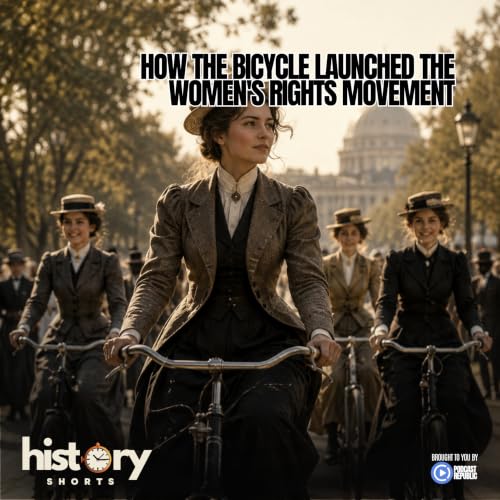
  • How the Bicycle Launched the Women's Rights Movement
    Jun 23 2026

    In the late nineteenth century, a simple invention transformed far more than transportation. As bicycles became affordable and widely available, they offered women something many had never possessed before: independent mobility.

    In this episode of History Shorts, we explore how the bicycle became an unexpected engine of social change. Women across Europe and the United States embraced cycling, gaining new freedom to travel, work, socialize, and participate in public life without relying on fathers, husbands, or chaperones. The bicycle also sparked fierce debates about fashion, gender roles, and women's place in society, helping fuel broader conversations that would eventually contribute to the growing movement for women's rights and suffrage.

    SUPPORT THE SHOW: https://www.patreon.com/c/HistoryShortsPodcast

    ADVERTISE: https://www.historyshortspodcast.com/advertise

    LEARN MORE: https://www.historyshortspodcast.com/

    SPONSORED BY: https://www.podcastrepublic.net/get-it-now

    Show More Show Less
    14 mins
  • Were the Founding Fathers Good Men? | The Historians with Joseph Ellis & Carol Berkin
    Jun 22 2026

    Welcome to THE HISTORIANS — a brand new series on History Shorts where host Peter Zablocki brings together two leading historians for an unscripted, informal conversation about history's biggest questions. No panels. No debate. No agenda. Just two brilliant minds talking shop.

    For the debut episode, Peter sits down with two of America's foremost historians of the founding era and asks one deceptively simple question:

    Were the Founding Fathers Good Men?

    Dr. Joseph J. Ellis — Pulitzer Prize-winning author of Founding Brothers, American Sphinx, His Excellency: George Washington, and The Cause — and Dr. Carol Berkin — Presidential Professor Emerita at CUNY and author of Revolutionary Mothers, A Brilliant Solution, and The Bill of Rights — join Peter for nearly an hour of warm, honest, and occasionally surprising conversation.

    Show More Show Less
    54 mins
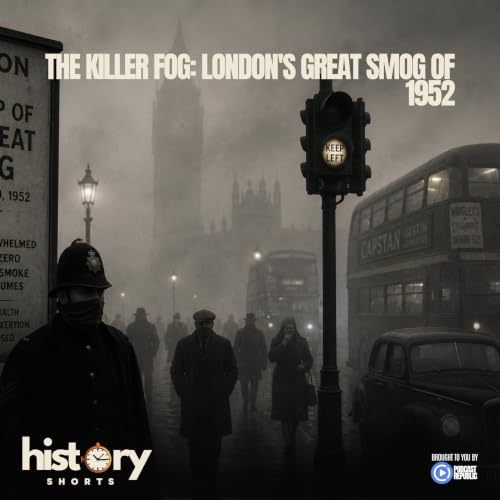
  • The Killer Fog: London's Great Smog of 1952
    Jun 21 2026

    In December 1952, a thick blanket of fog descended upon London. At first, it seemed like a familiar winter nuisance. But this was no ordinary fog. Mixed with smoke from millions of coal fires and trapped by unusual weather conditions, it became a toxic cloud that brought one of the world's greatest cities to a standstill.

    In this episode of History Shorts, we explore the deadly Great Smog of London, a five-day environmental disaster that turned daylight into darkness, halted transportation, and left thousands struggling to breathe. As hospitals overflowed and visibility dropped to just a few feet, Londoners found themselves confronting an invisible killer lurking in the air around them.

    SUPPORT THE SHOW: https://www.patreon.com/c/HistoryShortsPodcast

    ADVERTISE: https://www.historyshortspodcast.com/advertise

    LEARN MORE: https://www.historyshortspodcast.com/

    SPONSORED BY: https://www.podcastrepublic.net/get-it-now

    Show More Show Less
    14 mins