• Slow Down Will You?
    Oct 2 2025

    What if we've been approaching education all wrong? What if the race to cover more material, check more boxes, and meet arbitrary benchmarks is actually preventing our children from experiencing the deep, transformative learning they deserve?

    Leslie Martino joins us to discuss her groundbreaking book "The Joy of Slow: Restoring Balance and Wonder to Homeschool Learning." With warmth and wisdom, she challenges our culture's obsession with educational productivity and offers a refreshing alternative that prioritizes depth over breadth, process over product, and connection over curriculum.

    Drawing from her extensive experience as both an educator and homeschooling parent, Leslie explains what "slow" really means in education – not just taking more time, but fundamentally shifting how we approach learning. She addresses the fears that keep families trapped in educational rat races and shares powerful stories of how embracing self-directed interests creates rich learning environments. From her daughter's journey customizing toys to her own exploration of Florida Highwaymen artists, Leslie illustrates how organic curiosity leads to deeper, more meaningful educational experiences than any prescribed curriculum.

    This conversation will resonate with anyone feeling the pressure to accelerate learning at the expense of joy and connection. Whether you homeschool, send your children to traditional school, or simply want to nurture the natural love of learning in your family, Leslie's insights will help you recalibrate your educational approach to reflect what truly matters. You'll walk away with practical strategies for slowing down, honoring the learning process, and creating space for wonder and discovery in your home.

    Ready to transform how you think about education? Listen now and discover the extraordinary power of slowing down.

    What's your question?

    For links and the transcript, visit wokehomeschooling.com/podcast

    Show More Show Less
    52 mins
  • Are You Ready to Start Homeschooling?
    Aug 7 2025

    Stepping into homeschooling is a big leap—especially for families of color navigating spaces that often weren’t built with them in mind. In this episode, Elan Page, founder of Homeschool Our Way, shares how she helps Black families and other families of color create affirming, flexible, and culturally grounded homeschool experiences.

    We talk about:

    • Finding community when you feel alone
    • Choosing curriculum that represents your child
    • Letting go of the “school-at-home” mindset
    • Homeschooling with two working parents
    • Creating a learning space where your child feels seen

    Elan's story is full of warmth, real talk, and game-changing insight—especially if you’ve ever wondered, “Can we actually do this?” (Spoiler: Yes, you can.)

    Ready to explore homeschooling that truly represents your family? Visit wokehomeschooling.com for resources that empower you to teach inclusive, truthful history to your children.

    What's your question?

    For links and the transcript, visit wokehomeschooling.com/podcast

    Show More Show Less
    32 mins
  • Are you planning for college like it's still 2005?
    Jun 12 2025

    Remember when college applications meant taking the SAT and waiting for brochures to arrive in your mailbox? That world is long gone. Today's college admissions landscape has transformed into something barely recognizable to those of us who went through it decades ago.

    Shaquita Basileo, a seasoned college admissions coach and proud graduate of Florida A&M University and Stanford University's Graduate School of Business, pulls back the curtain on what's really happening in college admissions today. With the timeline shifting dramatically earlier—applications now happening at the end of junior year rather than senior year—families need to start planning for college as early as freshman year. Even those reliable state schools that were once considered "safety schools" have become fiercely competitive.

    The heart of a successful application today? A compelling story. "Your application needs to tell a story," Shaquita emphasizes. This narrative connects the dots between a student's experiences, interests, and future goals in a way that demonstrates genuine passion and commitment. Admissions officers, overwhelmed with applications, often only have time to read the first paragraph of an essay—making a powerful, coherent narrative essential for standing out.

    For parents worried their teen hasn't found their passion yet, Shaquita offers practical advice on sparking interest and building a compelling application regardless. She also tackles tough questions: Is college still worth the investment? (Yes, but with a strategic plan.) Why are HBCUs becoming more competitive? (They're proving their value and creating supportive environments.) What additional considerations should families with disabled students keep in mind? (Start early and learn about available accommodations.)

    Whether your teen is approaching college age or you're planning years ahead, this episode provides the insider knowledge you need to navigate this new landscape successfully. Subscribe, share with other parents, and start reimagining your approach to college admissions today. The landscape has changed—and now you're equipped to change with it.

    What's your question?

    For links and the transcript, visit wokehomeschooling.com/podcast

    Show More Show Less
    55 mins
  • Can Kids Grow Up Whole in a Digital World?
    May 17 2025

    What if the answer to digital parenting concerns isn't about screen time limits or monitoring apps, but about understanding human development itself? In this eye-opening conversation, Diana Graber, author of "Raising Humans in a Digital World" and creator of the Cyber Civics curriculum, reveals why developmental psychology holds the key to healthy technology relationships.

    Graber's perspective is refreshingly different. Rather than focusing solely on devices, she examines what makes us human in the first place. She explains why children can't fully engage in ethical thinking until around age 12-13 and how this biological reality should guide when we introduce social media and connected devices. "If we did one simple thing as parents and held off social media until the child's brain was ready for it," Graber notes, "it would solve 99% of our problems."

    The conversation explores why empathy emerges as the essential "digital superpower" children need most. Face-to-face interactions in early childhood build empathy muscles that later transfer to online spaces. Sandbox conflicts where children witness the immediate emotional impact of taking a toy teach lessons no screen can replicate. These foundational human experiences must precede digital engagement.

    Parents will appreciate Graber's practical guidance on teaching digital literacy at home. Her Cyber Civics curriculum offers over 140 developmentally appropriate lessons covering everything from basic safety to combating misinformation and deepfakes. Each lesson includes activities parents and children can complete together, creating what Graber calls the "trickle-up theory" where adults learn alongside their kids.

    Ready to raise humans rather than just digital consumers? Email podcast@wokehomeschooling.com to share your thoughts on maintaining humanity in our increasingly digital world.

    We’d be thrilled to offer any homeschoolers in your community 25% off a homeschool curriculum package: https://www.cybercivics.com/home-school

    If you'd like to take advantage of this offer, feel free to contact Beverly at beverly@cybercivics.com and let her know you are a Woke Homeschooling community member.

    What's your question?

    For links and the transcript, visit wokehomeschooling.com/podcast

    Show More Show Less
    24 mins
  • How Do You Introduce Hard Topics in an Age-Appropriate Way?
    Oct 10 2024

    How can we guide our children to understand and appreciate the diverse world around them through literature? Join us as we explore this compelling question with Amber, diving into the transformative power of stories. From picture books introducing toddlers to diverse characters to historical narratives for elementary learners, we discuss how literature serves as both a window and a mirror, allowing young minds to see themselves and understand others. By fostering an inclusive literary environment, we lay the groundwork for empathy and awareness in our children's formative years.

    Moving into more complex conversations, we address the importance of engaging older children and teens with narratives that challenge and educate. Delve into the world of memoirs, biographies, and contemporary fiction that confront societal issues, helping young readers become active participants in creating positive change. Alongside, we emphasize the importance of being an "askable" parent, creating an environment where any topic is open for discussion. Learn about practical tools, like “car questions,” that can help maintain open communication and ensure children feel heard and supported.

    In the final segment, we turn our focus to empowering parents through inclusive historical education. By encouraging homeschooling parents to embrace an ongoing journey of learning, we offer resources and support to make history truthful and enriching. Our mission at Woke Homeschooling Inc. is to provide an inclusive curriculum that engages both parents and children in a shared learning experience. Join us as we navigate these complexities and equip our children with the understanding and respect necessary to thrive in a diverse world.

    What's your question?

    For links and the transcript, visit wokehomeschooling.com/podcast

    Show More Show Less
    27 mins
  • How Can You Avoid Misrepresenting Native People in Your Homeschool?
    Aug 22 2024

    Unlock the secrets to an inclusive homeschool curriculum with our special guest, Kelly Tudor, who shares indispensable advice on Native representation. Learn how to identify and avoid harmful stereotypes by sourcing materials directly from Native authors. Kelly guides us through recognizing legitimate authors by their nation affiliations and the red flags in nostalgic yet misleading books like "Little House on the Prairie" and "Island of the Blue Dolphins."

    Together, we'll examine how to critically assess your current homeschool library and take actionable steps toward a more respectful and accurate portrayal of Native cultures.

    The discussion broadens to include the impact of social media, Native news sources, and vibrant pop culture on our understanding of Native communities. This episode is a treasure trove of insights for creating a more informed and respectful educational experience.

    What's your question?

    For links and the transcript, visit wokehomeschooling.com/podcast

    Show More Show Less
    26 mins
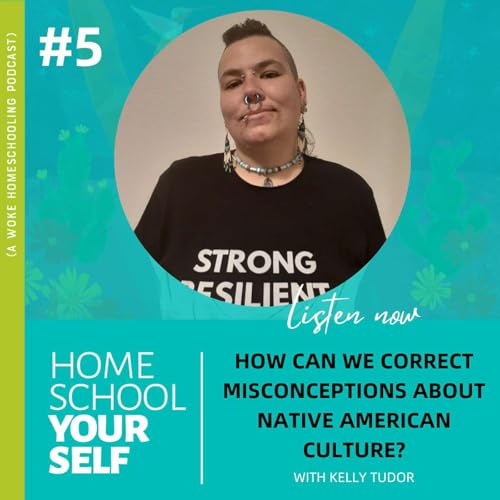
  • How Can We Correct Misconceptions About Native American Culture?
    Jun 9 2024

    Can you imagine a world where the stories you heard in school about Native American communities are completely redefined? This episode features a poignant conversation with Kelly Tudor, an educator and proud member of the Lippon Apache tribe of Texas. Kelly is on a mission to correct misconceptions and provide a true representation of Indigenous culture. We explore her tireless work raising her children with traditional Lippon Apache values and the significance of maintaining cultural integrity. Discover how Debbie Irving's book "Waking Up White" has been instrumental in challenging the stereotypes that many of us unknowingly perpetuate.

    For those interested in the profound issues within our education system, this episode is a must-listen. Kelly discusses the pervasive cultural insensitivity and miseducation that Native American students face daily, and how these issues have driven her to homeschool her children. Hear specific stories of cultural violations, including improper treatment of Native students' religious expressions, and learn about the federal protections that many educators overlook. This conversation is a call to action for better education and awareness to cultivate a more inclusive learning environment.

    Lastly, we address the painful history of Indian boarding schools and their lasting emotional impact on Indigenous families. Kelly highlights the gaps in our current education system regarding Indigenous histories and underscores the importance of teaching these stories to foster empathy and understanding. We also examine the subtle yet powerful influence of media and educational materials on shaping societal perceptions from a young age. Don't miss out on these critical insights, and be sure to stay tuned for part two in episode seven. Check our show notes for invaluable resources mentioned throughout our discussion.

    What's your question?

    For links and the transcript, visit wokehomeschooling.com/podcast

    Show More Show Less
    33 mins
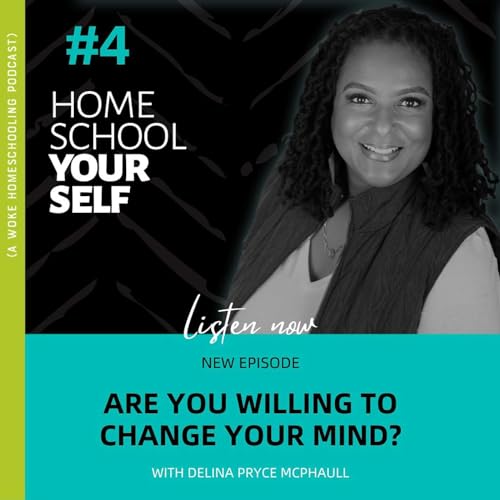
  • Are You Willing to Change Your Mind?
    May 24 2024

    Have you ever stood at the crossroads of stubbornness and enlightenment, where the choice to shift your mindset seems both daunting and liberating? That's where we find ourselves today on Homeschool Yourself, as I take you through the twists and turns of embracing change and the refreshing act of unlearning. Through intimate reflections on personal growth and the fleeting nature of material possessions, this episode underscores the profound satisfaction that often accompanies choosing action over complacency.

    Reach out with your stories of transformation and growth—because here at Homeschool Yourself, we're not just learning; we're evolving.

    What's your question?

    For links and the transcript, visit wokehomeschooling.com/podcast

    Show More Show Less
    5 mins