• Helga Jakobson: A "Zero Waste" Forks and the Right to a Healthy Environment
    Jan 22 2026

    When we picture zero waste, we often think of recycling bins or reusable coffee cups. But Helga Jacobsen sees something bigger: behind every piece of waste is a human story — someone who made it, someone who handles it, and communities who live with its impact.

    As Sustainability Coordinator at The Forks, Helga Jakobson is turning one of Winnipeg's most beloved gathering places into a living example of how community spaces can practice real sustainability. From her background as a transdisciplinary new media artist to her current work transforming coffee grounds into de-icer, Helga brings creativity and data together to communicate what's happening with our planet in ways people can actually understand and act on.

    We're talking:

    - Why protecting the earth and protecting people are the same conversation

    - How The Forks operates in a circular economy instead of the "produce, consume, throw away" linear model

    - Why setting "zero" as a goal matters even if you don't quite reach it

    Helga reminds us that sustainability work doesn't require perfection or pushback. Sometimes the most innovative solutions come from conversations with tenants over coffee, listening to Indigenous voices and water protectors, and staying hopeful even when the news feels overwhelming.

    As she puts it: "Everyone has the ability to create impact around them. So speak up."

    Learn more about the Forks' "Target Zero" project.

    More on Helga:

    Helga Jakobson is the Sustainability Coordinator at the Forks and is a Transdisciplinary Artist. In 2017, she received an MFA from AKV St. Joost (The Netherlands) in conjunction with courses in the Transdisciplinary New Media program at the Paris College of Art (France). She has exhibited, lectured and participated in residencies across North and South America and Europe. She was selected for the Emerging Excellence Award by the Manitoba Arts Council in 2019, has mentored through Creative Manitoba, Video Pool and, currently, MAWA. She lectures on material ecologies, eco-feminism, and sustainability in art. Her art practice often focuses on how to live on a damaged earth and how to make tangible the almost invisible and inaudible losses that are occurring all around us, from an environmental perspective.

    As CEO of a bourgeoning recycling business (REDO Waste), a Butterflyway Ranger for the David Suzuki Foundation and former Executive Director of ArtsJunktion (a creative reuse depot), Helga brings to her role as Sustainability Coordinator wide spanning experiences that help her to promote sustainability, with waste diversion and composting at the Forks.

    When she’s off duty, she can be found hiking and camping, gardening and cuddling her foster fail dogs; Wednesday and Huginn.

    See Privacy Policy at https://art19.com/privacy and California Privacy Notice at https://art19.com/privacy#do-not-sell-my-info.

    Show More Show Less
    53 mins
  • Bruce McIvor: What You Need to Know to Talk Reconciliation
    Jan 8 2026

    If your goals for 2026 include actually moving the needle on reconciliation, lawyer Bruce McIvor has news: you need to get uncomfortable.The Manitoba-born author of Indigenous Rights in One Minute joins us to cut through the performative gestures and explain what reconciliation actually demands. Bruce breaks down centuries of Indigenous law and constitutional rights in plain language—then challenges us to move beyond land acknowledgements to action that matters.

    We're talking:

    • Why Indigenous rights aren't "special" privileges—they're legal obligations Canada made and must keep
    • What Section 35 of the Constitution actually protects (and why most Canadians don't understand it)
    • The difference between consultation theatre and genuine partnership
    • Why feeling uncomfortable is exactly where real reconciliation work begins
    • What non-Indigenous Canadians can actually do to move reconciliation work forward

    Bruce reminds us: "If reconciliation is making you feel good, you're doing it wrong."Read Indigenous Rights in One Minute: What You Need to Know to Talk Reconciliation

    See Privacy Policy at https://art19.com/privacy and California Privacy Notice at https://art19.com/privacy#do-not-sell-my-info.

    Show More Show Less
    52 mins
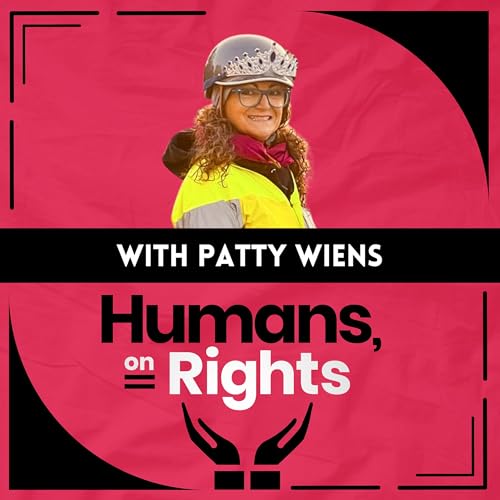
  • Patty Weins: Transportation, Safety, and the Right to the City
    Dec 18 2025

    We sit down with Patty Weins—author of That'll Never Work Here, host of the That's Her Problem podcast, and Bicycle Mayor of Winnipeg. Patty's journey from winter cycling newcomer to city-wide advocate reveals how transportation choices connect to mental health, physical wellbeing, climate justice, and the fundamental right to move safely through our cities.

    We're talking:

    • Why 30% of the population can't drive—and what that means for designing equitable cities
    • How winter cycling transformed from a parking cost workaround into a movement for safer streets
    • The hidden connection between snow removal priorities and gender equality in urban design
    • Why "trip chaining" matters: how women navigate cities differently than traditional planning assumes
    • What happened when one collision on Wellington Crescent galvanized 54 advocates in four weeks
    • How Brazil's bike culture shaped Patty's view of car dependency in Winnipeg—and what needs to change


    Patty challenges us to see transportation not as a convenience issue but as a fundamental right. When we design cities exclusively for cars, we're making choices about who belongs, who stays safe, and who gets left behind. Whether you're a daily driver reconsidering that right turn at Sherbrooke and Broadway or someone curious about the freedom winter cycling can bring, this conversation offers practical insights into building cities where everyone can arrive alive.

    Connect with Patty:

    Website: PattyBikes.com

    Book: That'll Never Work Here

    Podcast: That's Her Problem

    Learn more:

    Bike Winnipeg: bikewinnipeg.ca

    Bycs (Bicycle Mayors Network): bycs.org

    See Privacy Policy at https://art19.com/privacy and California Privacy Notice at https://art19.com/privacy#do-not-sell-my-info.

    Show More Show Less
    51 mins
  • Max Brault: Race to the Starting Line
    Dec 4 2025

    December 3rd was International Day of Persons with Disabilities—a day meant to recognize the contributions and rights of people with disabilities worldwide. Today, we're sitting down with someone who's spent 40 years making sure that recognition turns into actual change.Max Brault—national leader in accessibility, author, and someone who lives with spinal muscular atrophy—doesn't just talk about accessibility. He's helped build the Accessible Canada Act, transformed hiring practices in the federal government, and now consults with corporations trying to figure out what true inclusion actually looks like. His new book, The Race to the Starting Line, cuts through all the box-checking and virtue signalling to explain why equality has to start long before anyone even gets to compete.

    We're talking:

    • Why the Accessible Canada Act exists—and why the Charter alone wasn't enough
    • The moment Stats Canada discovered 27% of Canadians identify as having a disability (not the 4% everyone kept citing)
    • How organizations confuse accommodation with inclusion
    • Why "we're working on it" is code for "we haven't actually started"
    • The difference between designing for people with disabilities and designing with them


    Whether you're building spaces, creating policies, or just trying to understand why accessibility matters beyond compliance, Max brings decades of lived experience and hard-won wisdom about what it actually takes to build a world where everyone gets to show up fully.

    Learn more: Max Brault's website and book

    See Privacy Policy at https://art19.com/privacy and California Privacy Notice at https://art19.com/privacy#do-not-sell-my-info.

    Show More Show Less
    57 mins
  • Shohan Illsley: Harm Reduction and the Fight for Dignity
    Nov 19 2025

    We sit down with Shohan Illsley, Executive Director of the Manitoba Harm Reduction Network, to explore how harm reduction is saving lives and restoring dignity to people who use substances across Manitoba. Shohan brings powerful insights into why compassion-based approaches are essential to addressing substance use in our communities.The Manitoba Harm Reduction Network operates 11 sites across the province, connecting people who use substances with the support they need to stay alive and thrive.

    We're talking:

    • The toxic drug supply crisis that has claimed over 3,000 lives in Manitoba since 2014
    • How the war on drugs is actually a war on people, rooted in racism and colonial harm
    • The role of manufactured poverty and homelessness in substance dependence
    • Why evidence-based interventions like consumption sites reduce deaths and improve community safety

    Shohan reminds us that the majority of people use substances without problem—and those who do struggle deserve dignity, connection, and evidence-based support rather than criminalization and stigma."Can we just be brave and try something new?" she asks. "What we're asking people to try are interventions grounded in evidence that have been proven to have the desired outcomes we want."

    Learn more: Manitoba Harm Reduction Network

    See Privacy Policy at https://art19.com/privacy and California Privacy Notice at https://art19.com/privacy#do-not-sell-my-info.

    Show More Show Less
    47 mins
  • Dr. Marcia Anderson: Confronting Anti-Indigenous Racism in Healthcare
    Nov 6 2025

    A recent Winnipeg Free Press article revealed an uncomfortable truth: Indigenous and Black patients in Manitoba wait longer in emergency rooms and are more likely to leave without receiving care. For Dr. Marcia Anderson, these aren't just statistics – they're a reality she's witnessed firsthand, both as a physician and through her father's near-fatal experience with racist healthcare.As a Cree Anishinaabe physician from Peguis First Nation and Norway House Cree Nation, Dr. Anderson has dedicated her career to dismantling the systemic racism that pervades Canada's healthcare system. Now serving as Vice Dean of Indigenous Health, Social Justice and Anti-Racism at the University of Manitoba, she's leading groundbreaking work to collect racial, ethnic, and Indigenous identifiers in healthcare – making Manitoba the first province in Canada to systematically track these critical disparities.

    We're discussing:

    • How outdated and harmful theories like the "Thrifty Gene" theory were still being taught during her medical education, blaming Indigenous peoples' poor health on inferior genetics rather than addressing systemic factors
    • Manitoba's pioneering work in collecting racial and ethnic data in healthcare, revealing disturbing patterns of longer wait times and worse outcomes for Indigenous and Black patients
    • The critical difference between cultural safety training (which focuses on understanding different cultures) and anti-racism training (which addresses power, discrimination, and systemic barriers)
    • Practical strategies for anyone who witnesses anti-Indigenous racism – from asking curious questions like "I don't understand why that joke is funny, can you explain it to me?" to marking inappropriate behaviour with simple statements like "I'm not comfortable with that remark"

    Dr. Anderson's message is clear: healthcare disparities aren't inevitable, and they're not the result of individual "bad apples." They're systemic issues that require systemic solutions – from better data collection to transforming medical education to holding institutions accountable for equitable care.As she powerfully notes, while her father had a physician in the family who could advocate for him during his medical crisis, the vast majority of Indigenous people facing healthcare racism do not have that privilege. That reality fuels her ongoing work to ensure every patient receives the care they deserve, regardless of race or background.

    See Privacy Policy at https://art19.com/privacy and California Privacy Notice at https://art19.com/privacy#do-not-sell-my-info.

    Show More Show Less
    50 mins
  • Andréanne Mulaire: Sustainable Fashion & Cultural Pride
    Oct 23 2025

    We sit down with Andréanne Mulaire, co-founder of Anne Mulaire, a Winnipeg-based fashion company that has spent 20 years proving that ethical production, cultural heritage, and sustainability aren't just buzzwords – they're the foundation of a thriving business.Andréanne shares how she built a fashion brand that refuses to compromise, maintaining local production in Winnipeg, creating zero-waste collections, and offering sizes from double extra small to 6X – because sustainability should be for everyone.

    We're discussing:

    • How watching manufacturers throw away 4-5 garbage bins of fabric daily sparked her commitment to zero-waste fashion
    • Why she chose to keep production in Winnipeg despite the financial challenges
    • The six sustainability programs she's created, from refreshing worn garments to turning production waste into new yarn for socks
    • How Métis heritage and family entrepreneurship spanning generations influences her design philosophy
    • Why she believes every piece of clothing has a story – and why we should care about those stories

    Andréanne reminds us that sustainable fashion isn't about perfection – it's about making conscious choices: "We're all responsible for our own waste. Not doing something is worse. You just have to test, try, do something."Anne Mulaire's sustainability programs include:

    1. Refresh: Repairing and reinforcing garments to extend life
    2. Resale: Creating entry points for new customers through pre-loved pieces
    3. Revive: Upcycling and transforming existing garments
    4. Zero Waste Collection: Creating 100 one-of-a-kind pieces twice yearly from production remnants
    5. Downcycle: Donating fabric remnants to community members for their projects
    6. Fiber Lab: Transforming production waste into new yarn for "Wasted Socks" and future fabrics


    Connect with Anne Mulaire at annemulaire.ca

    See Privacy Policy at https://art19.com/privacy and California Privacy Notice at https://art19.com/privacy#do-not-sell-my-info.

    Show More Show Less
    56 mins
  • Dan Lussier & Jennifer Rodrigue - Co-Habit: Building Inclusive Housing Solutions
    Oct 9 2025

    We sit down with Dan Lussier, CEO of Réseau Compassion Network, and Jennifer Rodrigue from Co-Habit to discuss their groundbreaking partnership creating accessible, affordable housing that centers dignity and community.We're talking:

    • Why Manitoba's housing crisis demands innovative solutions that go beyond just "affordable units"
    • How Co-Habit is reimagining supportive housing for people with profound physical disabilities who currently have limited options beyond personal care homes
    • The difference between accessibility standards and true accessible design—and why Canada's building codes still fall short
    • How the Le Suite Marion project became a successful model combining deeply affordable housing with wraparound support services
    • Why segregation in housing (whether for seniors, people with disabilities, or any population) reinforces inequality and isolation
    • The power of integrated, intentional community in combating the loneliness crisis affecting all Canadians

    Dan and Jennifer remind us that housing is a human right, and true accessibility means more than meeting minimum standards—it means creating spaces where everyone can thrive with dignity, independence, and connection.

    Learn more:

    Réseau Compassion Network

    Co-Habit

    Action Marguerite St. Boniface

    See Privacy Policy at https://art19.com/privacy and California Privacy Notice at https://art19.com/privacy#do-not-sell-my-info.

    Show More Show Less
    50 mins