• “If it ain’t broke, don’t fix it”: the ICRC’s approach to Common Article 3 in its updated Commentary
    Feb 19 2026
    The updated ICRC Commentary on the Fourth Geneva Convention (GC IV) includes a number of important updates to its treatment of Common Article 3 (CA3). These relate primarily to three areas: the treatment of coalitions in non-international armed conflict (NIAC); the provision of support by one party to another; and questions of gender and the treatment of other marginalized groups. In this post – part of a joint blog symposium on the updated GC IV Commentary with EJIL: Talk! and Just Security – Associate Professor Katharine Fortin examines these developments, highlighting their significance and strengths while also pointing to areas that may warrant further reflection or study.
    Show More Show Less
    16 mins
  • Protecting civilians in good faith a joint symposium on the updated ICRC Commentary on the Fourth Geneva Convention
    Feb 17 2026
    Following five years of research and consultations, the ICRC published a new, updated Commentary on the Fourth Geneva Convention (GC IV) of 1949 in October 2025. GC IV is the cornerstone of protection for civilians in international armed conflict and occupation – protections that remain urgently relevant amid patterns of urban warfare, strikes on essential services, and persistent harm to people who are not, or are no longer, taking part in hostilities. The 2025 Commentary, following the interpretive methodology outlined in the Vienna Convention on the Law of Treaties, consolidates seven decades of practice, jurisprudence, and operational experience into a practical guide to applying GC IV’s safeguards effectively today. Over the coming weeks, we are delighted to co-host a joint symposium with the editors of Just Security and EJIL:Talk!, sharing expert contributions on selected topics addressed in the updated ICRC Commentary on the Fourth Geneva Convention. We hope this analysis will help shed light on important aspects of the Fourth Convention that are explored in depth in the updated Commentary, outline developments in law, technology and language since 1949, and give readers an idea of what has changed since the initial ICRC Commentary on this Convention was published in 1958. As Jean-Marie Henckaerts highlights below, a good faith interpretation and application of the Fourth Convention is indispensable: “it keeps interpretation anchored in the Conventions’ object and purpose, ensuring that their protective spirit prevails over technical evasions.” His following post, initially published on 21 October 2025, serves as an introduction both to the updated Commentary and to this symposium.
    Show More Show Less
    14 mins
  • Waging warfare at sea: how exceptional is the maritime domain today?
    Feb 10 2026
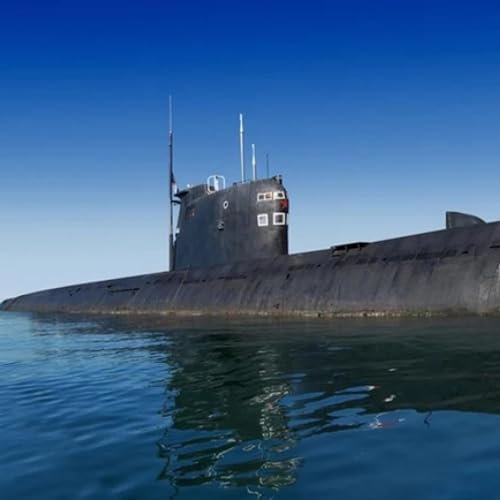
    Naval warfare has undergone dramatic transformation, expanding across multiple domains and exposing civilian seafarers, infrastructure, and global supply chains to new and evolving risks. As modern maritime operations become faster, more complex, and more interconnected, long-standing legal frameworks face growing pressure to keep pace. In this post, ICRC Legal Adviser Abby Zeith examines the changing character of naval warfare and questions whether the maritime domain should still be treated as exceptional. She explores how technological, operational, and geopolitical shifts intersect with existing international humanitarian law (IHL), and why renewed clarity from states is essential to protect civilian shipping, seafarers, and populations ashore.
    Show More Show Less
    19 mins
  • “Cognitive warfare”: why the human brain should not become a battlefield
    Feb 5 2026
    Militaries are gearing up for confrontation on a new battlefield: the human brain. While psychological operations aimed at deceiving enemies or manipulating soldiers and civilian populations have long been part of the military playbook, “cognitive warfare” marks a conceptual shift in which human cognition is framed as a “sixth domain” of military competition, alongside land, sea, air, cyber, and space. In this post, ICRC Policy Adviser Pierrick Devidal offers an overview of the concept of “cognitive warfare” and examines the humanitarian concerns it raises. He argues that if our brains are to be treated as future battlefields, now is the time to consider how the risks can be prevented and mitigated.
    Show More Show Less
    22 mins
  • Bridging IHL and WPS: untapped potential to advance the wellbeing of women in conflict settings
    Jan 29 2026
    The International Criminal Court recently issued its first conviction for gender persecution as a crime against humanity, alongside related convictions for rape as a war crime under international humanitarian law (IHL). These convictions signal expanding efforts to hold perpetrators accountable for violations committed during conflict, including against women and girls as well as on the basis of gender. This recognition aligns with the Women, Peace and Security (WPS) agenda created by UN Security Resolution 1325. Yet, despite the clear intersection of IHL and WPS, these two frameworks have been largely siloed from one another. With the WPS agenda celebrating its twenty-fifth anniversary against a backdrop of global anti-rights and anti-gender backlash, it's more urgent than ever these frameworks are brought together. In this post, Jessica Anania, a Conflict & Security Fellow at the Georgetown Institute for Women, Peace and Security, outlines the strategic advantages of closer coordination between IHL and WPS when it comes to strengthening protection and accountability for women and girls. Key benefits of bridging IHL and WPS include filling in gaps within IHL’s existing protections to better reflect the realities of women and girls before, during and after conflict; expanding IHL’s impact through stronger recognition of gender crimes; countering non-compliance; and strengthening awareness of women and girls’ needs by addressing gender stereotypes inherent to IHL.
    Show More Show Less
    18 mins
  • Deaths and separations in migration: lessons from migrant women and children
    Jan 22 2026
    Many women and children are exposed to violence, exploitation and other risks, including death and family separation, during their migration journeys. Despite the recognition that gender and age shape migration experiences, there is limited data and analysis that systematically and directly addresses how and why migrant women and children go missing or become separated. To reduce this knowledge gap and identify steps to mitigate risks for women and children, the ICRC’s Central Tracing Agency and the Red Cross Red Crescent Global Migration Lab undertook research across the Americas, Africa, and Europe.[1] In collaboration with 17 National Red Cross and Red Crescent Societies,[2] we spoke to over 800 migrant women and children, families of missing migrants, and key informants to hear their stories, concerns, and proposed solutions. In this post, we present key insights from the recently published research reports that draw on migrants’ lived experience to identify drivers of deaths and separations, obstacles to maintaining contact and searching for their missing loved ones, and strategies to ensure the safety, dignity, and well-being of migrant women and children.
    Show More Show Less
    13 mins
  • IHL’s lighthouse; navigating towards a digital emblem
    Jan 14 2026
    As cyber operations are increasingly taking place during armed conflicts, and this trend is likely to continue, certain specific protections afforded under IHL and identified in the physical world by the distinctive emblems of the Red Cross, Red Crescent, and Red Crystal must also be visible in an environment the drafters of the very first Geneva Convention in 1864 could never have imagined. In this post, Samit D’Cunha, Legal Adviser at the ICRC, and Mauro Vignati, Technical Adviser at the ICRC, examine the rationale behind the Digital Emblem Project and the significant progress made in recent months. Drawing on ongoing standardization efforts and a growing list of supporters of the project, this post explores how a simple, globally recognizable marker is being developed to help distinguish specifically protected medical and humanitarian assets online.
    Show More Show Less
    21 mins
  • Twenty years on: the enduring impact of the ICRC customary IHL study and database
    Dec 11 2025
    The ICRC’s 2005 study on customary international humanitarian law – along with the free, public database launched five years later – arrived at a moment when the legal landscape of armed conflict was rapidly shifting. Mandated by the 26th International Conference of the Red Cross and Red Crescent, the study set out to map the customary rules governing contemporary warfare by systematically analyzing global state practice and opinio juris. Twenty years on, with more than 130 armed conflicts active worldwide, reassessing the study’s methodological contributions, its evidence base, and its impact on the regulation of both international and non-international armed conflicts offers a timely lens on how customary IHL continues to underpin protections for people affected by war. In this post, ICRC Legal Adviser Claudia Maritano and members of the British Red Cross-ICRC customary IHL research team reflect on how the study’s rigorous methodology, global scope, and identification of 161 customary rules helped clarify gaps left by treaties, especially in non-international armed conflicts, and strengthen the practical application of IHL.
    Show More Show Less
    14 mins