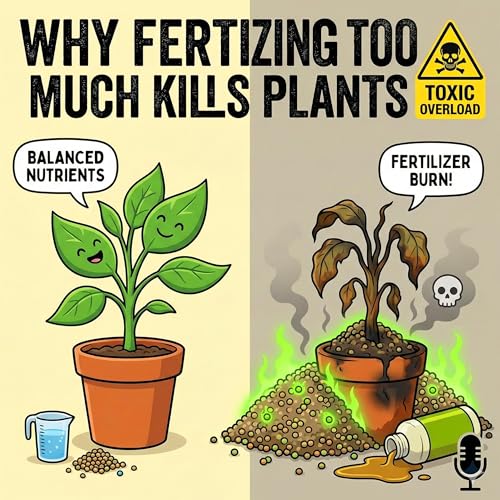
Why Your Plants Are Dying? cover art

Why Your Plants Are Dying?

Why Your Plants Are Dying?

Written by: abdelhamid bou ikhessayen
Listen for free

About this listen

Why Your Plants Are Dying is a practical, science-focused gardening podcast for home gardeners who are tired of confusing, contradictory advice.

If your plants keep dying, turning yellow, growing weak, or refusing to flower or fruit — even though you water them, fertilize them, and follow online tips — this podcast is for you.

Each episode:

  • Takes one common plant problem
  • Explains what gardeners usually do wrong
  • Breaks down what science and horticulture say actually matters
  • Separates myths, trends, and marketing from real plant biology

We cover soil health, watering mistakes, nutrients, light, pests, diseases, composting, fertilizers, indoor plants, vegetable gardens, and popular gardening myths — in simple language anyone can understand.

No fluff. No trends. No TikTok hacks. Just clear explanations so you can stop guessing and start growing healthy plants.

Hamid bkh 2026
Episodes
  • Why Fertilizing Too Much Kills Plants
    Jan 20 2026

    This Episode explore the complex relationship between soil fertility, nutrient management, and ecosystem health. High levels of salinity and excessive fertilization are shown to degrade soil quality by reducing organic matter and disrupting beneficial microbial communities. Research highlights how nitrogen over-application can trigger ammonium toxicity, increase plant susceptibility to pests and diseases, and alter the emission of volatile organic compounds. Conversely, the studies advocate for sustainable strategies, such as using biochar, organic amendments, and crop rotation, to enhance fungal diversity and yields. Special focus is also given to the molecular mechanisms of nutrient uptake, including the roles of arbuscular mycorrhizal fungi and specific enzyme pathways in plant resilience. Ultimately, the collection emphasizes that balanced nutrition is essential for maintaining both crop productivity and environmental integrity.

    Show More Show Less
    16 mins
  • Organic vs Synthetic Fertilizers: What Actually Works
    Jan 19 2026

    This Episode examine the comparative impacts of organic and synthetic fertilization on soil health, crop productivity, and environmental sustainability. While synthetic fertilizers provide immediate nutrient availability that can maximize short-term yields and biomass, they often contribute to soil acidification and the degradation of biological networks over time. In contrast, organic amendments like compost and manure improve soil architecture and foster a more diverse microbial community, which enhances long-term carbon sequestration and nutrient cycling. Research also highlights significant differences in plant metabolism, showing that organic systems often increase defensive secondary metabolites while synthetic inputs prioritize rapid growth, potentially attracting more pests. Additionally, the documents address the environmental trade-offs of these practices, weighing the high energy costs and greenhouse gas emissions of chemical production against the slower mineralization and potential nitrogen losses associated with organic matter. Overall, the literature advocates for integrated fertilization strategies that balance immediate food security needs with the ecological resilience required for sustainable agriculture.

    Show More Show Less
    12 mins
  • Is Compost Enough or Do Plants Need Fertilizer?
    Jan 18 2026

    This Episode provide a comprehensive guide to optimizing vegetable garden productivity through strategic soil management and fertilization. Authors emphasize the importance of soil testing to determine pH levels and macronutrient ratios, which are essential for preventing "nutrient lockout" and hidden hunger in plants. While synthetic fertilizers offer immediate nutrient delivery, the texts highlight organic matter and compost as superior long-term solutions for enhancing soil structure, water retention, and microbial biodiversity. The collection further explores the biochemistry of composting, detailing how specific inputs like peanut straw or manure influence nutrient availability and carbon sequestration. Gardeners are also warned against the over-application of nutrients, which can lead to environmental issues like toxic runoff and secondary mineral deficiencies. Ultimately, the materials advocate for a balanced, sustainable approach that prioritizes feeding the soil ecosystem to ensure healthy plant growth and high crop yields.

    Show More Show Less
    13 mins
No reviews yet