D.C. Drops the Power Lunch: Why the Capital Is Secretly America's Hottest Food Scene Right Now cover art

D.C. Drops the Power Lunch: Why the Capital Is Secretly America's Hottest Food Scene Right Now

D.C. Drops the Power Lunch: Why the Capital Is Secretly America's Hottest Food Scene Right Now

Listen for free

View show details
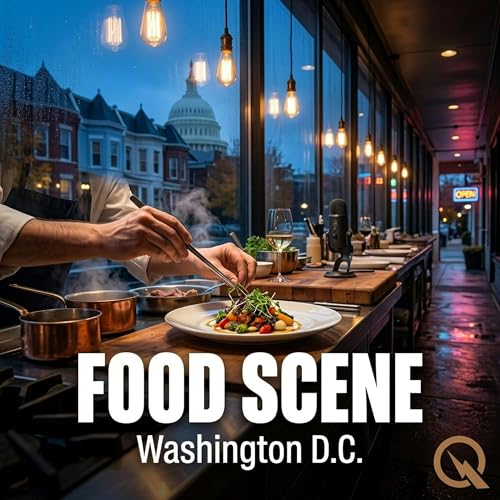
Food Scene Washington D.C. Washington D.C. is having a delicious identity crisis, and listeners are the lucky beneficiaries. Once pigeonholed as a steakhouse-and-power-lunch town, the city now feels more like a living tasting menu, where embassies, immigrant communities, and a new wave of ambitious chefs all share the pass. At the Michelin-starred end of the spectrum, Pineapple and Pearls on Capitol Hill has reclaimed its status as a destination for those who like their tasting menus playful as well as polished, with intricate seasonal courses that might move from pristine seafood to whimsical desserts in a single, seamless arc. Over in Shaw, Rose’s Luxury and its sister restaurant Little Pearl continue to push the city’s comfort zone with menus that read casual but eat like deep culinary essays, driven by farmers’ market finds from the Chesapeake region and beyond. The real electricity, though, is coming from Washington D.C. newer guard. Restaurants like Moon Rabbit at the Wharf have made Vietnamese-American cooking feel downright operatic, layering smoky grilled meats, bracing herbs, and funk-laced sauces into dishes that taste like both memory and manifesto. In Navy Yard, Albi has turned Levantine flavors into a live-fire spectacle, with wood-smoke perfuming everything from pillowy pita to deeply charred lamb, a sensory reminder that D.C. shares a shoreline with robust Middle Eastern and North African diasporas. Local ingredients are quietly starring in all of this. The briny sweetness of Chesapeake oysters, the snap of Mid-Atlantic sweet corn, and the floral punch of regional honey are showing up everywhere from minimalist tasting rooms to bustling fast-casual counters along U Street and H Street. Many chefs are treating the Potomac and nearby farms as their primary pantry, weaving in Southern inflections—think sorghum, country ham, and heirloom grits—that nod to the city’s place below the Mason-Dixon Line. This being Washington D.C., the food festivals feel like policy summits with better catering. Events like the Capital Food Fight and the Smithsonian’s food-centered programs turn sustainability, labor, and food justice into cocktail-party conversation, while night markets and go-go soundtracked block parties showcase Ethiopian tibs, Salvadoran pupusas, and Korean fried chicken within a few hungry steps of each other. What makes Washington D.C. singular is that its restaurants cook like the city talks: globally fluent, policy-aware, and unafraid of a little drama. For food lovers paying attention, this isn’t just a government town with good restaurants; it is one of the country’s most compelling culinary test kitchens, where every dinner feels like a front-row seat to what American dining is becoming next. Get the best deals https://amzn.to/3ODvOta
adbl_web_anon_alc_button_suppression_t1
No reviews yet