Episodes

  • Why “Start Before You’re Ready” Became Cultural Pressure
    Dec 22 2025

    Session 2 – Genealogy of Ideas (Concepts)

    In this episode of Idea Lineage, we trace the hidden genealogy behind the idea “Start Before You’re Ready.”

    What began as a learning strategy inside creative and startup environments slowly turned into a moral command applied to everyone, everywhere.
    But not all action is created equal — and not all hesitation is laziness.

    Drawing on thinkers like Austin Kleon, Paul Graham, and critiques of productivity culture, this episode explores:

    • where the “start early” mindset really came from

    • why it feels empowering in some contexts and damaging in others

    • how education systems condition fear of starting

    • and why action without context can become psychological pressure

    This is not an episode about motivation.
    It’s about understanding when action is learning — and when it’s risk disguised as advice.

    🎧 In the end, you’ll be invited to examine which ideas about action you inherited — and which ones no longer deserve a place in your idea genealogy.

    A visual breakdown of this idea lineage is available on YouTube.https://www.youtube.com/@IdeaLineage

    Show More Show Less
    14 mins
  • #13 – Gary Vaynerchuk – How Attention Became the Strategy
    Dec 21 2025

    In this episode of Idea Lineage, we examine the psychological and strategic system behind Gary Vaynerchuk — a first-generation immigrant entrepreneur who transformed hustle, empathy, and platform intuition into one of the most recognizable personal brands of the digital age.

    We trace Gary’s journey from a family-run liquor store to becoming a dominant voice in modern marketing, breaking down how immigrant work ethic, early exposure to sales, and a childhood shaped by a disciplined father and emotionally supportive mother forged his relentless drive and intuitive understanding of people.

    Rather than celebrating hustle culture at face value, this episode analyzes the idea architecture behind Gary Vee’s rise:

    • how attention became the primary asset

    • how authenticity turned into a growth strategy

    • how emotional intelligence evolved into a competitive advantage

    • how early pattern recognition led him to platforms like YouTube, social media, and emerging tech

    We also examine the limits and contradictions of his philosophy — including the psychological cost of perpetual grinding, overlooked failures, and the tension between long-term patience and nonstop output in the attention economy.

    This episode does not aim to glorify or dismiss Gary Vaynerchuk. Instead, it maps how adaptability, self-awareness, and media fluency combined to create a system that rewards speed, resilience, and emotional resonance over traditional authority.

    Gary Vee emerges not just as a marketer, but as a case study in how modern influence is built, sustained, and monetized in a world where attention is currency.

    If you’re interested in marketing psychology, personal branding, entrepreneurship, and the hidden trade-offs of hustle culture, this episode traces the idea tree behind Gary Vaynerchuk’s worldview.

    🎧 Full episode available on Spotify, Amazon Music, and Castbox
    ▶️ Watch the video version on YouTube: https://www.youtube.com/@IdeaLineage

    Show More Show Less
    14 mins
  • #12 – Peter Thiel – How Contrarianism Became a Power Strategy
    Dec 20 2025

    In this episode of Idea Lineage, we examine the intellectual and psychological system behind Peter Thiel — a tech entrepreneur and investor who built influence not by consensus, but by systematic opposition to it.

    We trace Thiel’s journey from a disciplined, academically rigorous upbringing to his formative years at Stanford, and onward to founding PayPal and Palantir. Along the way, we explore how early exposure to competition, hierarchy, and elite institutions shaped a worldview deeply skeptical of democracy, equality, and incremental progress.

    Rather than framing Thiel as a visionary or provocateur, this episode analyzes the idea architecture behind his power:

    • why competition is treated as a failure mode

    • how monopoly became a moral and strategic goal

    • how secrecy, leverage, and asymmetry define his approach to innovation and politics

    We also examine the deeper ideological layers of Thiel’s thinking — including his blend of libertarianism, Christian theology, and technological acceleration — as well as the controversies that reveal how far he is willing to go to protect and impose his worldview, from covert legal warfare to polarizing political interventions.

    This episode does not aim to defend or condemn Peter Thiel. Instead, it maps how a coherent but uncomfortable belief system translated into outsized influence across Silicon Valley, venture capital, and modern political culture.

    Peter Thiel emerges not simply as an investor, but as a case study in how contrarian ideas, when paired with capital and timing, can quietly rewrite the rules of power.

    If you’re interested in elite decision-making, monopolistic thinking, and the hidden philosophies shaping modern tech empires, this episode traces the idea tree behind Peter Thiel’s worldview.

    🎧 Full episode available on Spotify, Amazon Music, and Castbox
    ▶️ Watch the video version on YouTube: https://www.youtube.com/@IdeaLineage

    Show More Show Less
    14 mins
  • #11 – Andrew Huberman – How Optimization Became a Belief System
    Dec 17 2025

    In this episode of Idea Lineage, we examine the psychological and intellectual system behind Andrew Huberman — a neuroscientist who transformed academic credibility into one of the most influential science-based media platforms of the modern internet.

    We trace Huberman’s journey from a turbulent adolescence marked by instability, aggression, and time in a youth facility, to a life rebuilt around structure, discipline, and physiological self-mastery. This early search for control becomes the backbone of both his scientific worldview and his public-facing philosophy.

    Rather than focusing on motivation or productivity hacks, this episode analyzes the idea architecture behind Huberman’s rise:

    • how neuroscience became a language of certainty

    • how “protocols” replaced curiosity

    • how optimization evolved from a tool into an identity

    We also examine the tension between academic science and media influence, including sponsorship-driven incentives, shifting scientific positions, and recent controversies surrounding personal conduct and the perceived boundaries between evidence, branding, and authority.

    This episode does not aim to cancel or celebrate Huberman. Instead, it maps how a legitimate scientific background, combined with personal history and platform dynamics, produced a system that millions now treat as truth, guidance, and moral framework.

    Andrew Huberman emerges not simply as an educator, but as a case study in how modern expertise is shaped, rewarded, and distorted in public space.

    If you’re interested in neuroscience, self-optimization, and the hidden psychological costs of turning science into certainty, this episode traces the idea tree behind Andrew Huberman’s worldview.

    🎧 Full episode available on Spotify, Amazon Music, and Castbox
    ▶️ Watch the video version on YouTube: https://www.youtube.com/@IdeaLineage

    Show More Show Less
    13 mins
  • #10 – Eric Weinstein – How His Ideas Emerged Outside the System
    Dec 16 2025

    In this episode of Idea Lineage, we examine the intellectual and psychological system behind Eric Weinstein — a thinker shaped not by academic prestige, but by prolonged friction with institutions meant to reward original thought.

    We trace Weinstein’s journey from theoretical physics and economics to becoming a central voice in the Intellectual Dark Web, exploring how repeated encounters with gatekeeping, ideological pressure, and institutional failure shaped his worldview.

    Rather than presenting isolated arguments, this episode maps the structure of Weinstein’s thinking — how culture, science, politics, and power converge into a single explanatory framework.

    Instead of consensus, Weinstein focuses on structural dysfunction:

    • why modern institutions fail to surface breakthrough ideas

    • how activism reshapes scientific incentives

    • why intelligence alone is insufficient inside closed systems

    We explore his controversial theory of Geometric Unity, not to validate or dismiss it, but to understand what its reception reveals about the psychology of modern academia.

    This episode also examines the tension at the core of Weinstein’s influence — his commitment to open inquiry alongside his role in a media ecosystem skeptical of institutions and expertise.

    Rather than portraying Weinstein as a hero or a contrarian, this episode positions him as an intellectual outsider — a case study in what happens when high-level thinking collides with rigid systems.

    If you’re interested in science, power, institutional failure, and the psychology of dissent, this episode traces the idea tree behind Eric Weinstein’s worldview.

    🎧 Watch the video version on YouTube:
    https://www.youtube.com/@IdeaLineage

    Show More Show Less
    13 mins
  • #9 - David Goggins - How His Ideas Were Forged Through Suffering
    Dec 15 2025

    In this episode of Idea Lineage, we break down the psychological and philosophical system behind David Goggins — a figure shaped not by talent or balance, but by suffering, discipline, and radical self-accountability.

    We trace Goggins’ journey from a childhood marked by abuse, fear, and obesity to becoming the only person to complete Navy SEAL training, Army Ranger School, and Air Force TACP, alongside his extreme achievements in endurance sports.

    Rather than celebrating motivation, this episode examines the mental tools Goggins built:

    • the 40% Rule

    • the Cookie Jar

    • the Accountability Mirror

    We also explore the controversy around his philosophy — why his rejection of comfort inspires millions, and why some argue it comes at a psychological cost.

    This episode positions Goggins not as a balanced role model, but as a psychological outlier — a man who turned pain into a system.

    If you’re interested in mental toughness, discipline, and the hidden costs of extreme resilience, this episode maps the idea tree behind David Goggins’ worldview.

    🎧 Watch the video version on YouTube:
    https://www.youtube.com/@IdeaLineage

    Show More Show Less
    12 mins
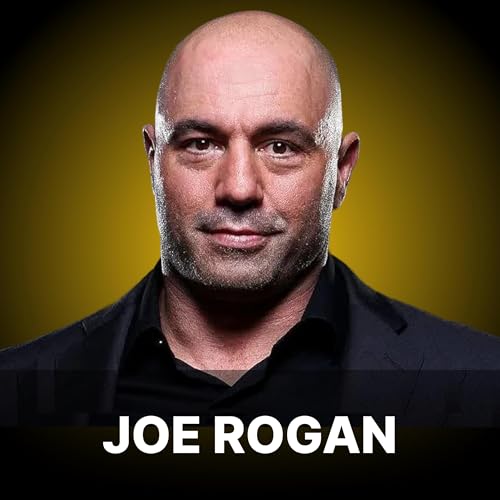
  • #8 - Joe Rogan - The Psychology Behind His Media Empire
    Dec 14 2025

    In this episode of Idea Lineage, we explore how Joe Rogan became one of the most influential figures in modern media — not through ideology or authority, but through curiosity, discipline, and radical independence.

    This episode traces the psychological and cultural foundations behind The Joe Rogan Experience: from Rogan’s early struggles with identity, anxiety, and meaning, to his obsession with physical training, long-form conversation, and intellectual exploration.

    We examine how Rogan transitioned from traditional entertainment (stand-up comedy, television, UFC commentary) into building a decentralized media empire — one that operates outside institutional control while commanding massive cultural influence.

    Key themes explored in this episode:

    • Discipline as a response to chaos and inner instability

    • Why long-form conversation became Rogan’s unfair advantage

    • The tension between open inquiry and misinformation

    • How controversy, apology, and forward motion sustain authenticity

    • Why distrust in institutions fuels modern creator-led media

    Rather than praising or criticizing, this episode maps the idea lineage behind Joe Rogan’s influence — the mental models, experiences, and strategies that shaped his worldview.

    🎥 Watch the video breakdown of this episode on YouTube:
    https://www.youtube.com/@IdeaLineage

    Show More Show Less
    14 mins
  • Paul Graham: How His Ideas Were Born
    Dec 13 2025

    In this episode of Idea Lineage, we explore the intellectual roots behind Paul Graham’s thinking — one of the most influential voices in startups, programming, and modern entrepreneurship.

    Drawing from his lecture “Before the Startup,” we trace how Graham developed his counterintuitive worldview: why startups reward instincts that feel wrong, why understanding people and users matters more than startup theory, and why genuine curiosity beats “playing founder.”

    You’ll learn how Graham’s background in computer science, art, and writing, combined with years of observing founders at Y Combinator, shaped his mental models around learning, ambition, and focus.

    If you’re a founder, builder, or curious thinker, this episode offers a practical starting point to explore Paul Graham’s idea family tree — and rethink what actually matters before you start anything serious.

    Show More Show Less
    12 mins