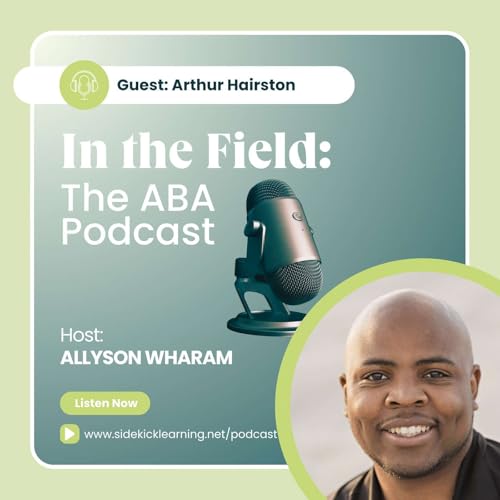
In the Field: The ABA Podcast cover art

In the Field: The ABA Podcast

In the Field: The ABA Podcast

Written by: Allyson Wharam
Listen for free

Welcome to In the Field- The ABA Podcast, hosted by Allyson Wharam. This podcast is a resource hub for Board Certified Behavior Analysts (BCBAs), business owners, training coordinators, individual supervisors, and graduate students accruing fieldwork in ABA.

Allyson, the creator of Sidekick, an innovative online curriculum and learning portal for behavior analysts, dives into the nuances of ABA with a focus on quality supervision, which she believes is the cornerstone of the field. Each episode offers information on topics relevant to ABA professionals, ranging from effective strategies for supervision, innovations in the field, to practical advice for improving service quality and outcomes for clients.

In the Field- The ABA Podcast is not just a show; it's a community for those who are passionate about enhancing their knowledge, skills, and practices in ABA. The podcast features interviews with experts, discussions on emerging trends, and shares actionable tips to help listeners invest in their professional growth and the advancement of the field.

Whether you are driving to an in-home session, taking a break in your busy day, or seeking inspiration and guidance, this podcast is your companion in fostering excellence in ABA. Join us as we explore, learn, and grow together in the field of Applied Behavior Analysis.

For more resources and information, visit our website at www.sidekicklearning.net.

© 2026 In the Field: The ABA Podcast
Careers Economics Education Personal Success
Episodes
  • More Than a Supervisor: How Mentorship Shapes Clinical Decision Making and Career Growth in ABA with Dr. Becky Eldridge
    May 20 2026

    In this episode of In the Field: The ABA Podcast, I sit down with Dr. Becky Eldridge, Ph.D. BCBA-D, researcher, and mentor with 17 years of experience in behavior analysis. Becky brings both personal passion and scholarly depth to the topic of mentorship, having completed her dissertation on clinical decision making for BCBAs and having witnessed firsthand what happens when new behavior analysts enter the field without adequate support. We dig into what mentorship actually is, how it differs from supervision, and why that distinction matters so much for new BCBAs who are trying to find their footing.

    Key Topics:

    Supervision vs. Mentorship: Not all support looks the same. Supervision is often tied to performance outcomes that may serve an organization. Mentorship centers on you. Your goals, your values, and what is meaningful to you. Knowing the difference can change who you turn to and when.

    Finding the Right Fit in a Mentor: Trust matters, but so does experience. Becky recommends Brené Brown's BRAVING Inventory as a starting point for evaluating fit, and emphasizes finding someone who has actually navigated the situations you are facing.

    Internal vs. External Mentorship: Becky makes a strong case for seeking mentorship outside your organization, especially early in your career. When competing contingencies exist between what is good for you and what is good for the organization, true objectivity is hard to find internally.

    What Mentorship Actually Looks Like: At its core, mentorship is about building self-management.

    Formal vs. Informal Mentorship: Formal mentorship means dedicated time and a mutual commitment to showing up consistently. Informal mentorship happens more organically, through relationships that develop over time without a structured agreement.

    Mentorship and the Evolution of the Field: The field has grown fast, and mentorship has not always kept up. Becky's advice is simple: stop waiting for it to find you. Get involved in your state chapter, go to your state conference, and meet people.

    Key Takeaways:

    • Supervision is about specific performance outcomes. Mentorship is about supporting your goals and your growth.
    • A sponsor is someone who creates or advocates for opportunities you would not have had otherwise, and that role can be distinct from both supervisor and mentor.
    • Trust is essential in a mentoring relationship, but experience matters just as much. Find someone who has done what you are trying to do.
    • Seek external mentorship, especially early in your career, when you need perspective.
    • Mentorship can be formal (dedicated time, clear expectations) or informal (opportunistic, reciprocal, peer-based). Both are valuable.
    • If you are waiting for the perfect moment or the perfect person, stop waiting. People are people. Ask.

    Resources Mentioned:

    • Building and Sustaining Meaningful and Effective Relationships as a Supervisor and Mentor, by Dr. Linda LeBlanc, Dr. Tyra Sellers, and Dr. Shahla Ala'i-Rosales
    • Dare to Lead by Brené Brown, including the BRAVING Inventory (available free on her website)

    Connect with Dr. Becky Eldridge:

    • LinkedIn: Becky Eldridge
    • Website: https://beckyeldridge.com/


    Keywords:

    BCBA mentorship, ABA mentorship, supervision vs mentorship, clinical decision making ABA, new BCBA support, BCBA career growth, self-management behavior analysis, ABA leadership, fieldwork supervision, behavior analyst professional development, Becky Eldridge, In the Field ABA Podcast, Sidekick Learning

    Disclaimer:

    BCBA®, BACB® [or any other BACB® trademark used] is/are registered to the Behavior Analytic Certification Board® BACB®. This website and products are not in any way sponsored by the BACB®.

    All information and products are for educational purposes only.

    Show More Show Less
    56 mins
  • Expanding Your ABA Career: Behavior Analysis in Residential and Foster Care Settings with Arthur Hairston
    May 6 2026

    In this episode of In the Field: The ABA Podcast, I sit down with Arthur Hairston, BCBA and entrepreneur, to talk about a corner of our field that most BCBAs never get exposure to: residential services and group homes for children in foster care. Arthur has built and exited an ABA organization and is now focused on developing group homes for youth with intellectual and developmental disabilities. His work sits at the intersection of clinical quality, trauma-informed care, and systems leadership in an environment where care happens around the clock.

    Key Topics:

    Why BCBAs Belong in Foster Care Group Homes: BCBAs are not always part of the picture in foster care group homes, but Arthur makes the case for why they should be and what it means for kids who have spent years on waitlists.

    The 24/7 Business Model: Running a residential program is a fundamentally different business than a traditional ABA company. Arthur walks through what caught him off guard, from overtime costs and staffing ratios to the capital reserves required for licensure.

    Funding and Revenue Consistency: The group home model runs on a state and federal funding mix, creating more revenue consistency than traditional billing but a real cap on growth.

    Compassionate, Trauma-Informed Care: Arthur talks outings, community inclusion, and skills practice as the context in which clinical goals become achievable. Behavior is communication, and the first weeks with a new resident are about building trust.

    Delegation as a Business and Clinical Skill: Arthur opens up about letting go, partnering with his wife on operations, and why holding everything yourself puts your program's quality at risk.

    Training Staff in Residential Settings: Training in a residential setting goes well beyond behavior plans and data sheets. Arthur shares how his team prepares new staff for the emotional and relational complexity of this work, and why shadowing is a non-negotiable part of that process.

    Key Takeaways:

    • BCBAs bring clinical infrastructure and systems thinking that directly benefit residents, even when it is not required.
    • The residential model demands different business skills, including capital reserves, overtime management, and licensing timelines of six to nine months.
    • Delegation is not optional. If you are the bottleneck, your program's sustainability is at risk.
    • Training staff here means preparing them for the emotional and relational complexity of this work, not just the clinical tasks.

    Keywords: Group Home ABA, Residential Services ABA, BCBA, Foster Care Group Home, Trauma-Informed ABA, ABA Business Models, Group Home Licensing, ABA Entrepreneurship, Arthur Hairston, Med Waiver, Residential Program Leadership

    Connect with Arthur Hairston:

    LinkedIn: Arthur Hairston

    Website and Free Group Home Checklist: go.ghleadership.com

    ABA C.A.R.E.S. Summit: https://behaviorlive.com/conferences/abacares2026/home

    Disclaimer:

    BCBA®, BACB® [or any other BACB® trademark used] is/are registered to the Behavior Analytic Certification Board® BACB®. This website and products are not in any way sponsored by the BACB®.

    All information and products are for educational purposes only.

    Show More Show Less
    45 mins
  • Building a Referral Network That Actually Works: ABA Marketing and Care Collaboration with Matt Harrington
    Apr 22 2026

    In this episode of In the Field: The ABA Podcast, I sit down with Matt Harrington, BCBA® and founder of Provider Spark, the Behaviorist Book Club, and ABA Digital Marketing to talk about marketing through a behavioral lens. Matt brings a rare combination of clinical depth and marketing expertise, and this conversation is packed with practical strategy for ABA providers at every stage of growth.

    We cover what it really means to market ethically as an ABA provider, why quality and trust are the foundation of sustainable growth, and how the same behavioral principles that guide effective treatment can be applied to building referral networks and lasting care collaboration.

    Key Topics:

    Marketing Starts with Quality: Why word of mouth is the foundation of any sustainable ABA business and how delivering consistent wins for caregivers drives both retention and referrals.

    Speed to Lead and Say-Do Correspondence: Response time to new inquiries is a behavioral concept and what it signals to families about your trustworthiness as a provider matters more than most providers realize.

    Building a Referral Network: How to identify the right referral partners, get in front of them with enough volume to generate replies, and nurture those relationships into consistent referral sources.

    Care Collaboration as the Long Game: Why investing in care collaboration across your caseload compounds into referral relationships that no ad spend can replicate.

    Niche Clarity and Differentiation: Being the best provider for a specific client profile is more compelling and more ethical than saying yes to everyone.

    Profit as a Tool for Impact: A reframe for clinicians who feel uncomfortable with the business side. Profitability is what allows you to scale your mission.

    Key Takeaways:

    • Quality is the foundation of all marketing. No strategy compensates for a service that does not deliver.
    • Say-do correspondence applies to your intake process. Doing what you say you will do builds the trust that converts inquiries into long-term clients.
    • Care collaboration is marketing in its most authentic form. When you collaborate well clinically, referrals follow naturally.
    • Niche clarity makes your pitch more compelling and your services more effective.
    • Profit enables impact. A sustainable business model allows you to reach more families and pay staff above market value.

    Keywords:

    ABA Marketing, ABA Business, Provider Relationships, Referral Network, Care Collaboration, BCBA® Business Development, ABA Intake Process, Say-Do Correspondence, Word of Mouth Marketing, Provider Spark, Behaviorist Book Club, Matt Harrington, ABA Differentiation, ABA Growth Strategy, ABA Digital Marketing

    Connect with Matt Harrington:

    LinkedIn: Matthew Harrington, BCBA®

    Provider Spark: providerspark.com/grow

    Behaviorist Book Club: behavioristbookclub.com

    ABA Digital Marketing: abadigitalmarketing.com

    Disclaimer:

    BCBA®, BACB® [or any other BACB® trademark used] is/are registered to the Behavior Analytic Certification Board® BACB®. This website and products are not in any way sponsored by the BACB®.

    All information and products are for educational purposes only.

    Show More Show Less
    46 mins
adbl_web_anon_alc_button_suppression_c
No reviews yet