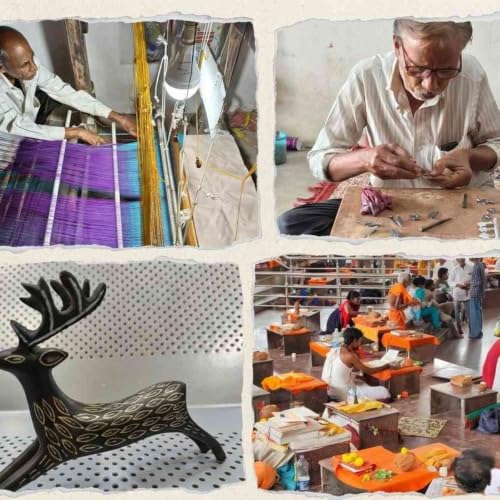
• Channapatna Toys Tour From Bangalore: The Tiger King's Gift to the World That Michelle Obama Bought and Barack Obama Received
    May 10 2026
    In the last decade of the 18th century, the most formidable military adversary the British East India Company ever faced in South India looked at a small town 60 kilometres from his capital and made a decision that would outlast his empire, his wars and his death in battle by over two centuries.Tipu Sultan decided to make Channapatna the toy capital of India.He created an international export market for the wooden lacquerware toys that local craftsmen had been making in this small Karnataka town. He provided land for artisan workshops. He established trade connections with Persian, Egyptian, Chinese and Turkish merchants who visited his capital at Srirangapatna. The toys that left Channapatna on those 18th century trade routes were made from locally-grown ivory wood, coloured with vegetable dyes made from turmeric, spinach and beetroot and finished with lac melted by friction from a spinning lathe in a technique that was already ancient when Tipu Sultan patronised it.In 1904 the Maharaja of Mysore sent a craftsman named Bavas Miyan from Channapatna to Japan to study its advanced lacquerware and toy-making techniques. Bavas Miyan returned and introduced the Japanese-inspired doll form that you now see on every Channapatna toy shelf, the rounded wobbling figure that children of every culture reach for instantly.In 2006 the Indian government gave Channapatna toys a Geographical Indication tag, placing them in the same protected category as Darjeeling tea and Kanchipuram silk.In 2010 Michelle Obama bought Channapatna toys during her visit to India. In 2015 Barack Obama received them as a gift when he visited the country.From Tipu Sultan's 18th century export market to the White House. In two centuries.In this episode we take you on the complete Channapatna toys tour from Bangalore. We tell the full story of how a king's aesthetic passion created a craft tradition that has survived wars, colonial rule, the near-death experience of cheap Chinese plastic toy competition and two centuries of economic turbulence to arrive at the present day with over 1500 artisan families still making what Tipu Sultan's craftsmen made, in the same town, with the same wood, the same dyes and the same spinning lathe technique. We take you inside a working Channapatna toy workshop and describe the mesmerising process of watching lac melt onto spinning ivory wood in real time. We take you to Asia's largest silk cocoon auction market, one of the most extraordinary and most completely unexpected commercial spectacles available on any day trip from Bangalore. We explore Janapada Loka, the Karnataka folk art museum that is one of the most underappreciated cultural institutions in South India. And we visit the Big Banyan Tree at Dodda Aalada Mara, a single tree over 400 years old whose aerial roots cover three acres of ground and whose canopy was once used as a village marketplace.This is the Channapatna toys tour from Bangalore with 5 Senses Tours. And it is unlike anything else available on a day trip from the city.What You Will Discover in This EpisodeThe full story of Tipu Sultan's extraordinary role in creating the international market for Channapatna toys in the 18th century, including the Daria Daulat Bagh trading pavilion he built specifically for meetings with overseas merchants, the 25 to 30 acres of land he provided for artisan workshops and the export connections to Persia, Egypt, China and Turkey that made Channapatna toys a global product two centuries before anyone used the word globalisationThe remarkable story of Bavas Miyan, the Channapatna craftsman sponsored by the Maharaja of Mysore to travel to Japan in 1904 to study advanced lacquerware techniques, and how the Japanese doll-making tradition he encountered there produced the rounded wobbling Channapatna doll figure that is now one of the most recognisable craft objects in IndiaThe complete toy-making process at a Channapatna workshop, from the sourcing of locally-grown ivory wood through the lathe-spinning technique in which lac sticks are pressed against spinning wood to melt colour into the grain, to the vegetable dyes made from turmeric for yellow, spinach for green and beetroot for red, to the palm leaf polish that gives the finished toy its distinctive warm sheenWhy Channapatna toys faced a genuine existential crisis at the turn of the 21st century as cheap Chinese plastic toys flooded the Indian market, how the Karnataka Handicrafts Development Corporation and multiple social enterprises intervened to save the craft, and how the 2006 Geographical Indication tag formally recognised the toys' unique and protected status alongside Darjeeling tea and Kanchipuram silkThe extraordinary moment when Michelle Obama bought Channapatna toys during her India visit in 2010 and Barack Obama received them as a presidential gift in 2015, and what these two moments meant for the visibility and confidence of the Channapatna artisan communityAsia's largest silk cocoon auction ...
    Show More Show Less
    22 mins
  • Bodhgaya Buddhist Pilgrimage Tour Blog
    May 7 2026
    In the year 528 BCE, on the banks of a river in what is now the state of Bihar in India, a prince from Nepal sat beneath a fig tree and refused to move until he understood the nature of suffering.He sat for 49 days.On the 49th day, as the last star faded from the morning sky, Siddhartha Gautama attained enlightenment and became the Buddha.The fig tree still stands.Not the same tree but a direct descendant of the original Bodhi Tree, standing in the same place where the most transformative moment in the history of Asian civilisation occurred. And the town that grew up around it, Bodhgaya in Bihar, India, is the most sacred site in the Buddhist world. More sacred than Lumbini where the Buddha was born. More sacred than Sarnath where he first taught. More sacred than Kushinagar where he died. Because it is here that the teaching itself was born.In this episode we take you on a complete Bodhgaya Buddhist pilgrimage tour, through the Mahabodhi Temple complex and the Bodhi Tree, the Vajrasana or Diamond Throne that marks the exact spot where the Buddha sat for 49 days, the extraordinary collection of international monasteries that have transformed this small town in Bihar into the most culturally diverse Buddhist landscape on earth, the sacred Dungeshwari Caves where Siddhartha spent years in austerity before his enlightenment, and the extraordinary extension to Rajgir where the Buddha taught for twelve years and to Nalanda, the greatest university the ancient world ever built.We tell the complete human story of Prince Siddhartha's journey from the palace of his birth to the fig tree of his awakening. We explain how Buddhism spread from this single spot in Bihar to transform the civilisation of an entire continent and eventually reach every corner of the world. We explore the extraordinary international monasteries of Bodhgaya where the entire spectrum of Asian Buddhist tradition gathers in common reverence for the same source. We take you to Vulture's Peak at Rajgir where the Heart Sutra and the Lotus Sutra were delivered. And we stand in the ruins of Nalanda University, the greatest centre of Buddhist scholarship in history, whose library reportedly burned for three months when it was destroyed in 1193 CE.This is not just a pilgrimage guide. It is the complete story of how one man's search for the truth about suffering gave rise to a tradition that transformed the world. And every single place in this story is a real, visitable, experienceable destination in the state of Bihar in India.What You Will Discover in This EpisodeThe complete human story of Prince Siddhartha's journey from extraordinary royal privilege to six years of wandering and austerity to the 49-night meditation at Bodhgaya that produced one of the world's most transformative spiritual and philosophical traditionsWhy Bodhgaya is the most sacred site in the Buddhist world, more sacred than any of the other three sites the Buddha himself identified as worthy of pilgrimage, and why pilgrims from Japan, Thailand, Sri Lanka, Myanmar, Korea, China, Tibet, Vietnam and every Buddhist nation on earth return here again and again throughout their livesThe Bodhi Tree, the Vajrasana and the Mahabodhi Temple, the three sacred elements of the Bodhgaya complex that together mark the exact location of the Buddha's enlightenment and create the most powerful devotional atmosphere available anywhere in the Buddhist worldHow the atmosphere at the base of the Bodhi Tree at dawn and dusk, with monks from a dozen Asian countries chanting simultaneously in a dozen different languages, creates an encounter with living Buddhist diversity that is unlike anything available at any other heritage site in India or the worldThe extraordinary collection of international monasteries built in and around Bodhgaya by Japan, Thailand, Tibet, Bhutan, China, Sri Lanka, Myanmar, Korea and Vietnam, each one an architectural embassy of its nation's Buddhist tradition transplanted to the most sacred location in the Buddhist worldThe Dungeshwari Caves twelve kilometres from the Mahabodhi Temple where Siddhartha spent years in physical austerity before realising this was not the path to liberation, and why these caves give the Bodhgaya pilgrimage a human rawness and emotional depth that the polished devotional atmosphere of the main temple cannot provide on its ownThe Great Buddha Statue at the Daijokyo Temple, 25 metres tall, consecrated by the Dalai Lama in 1989, said to contain 20,000 bronze Buddhas within its hollow interior, standing as one of the most powerful symbols of global Buddhist unity in the entire Bodhgaya landscapeRajgir, the ancient capital of the Magadha kingdom 70 kilometres north of Bodhgaya, where the Buddha spent twelve years teaching after his enlightenment, established his primary monastery in the Veluvana Bamboo Grove and delivered the Heart Sutra and the Lotus Sutra from the summit of Vulture's PeakThe Shanti Stupa at Vulture's Peak, a white peace pagoda built ...
    Show More Show Less
    24 mins
  • Ancient Goa Temples: Beyond the Beaches the Portuguese Could Never Destroy
    May 6 2026
    Most people who visit Goa think its history began in 1510.That was the year the Portuguese arrived, defeated the Bijapur Sultanate and established the colony that would last 451 years. They left behind extraordinary churches, elegant colonial architecture and a cultural legacy that defines the Goa the world knows today.But Goa's history did not begin in 1510. It began two thousand years before that.And the most dramatic chapter of the story that most foreign tourists never discover is not about what the Portuguese built. It is about what they tried to destroy and could not.The Goa Inquisition, one of the most severe in history, led to the destruction of hundreds of Hindu temples across the region. The Portuguese made it illegal to practice Hinduism openly. Ancient Goa temples were demolished and their stones used to build the very churches that tourists photograph today. Communities that had practiced their faith for centuries were given the choice of conversion or exile.And yet three ancient Goa temples survived.Not by luck. By strategy. By courage. And in one extraordinary case, by being so completely hidden in the jungle that the Portuguese never even found it.In this episode we tell the complete story of these three extraordinary ancient Goa temples. We explore the Kadamba dynasty that built them, the 800-year Hindu kingdom whose artistic tradition the Portuguese tried to erase from the landscape of Goa forever. We stand at the Tambdi Surla Mahadev Temple, the oldest intact Hindu temple in Goa, hidden so deep in the Western Ghats forest that it was not rediscovered until 1935. We tell the story of Saptakoteshwar, the temple whose deity was rescued from Portuguese destruction by Chhatrapati Shivaji Maharaj himself in one of the most heroic acts of cultural preservation in Indian history. And we visit the Mangeshi Temple with its extraordinary seven-storey Deepastambha lamp tower, the ancient Goa temple that disguised itself as a wedding venue to survive the Inquisition.This is not the Goa the brochures promised. This is the Goa that existed long before the brochures. And it is the most extraordinary Goa you will ever encounter.What You Will Discover in This EpisodeThe full story of the Kadamba dynasty and the 800-year Hindu kingdom that built Goa's ancient temples before the Portuguese arrived, whose Kadamba-Yadava architectural tradition produced some of the most refined temple buildings in South Indian historyThe Goa Inquisition that began in 1560 and lasted until 1812, one of the most severe in history, during which hundreds of ancient Goa temples were demolished and their stones recycled into churches, and communities were given the choice of conversion or exile from the land their families had inhabited for centuriesThe Tambdi Surla Mahadev Temple, Goa's oldest intact Hindu temple, built in the 12th century from basalt carried across the mountains from the Deccan Plateau and fitted together without a single drop of mortar, hidden so completely in the Western Ghats jungle that the Portuguese never found it and it was not rediscovered until 1935Why the Tambdi Surla temple is the only surviving specimen of Kadamba architecture in basalt stone in all of Goa, with its extraordinary pyramidal shikhara, its bas-relief figures of Shiva Vishnu and Brahma, and the ancient stone steps and flowing river that create one of the most atmospheric heritage encounters available in any Indian stateThe black cobra that is said to permanently inhabit the inner sanctum of the Tambdi Surla temple as its guardian, the headless Nandi whose story is one of the most poignant details of the entire ancient Goa temple visit, and why walking to the temple across the river bridge in the early morning silence with only the birdsong and the water is unlike any other heritage experience in GoaThe full story of Saptakoteshwar, the chief deity of the Kadamba kings, destroyed by the Bahmani Sultan in the 14th century, partially restored by the Vijayanagara kings and then rescued from Portuguese destruction by Chhatrapati Shivaji Maharaj himself, one of the most heroic acts of ancient temple preservation in the entire history of Indian cultural survivalWhy the intervention of Shivaji Maharaj in the rescue of the Saptakoteshwar Shiva linga gives this ancient Goa temple a dimension that no other Goan heritage site possesses, connecting the story of Goa's Hindu religious survival directly to one of the greatest military and cultural figures in Indian historyThe Mangeshi Temple and the extraordinary act of cultural camouflage by which this ancient Goa temple disguised itself as a wedding venue when the Portuguese forbade the practice of Hindu customs in the region, one of the most creative and most poignant stories of religious survival in the entire history of the Goa InquisitionThe Deepastambha of the Mangeshi Temple, the seven-storey lamp tower whose rows of oil lamp niches when fully lit create a column of fire visible for ...
    Show More Show Less
    23 mins
  • Hampi Travel Guide: The Complete Guide to India's Most Extraordinary Ruined City
    May 6 2026
    In 1500 AD Hampi was the second largest city in the world.Only Beijing was bigger.Its markets stretched for kilometres in every direction. Its temples were sheathed in gold. Its streets were thronged with merchants from Portugal, Persia, Arabia and China who had come to trade with the most powerful empire in South India. The Tungabhadra River flowed through its heart, its banks lined with ghats and gardens and the residences of a court whose wealth was so extraordinary that foreign travellers ran out of superlatives trying to describe it.Today Hampi is a village of a few thousand people surrounded by over 1600 ancient monuments spread across 4187 hectares of one of the most dramatically beautiful landscapes in India. Massive granite boulders pile upon each other in formations of surreal grandeur. Banana plantations line the river banks. Ruins of palaces, temples, stables and market streets extend in every direction across a terrain that looks like it was designed by a painter rather than shaped by geology.Hampi is the most Google-searched tourist destination in Karnataka. It is a UNESCO World Heritage Site. And it is one of the most extraordinary places in India.In this episode we take you on the complete Hampi travel guide, from the founding of the Vijayanagara Empire in 1336 AD to the catastrophic Battle of Talikota in 1565 that ended it in a single devastating afternoon, from the musical pillars of the Vittala Temple to the sacred geography of the Ramayana landscape that surrounds every monument, from the sunrise at Matanga Hill to the coracle ride across the Tungabhadra and the living village of Anegundi that predates the empire itself.We tell the complete story of Krishnadevaraya, the greatest of the Vijayanagara kings, whose court attracted scholars and merchants from across Asia and whose temple building programme produced some of the most extraordinary examples of Dravidian architecture ever created. We explore every major monument in depth, the Vittala Temple with its 56 musical granite pillars and its stone chariot that appears on the Indian fifty-rupee note, the Virupaksha Temple that has been in continuous worship since the 7th century, the Royal Enclosure where the Mahanavami Dibba platform is covered in extraordinary relief carvings of the court at full ceremonial glory, the Lotus Mahal, the Elephant Stables and the extraordinary Hemakuta Hill temple complex that most visitors miss entirely.And we give you the complete practical Hampi travel guide, the best time to visit, how to reach from Bangalore, Hyderabad and Goa, how long to spend, the entry fees, the photography tips and how to experience Hampi with the depth and understanding it genuinely deserves.What You Will Discover in This EpisodeThe full story of the Vijayanagara Empire from its founding in 1336 AD by brothers Harihara and Bukka Raya to its peak under Krishnadevaraya and its catastrophic fall at the Battle of Talikota in 1565 when the second largest city in the world was systematically destroyed in less than a yearWhy the Portuguese traveller Domingo Paes described Hampi as surpassing Rome in splendour and the Persian ambassador Abdul Razzaq described markets overflowing with rubies diamonds and pearls, and why these were accurate descriptions not exaggerationsThe sacred geography of Kishkinda and how the landscape of Hampi is identified in the Ramayana as the monkey kingdom of Sugriva, with every major hill and river in the UNESCO zone carrying a specific story from one of India's oldest sacred narrativesThe Vittala Temple complex and its 56 musical granite pillars each tuned to a different note of the classical Indian musical scale, still producing clear acoustic tones after 500 years of weathering, with no hollow chambers or internal mechanismsThe stone chariot of the Vittala Temple, one of the most recognisable images in all of Indian heritage photography, which appears on the Indian fifty-rupee note and was originally built with wheels that could rotateThe Virupaksha Temple, in continuous active worship since the 7th century AD, and the morning puja that has been performed in this same stone corridor for over thirteen centuries without interruptionThe Royal Enclosure, the Mahanavami Dibba viewing platform covered in extraordinary relief carvings, the Lotus Mahal built in a stunning hybrid style combining Islamic arches with Hindu decorative vocabulary, and the Elephant Stables whose architectural quality reflects the extraordinary importance of war elephants in Vijayanagara military cultureThe Hemakuta Hill temple complex, the most undervisited site in Hampi, containing pre-Vijayanagara temples and offering the most extraordinary panoramic views of the entire UNESCO zone, and why most visitors miss it completelyThe sunrise experience at Matanga Hill, the sacred geography of the Ramayana sage whose hermitage stood on this summit, and why arriving before dawn and climbing in the dark to witness the light fall across the ...
    Show More Show Less
    24 mins
  • Amrabad Tiger Reserve: The Hidden Tiger Safari From Hyderabad That Most of India Has Never Heard Of
    May 3 2026
    Ask any wildlife enthusiast in India to name the country's tiger reserves and you will hear the same answers every time.Ranthambore. Kanha. Corbett. Bandhavgarh. Pench. Tadoba.Nobody mentions Amrabad.This is extraordinary. Because Amrabad Tiger Reserve in Telangana is one of the largest tiger reserves in India, covering approximately 2611 square kilometres of the Nallamala Hills in a landscape so dramatic and so biodiverse that wildlife naturalists who have worked here describe it as one of the most rewarding and most underappreciated wildlife destinations in the entire country.While Ranthambore handles hundreds of thousands of visitors every year and Kanha's safari zones fill up months in advance, Amrabad operates in a state of extraordinary, comfortable obscurity. The safari vehicles are never crowded. The jungle tracks are largely undisturbed. The wildlife encounters happen without the competitive urgency that characterises the more famous reserves. And the entire extraordinary experience is available as an overnight tour from Hyderabad, one of India's most dynamic and historically extraordinary cities.But the Amrabad story goes deeper than just an uncrowded tiger reserve.At the heart of the reserve stands the ruined fort of Prataparudra, the last king of the Kakatiya dynasty, whose fall to the Delhi Sultanate in 1323 AD ended one of the most powerful empires in South Indian history. The forests of Amrabad were once the private hunting grounds of the Nizams of Hyderabad, whose roads and rest houses still thread through the reserve. And in the canopy above a percolation tank frequented by leopards, sloth bears and deer, a treehouse named after the reigning tigress of the reserve offers an overnight stay unlike anything else available from Hyderabad.This is the Amrabad Tiger Reserve tour from Hyderabad. And in this episode we tell you everything about it.What You Will Discover in This EpisodeWhy Amrabad Tiger Reserve is one of the largest tiger reserves in India and why almost nobody in the international travel community knows it exists, creating safari conditions of extraordinary quality without the crowds and competitive urgency that characterise India's more famous reservesThe ecological story of the Nallamala Hills and why the Eastern Ghats landscape of Amrabad is dramatically different from the central Indian forests that most tiger tourism destinations occupy, with ancient rock formations, dry deciduous forest, thorn scrub and the extraordinary river valley habitats of the Krishna River creating a wildlife environment unlike any other tiger reserve in the countryThe tiger population of Amrabad and what the current census data tells us about the health and growth of this extraordinary wildlife sanctuary that has benefited so significantly from reduced human disturbance compared to more visited reservesThe complete wildlife of Amrabad beyond the tigers, including one of the most significant and most accessible leopard populations in South India, the Indian wild dog or Dhole whose pack hunts across the open grasslands of the Amrabad plateau are among the most thrilling wildlife encounters available in any Indian reserve, the sloth bear population of the Nallamala Hills rock terrain, the striped hyena, the Indian wolf and over 250 bird species including significant raptor diversity during the winter migration periodThe extraordinary historical dimension that no other Indian tiger reserve can match, including the ruined fort of Prataparudra the last Kakatiya king whose fall in 1323 AD ended one of the most powerful empires in South Indian history, accessible on the dawn trek that forms the most unusual and most memorable element of the Amrabad Tiger Reserve tour from HyderabadHow the forests of Amrabad were once the private hunting grounds of the Nizams of Hyderabad, the extraordinarily wealthy dynasty whose roads and rest houses still thread through the reserve, connecting the wildlife experience directly to one of the most remarkable chapters in South Indian historyThe overnight treehouse experience at Farha named after the reigning tigress of the reserve, positioned above a percolation tank frequented by leopards sloth bears and deer and offering an overnight wildlife encounter unlike anything else available from HyderabadThe Chenchu and Lambada tribal communities who have lived in these forests for generations, their traditional relationship with the reserve's wildlife and the extraordinary cultural heritage of communities whose forest knowledge is as old as the landscape they inhabitHow the safari experience at Amrabad differs fundamentally from India's more famous tiger reserves, with uncrowded tracks, extended unhurried wildlife encounters and forest department naturalists whose tracking skills have been developed in a largely undisturbed environment of exceptional qualityThe extraordinary cultural heritage of Hyderabad that surrounds the Amrabad wildlife experience, from the Golconda Fort ...
    Show More Show Less
    20 mins
  • Gir Forest Lions: The Last 700 Asiatic Lions on Earth All Live in This One Forest in Gujarat
    May 2 2026
    There is only one place on earth outside Africa where you can see lions in the wild.Not Kenya. Not Tanzania. Not Botswana or Zimbabwe or any of the African landscapes the world associates with the word lion.One forest. In Gujarat, India.The Sasan Gir National Park and Wildlife Sanctuary in the Saurashtra peninsula is the last home on earth of the Asiatic lion. Approximately 700 individuals. One species. One forest. And a conservation story so extraordinary that it has no parallel in the history of Indian wildlife.At the beginning of the 20th century the Asiatic lion was functionally extinct across virtually its entire former range, eliminated by hunting across Persia, Syria, Turkey, Palestine, Iraq and across most of India. The last surviving population, fewer than 20 individuals, was clinging to existence in the forests of the Nawab of Junagadh in Saurashtra, Gujarat. The Nawab's decision to protect his lions rather than permit their hunting was the single act that prevented the complete extinction of the Asiatic lion from the earth.Today there are approximately 700.In this episode we tell the complete story of the Gir forest Asiatic lion tour, from the extraordinary physical and behavioural differences that distinguish the Asiatic lion from its African cousin to the remarkable social structure that makes every Gir lion sighting a completely different experience from any African safari. We explore the conservation story that brought this population back from the brink of extinction. We meet the Maldhari tribal communities who have lived inside the sanctuary for generations, sharing their landscape with the lions in a relationship of coexistence that has no parallel anywhere in the world. We explore the extraordinary biodiversity of the Gir forest beyond the lions, from the leopards and Indian wild dogs to the marsh crocodiles, the four-horned antelope and over 300 species of birds. And we give you everything you need to plan your Gir forest Asiatic lion tour with 5 Senses Tours.What You Will Discover in This EpisodeThe extraordinary physical differences that distinguish the Asiatic lion from its African relative, including the distinctive belly fold, the shorter mane that leaves the ears visible and the prominent elbow tufts that serve as the most reliable field identification featureWhy the social structure of Asiatic lions is fundamentally different from the African pride system, with males and females living largely separately except during mating, creating distinctly different behavioural dynamics in every sightingThe complete conservation story of the Gir lions, from fewer than 20 individuals surviving in the Nawab of Junagadh's forest at the beginning of the 20th century to the current population of approximately 700 lions across the broader Gir landscape, one of the greatest conservation achievements in Indian wildlife historyWhy the Gir lions are remarkably habituated to human presence in ways that make close-range viewing possible, shaped by generations of coexistence between the Maldhari tribal communities and the lions who share their landscapeThe Maldhari pastoral communities who live inside the sanctuary in circular settlements called nesses, their traditional livestock management practices that minimise conflict with the lions, and the extraordinary cultural relationship between this community and the predator that shares their homeThe complete wildlife of Gir beyond the Asiatic lion, including one of the most significant leopard populations in South India, the Indian wild dog or Dhole, the sloth bear, the striped hyena, the four-horned antelope found almost exclusively in India and over 300 species of birdsWhy the Gir forest landscape is dramatically different from any other Indian wildlife destination, with the extraordinary terrain of the Saurashtra peninsula, the dry deciduous forest and thorn scrub of the Nallamala Hills and the extraordinary visual backdrop of the Nagarjunasagar reservoir creating a safari experience unlike any other in IndiaHow the safari permit system works at Gir, why advance booking is essential during peak season and how 5 Senses Tours handles all permit acquisition on your behalf to ensure confirmed safari access before you travelThe best time to visit Gir for lion sightings, the optimal safari zone allocation and why February to April represents the peak season for wildlife concentration and viewingHow to combine your Gir forest Asiatic lion tour with the extraordinary heritage and natural wonders of Gujarat, including the ancient Indus Valley civilisation, the UNESCO World Heritage stepwells, the White Rann of Kutch and the world's tallest statueExperience the Last Asiatic Lions on Earth With 5 Senses ToursThe Asiatic lion has survived against every prediction. Fewer than 20 individuals a century ago. Approximately 700 today. In one forest. In Gujarat.Standing in a jeep at dawn in the Gir forest while a male Asiatic lion walks along the track ahead of you, ...
    Show More Show Less
    16 mins
  • Ahmedabad Heritage Walk: The Complete Guide to the Pols of India's First UNESCO World Heritage City
    Apr 29 2026
    Six hundred years ago a sultan stood on the banks of the Sabarmati River and built a city.Not just any city. A city of extraordinary ambition and extraordinary intelligence, planned around a system of residential clusters called pols that would prove so well-designed, so socially sophisticated and so architecturally brilliant that UNESCO would recognise them six centuries later as an outstanding universal value belonging not just to India but to the entire world.Ahmedabad became India's first UNESCO World Heritage City in 2017.And the pols at the heart of that recognition are not ruins. They are not restored heritage precincts with ticketed entry and audio guides. They are living, breathing, actively inhabited neighborhoods where the same families have been practicing the same crafts in the same wooden havelis for generations. Where patola weavers still use the double ikat technique that can take months to produce a single saree. Where wood carvers still use hand tools to create the intricate jharokhas and jaalis that define the visual language of Gujarati heritage architecture. Where the morning ritual of women gathering at community wells and drawing rangoli at their doorsteps has continued without interruption since the 15th century.In this episode we take you on a complete Ahmedabad heritage walk through the pols of the walled city, from the origins of the pol system in Sultan Ahmed Shah's 15th century urban vision to the extraordinary preservation challenges that threaten these irreplaceable architectural treasures today.We explore the architectural language of the pols in depth, the central chowks that serve as neighborhood beating hearts, the elaborate jharokhas and jaalis that offer privacy while allowing air circulation, the carved wooden doorways whose symbolic language communicates family identity, religious belief and social status to anyone who knows how to read it. We walk the labyrinthine streets of the old city, discovering hidden courtyards behind unassuming facades and secret passages that once allowed residents to move between buildings without using public streets. We visit the artisan workshops tucked into the ground floors of ancient havelis, where master craftsmen in textile weaving, wood carving and metalworking practice skills passed down through bloodlines spanning centuries.We experience the extraordinary daily life of the pols at dawn when elderly women draw intricate rangoli patterns at their doorsteps. We witness the festival transformations when narrow alleys explode with color during Navratri and every balcony and doorway blazes with oil lamps during Diwali. We watch children transform centuries-old stone courtyards into timeless playgrounds, navigating these ancient spaces with an inherited knowledge that bridges past and present in the most moving possible way.And we share everything you need to know to plan your own Ahmedabad heritage walk, the best time to visit, the photography techniques that will help you capture the extraordinary architectural details and the authentic moments of daily life that make these neighborhoods so special, and how to experience the pols with the depth and understanding they genuinely deserve.What You Will Discover in This EpisodeHow the pol system emerged in the 15th century as Sultan Ahmed Shah's grand urban vision took shape, creating tightly-knit residential clusters designed around community bonds, shared identities and trade guilds that transformed a riverbank into one of Asia's greatest trading citiesWhy Ahmedabad became India's first UNESCO World Heritage City in 2017 and what the international recognition of the pols' outstanding universal value means for their preservation and for the communities who still live within their ancient wallsThe extraordinary architectural language of pol design, including the central chowks that provide natural ventilation and community gathering spaces, the elaborately carved jharokhas and jaalis that are masterpieces of Gujarati woodcarving tradition, and the narrow lanes that follow ancient urban design principles perfectly suited to Gujarat's demanding climateThe symbolic meanings encoded in the carved wooden doorways of every pol haveli, where lotus motifs signal spiritual purity, kalash designs communicate abundance and hospitality, and the size and elaborateness of the carving traditionally indicated the wealth and importance of the family withinThe hidden courtyards and secret passages that lie behind the unassuming facades of pol houses, the private chowks that remain invisible from the main pathways and the underground passages that once allowed residents to move between buildings without using public streetsThe seven primate species of artisan traditions still practiced within the pols today, including patola weavers using the extraordinary double ikat technique, bandhani artists creating thousands of tiny knots with extraordinary precision, block printers using vegetable dyes derived ...
    Show More Show Less
    21 mins
  • Varanasi Tour Guide: Why the World's Oldest Living City Changes Everyone Who Visits
    Apr 28 2026
    There is a city in India that has been continuously inhabited for over three thousand years.Not ruins. Not archaeological remains. Not a restored heritage precinct with ticketed entry and an audio guide.A living, breathing, working city. Where the same families have been performing the same rituals on the same stone steps beside the same river for dozens of generations. Where Sanskrit scholars still teach students using methods identical to those used a thousand years ago. Where the silk weavers use looms their ancestors designed. Where the priests at the Kashi Vishwanath Temple carry knowledge systems that predate written history.Mark Twain called Varanasi older than history, older than tradition, older even than legend.He was not exaggerating.In this episode we take you on a complete Varanasi tour, through the ancient lanes of the oldest continuously inhabited city on earth, down to the sacred ghats of the Ganges at dawn, into the extraordinary ceremonies that have run without interruption for millennia, and deep into the human stories, the sensory experiences and the life lessons that make Varanasi the single most transformative travel destination in India.We explore the archaeological evidence that places Varanasi's origins at over 3000 years of unbroken habitation, making it older than Rome, older than Athens and older than Jerusalem. We examine the sacred traditions preserved unchanged for over 2500 years of continuous practice, the living museums where ancient Varanasi and modern India coexist on every street corner simultaneously and the extraordinary architecture of the ghats, temples and hidden passages that survived every invasion across thirty centuries of history.We take you to the Ganges at dawn for the morning prayers and the extraordinary Ganga Aarti ceremony at Dashashwamedh Ghat, where hundreds of devotees descend the ancient stone steps as the light arrives and Sanskrit mantras fill the air while oil lamps flicker like earthbound stars. We explore the encounters with sadhus, mystics and holy men that change every visitor who experiences them. We walk the narrow lanes of the old city where every alley carries three thousand years of stories in its stone walls. We stand at Manikarnika Ghat and explore how witnessing the sacred cremation ceremonies transforms every visitor's relationship with life, death and what actually matters.And we explore the profound life lessons that every Varanasi tour delivers. Acceptance through witnessing life's cycles. Resilience discovered in the face of extraordinary chaos. True devotion witnessed through the faith of local believers who have never wavered. Spiritual wealth measured in something other than material possessions.What You Will Discover in This EpisodeThe archaeological evidence that makes Varanasi the oldest continuously inhabited city on earth, with excavations revealing pottery shards, coins and artifacts dating to 1200 BCE, predating Rome Athens and Jerusalem as vibrant urban centresWhy the sacred traditions you witness in Varanasi today, the fire ceremonies, the chanting traditions, the Sanskrit teaching methods, the funeral rites, have remained largely unchanged for over 2500 years of continuous practiceHow Varanasi operates as multiple time periods simultaneously, with medieval markets, traditional workshops, ancient streets and spiritual centres all functioning together in a single living cityThe extraordinary sensory experience of the narrow lanes of the old city, the Sanskrit chants bouncing off medieval stone walls, the aromas of incense and marigolds and street food, the sounds of temple bells and river water that create one of the most overwhelming and most rewarding multi-sensory encounters available anywhere in IndiaThe Ganga Aarti at Dashashwamedh Ghat and the dawn prayers along the ghats, where the raw authenticity of faith displayed by people from every walk of life creates an emotional bridge that transcends every cultural differenceThe encounters with sadhus and holy men that possess an uncanny ability to see through surface-level concerns and address the fundamental questions you did not even know you were askingManikarnika Ghat and the sacred cremation ceremonies that confront visitors with humanity's most profound mystery, the open acknowledgement of death's inevitability that cuts through modern society's careful avoidance of this universal experienceThe extraordinary social fabric of Varanasi where wealthy merchants share sweets with street vendors and professors seek blessings from illiterate holy men who command deep respect for their spiritual wisdomHow Varanasi's silk weavers, classical musicians, Sanskrit scholars and traditional craftspeople pass generational wisdom through daily practice rather than formal education, creating living bridges across centuries of unbroken cultural continuityThe life lessons that every Varanasi tour delivers, acceptance, resilience, true devotion and spiritual wealth, and why these...
    Show More Show Less
    20 mins