PRIME MEMBER EXCLUSIVE | 3 Months Free Trial

Auto-renews at INR 199/mo after 3 months. Cancel anytime. Offer ends 15 July, 2026.
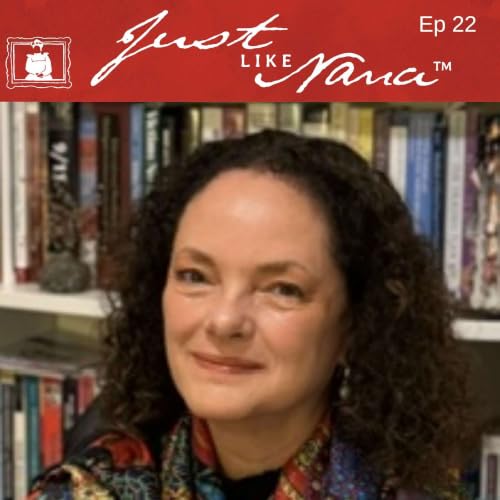
Just Like Nana cover art

Just Like Nana

Just Like Nana

Written by: Amie Penny Sayler
Listen for free

Dive into the journey of Just Like Nana, a podcast passionately exploring ancestral trauma, generational healing, and the profound ways our family's past shapes our present mental and holistic health. Amie Penny Sayler shares captivating, research-based fiction stories of her grandmothers' lives and features insightful interviews with leading mental health and wellness practitioners.


Learn how to break cycles of trauma passed down through generations, understand family dynamics, and cultivate a regulated nervous system. Ground yourself in your history, honor your ancestors, and find your own path to trauma healing.


New episodes every Friday. Learn more at https://justlikenana.com/

© 2026 Just Like Nana
Hygiene & Healthy Living Parenting Psychology Psychology & Mental Health Relationships Self-Help Success
Episodes
  • Dr. Irit Felsen
    Jun 19 2026

    In this episode of Just Like Nana, host Amie (Elizabeth) Penny Sayler is joined by Dr. Irit Felsen, a clinical psychologist who specializes in trauma and traumatic loss, where they discuss the impact of significant familial trauma through the lens of Holocaust survivors and their families.


    Together, they explore how to navigate family dynamics that result from trauma, and the importance of separating the love from the trauma.


    About Dr. Irit Felsen

    Irit Felsen, PhD is a clinical psychologist specializing in trauma and traumatic loss, whose clinical work and research have been focused on Holocaust survivors and their families. Dr. Felsen is an Adjunct Professor at Columbia University and was previously an Assistant Professor at Ferkauf Graduate School of Psychology, Yeshiva University for 14 years. Dr. Felsen is a Fellow of the APA Trauma division (Division 56) and a member of the American Academy of Experts in Traumatic Stress. She is the chair of the Trauma Working Group at the NGO Committee on Mental Health in Consultative Relationship to the United Nations.


    During the Covid-19 pandemic, Dr. Felsen was the chair of the Working Group focused on the needs of Vibrant Older Adults in the APA Interdivision Covid-19 Task Force, and when she resided in NJ, she was a board member of the Holocaust Council of MetroWest.


    Dr. Felsen’s papers have been published in peer-reviewed professional journals, and she authored multiple book chapters. Her research was the basis for the book “Psychoanalysis and Holocaust Testimony: Memories of Unwanted Social Trauma.”


    Dr. Felsen is sought-after speaker presenting nationally and internationally about the long-term effects of trauma on survivors and about the intergenerational transmission of trauma and resilience to the descendants of survivors. She is in private practice in Englewood, NJ.


    In This Episode, You’ll Learn:

    • Learn to distinguish between your parents' true core personality—what they actually wished and wanted for you—and the restrictive, anxious behaviors caused by post-traumatic stress.
    • Gain a clearer psychological perspective on why trauma survivors sometimes struggle with boundary-setting and letting their children separate, removing the blame and introducing deep compassion into the relationship.
    • Reclaim your family narrative by honoring the immense resilience it took for your lineage to survive, turning that historical strength into fuel for your own personal growth and success.


    Resources Mentioned

    • Psychoanalysis and Holocaust Testimony: Memories of Unwanted Social Trauma
    • The work of Beatrice Beebe, PhD
    • Nothing Makes You Free edited by Melvin Jules Bukiet
    • Fugitive Pieces by Anne Michaels


    Connect with Dr. Irit Felsen

    • Website: https://www.iritfelsen.com/
    • Research: https://www.iritfelsen.com/research/
    • LinkedIn: https://www.linkedin.com/in/irit-felsen-3b316712/
    • YouTube: https://www.youtube.com/channel/UCoPm6rBX9nGA0g76s4A-UpA


    Connect with the Show

    • Website: justlikenana.com
    • Share Your Story: If you have a family story or trauma you’re exploring, reach out via our website for a chance to be interviewed.

    Connect with Just Like Nana's Website.

    A proud member of the Feminist Podcasters Collective.

    Theme music by Carter Penny.

    Show More Show Less
    46 mins
  • Liza Miron
    Jun 12 2026

    In this episode of Just Like Nana, host Amie (Elizabeth) Penny Sayler is joined by Liza Miron, Family Constellations facilitator and coach, to discuss ancestral trauma through family entanglements and how we can heal from them.


    Together they discover how to balance ancestral anger while honoring those ancestors, the importance of acceptance and belonging, and so much more.

    About Liza

    With over 15 years of hands-on experience with different modalities, Family Constellations facilitator and trainer Liza Miron is passionate about nurturing growth, fostering awareness, and uncovering underlying threads that keep people from enjoying their lives. This is complemented by her dynamic academic background, including a BA in Business Administration, an MA in Coaching and Human Resources Management, and spectrum-wide certifications including NLP (Neuro-Linguistic Programming), EFT (Emotional Freedom Techniques), Reiki, and Syntara System Energy Healing.


    In This Episode, You’ll Learn:

    • Recognize that you are part of a larger energetic web. When an ancestor is forgotten, excluded, or judged, the system often entangles a later generation to represent that person, leading us to repeat their difficult patterns.
    • Healing begins when we acknowledge the black sheep or the forgotten ones and return them to their place in the system.
    • Discover why the most powerful healing sentence is a simple Yes to reality. Looking at the truth of your family history without judgment allows the heavy energy of the past to transform into strength.
    • You don't have to suffer to show loyalty to your lineage. Learn how to honor your ancestors by living a full, happy life—turning their survival and sacrifices into your fuel for success.


    Resources Mentioned

    • Another Self (Zeytin Agaci)


    Connect with Liza Miron

    • Website
    • Facebook
    • YouTube
    • Instagram
    • LinkedIn


    Connect with the Show

    • Website: justlikenana.com
    • Share Your Story: If you have a family story or trauma you’re exploring, reach out via our website for a chance to be interviewed.

    Connect with Just Like Nana's Website.

    A proud member of the Feminist Podcasters Collective.

    Theme music by Carter Penny.

    Show More Show Less
    39 mins
  • Melissa Taylor
    Jun 5 2026

    In this episode of Just Like Nana, host Amie (Elizabeth) Penny Sayler is joined by Melissa Taylor, a mental health provider who's deeply versed in cultural nuances and intergenerational trauma, to discuss seeking ancestral wisdom as part of healing.


    They also dive into the impact of systemic oppression on family dynamics and the importance of recognizing and validating individual experiences.


    About Melissa

    Navigating both physical and virtual spaces, Melissa is a third-culture individual deeply versed in cultural nuances and intergenerational trauma. Driven by a mission to reconnect with her ancestors and to help others on their own journeys of reconnection, she specializes in addressing relational and intergenerational trauma as well as oppression. Melissa’s practice is grounded in principles of anti-racism, anti-oppressive practices, and Black feminism. She’s committed to working with individuals impacted by colonization, enslavement, and 2SLGTBQ+ oppression.


    In This Episode, You’ll Learn:

    • Ancestors are not just biological; they can include community members, writers, artists, or even elements of nature like a specific lake or river that provides a felt sense of connection.
    • We don't just inherit intergenerational wounds; we also inherit intergenerational wisdom—skills, ways of knowing, and a capacity for playfulness that can anchor us during difficult times.
    • Healing often begins with a sensation rather than a thought. Look for glimmers of okayness or a settlement in the body, even if it only lasts for a few seconds.
    • Individual trauma is often inseparable from systemic oppression, including racism, misogyny, and the patriarchy. Recognizing these external forces helps take the pathology off the individual.


    Resources Mentioned

    • Ancestral Memory Therapy’s blog

    Connect with Melissa Taylor

    • Ancestral Memory Therapy: https://www.ancestralmemorytherapy.com/


    Connect with the Show

    • Website: justlikenana.com
    • Share Your Story: If you have a family story or trauma you’re exploring, reach out via our website for a chance to be interviewed.

    Connect with Just Like Nana's Website.

    A proud member of the Feminist Podcasters Collective.

    Theme music by Carter Penny.

    Show More Show Less
    41 mins
adbl_web_anon_alc_button_suppression_t1
No reviews yet