• Episode 20: Tissue and Organ Donation- DonateLife
    Jul 26 2026


    In recognition of DonateLife Week, Tim speaks with Dr David Blythe, State Medical Director at DonateLife, about how organ and tissue donation works in Australia and its connection to palliative care and advance care planning.


    Dr Blythe discusses the circumstances required for donation, common barriers, and why it is important to share your wishes with those closest to you. He also reflects on what constitutes a good death and the profound impact donation can have on recipients and donor families


    To learn more about organ and tissue donation, or to become registered click here: Home | DonateLife


    Listen to the full episode of Keeping Up with the PaSCE on YouTube, Spotify or Apple Podcasts.

    Hosted on Acast. See acast.com/privacy for more information.

    Show More Show Less
    35 mins
  • Episode Nineteen: Building Dignity, Joy and Community: Inside WA’s First Children’s Hospice
    Jun 2 2026

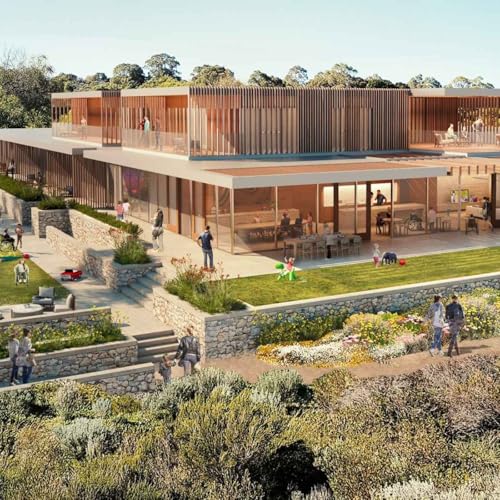
    In this episode of Keeping Up with the PaSCE, Tim speaks with Dr Lisa Cuddeford and Carrick Robinson about the Sandcastles Project, Western Australia’s first dedicated children’s hospice. Together, they explore the realities of paediatric palliative care, the importance of supporting whole families, and how Sandcastles has been designed to provide respite, connection, symptom management and compassionate end-of-life care in a home-like environment. This moving conversation highlights the power of community, dignity and creating joy for children and families facing life-limiting illness.


    Cover image courtesy of Perth Children's Hospital Foundation

    Hosted on Acast. See acast.com/privacy for more information.

    Show More Show Less
    52 mins
  • Episode Eighteen: AI and Neurodegenerative Disorders
    Feb 2 2026

    In this episode of the PaSCE Podcast, I am joined by Lok, an Occupational Therapist from North District Hospital in Hong Kong, to explore the intersection of artificial intelligence, palliative care and Motor Neuron Disease (MND).

    Our conversation begins with the unfortunate reality of living with MND, its impact on the social, emotional and physical wellbeing of suffers and their loved ones. Lok shares what drew him to this work and introduces his framework, “The Four Things That Matter Most,” which guides his approach to end-of-life care.

    Together, we unpack how emerging technologies—such as voice banking, digital twins, eye-gaze control, powered voice synthesis and wearable technologies to support communication, autonomy and dignity throughout the course of the illness. It creates access when communication becomes inaccessible.

    Looking ahead, Lok reflects on the future of healthcare and what the next frontier of technology may offer people living with MND and other life-limiting illness.


    Breaking the forth wall- will need to discuss the what’s next- it sounds groundbreaking.

    Hosted on Acast. See acast.com/privacy for more information.

    Show More Show Less
    30 mins
  • Episode Seventeen: Grief Australia
    Dec 19 2025

    In this episode, Tim is joined by Chris Hall, psychologist and CEO of Grief Australia, Australia’s government-funded specialist bereavement service. With nearly two decades leading national grief support—and decades more in practice—Chris brings deep expertise in grief and bereavement, including child and adolescent grief, complex loss, and the impact of grief in workplaces and organisations.

    Together, they explore what grief really is, how our understanding of it is changing, and what a more grief-literate Australia could look like in practice. Chris also reflects on emerging trends, the role of government, and what gives him hope for the future of grief support in Australia.

    Hosted on Acast. See acast.com/privacy for more information.

    Show More Show Less
    50 mins
  • Episode Sixteen: Health Economics
    Dec 15 2025

    In this episode of the PaSCE Podcast, we’re joined by Associate Professor Chris Schilling, health economist and Principal Research Fellow at the University of Melbourne, to unpack how health economics shapes the decisions that influence care, equity and sustainability across Australia’s health system.


    Chris breaks down health economics in practical terms, explores the real-world implications for aged care and palliative care, and reflects on the economic challenges facing the system amid rapid reform, workforce shortages and shifting government priorities.


    We discuss how concepts like value, resource allocation and quality of life are understood (and sometimes misunderstood), and what Chris sees that others may not.


    References discussed throughout:

    Association of advance care planning with hospital use and costs at the end of life: a population-based retrospective cohort study | BMJ Open

    Measures of health and health care for Australia and similar countries - Australian Institute of Health and Welfare and Australia (EN) 2023 OECD Report


    Hosted on Acast. See acast.com/privacy for more information.

    Show More Show Less
    28 mins
  • Episode Fifteen: International Men's Day- Celebrating Men and Boys
    Nov 18 2025

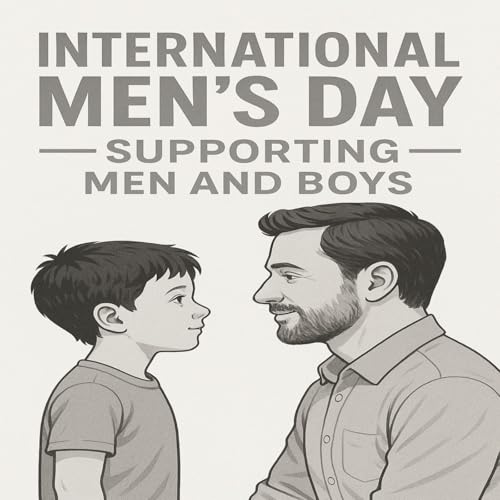
    In this International Men’s Day (19 Nov 2025) episode, we’re Celebrating Men and Boys with Matt Oke, facilitator at Kai-Fella, a WA charity working to prevent youth suicide and build emotional resilience. Matt shares his journey from international athlete and DJ to mental-health advocate — and how learning to open up helped him guide young men to do the same.


    A truly inspirational and dedicated young man.


    👉 kai-fella.com.au

    Hosted on Acast. See acast.com/privacy for more information.

    Show More Show Less
    37 mins
  • Episode Fourteen: World Hospice and Palliative Care Day
    Oct 7 2025

    This year’s World Hospice and Palliative Care Day falls on October 11, uniting communities worldwide to celebrate, reflect, and call for universal access to quality palliative care.More than 60 million people need palliative care globally, yet access remains unequal, even in developed countries.


    I sat down with Ed Gaudian, a leader in WA palliative care, to reflect on this year’s theme. Ed’s career has spanned emergency, ICU, hospice innovation and statewide consultancy. His first encounter with palliative care was transformative: “I viewed it from a new lens… clinical teams putting the patient first.”


    He’s seen the field evolve from an oncology focus to supporting people with complex, diverse needs. But despite progress, system navigation and funding pressures remain major barriers, with many patients falling through the cracks.

    New aged care standards are raising expectations for residential facilities to deliver quality end-of-life care. Ed sees this as a positive shift, supported by stronger education, community awareness and teamwork.


    He reminds us that often, “it’s the smallest things that matter.” From arranging final wishes to simple acts of comfort, person-centred care is built on human connection.

    This World Hospice and Palliative Care Day, let’s celebrate providers, share stories, and advocate for equitable access — so that quality palliative care truly reaches everyone


    References:

    Palliative Care WA

    Home - Ambulance Wish Western Australia

    MPaCCS (Palliative Care Consultancy Service) - Bethesda Health Care


    Hosted on Acast. See acast.com/privacy for more information.

    Show More Show Less
    26 mins
  • Episode Thirteen: R U Ok? A conversation could change a life.
    Sep 10 2025

    On today’s episode, I’m joined by Dr. Hannah Brown from R U OK?


    We dive into the history of the organisation, the importance of R U OK? Day, and—most importantly—how to start meaningful conversations that can make a real difference.


    If you’d like to learn more or access resources, head to www.ruok.org.au.

    Hosted on Acast. See acast.com/privacy for more information.

    Show More Show Less
    20 mins