Kicking Cancer's Ass cover art

Kicking Cancer's Ass

Kicking Cancer's Ass

Written by: Joelle Kaufman
Listen for free

About this listen

Kicking Cancer’s Ass is the weekly podcast giving cancer survivors, patients, and caregivers hope and power through stories, strategies, and science.Joelle Kaufman Self-Help Success
Episodes
  • The Career Crisis After Cancer No Executive Expects
    Feb 17 2026

    "I felt like I had been derailed. We had built our careers over several decades and we knew what the challenges were in building our careers as well. We had to overcome a lot of bias... and when something like this hits you, there's the fear that… Am I slipping in taking care of business?"

    Patricia Muir was at the peak of her consulting career, three decades of building her business, when breast cancer hit in 2013. She caught it early through intuition, went through surgery and radiation, and returned to work physically ready. But she found herself staring in the mirror not recognizing the person looking back. Not physically. Emotionally. As an entrepreneur and executive coach specializing in emotional intelligence, she reveals the hidden professional crisis successful women face post-cancer: being told on day one they're on their way out, boardroom perception shifts that question capability, and the identity reconstruction that medical teams never address.

    Joelle and Patricia dive deep into:

    • Return to work versus return to performance framework: three paths from diagnosis—reflection to thriving, questioning to passive performance, or disillusionment to disengagement

    • Self-trust over self-confidence: making and keeping small promises to yourself builds evidence your body can handle this—escaping the "you just need more confidence" trap

    • "Needs to know" disclosure strategy for compliance-driven professionals: protecting privacy while managing unwanted daily wellness checks and colleague fussing

    • Empathy as recovery drain: recognizing when supporting others' cancer diagnoses depletes your energy and redirecting effort back to yourself

    • Year-long emotional intelligence rebuilding: cancer hits self-perception and self-regard hardest, requiring structured work across specific domains rather than quick fixes

    • Watching for emotional triggers in client work: identifying when hearing others' diagnoses creates performance-affecting responses you need to manage

    • Wellspring facilitated groups: why sharing with strangers in treatment proves more therapeutic than confiding in close networks who haven't had cancer

    • The day-one exit signal: why women executives report knowing immediately post-treatment they're being pushed out despite proven capability

    Patricia transformed her business 12 years post-diagnosis, choosing joy and impact over adrenaline and difficult clients by focusing her work exclusively on executive women post cancer.. For executive women wondering if they'll maintain their hard-won authority and position: this episode maps the path from derailment to intentional redesign.

    Show More Show Less
    46 mins
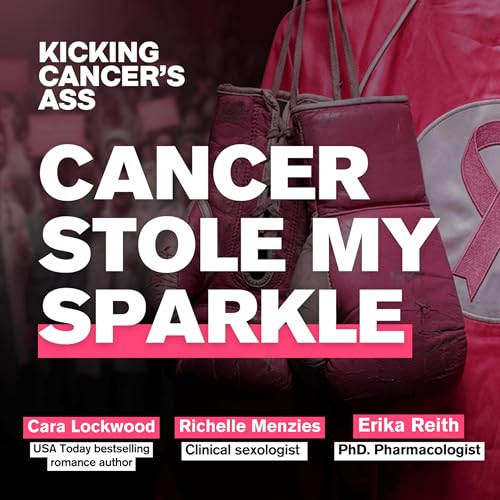
  • Episode 33: When Cancer Kills Your Sex Drive: The Conversation Oncologists Avoid
    Feb 10 2026

    “I talk about my sparkle and I just felt like… hormone blockers took my sparkle. That cognitive side of it, the lack of desire, feeling just fatigued... during cancer treatment, it was like the last thing that I wanted to do."

    In this essential conversation, clinical sexologist Richelle Menzies, USA Today bestselling romance author Cara Lockwood, and pharmacologist Dr. Erika Reith (all breast cancer survivors) break the silence on what 87% of cancer patients experience but only 27% are ever asked about: what happens to your sex life during and after treatment. From hormone blockers that erase desire to surgeries that eliminate sensation, they reveal the specific medical interventions and frameworks that restore intimacy when oncologists offer nothing but silence.

    They dive deep into:

    • Vaginal estrogen protocols reversing severe atrophy when even washing becomes painful—why emerging peer-reviewed research proves safety for hormone-positive cancers

    • Testosterone cream restores energy levels within one week and libido within three months when hormone therapy crashes levels to zero

    • Traffic light negotiation framework: separating red (absolute no), yellow (nice to have), green (must have) needs before difficult partner conversations

    • Six-week progressive touch protocol rewiring neuroplasticity by mapping new erogenous zones on previously non-sexual body areas after mastectomy

    • "Use it or lose it" blood flow principle with critical exception: stop immediately if there's pain or risk conditioning vaginismus responses

    • Responsive versus spontaneous desire shift affecting 75% of women post-treatment and why Emily Nagoski's "Come As You Are" framework changes everything

    • Weekly capacity check-ins replacing one-time conversations to assess what's working and what needs adjustment as recovery progresses

    • Five senses somatic grounding and extended exhale breathing techniques bringing you back into your body when fight-or-flight response blocks intimacy

    • Why late-stage neurodivergence diagnoses spike during treatment as hormone suppression causes masking behaviors to drop

    Cancer doesn't get to decide you're done being a sexual being. These interventions exist right now—you just have to advocate for them yourself.

    Show More Show Less
    57 mins
  • Episode 32: How 47,000 women proved risk-based screening stops late-stage breast cancer | Laura Esserman
    Feb 4 2026

    "Why can't we build a contraceptive that reduces breast cancer risk? That's the way to get rid of breast cancer. I don't want to just keep treating it. I want to prevent it altogether."

    In this groundbreaking episode, Dr. Laura Esserman, Director of the UCSF Breast Cancer Center, joins Joelle Kaufman to reveal how her 47,000-patient WISDOM study just proved we can eliminate late-stage breast cancer through risk-based screening—and why the medical establishment resisted her every step of the way.

    They dive deep into:

    • WISDOM study results: Zero stage 2B+ cancers in highest-risk women screened every 6 months versus annual age-based protocols

    • Population genetic testing economics: now cheaper than a single mammogram, done once, reveals 30% of mutation carriers have no family history

    • Polygenic risk scores (PRS) changing screening recommendations for 15% of women beyond single-gene BRCA testing

    • AI breast density algorithms identifying the actual 10% who need supplemental screening—not the 50-60% currently over-screened

    • Anti-progestin medications like mifeprestone already used for fibroids and endometriosis are being repurposed as breast cancer prevention tools

    • Intermediate endpoint frameworks for prevention drugs modeled on cardiology's blood pressure and cholesterol standards

    • Why 25% of I-SPY trial patients are under 40 and what that reveals about current screening failures

    • The $4-5 million funding gap is blocking WISDOM 2.0 enrollment while waiting 1-2 years for insurance guideline changes

    From proving precision screening works to building prevention pathways that could cut annual diagnoses from 320,000 to 150,000, this is essential listening for anyone rethinking how we approach women's health.

    Don't wait for guidelines to catch up. Understand the science that's already proven.

    Support the WISDOM Study—help provide genetic testing and personalized screening to women while we wait for insurance guidelines to catch up: https://giving.ucsf.edu/fund/wisdom


    Show More Show Less
    30 mins
No reviews yet