• Mutual Aid: Where Democracy Lives
    Apr 28 2026

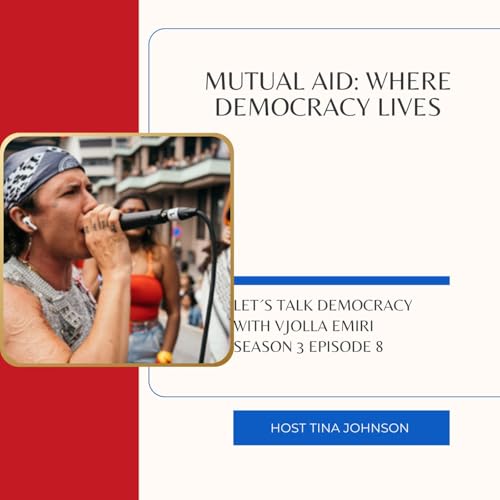
    In this episode of Let’s Talk Democracy, host Tina Johnson explores the meaning of mutual aid and how it is reshaping our understanding of democracy, care, and collective power in practice.

    Tina is joined by Vjolla Emiri (they/them), a trans, queer, and Muslim Kosovo-Albanian artist, grassroots organizer, facilitator, somatic practitioner, and weaver based in Oslo. Together, they examine how communities build systems of care when formal institutions fail to meet people’s needs.

    From community survival programs like the Black Panther Party to Emergency Response Rooms in Sudan, mutual aid has long existed as a global practice of solidarity and collective survival. This episode connects these histories to present-day struggles in Norway and beyond, highlighting how people organize to meet needs such as housing, healthcare, food access, and safety.

    Key themes include:

    • What mutual aid is and why it is not charity
    • How mutual aid functions as grassroots democracy
    • Activism vs organizing: understanding the difference
    • How communities build power outside formal political systems
    • Care, reciprocity, and collective responsibility as political tools

    This conversation challenges dominant ideas of democracy as something that only happens through institutions or voting. Instead, it asks: what if democracy is something we practice every day through how we care for each other?

    If you are interested in mutual aid networks, grassroots organizing, social justice movements, community care, or rethinking democracy, this episode offers grounded insight and global perspective.

    Subscribe to Let’s Talk Democracy for more conversations on democracy, power, and collective action.

    Show More Show Less
    54 mins
  • Inside Democracy: Where Systems Meet Real Life
    Apr 14 2026

    What does democracy actually look like when you’re inside it?

    In this episode, we move beyond theory and explore how democratic systems function in real life—through participation, decision-making, and everyday interaction.

    Democracy is often described as a set of institutions or processes. But from the inside, it operates very differently. It becomes something that depends on attention, coordination, and continuous engagement.

    This episode explores how democracy works on the ground, from local decision-making spaces to the informal conversations that shape outcomes before formal decisions are made.

    Because democracy isn’t just something we observe.

    It’s something we participate in—and help sustain.

    In This Episode
    • What democracy feels like from the inside
    • How local participation changes behavior and accountability
    • Why coordination—not just disagreement—is a central challenge
    • The hidden costs of participation and democratic fatigue
    • How informal influence shapes decisions before they are made
    Key Takeaway

    Democracy is not a fixed system.

    It is a continuous process—maintained through participation, attention, and repeated engagement.

    Show More Show Less
    22 mins
  • The Public Square Isn’t Dead: How showing up in our communities keeps democracy alive
    Mar 31 2026

    This week on Let’s Talk Democracy host, Tina Johnson delivers a concise, reflection on what democracy really requires: presence, effort, and human participation. While social media and technology shape how we engage, the heart of democracy is lived in real-world spaces—from global protests to local community actions like No Kings.

    Tina reflects on the difference between digital engagement and active participation, sharing insights on why showing up matters, even when it’s uncomfortable or inconvenient. She explores how people across the globe continue to organize, protest, and engage, proving that democracy is sustained by action, not algorithms.

    This episode is a thought-provoking listen with one clear takeaway: pay attention to where you’re showing up in your community, and consider taking meaningful steps to engage. Because democracy isn’t built online—it’s built by people.

    Tune in for a reflective reminder that every effort counts.

    • Democracy lives in presence, effort, and real-world action.
    • Why showing up matters more than scrolling, sharing, or liking.
    • Global and local examples of civic engagement, including No Kings.
    • Reflection on human work sustaining democracy.
    • Quick, actionable takeaway for listeners: how to participate meaningfully this week.

    #LetsTalkDemocracy #CivicEngagement #Participation #CommunityAction #Grassroots #Protests

    Show More Show Less
    9 mins
  • Can Technology Fix Democracy? Mobile Voting, AI, and the Future of Civic Power
    Mar 17 2026

    In this episode of Let’s Talk Democracy, host Tina Johnson speaks with Ramon Perez, founder of the Digital Democracy Project, about the future of digital democracy and civic engagement.

    How can mobile voting, blockchain technology, and AI transform the way citizens interact with government? Ramon shares how his platform enables real-time voter input on legislation, creating a more participatory and transparent democratic process.

    This episode explores key issues including voter access, political representation, gerrymandering, and the growing role of technology in shaping public policy.

    If you're interested in democracy reform, civic technology, or how AI is changing government, this conversation offers powerful insights into the future of participatory democracy.

    Keywords: digital democracy, civic engagement, mobile voting, blockchain voting, AI in government, participatory democracy

    Show More Show Less
    51 mins
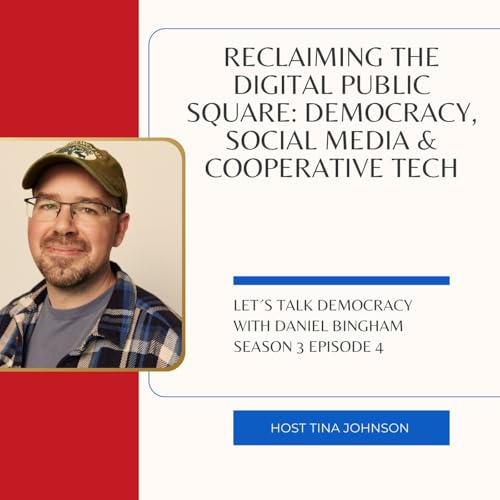
  • Reclaiming the Digital Public Square: Democracy, Social Media & Cooperative Tech
    Mar 3 2026

    What happens to democracy when social media becomes the public square?

    In this episode of Let’s Talk Democracy, host Tina Johnson speaks with technologist and civic activist Daniel Bingham about how platforms like Facebook and Twitter reshaped civic life — and how their ad-driven business models may be fueling polarization instead of healthy dialogue.

    Together, they explore:

    • How venture capital and advertising incentives shape online discourse
    • The concept of “enshittification” and platform decline
    • Why polarization may be a design outcome
    • The limits of decentralization and the Fediverse
    • How democratic governance could transform social media

    Daniel shares his work building Communities — a democratically governed, user-funded social platform designed to align technology with democratic values instead of shareholder profit.

    If you're interested in:

    ✔ Digital democracy

    ✔ Ethical social media

    ✔ Civic engagement

    ✔ Cooperative governance

    ✔ The future of online dialogue

    This episode offers both critique and a practical alternative.

    Explore Communities in open beta using the link https://communities.social/about/contribute

    Subscribe, share, and leave a review to support thoughtful conversations about democracy and civic life.

    Show More Show Less
    1 hr and 10 mins
  • Deliberation by Design: Rebuilding Social Media for Democracy
    Feb 17 2026

    Social media was once celebrated as a tool for connection — but today, it often divides us, amplifying outrage and eroding public trust.

    In this episode of Let’s Talk Democracy, I speak with Paul Bonifacio, a French tech professional turned social entrepreneur, about the role of platform design in shaping behavior, amplifying extremes, and influencing the health of our democracies.

    We explore a critical question: Can social media be redesigned to support dialogue instead of division? Together, we discuss what it would look like to build digital spaces that prioritize reflection, accountability, and meaningful human connection.

    Tune in to rethink the online spaces you inhabit every day and imagine how they could be transformed from engines of division into foundations for democratic renewal.

    Key Takeaways:

    • Division online isn’t inevitable — it’s designed into the platforms we use.
    • Platform choices shape behavior, amplify extremes, and affect public discourse.
    • Reimagining social media for dialogue, accountability, and connection is possible.
    • Every user can play a role in fostering healthier, more deliberative digital spaces.

    Show More Show Less
    1 hr and 7 mins
  • The Megaphone Effect: How Social Media Controls Democracy
    Feb 3 2026

    How does social media affect democracy? Are digital platforms promoting informed debate—or fueling polarization and conflict?

    In this episode of Let’s Talk Democracy, host Tina Johnson and Lisa Schirch, Professor of Peacebuilding and Director of the Peacetech and Polarization Lab at the University of Notre Dame, explore the impact of social media on democracy, political polarization, and public discourse.

    We cover:

    • How algorithms amplify outrage and extremism
    • The role of misinformation and digital manipulation in undermining democracy
    • Deliberative technologies that foster listening, dialogue, and civic engagement
    • Strategies for redesigning social media platforms to support democratic resilience

    Perfect for anyone interested in digital democracy, social media ethics, civic engagement, and peacebuilding, this episode offers insights into how we can reclaim the digital public square.

    Listen now to explore the intersection of social media, democracy, and technology:

    Keywords: social media impact on democracy, political polarization, digital platforms and democracy, deliberative technologies, civic engagement, misinformation, online discourse, peacebuilding.

    Show More Show Less
    52 mins
  • It’s Been Emotional Whiplash Already
    Jan 20 2026

    It’s only January — and the world already feels heavy. In the Season 3 premiere of Let’s Talk Democracy, Tina Johnson reflects on global unrest, domestic protests, and the emotional whiplash of watching democracy tested in real time.

    Show More Show Less
    10 mins