Mirror Mirror cover art

Mirror Mirror

Mirror Mirror

Written by: Alex Quinn
Listen for free

About this listen

This podcast explores eating disorders and mental health through a compassionate, evidence informed lens. Each episode blends clinical insight with real-world understanding, helping listeners make sense of complex experiences around food, body image, trauma, mood, and recovery. Grounded in psychiatry, neuroscience, and lived experience, conversations focus on reducing shame, challenging stigma, and offering clarity without pressure or perfection. Rather than quick fixes, this space emphasizes curiosity, safety, and the slow work of healing. Whether you’re navigating recovery, supporting someone you love, or working in mental health care, this podcast offers thoughtful discussion, gentle education, and reminders that change is possible and you don’t have to do it alone.Copyright 2026 Alex Quinn Hygiene & Healthy Living Psychology Psychology & Mental Health Relationships Social Sciences
Episodes
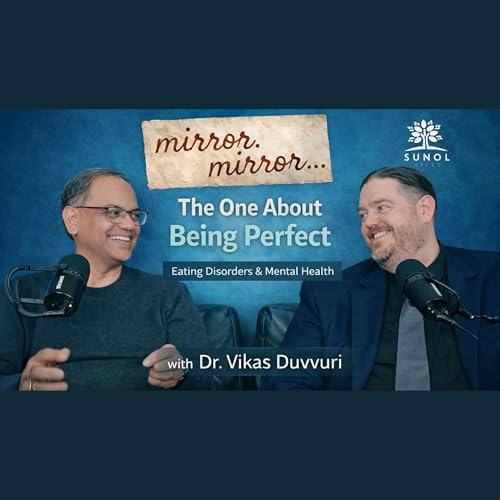
  • The One About Being Perfect
    Feb 18 2026

    The discourse we engage in today revolves around the intricate question, "Why don't I look perfect?" This inquiry serves as a catalyst for a profound exploration into the societal constructs surrounding the notion of perfection, particularly as influenced by pervasive media messaging. As we delve into the complexities of self-image, Dr. Vikas Duvvuri articulates that the crux of the issue lies not merely in the desire to achieve an idealized physique but rather in the methodologies individuals employ to reach such ends, which often exacerbate underlying mental health challenges. We emphasize the importance of understanding that societal standards of beauty are frequently distorted, leading individuals to adopt harmful behaviors in their pursuit of acceptance. Through this episode, we aspire to illuminate the necessity of redefining personal health goals and recognizing the inherent value in one's unique body, thereby fostering a healthier relationship with oneself amidst the cacophony of external expectations.

    Takeaways:

    1. In contemporary society, perceptions of perfection are profoundly influenced by pervasive media representations and social trends.
    2. Individuals often feel inadequate when they perceive a disconnect between societal ideals and their own realities of appearance or health.
    3. The pursuit of specific weight loss targets can inadvertently exacerbate or trigger the onset of eating disorders in vulnerable individuals.
    4. Health professionals advocate for a focus on holistic well-being rather than rigid numerical goals in weight management and health.
    5. Media's portrayal of beauty often emphasizes unrealistic standards, perpetuating harmful stereotypes that can lead to disordered eating behaviors.
    6. Recognizing the unique genetic and personal diversity among individuals is crucial for developing effective and personalized health strategies.

    Dr. Vikas Duvvuri and Alex Haynes engage in a compelling dialogue that interrogates the societal constructs surrounding beauty and perfection. They delve into the notion that perfection, as defined by contemporary media and cultural narratives, is often an elusive and unattainable ideal, which can lead to detrimental mental health outcomes, particularly for those grappling with eating disorders. Dr. Duvvuri articulates that the pressures exerted by these societal standards can create a chasm between individual self-perception and the idealized images portrayed in media, exacerbating feelings of inadequacy and self-doubt. This dissonance is particularly pronounced in the context of individuals who are already vulnerable to body image issues, where the relentless pursuit of perfection becomes a damaging cycle of self-criticism and unhealthy behaviors. Throughout the conversation, the hosts emphasize the importance of shifting the focus from rigid numerical targets to a more nuanced understanding of health that encompasses emotional and psychological well-being. Dr. Duvvuri advocates for a holistic approach to health that prioritizes personal agency and self-acceptance, urging listeners to recognize that beauty cannot be distilled into mere statistics or conformist ideals. The episode further explores the role of media in perpetuating narrow definitions of beauty, highlighting the dangers of consuming content that promotes unrealistic standards. Dr. Duvvuri calls for a collective resistance against these pervasive narratives, encouraging individuals to challenge societal norms and embrace their unique...

    Show More Show Less
    41 mins
  • The One About Treating Eating Disorders
    Feb 18 2026

    Links referenced in this episode:

    1. sunolhills.com

    The discourse surrounding eating disorders is fraught with complexity, as elucidated in the inaugural episode of Mirror Mirror, hosted by Alex Haynes alongside Dr. Vikas Deveri, co-founder of Sunol Hills. The episode establishes a foundational understanding of eating disorders, emphasizing the multifaceted nature of these conditions, which range from severe manifestations to those in the recovery continuum. Dr. Deveri elucidates the imperative for comprehensive treatment options that cater to individuals at various stages of their struggles with eating disorders. The dialogue underscores the systemic barriers that individuals face when seeking treatment, likening the process to the onerous task of applying to college. Through this analogy, the episode poignantly illustrates the urgent need for accessible care that prioritizes the individual's needs over bureaucratic hurdles. Haynes and Deveri passionately advocate for early intervention, emphasizing that the journey towards recovery must begin with a single step, regardless of the initial condition presented by the patient. This episode serves not only as an introduction but also as a clarion call for those in need, presenting Sunol Hills as a resource dedicated to guiding individuals towards recovery and wellness, regardless of where they commence their journey. In a thorough examination of the complexities surrounding eating disorders, this episode of Mirror Mirror provides listeners with invaluable insights into the psychological and physiological dimensions of these conditions. Dr. Deveri's extensive experience in the field, spanning over two decades, informs a nuanced discussion on the stigma associated with eating disorders and the critical need for empathy in treatment. He articulates the challenges posed by societal misconceptions that often trivialize the severity of these disorders, highlighting that mental health issues are frequently invisible and, therefore, misunderstood. This misunderstanding perpetuates the myth that individuals must reach a certain threshold of severity—often referred to as 'sick enough'—before they are deemed worthy of care. Dr. Deveri compellingly argues against this notion, advocating instead for a model of care that seeks to understand each individual's unique circumstances and psychological landscape. The episode emphasizes the importance of fostering a supportive environment where individuals can express their struggles without the fear of judgment, thereby diminishing the barriers that often deter individuals from seeking help. The episode further delves into the alarming prevalence of eating disorders among adolescents, particularly during the tumultuous period of puberty. Dr. Deveri articulates the intricate interplay between hormonal changes and the onset of eating disorders, emphasizing the need for vigilance among parents and caregivers. The discussion highlights the subtle signs of disordered eating that may easily be overlooked, underscoring the importance of proactive communication and education. As the hosts navigate through the conversation, they invite listeners to consider the broader societal context that contributes to the distorted perceptions of body image perpetuated by media and culture. Mirror Mirror aims to not only illuminate the path to recovery for those affected by eating disorders but also to educate the public on the warning signs and the critical importance of early intervention. In doing so, the podcast emerges as a vital resource for individuals and families grappling with the challenges of eating disorders, providing them with the knowledge and support necessary to embark on the journey towards healing.

    Show More Show Less
    36 mins
  • Mirror Mirror: The One About the New Year
    Jan 5 2026

    The start of a new year often brings hope, motivation, and the promise of change — but it can also bring pressure, disappointment, and unrealistic expectations. In this episode of Mirror, Mirror…, we take a closer look at why New Year’s resolutions so often fall apart, and why they can be especially complicated for individuals struggling with eating disorders and mental health challenges. Host Sarah is joined by Dr. Vikas Duvvuri, psychiatrist, neuroscientist, and co-founder of Sunol Hills, to explore what really makes change stick — and why willpower alone is rarely the answer. Together, they unpack the biological, psychological, and environmental factors that influence behavior change, and why “quick fixes” and perfection-based goals can do more harm than good. In this conversation, we discuss: Why New Year’s resolutions tend to fizzle out after a few weeks The role of biology and brain-based predispositions in eating disorders How diet culture and weight-centric messaging can increase risk Why consistency does not mean perfection How self-compassion, flexibility, and support systems are essential for sustainable change What healthier, mental-health-focused resolutions can actually look like This episode offers a grounded, compassionate perspective for anyone feeling discouraged by past resolutions — especially those navigating recovery or supporting someone who is. If you or someone you love is struggling with eating disorders or mental health concerns, support is available. Learn more about treatment options and resources at SunolHills.com. If you found this episode helpful, please consider liking, sharing, or leaving a comment — your engagement helps these conversations reach the people who need them most.

    Show More Show Less
    35 mins
No reviews yet