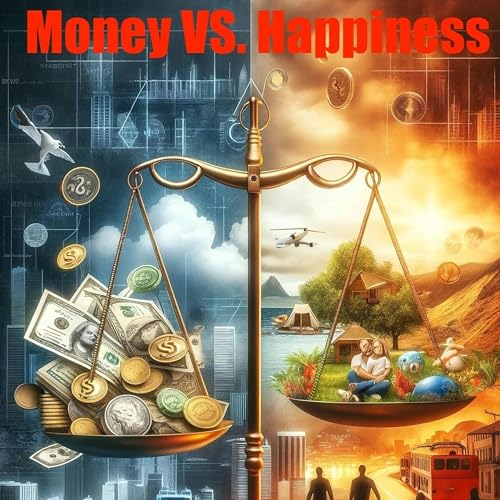
The age-old question of whether money can buy happiness has fascinated thinkers across disciplines for centuries. While the adage suggests that it cannot, research paints a more nuanced picture – one where income and happiness are undoubtedly linked, but in complex and often surprising ways. This expanded essay delves into the historical context of this question, examines how income levels, tax brackets, spending habits, financial security, and income inequality shape individual and societal well-being, and explores the policy implications of these insights. A Historical Lens on Happiness Happiness has been a subject of philosophical inquiry since ancient times. Aristotle, one of the earliest thinkers to systematically examine the concept, argued in his Nicomachean Ethics that happiness (eudaimonia) is the highest good and the end goal of human existence. For Aristotle, happiness was not a fleeting emotional state but a life well-lived, achieved through the cultivation of virtue and the fulfillment of one's potential. Fast forward to the 20th century, and psychologists began to empirically study happiness and its determinants. One influential theory that emerged was Abraham Maslow's hierarchy of needs (1943). Maslow proposed that human needs can be organized into a hierarchy, with basic physiological needs (food, water, shelter) at the bottom, followed by safety needs, love and belonging, esteem, and finally, self-actualization at the top. This theory suggests that individuals must first fulfill lower-level needs before they can pursue higher-level ones. In this framework, income is crucial for meeting basic needs and laying the foundation for further growth and self-realization. The Easterlin Paradox, named after economist Richard Easterlin, added another layer of complexity to the income-happiness relationship. In his seminal 1974 paper, Easterlin found that within countries, wealthier individuals were generally happier than poorer ones, but when comparing countries, average happiness levels did not increase in line with rising GDP per capita over time. This finding challenged the assumption that economic growth alone could lead to greater well-being and spurred further research into the nuances of this relationship. Income Levels and Diminishing Returns Numerous studies have confirmed that higher income is associated with greater life satisfaction and happiness, but with an important caveat – this relationship is not linear. The "diminishing returns" phenomenon suggests that beyond a certain income threshold, additional money has a smaller impact on happiness. A landmark study by Princeton University researchers Daniel Kahneman and Angus Deaton (2010) found that in the United States, emotional well-being (the frequency and intensity of positive and negative experiences) plateaus around an annual income of $75,000. Beyond this point, additional income did not significantly improve day-to-day happiness, although it continued to enhance over This content was created in partnership and with the help of Artificial Intelligence AI.
Show More
Show Less


 May 30 202415 mins