Episodes

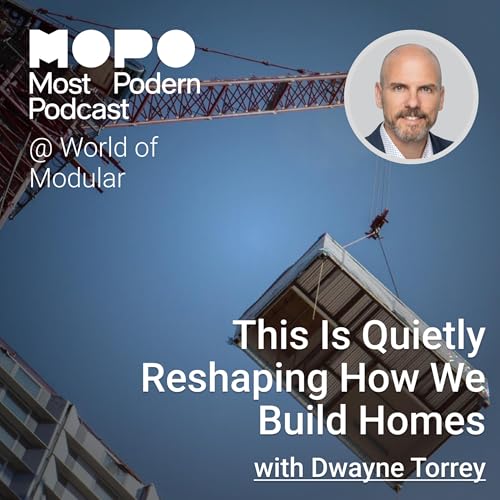
  • This Is Quietly Reshaping How We Build Homes - Dwayne Torrey
    May 20 2026

    The housing crisis is real. So why isn't modular construction fixing it?


    Dwayne Torrey is the Director of Construction and Infrastructure at CSA Group — the organization that writes the standards every builder, regulator, and manufacturer in Canada has to follow. He's been working at the intersection of modular construction and policy for seven years, and his answer might surprise you: the technology isn't the problem. The rulebook is.


    In this episode we get into how consensus standards actually get written, who's fighting in the room when they do, and why a 1972 document about school portables is still shaping how Canada builds homes today.


    🔗 CSA Group: https://www.csagroup.org/


    CHAPTERS

    0:00 Intro1:20 What is CSA Group?3:45 Standards vs. regulation — what's the difference?6:30 Who sits in the room when the rules get written10:00 The modular construction problem nobody talks about14:15 CSA A277 — the standard that's been around since 197218:00 What the new structural design standard actually covers22:30 Certification — what it means and why it matters27:00 Why building officials are nervous about modular31:00 The education gap — who needs to learn what35:30 "Inflection point" — what this moment means for housing


    #modular #housingcrisis #construction

    Show More Show Less
    21 mins
  • Architecture Off the Assembly Line - with Justin Brechtel
    May 13 2026

    What happens when an architect stops designing one-off buildings and starts designing a system?

    Justin Brechtel is a licensed architect in California, principal of Iterate Architecture, and VP of Architecture at West Modular — and he's making the case that the way we deliver buildings is broken. Architects have spent decades reinventing the wheel on every project, slowly ceding their leadership role to developers and contractors. Justin's answer: treat architecture like a product. Build the bones once. Refine them like an iPhone.

    In this episode we get into what it actually looks like to embed architects on a factory floor, why talking to a modular manufacturer early can save your entire project, and why "slow is responsible" has quietly become one of the most expensive ideas in American cities.


    Links:

    Website: www.iterae.com

    Instagram: @iteraearchitecture

    https://www.westmodular.com/


    Show More Show Less
    42 mins
  • What's Your Density Appetite?
    May 7 2026

    Have you ever walked through a city and felt, almost physically, that it was too much or not enough? That feeling has a name. Alex Yuen, architect, urbanist, and host of Most Podern, calls it density appetite and it might be the most fundamental idea in urbanism that no one is talking about. From the way Tokyo reinvents itself decade after decade to the way San Francisco has quietly frozen itself in place, the cities we live in are a direct reflection of how much growth we're actually willing to stomach. This conversation unpacks how density works not just as a planning metric but as a deeply personal, political, and cultural force, one that shapes your rent, your commute, your neighborhood, and your quality of life. Whether you're a lifelong city dweller or someone who just moved out to the suburbs, you probably already have a density appetite. You just didn't know what to call it.

    Read the original essay that sparked the conversation on Alex's Substack, Dust to Density: https://www.dusttodensity.com/p/density-appetite

    Subscribe to Most Podern on:

    Spotify - https://open.spotify.com/show/3zYvX2lRZOpHcZW41WGVrpApple Podcasts - https://podcasts.apple.com/us/podcast/most-podern-podcast/id1725756164Youtube - https://www.youtube.com/@MostPodernInstagram - https://www.instagram.com/most.podernLinkedIn - https://www.linkedin.com/company/most-podern

    Keywords

    density, urban density, density appetite, city planning, housing policy, housing crisis, urbanism, urban design, NIMBY, NIMBYism, urban growth, zoning, ADU, accessory dwelling units, urban metabolism, Tokyo housing, San Francisco housing, Los Angeles housing, built environment, walkability, public transit, housing affordability, mixed-use development, floor area ratio, FAR, population density, city development, city life, suburb vs city, urban planning podcast, urban culture

    Chapters

    00:00 Understanding Density Appetite03:02 Density in Urban Environments07:07 Comparing Density Appetite Across Regions10:12 California's Evolving Density Policies11:34 Metabolism of Urban Density14:48 Challenges of Density in American Cities18:27 Cultural Influences on Density Appetite19:33 Cultural Perspectives on Public Spaces21:24 Understanding Urban Density and Infrastructure23:38 The Complexity of Density Appetite25:39 Leadership in Urban Planning27:36 The Role of Architects in Politics28:24 Personal Experiences with Density32:14 Future Directions in Urban Density Discussions

    Show More Show Less
    35 mins
  • Why the Future Is Physical: Real Estate, Loneliness & The Playbook Behind AREA15’s Success
    Feb 25 2026

    If your city, office, or retail district feels emptier than it used to, it’s not just “remote work” or “online shopping.” It’s a deeper problem: digital convenience is quietly fueling loneliness—and the built environment is being forced to evolve. Winston Fisher argues the next era isn’t virtual-first…it’s a renewed fight for real-world connection.

    Winston (Managing Partner at Fisher Brothers, CEO of AREA15) breaks down why the future is physical—and what developers, operators, and city leaders get wrong when they treat real estate like a spreadsheet instead of a living platform. You’ll hear how AREA15 was designed as “real estate as content,” why programming is the true moat, and how brand + technology + operations can turn a space into an “always-on” destination. He also goes deep on authenticity, uncompromising standards, and why playing it safe is the real risk.


    https://www.fisherbrothers.com/


    https://www.linkedin.com/in/winstonfisher/

    https://area15.com/


    Chapters00:00 – Programming as the Cure for Loneliness00:28 – Why the Built Environment Matters More Than 20 Years Ago01:56 – The “Future Is Physical” Moment (and Why Zoom Isn’t Enough)03:54 – Physical + Digital: The Overlay That Actually Works04:41 – “Real Estate as Content”: What Great Space Feels Like06:17 – Profit vs. Purpose: The Honest Economics of Real Estate08:47 – How Developers Decide the “Qualitative” Choices10:28 – Inside AREA15: The Original Bet and the Creative Thesis12:24 – The 30-Acre Campus: Art-Forward Entertainment as a New Category13:16 – Concrete Examples: Meow Wolf, John Wick, Barbie Cafe + More14:23 – The Big Surprise: Scale, Stitching, and Diversified Entertainment15:47 – Why Programming Became the Secret Weapon17:08 – Owner-Operator Advantage: Owning the Guest Journey18:15 – Brand as Real Estate’s Hidden Multiplier19:39 – From Box to Platform: Tech + Ops + Real Estate Working Together22:18 – Taking the Model to Other Cities (and What Must Change)24:18 – Why Being a Conformist Is the Real Risk29:28 – Authenticity Is Hard: The Internal Fight Against “Shortcuts”32:21 – Can AREA15 Work Outside Vegas (or Go Vertical in Manhattan)?37:10 – Fixing Downtowns: Cities Need a Vision Big Enough to Anchor41:09 – 30 Years From Now: A Healthier Relationship With Technology44:13 – The Algorithm of Humanity: Why Live Experiences Will Surge46:13 – Where to Find Winston + AREA15

    Show More Show Less
    47 mins
  • Why 12 Million Tons of Glass Goes to Landfills Every Year (And How We're Stopping It)
    Jan 21 2026

    Every year, 12 million tons of architectural glass from skyscrapers and office buildings ends up in landfills. Even though you diligently put your glass bottles in the recycling bin, only 30% of collected glass actually gets recycled back into glass.


    Sydney Mainster, VP of Sustainability at The Durst Organization, is on a mission to change that. After watching hundreds of tons of perfectly recyclable glass from a 40-story building go to waste, she pioneered a partnership to recycle skyscraper windows across New York City.


    In this episode, Sydney and David Entwistle (Director of Major Projects at Saint-Gobain Glass) reveal:

    - Why glass is the ONLY material recyclers lose money on

    - The hidden contamination problem that shuts down $40M furnaces

    - How "sneaky sustainability" is making glass recycling standard practice

    - Why interior office glass is the secret to scaling this solution

    - The roadblocks preventing this from going national


    Sydney and David are completely reimagining how we handle one of our most valuable building materials.


    🔗 Connect with Sydney Mainster: https://www.linkedin.com/in/smainster/🔗 Connect with David Entwistle: https://www.linkedin.com/in/david-entwistle-b51b2531/


    Chapters

    00:00 Circular Economy in Glass Recycling00:37 Roles and Responsibilities in Sustainability00:54 The Glass Recycling Challenge07:37 Understanding Architectural Glass vs. Container Glass16:15 Origin Stories of Glass Recycling Programs27:03 Collaboration and Learning in the Industry31:30 The Journey of Deconstruction and Sustainability33:37 Overcoming the Status Quo in Construction35:12 Convincing Stakeholders for Sustainable Practices38:40 The Role of Case Studies in Advocacy40:19 Scaling Challenges in Sustainability43:46 Looking Forward: The Future of Sustainability

    Show More Show Less
    54 mins
  • An Architectural Answer to how Cities can Turn Down the Heat
    Dec 18 2025

    What if a powerful climate solution in cities isn’t a new building, but the roof that’s already there? As heat waves intensify across Europe, architect and MIT-trained educator Olivier Faber explains how his firm, Roofscapes is transforming overlooked rooftops into cooling, accessible, green infrastructure. Starting with Paris’s iconic zinc roofs, the conversation unpacks why existing buildings are misaligned with today’s climate, how shading and vegetation can dramatically reduce indoor temperatures without air conditioning, and why renovation and adaptation may matter more than new construction in the decades ahead. Along the way, Olivier reveals the political, technical, and cultural battles behind testing climate solutions in historic cities, and why climate adaptation is about changing how we value the buildings we already have.


    Thumbnail Image courtesy of Roofscapes

    Subscribe to Most Podern on:

    Spotify - https://open.spotify.com/show/3zYvX2lRZOpHcZW41WGVrpApple Podcasts - https://podcasts.apple.com/us/podcast/most-podern-podcast/id1725756164Youtube - https://www.youtube.com/@MostPodernInstagram - https://www.instagram.com/most.podernLinkedIn - https://www.linkedin.com/company/most-podern

    Keywords

    architecture, climate change, renovation, urban design, sustainability, Roofscapes, green roofs, preservation, adaptation, building practices, Paris, urban design, heat island effect

    Chapters

    00:00 Background and Journey into Architecture

    00:51 Exploring Alternative Architecture Practices

    03:52 Introducing Roofscapes and Its Mission

    06:17 Physical Adaptation: Before and After

    07:16 The Challenges of Zinc Roofs in Urban Design

    10:29 Innovative Solutions for Urban Heat Management

    11:34Pitching Green Roof Solutions to Building Owners

    14:08 Navigating the Complexities of Building Regulations

    17:14 Measuring the Impact of Climate Adaptation Projects

    24:09 Future Directions for Climate Adaptation in Architecture

    Links

    Olivier Faber - https://www.linkedin.com/in/olivier-faber

    Roofscapes - https://www.roofscapes.studio/MITx - https://mitxonline.mit.edu/

    Show More Show Less
    32 mins
  • A New Era for Sprawl
    Dec 10 2025

    The American suburban dream is unsustainable—but we're not giving up on it.


    David Kooris, Executive Director of the Connecticut Municipal Development Authority and lecturer at Yale, explains why sprawl no longer works as an economic engine and how we can retrofit existing suburbs to be more prosperous, walkable, and sustainable.


    In this episode, we explore:✓ Why the suburban development model is fiscally unsustainable✓ How to transform aging strip malls into thriving town centers✓ The art of community engagement that builds consensus (not opposition)✓ Why making car-dependent places walkable has more impact than you think✓ Planning concepts everyone should understand about their built environment


    https://www.wearecmda.com/


    Chapters

    00:00 The Impetus for Urban Planning00:00 Understanding the Role of Municipal Development00:00 Examples of Community Engagement00:00 David Kooris's Background and Insights00:41 The Importance of Long-Term Planning00:41 Retrofitting Suburban Landscapes00:41 Strategies for Community Improvement00:41 Engaging Future Residents in Development Conversations00:41 The Importance of Diverse Stakeholder Engagement00:41 Overcoming Community Resistance to Change00:41 Planning 101: Essential Concepts for Community Engagement00:41 Understanding the Complexities of the Built Environment00:41 Streamlining Community Engagement in Planning00:41 Innovative Approaches to Municipal Development00:41 Reflecting on the Current Era of Urban Planning

    Show More Show Less
    42 mins
  • Planning Coachella - Reiko Wei
    Dec 3 2025

    What hidden design choices make a 125,000-person festival feel effortless—and what happens when being off by just one foot throws everything into chaos? Why do some festivals become cultural icons while others collapse spectacularly? And how did one architect watching the Fyre Festival documentary suddenly realize, “I could do this a million times better”—and then actually go do it?

    In this episode, Reiko Wei, design production manager at Goldenvoice (the team behind Coachella & Stagecoach), pulls back the curtain on the invisible systems, political negotiations, spatial puzzles, and human-centered decisions that shape the world’s most iconic music festivals. She reveals how a show built on 1200 acres needs precision down to a single foot, why the fire marshal has the ultimate power, how Gen Z is reshaping festival culture, and why physical spaces for real connection matter more than ever in a post-COVID world.

    If you’ve ever wondered how a “giant party” becomes a safe, seamless, deeply human experience—or why these events still matter—this conversation will change how you see every festival you attend.

    https://goldenvoice.com/

    https://www.coachella.com/

    https://www.stagecoachfestival.com/

    Chapters

    00:00 Understanding Coachella: The Festival Experience03:19 The Role of Logistics in Event Planning06:41 Reiko's Transition from Architecture to Event Planning10:10 Collaboration with Authorities and Stakeholders13:35 The Evolution of Coachella: Adapting to Change17:00 Designing for Experience: The Importance of Flow21:15 The Art of Curation in Festivals25:02 Shifting Audience Dynamics Post-COVID27:11 The Importance of In-Person Connections30:43 Navigating Loneliness and Community31:51 Reflections on the Current Era

    Show More Show Less
    35 mins