Natural Intelligence Worldwide cover art

Natural Intelligence Worldwide

Natural Intelligence Worldwide

Written by: naturalintelligence
Listen for free

About this listen

Curating a Climate for Change: Exploring the future of human, nature, technology, climate, environment, biodiversity, sustainability, and the regeneration of planet earthCopyright 2020 All rights reserved. Biological Sciences Science Social Sciences
Episodes
  • Peter Thomson
    Jun 12 2020

    The Ocean: Our Source of Life and Every Second Breath

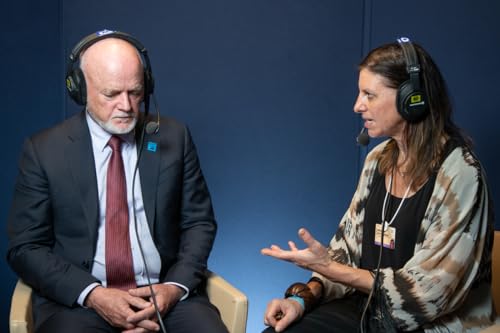
    Peter Thomson; Special Envoy for UN to Oceans

    In my interview with Peter Thompson, the Special Envoy to the UN on Oceans; he begins our conversation with this sobering message from the UN Secretary General, Antonio Guterres.

    “We are knowingly destroying the life support systems of the planet.”

    It is extraordinary to me that we have come so far in our biological discourse on humanity’s relationship to nature to now directly state that our carbon, plastic, waste pollution is destroying the planet…and the seat of life, the ocean.

    Do we really understand that without a health ocean, we don’t have a healthy planetary system to support all of life on earth, including our own?

    Do we really feel the agency and urgency to act? Do we know what to do? Well, Peter Thompson gives us a few clues…and in the end, it is clear that our success or failure of stewarding life on earth IS all up to me and you.

    So…

    Let’s be diligent and consistent and vocal about our personal ban on single use plastic. As with CV 19 we are all becoming more conscious about what we touch; let’s become conscious about how much plastic we let into our homes and life.

    Let’s be diligent and consistent and vocal about our food choices—and shift food fashion from top predator fin fish and shell fish 24/7 and out of season to high protein, marine-rich tofu.

    Let’s be diligent and consistent and vocal about our concern for the disappearance of the coral reef ecosystem and the decimation of marine wildlife due to illegal fishing and consumption. Let’s let our local, regional, national political leaders know that we care about the ocean… and we want them to prioritize caring about and protecting them too.

    Show More Show Less
    31 mins
  • Hindou Ibrahim
    Jun 6 2020

    Bringing Cultural Intelligence Home

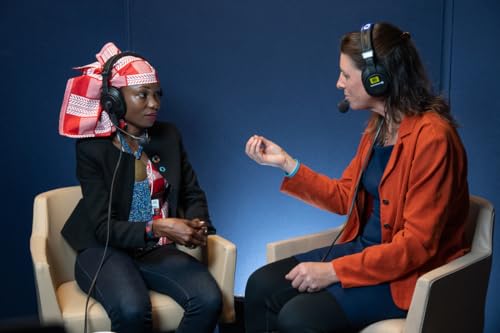
    Hindou Ibrahim

    Chair of the Association for Indigenous Women and Peoples of Chad

    I saw by my eyes, my future seven generations ahead and seven generations back and because of this I know which way to go.

    This statement captures the essence of my conversation with Hindou Ibrahim, the Chair for the Association of Indigenous Women and Peoples of Chad. Speaking to Hindou is like speaking to nature herself, whose ability to adapt and to react to the changing environment and climate is as fluid, simple, direct, and natural as breathing.

    Like many Indigenous Peoples, Hindou has been trained since childhood in the cultural intelligence of her people- she knows the land, she’s learned how to observe the animals. She is sensitized to the climate, and she views her home as not just the family house, but as the wider community and bioregion. It’s her nature. Its the cultural intelligence she was gifted by her family.

    Hindou was fortunate to be born into a place and people who value above all else their cultural and ecological heritage, and who teach a way of directly sensing in the world “with my own eyes”—valuing every person and every living being as part of the natural ecosystem—making decisions about how to act—seven generations forward and seven generations back.

    In our conversation, Hindou shares with us how each one of us-whether we live in a suburb or a city can also learn how awaken our cultural intelligence, to respect every member of our society—the gardener, the farmer, the grocer, the health worker—as home-keepers. We can evolve our cultural intelligence to value every person as an essential worker in supporting our livelihoods; and to value nature as essential to regenerating sustainable economies.

    Show More Show Less
    38 mins
  • David Nabarro IV
    May 19 2020

    Today marked the end of the 73rd Annual World Health Assembly hosted by the World Health Organization for member states. President Macron, Chancellor Merkel, the spokesperson for the European Commission, Virginie Battu-Henriksson— all emphasized that global cooperation forward is the only effective means to avoid a viral spiral. These European Heads of State and many other world leaders agreed to help support and further fund the worldwide efforts of the WHO to continue responding to the COVID-19 pandemic.

    The World Health Organization, comprised of 7000 employees in 100 countries, assists all countries to respond to health crises, and especially the developing, most vulnerable nations. And yet, WHO operates worldwide on a third of the US Center for Disease Control budget, reserved only for the United States.

    In my interview with Dr. David Nabarro in our continuing series: “Combatting COVID19 with Compassion” it is abundantly clear that our primary coordinated action must be to make it hard for the virus to move—and that means to practice good hygiene everywhere, protect yourself and others from spreading the virus by wearing masks and keeping physical distance, by ensuring local, sustainable community based health services in every town, village, county, and city—and by creating a smart system for preventing spread, protecting the most vulnerable, testing, isolating cases, contact tracing, and diligent, continual adaptation in business and government to respond to the highly contagious COVID-19 everywhere, all the time.

    As information is everywhere; it’s super important to critically evaluate one’s sources; so I am happy that I have the privilege to bring to you one of the most trusted sources of information on global pandemics, Dr. David Nabarro.

    Show More Show Less
    28 mins
No reviews yet