

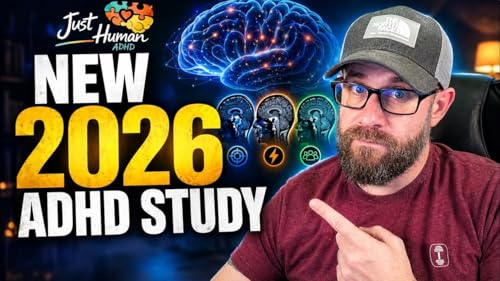
New 2026 ADHD Brain Study Found 3 Biotypes… It’s Not What You Think
Failed to add items
Add to cart failed.
Add to wishlist failed.
Remove from wishlist failed.
Follow podcast failed
Unfollow podcast failed

New 2026 ADHD Brain Study Found 3 Biotypes… It’s Not What You Think
-
Narrated by:
-
Written by:
About this listen
A new 2026 JAMA Psychiatry brain imaging study found that ADHD may not be one single brain pattern. Researchers identified three ADHD biotypes linked to different brain-network patterns, including emotional dysregulation, hyperactive/impulsive symptoms, and inattentive symptoms.
In this video, I break down what the study actually found, why this does not mean ADHD now has three official new diagnoses, and why it may help explain something many of us already know: one-size-fits-all ADHD advice often fails.
We’ll talk about:
The 3 ADHD biotypes identified in the study
Why emotional dysregulation may be a major part of ADHD for some people
How hyperactive/impulsive ADHD may involve the brain’s “brake system”
Why inattentive ADHD can be quiet, internal, and easy to miss
Why planners, routines, and productivity hacks don’t work the same for everyone
What this research could mean for future ADHD treatment personalization
This is not medical advice, and you cannot diagnose your ADHD subtype from a YouTube video. But this research may help us better understand why ADHD looks so different from person to person — and why the right support has to match the actual struggle.
If you’ve ever felt like ADHD advice didn’t fit your brain, this one is worth watching.
Study discussed:
JAMA Psychiatry — Mapping ADHD Heterogeneity and Biotypes by Topological Deviations in Morphometric Similarity Networks
#ADHD #ADHDResearch #AdultADHD #Neurodivergent #ADHDBrain #ADHDAwareness #MentalHealth #ExecutiveFunction #EmotionalDysregulation #InattentiveADHD