Episodes

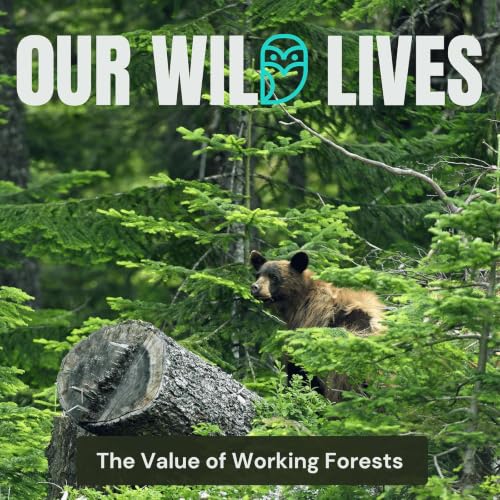
  • The Value of Working Forests
    Jun 19 2026

    How does harvesting timber impact wildlife around the world?

    In this episode of “Our Wild Lives,” Darren Miller, vice president of forestry programs and director of research programs for the National Council for Air and Stream Improvement (NCASI) Foundation, and Jessica Homyack, director of environmental research and operational support at Weyerhaeuser, explore how commercial timber forests can coexist with wildlife conservation.

    As the forest industry undergoes organizational shifts and public expectations around sustainability grow, managed forest land has become increasingly important for global biodiversity.

    “Our Wild Lives” is The Wildlife Society’s biweekly podcast, sharing stories from wildlife professionals doing critical work around the world. Your hosts, Katie Perkins and Ed Arnett, of The Wildlife Society, bring you thought-provoking conversations with leading experts and emerging voices.

    Further reading:

    About Jessica Homyack - https://www.linkedin.com/in/jessica-homyack-phd-cwb-52877a16/

    About Darren Miller - https://ncasi.org/about-ncasi/staff-directory/darren-a-miller_vp-forestry/

    Share your thoughts on the Our Wild Lives Podcast by sending us a text here!

    Become a member of The Wildlife Society: https://wildlife.org/membership/

    Support Wildlife, Invest in Wildlife Professionals: https://wildlife.org/donate/

    Follow us on

    Instagram: https://www.instagram.com/thewildlifesociety/

    Facebook: https://www.facebook.com/thewildlifesociety

    LinkedIn: https://www.linkedin.com/company/the-wildlife-society/

    YouTube: https://www.youtube.com/@The_Wildlife_Society

    Show More Show Less
    51 mins
  • Solving a Pig Problem
    May 29 2026

    Since their introduction to North America in the 16th century, uncontrolled populations of wild pigs have wreaked havoc across North America.They can disrupt native wildlife, decimate riparian ecosystems, cause billions of dollars in agricultural damage and more.

    Reducing the population has proved complex, but the state of Missouri has successfully removed feral swine populations from nearly 10 million acres throughout the state since 2016.

    In this episode of “Our Wild Lives,” Alan Leary, wildlife management coordinator for the Missouri Department of Conservation and Travis Guerrant, state director for both the Missouri and Iowa U.S. Department of Agriculture Wildlife Services programs, join us to explain how they approach eliminating this invasive species from the landscape.

    Read more:

    TWS Issue Statement: Feral Swine in North America: https://wildlife.org/tws-issue-statement-feral-swine-in-north-america/

    Why has Missouri succeeded in wild pig control?: https://wildlife.org/why-has-missouri-succeeded-in-wild-pig-control/

    Share your thoughts on the Our Wild Lives Podcast by sending us a text here!

    Become a member of The Wildlife Society: https://wildlife.org/membership/

    Support Wildlife, Invest in Wildlife Professionals: https://wildlife.org/donate/

    Follow us on

    Instagram: https://www.instagram.com/thewildlifesociety/

    Facebook: https://www.facebook.com/thewildlifesociety

    LinkedIn: https://www.linkedin.com/company/the-wildlife-society/

    YouTube: https://www.youtube.com/@The_Wildlife_Society

    Show More Show Less
    41 mins
  • Restoring a Cultural Keystone Species
    May 15 2026

    For Remington Bracher, working on the reintroduction of bison back to Canada is not only a win for his wildlife career, but also for his culture as a Nêhiyaw (Cree) member of Muskoday First Nation.

    In this episode of “Our Wild Lives,” Bracher, an Indigenous Liaison with Parks Canada and graduate student at the University of British Columbia, shares how growing up hunting and fishing led him into wildlife conservation. His current research combines policy analysis with quantitative population modeling to see what a sustainable Indigenous bison (Bison bison) harvest could look like. He hopes it will further his dream of one day seeing Indigenous bison hunts in national parks.

    Alongside his experiences working with bison, Bracher also discusses the importance of relationship-building, co-creation, youth involvement, and respectful integration of Indigenous knowledge in wildlife management.

    “Our Wild Lives” is The Wildlife Society’s biweekly podcast, sharing compelling stories from wildlife professionals doing critical work around the world. Your hosts, Katie Perkins and Ed Arnett, of The Wildlife Society, bring you thought-provoking conversations with leading experts and emerging voices.

    Further reading:

    About Remington Bracher - https://wildlife.org/remington-bracher-earns-graduate-fellowship-in-wildlife-policy/

    The Native Student Development Program - https://wildlife.org/working-groups/npwmwg/

    Towards reconciliation: 10 Calls to Action to natural scientists working in Canada- https://www.facetsjournal.com/doi/10.1139/facets-2020-0005

    Singing Back the Buffalo documentary trailer - https://youtu.be/xshtMcU6fZE?si=JfKEJ3r8s8FmyjU2

    Photo Caption: A bison stands in a grassland. Image by WikiImages from Pixabay


    Share your thoughts on the Our Wild Lives Podcast by sending us a text here!

    Become a member of The Wildlife Society: https://wildlife.org/membership/

    Support Wildlife, Invest in Wildlife Professionals: https://wildlife.org/donate/

    Follow us on

    Instagram: https://www.instagram.com/thewildlifesociety/

    Facebook: https://www.facebook.com/thewildlifesociety

    LinkedIn: https://www.linkedin.com/company/the-wildlife-society/

    YouTube: https://www.youtube.com/@The_Wildlife_Society
    Show More Show Less
    40 mins
  • Keeping Wild Sheep on the Mountain
    May 1 2026

    Wild sheep are known for their tenacity to endure some of the harshest landscapes around the world, yet the global population of the subfamily continues to decline due to a bacterium, Mycoplasma ovipneumoniae (M. ovi). Pneumonia caused by this bacterium can wipe out entire herds.

    In this episode of “Our Wild Lives,” Kurt Alt and Corey Mason from the Wild Sheep Foundation (WSF) join us to talk about all things sheep conservation. They discuss the role of the WSF, the unique way sheep conservation is funded, the disease challenges wild sheep face and more.

    Learn more about the Wild Sheep Foundation: https://www.wildsheepfoundation.org/

    “Our Wild Lives” is The Wildlife Society’s biweekly podcast, sharing compelling stories from wildlife professionals doing critical work around the world. Your hosts, Katie Perkins and Ed Arnett of The Wildlife Society, bring you thought-provoking conversations with leading experts and emerging voices.

    Share your thoughts on the Our Wild Lives Podcast by sending us a text here!

    Become a member of The Wildlife Society: https://wildlife.org/membership/

    Support Wildlife, Invest in Wildlife Professionals: https://wildlife.org/donate/

    Follow us on

    Instagram: https://www.instagram.com/thewildlifesociety/

    Facebook: https://www.facebook.com/thewildlifesociety

    LinkedIn: https://www.linkedin.com/company/the-wildlife-society/

    YouTube: https://www.youtube.com/@The_Wildlife_Society

    Show More Show Less
    55 mins
  • Big Cats and the Border
    Apr 17 2026

    New evidence reveals that mountain lions can fit through small wildlife crossing cut-outs on the border wall dividing the U.S. from Mexico. But researchers are concerned about the future connection of the population of the big cats.

    In this episode of “Our Wild Lives,” carnivore ecologist Lisanne Petracca walks us through the monitoring being done to determine the potential effects of the construction of the 30 foot high wall along the Texas border on mountain lions (Puma concolor).

    Preliminary results show that openings the size of a sheet of paper could be the solution keeping the United States and Mexico populations connected.

    “Our Wild Lives” is The Wildlife Society’s biweekly podcast, sharing compelling stories from wildlife professionals doing critical work around the world. Your hosts, Katie Perkins and Ed Arnett, of The Wildlife Society, bring you thought-provoking conversations with leading experts and emerging voices. New episodes are released weekly wherever you get your podcasts.

    Read more:

    About Lisanne Petracca: https://www.tamuk.edu/agriculture/departments/rwsc/faculty-staff-rwsc/Petracca.html

    Spatial and Population Ecology of Carnivores (SPEC) Lab: https://thespeclab.weebly.com/

    Share your thoughts on the Our Wild Lives Podcast by sending us a text here!

    Become a member of The Wildlife Society: https://wildlife.org/membership/

    Support Wildlife, Invest in Wildlife Professionals: https://wildlife.org/donate/

    Follow us on

    Instagram: https://www.instagram.com/thewildlifesociety/

    Facebook: https://www.facebook.com/thewildlifesociety

    LinkedIn: https://www.linkedin.com/company/the-wildlife-society/

    YouTube: https://www.youtube.com/@The_Wildlife_Society

    Show More Show Less
    34 mins
  • The Forgotten Bird Artist
    Apr 3 2026

    Rex Brasher was one of the greatest bird artists of his time. His life’s mission was to see and paint every bird species in North America. But today, many people–even avid birders–have never heard his name.

    In this episode of “Our Wild Lives,” Cynthia Carter Ayres and Matthew Schnepf from the Rex Brasher Association join us to tell the story of the man who painted 874 different bird species of North America.

    Brasher's approach was unique. Unlike most other artists of his time, he painted live birds in the field, not after shooting them or from consulting stuffed study specimens. Now, the Association is working to bring his body of work to the modern age for all to enjoy.

    Learn more:

    About Rex Brasher: https://rexbrasher.org/

    The digitized “Birds and Trees of North America” collection: https://rexbrasher.org/collection/birds-and-trees

    Cover Images courtesy of the Rex Brasher Association


    Share your thoughts on the Our Wild Lives Podcast by sending us a text here!

    Become a member of The Wildlife Society: https://wildlife.org/membership/

    Support Wildlife, Invest in Wildlife Professionals: https://wildlife.org/donate/

    Follow us on

    Instagram: https://www.instagram.com/thewildlifesociety/

    Facebook: https://www.facebook.com/thewildlifesociety

    LinkedIn: https://www.linkedin.com/company/the-wildlife-society/

    YouTube: https://www.youtube.com/@The_Wildlife_Society

    Show More Show Less
    49 mins
  • Keeping Birds on the Map: Bird Conservation in North America
    Mar 27 2026

    Birds have been declining since the 1970s. Now scientists, non-governmental organizations and everyday birders are doing everything they can to stabilize and rebound populations across the globe.

    In this episode of “Our Wild Lives,” Katie and Ed are joined by Tammy VerCauteren, Executive Director at Bird Conservancy of the Rockies, and Steve Riley, Chief Conservation Officer at American Bird Conservancy, to catch up on the state of bird conservation today.

    From multi-state collaborations to track birds across the annual migration cycle to backyard birders supporting populations, our guests dive into the opportunities to get involved in bird conservation.

    “Our Wild Lives” is The Wildlife Society’s weekly podcast, sharing compelling stories from wildlife professionals doing critical work around the world. Your hosts, Katie Perkins and Ed Arnett, of The Wildlife Society, bring you thought-provoking conversations with leading experts and emerging voices. New episodes are released weekly wherever you get your podcasts.

    Further reading:

    Bird Conservancy of the Rockies: https://www.birdconservancy.org/

    American Bird Conservancy: https://abcbirds.org/

    Motus Wildlife Tracking: http://motus.org/

    Bird City USA: https://birdcity.org/

    Keep Cats Indoors: https://abcbirds.org/solutions/keep-cats-indoors/

    Share your thoughts on the Our Wild Lives Podcast by sending us a text here!

    Become a member of The Wildlife Society: https://wildlife.org/membership/

    Support Wildlife, Invest in Wildlife Professionals: https://wildlife.org/donate/

    Follow us on

    Instagram: https://www.instagram.com/thewildlifesociety/

    Facebook: https://www.facebook.com/thewildlifesociety

    LinkedIn: https://www.linkedin.com/company/the-wildlife-society/

    YouTube: https://www.youtube.com/@The_Wildlife_Society

    Show More Show Less
    48 mins
  • Building a Better Backyard for Wildlife
    Mar 13 2026

    As spring begins to emerge, so does the opportunity to support wildlife and increase biodiversity in your own yard.

    In this episode of “Our Wild Lives,” TWS member Shaun McCoshum, a botanist and landscape ecologist, tells us about what has been lost from North American landscapes and how homeowners can mimic missing ecological processes to support wildlife in their own yards.

    McCoshum shares practical yard strategies beyond planting native plants, including amending your soil, building structures for wildlife success, underground habitat needs for pollinators and more. Whether helping a monarch butterfly on their migration or giving your local lizards a place to retreat, your yard can be the little slice of paradise for wildlife with a few, simple changes.

    “Our Wild Lives” is The Wildlife Society’s weekly podcast, sharing compelling stories from wildlife professionals doing critical work around the world. Your hosts, Katie Perkins and Ed Arnett, of The Wildlife Society, bring you thought-provoking conversations with leading experts and emerging voices. New episodes are released weekly wherever you get your podcasts.

    Further reading:

    Connect with Shaun McCoshum:

    • https://www.linkedin.com/in/shaun-mccoshum/
    • https://www.youtube.com/@mccoshsm

    Shaun’s new book: Natural Habitats and Wildlife Gardening: Inviting Nature into Your Backyard. Use code NHWG30 for 30% off

    • https://press.princeton.edu/books/paperback/9780691261003/natural-habitats-and-wildlife-gardening

    Share your thoughts on the Our Wild Lives Podcast by sending us a text here!

    Become a member of The Wildlife Society: https://wildlife.org/membership/

    Support Wildlife, Invest in Wildlife Professionals: https://wildlife.org/donate/

    Follow us on

    Instagram: https://www.instagram.com/thewildlifesociety/

    Facebook: https://www.facebook.com/thewildlifesociety

    LinkedIn: https://www.linkedin.com/company/the-wildlife-society/

    YouTube: https://www.youtube.com/@The_Wildlife_Society

    Show More Show Less
    41 mins