Episodes

  • EP 162: Cardiac CT in 2026: From Risk Scores to Plaque Precision
    Jul 13 2026
    In this week’s episode of Parallax, Dr Ankur Kalra is joined by Dr Chris Maroules, National Director for Cardiac Imaging at SimonMed and co-director of Innovation Health. Together, they explore why coronary CTA, now a Class 1 recommendation in the 2021 ACC/AHA chest pain guidelines, has become the standard first-line non-invasive test, and why proficiency in cardiac CT is essential for cardiology trainees in 2026. The conversation shifts from traditional risk scores to direct disease assessment, highlighting the power of coronary CTA to identify and quantify plaque burden. Dr Maroules discusses high-risk plaque features, the limitations of calcium scoring, and the evolving role of FFRCT, before outlining a future of AI-enabled screening and precision prevention. He concludes with practical advice for fellows, encouraging Level 2 certification to stay ahead in an increasingly imaging-driven field. Questions and comments can be sent to "podcast@radcliffe-group.com" and may be answered by Ankur in the next episode. Host: @AnkurKalraMD and produced by: @RadcliffeCardio Parallax is Ranked in the Top 100 Health Science Podcasts (#48) by Million Podcasts.
    Show More Show Less
    33 mins
  • EP 161: Calcium Score vs CCTA: Rethinking Primary Prevention Screening
    Jun 29 2026
    In this episode of Parallax, Dr Ankur Kalra is joined by Dr Matthew Budoff, Professor of Medicine at the David Geffen School of Medicine at UCLA and a leading authority on preventive cardiology and cardiac imaging. Together they examine the role of cardiac CT in detecting silent atherosclerosis, and ask whether imaging should displace traditional risk scores in routine practice. Dr Budoff makes the case for the coronary calcium score as the foundation of personalised cardiovascular care, arguing that population-based risk factors often fail at the individual level. He weighs the calcium score against CT angiography in primary prevention - covering cost, radiation, the uncertain significance of trivial plaque, and the risk of inappropriate stenting in asymptomatic patients - while noting that symptomatic patients warrant CCTA first-line. He also addresses elevated Lp(a) with a zero score and the case for CCTA in younger high-risk patients, before outlining his scalable, score-tiered approach to therapy, drawing on data from the VESALIUS trial. Is the calcium score ready to replace traditional risk scores? When should imaging guide therapy, and when should it be deferred? Questions and comments can be sent to "podcast@radcliffe-group.com" and may be answered by Ankur in the next episode. Host: @AnkurKalraMD and produced by: @RadcliffeCardio Parallax is Ranked in the Top 100 Health Science Podcasts (#48) by Million Podcasts.
    Show More Show Less
    35 mins
  • Ep 160: Cardiac CT: Plaque Analysis, Photon-Counting & Prevention
    Jun 15 2026
    In this episode of Parallax, Dr Ankur Kalra is joined by Professor Ron Blankstein, a leading authority in preventive cardiology and cardiac imaging at Harvard Medical School and Brigham and Women's Hospital, Boston. Together they trace the remarkable journey of cardiac computed tomography (CT) from a niche diagnostic test to an indispensable pillar of contemporary cardiovascular practice. Professor Blankstein shares the moving story behind his new textbook, a companion to the legendary Braunwald's Heart Disease, recounting his personal collaboration with the late Dr Eugene Braunwald, who initiated the project and remained meticulously involved in its development until his passing. How has cardiac CT reshaped the diagnosis and management of coronary disease? What does the future of plaque analysis and photon-counting technology hold? And why should every cardiology fellow now consider CT essential to their training? Questions and comments can be sent to "podcast@radcliffe-group.com" and may be answered by Ankur in the next episode. Host: @AnkurKalraMD and produced by: @RadcliffeCardio Parallax is Ranked in the Top 100 Health Science Podcasts (#48) by Million Podcasts.
    Show More Show Less
    44 mins
  • EP 159: Finding Your Professional Home: Early Career Cardiology and Beyond
    May 18 2026
    In this episode of Parallax, Dr Ankur Kalra welcomes Dr Eunice Dugan, a graduating interventional and structural heart disease fellow at the Cleveland Clinic, as she prepares to transition into independent practice in Fort Wayne in the summer of 2026. Dr Dugan reflects on how early mentorship shaped her decision to engage with the American College of Cardiology during fellowship, and what professional societies can offer beyond the clinical environment — from expanding skill sets and building lasting networks to driving meaningful change. She shares how her role as a local FIT representative led her to organise a widely attended webinar helping fellows navigate the new interventional cardiology match. The conversation also tackles the attrition challenge that affects many early-career cardiologists in their first three to five years of practice: Dr Dugan, now transitioning into the ACC's Early Career Council, discusses the "fog" of establishing a new career and makes the case for cultivating a specific project during fellowship as a professional anchor through the pressures of a new post, relocation, and family life. She also speaks to her advocacy for women in cardiology, including championing open discussion around family planning and reproductive strategies — topics that remain underaddressed in the field. Questions and comments can be sent to podcast@radcliffe-group.com and may be answered by Ankur in the next episode. Host: @AnkurKalraMD and produced by: @RadcliffeCardio Parallax is Ranked in the Top 100 Health Science Podcasts (#48) by Million Podcasts.
    Show More Show Less
    28 mins
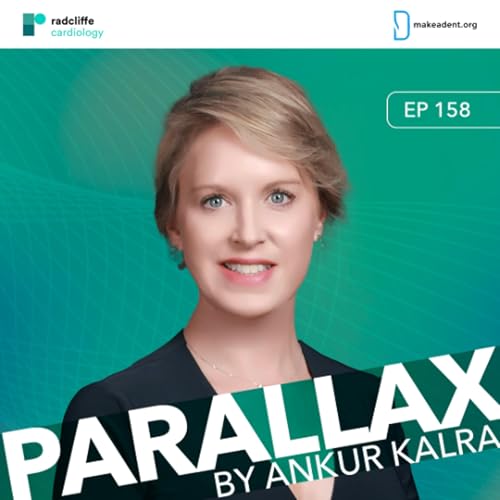
  • EP 158: Leading the Structural Heart Revolution: Innovation, Data, and the Future of Valve Therapy
    May 5 2026
    In this episode of Parallax, Dr Ankur Kalra is joined by Dr Kendra Grubb, Vice President and Chief Medical Officer for Structural Heart Interventions at Medtronic and former cardiac surgeon and professor at Emory University. Dr Grubb discusses her career journey from being an active clinician to a leader within the medical device industry, elaborating on the philosophy behind her choices and the concept of scaling impact beyond the operating theatre. This leads the discussion into an analytical dissection of the Evolut low-risk trial, with Dr Grubb explaining how the evolution of procedures such as cusp overlap and pre-dilation have made a world of difference in terms of improving results concerning paravalvular leaks and pacemaker implantations as well as comparing current long-term reintervention data to older methods. Other topics in this podcast include sex disparity in structural heart disease, specifically the issues around the diagnosis and treatment of female patients with fibrotic, low flow-low gradient aortic stenosis. Dr Grubb ends with her thoughts about the future direction of the field, which entails a comprehensive transcatheter/surgical approach towards mitral and tricuspid diseases, in addition to incorporating AI and robotics in precision valve therapy. Questions and comments can be sent to podcast@radcliffe-group.com and may be answered by Ankur in the next episode. Host: @AnkurKalraMD and produced by: @RadcliffeCardio Parallax is Ranked in the Top 100 Health Science Podcasts (#48) by Million Podcasts.
    Show More Show Less
    47 mins
  • EP 157: From HFpEF to AF: Dissecting the ACC 2026 Trials That Matter
    Apr 20 2026
    In this episode of Parallax, Dr Ankur Kalra is joined by Dr Michelle Kittleson, Professor of Medicine and Advanced Heart Failure Cardiologist at Cedars-Sinai Medical Center, for a clinically rich breakdown of her standout trial picks from the 2026 ACC Annual Scientific Sessions. Dr Kittleson brings her characteristic precision to four landmark studies spanning heart failure and atrial fibrillation. She unpacks the SPIRIT HF trial — a negative study of spironolactone in HFpEF that, she argues, does not consign the drug to the shelf — and explains why its high discontinuation rate and pandemic-era disruptions complicate the headline result. For clinicians managing cost-conscious patients, her take on spironolactone as a practical alternative to finerenone is a perspective worth hearing. The conversation turns to the CADENCE trial, a Phase 2 study of sotatercept in Group 2 pulmonary hypertension secondary to HFpEF — a phenotype Dr Kittleson treats with particular caution given the risks of misdirected pulmonary vasodilator therapy. She offers measured optimism about what these early results might mean for future treatment of HFpEF-related lung remodelling. Dr Kalra and Dr Kittleson also enter the ongoing debate around left atrial appendage closure, weighing the contrasting conclusions of the CLOSURE AF and CHAMPION AF trials against each other — and against a shared conviction that anticoagulation remains the standard of care for the vast majority of patients with atrial fibrillation. Finally, they examine the STEMI Door to Unload trial, a cautionary study in indication creep: the microaxial flow pump that proves life-saving in cardiogenic shock offered no infarct-size benefit in haemodynamically stable STEMI patients — and came with a meaningful increase in bleeding and vascular complications. Dr Kittleson also shares her stepwise outpatient algorithm for a new HFpEF diagnosis, from ruling out mimics such as cardiac amyloidosis to sequencing SGLT2 inhibitors, MRAs, GLP-1 agonists, and ARNIs based on individual patient profile. The episode closes with a discussion of her new column for NEJM Voices, where she writes on the art of medicine. Questions and comments can be sent to podcast@radcliffe-group.com and may be answered by Ankur in the next episode. Host: @AnkurKalraMD and produced by: @RadcliffeCardio Parallax is Ranked in the Top 100 Health Science Podcasts (#48) by Million Podcasts.
    Show More Show Less
    47 mins
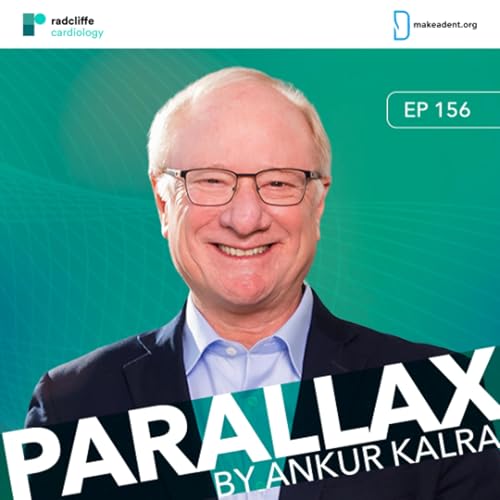
  • EP 156: Gravity, the Heart, and POTS: Space Cardiology's Unexpected Discoveries
    Mar 30 2026
    In this fascinating episode of Parallax, Dr Ankur Kalra is joined by Dr Benjamin Levine, Director of the Institute for Exercise and Environmental Medicine and a pioneering figure in the field of space cardiology. Together, they explore the remarkable cardiovascular adaptations that occur in microgravity, and what they are teaching clinicians about treating patients on Earth. Dr Levine unpacks the haemodynamic realities of spaceflight, from the counterintuitive finding that central venous pressure actually drops to zero in microgravity, to the physiologic cardiac atrophy that results when the heart no longer pumps against gravitational load. He shares how this research has transformed the understanding and treatment of POTS, reframing it not as a disorder of the autonomic nervous system, but as a consequence of reduced stroke volume - and how horizontal exercise training borrowed directly from astronaut countermeasure programmes is now changing clinical practice. The conversation also turns to the emerging cardiovascular risks of long-duration spaceflight, including earlier onset atrial fibrillation, upper body venous thrombosis, and the intracranial pressure dynamics underlying spaceflight-associated neuro-ocular syndrome. Dr Levine discusses the Astro-CHARM risk score, NASA's approach to coronary calcium screening, and the forthcoming scientific statement on cardiovascular management in tactical athletes. Questions and comments can be sent to podcast@radcliffe-group.com and may be answered by Ankur in the next episode. Host: @AnkurKalraMD and produced by: @RadcliffeCardio Parallax is Ranked in the Top 100 Health Science Podcasts (#48) by Million Podcasts.
    Show More Show Less
    40 mins
  • EP 155: Making Every Procedure Safer, Every Patient Count: Bleeding Risk, Sex Differences, and the Future of Structural Heart
    Mar 16 2026
    In this special TIO Congress edition of Parallax, Dr Ankur Kalra is joined by two of interventional cardiology's most influential voices: Professor Roxana Mehran, incoming President of the American College of Cardiology and Co-Course Director of TIO, and Professor Nicholas Van Mieghem, TIO Course Director. The conversation spans the evolution of online medical education, sex-specific differences in cardiovascular disease, and the challenge of translating clinical evidence into everyday practice. The guests explore sex as a biological variable across valve disease, plaque formation, and left ventricular remodeling, address the underdiagnosis of microvascular dysfunction in women, and examine persistent access barriers for female and non-white patients despite advances in trials such as SMART and RHEA. Professor Van Mieghem adds insights on modern TAVI planning and lifetime valve management, while Professor Mehran shares promising data on Factor XI inhibitors and the case for simplifying antithrombotic regimens. The episode closes on clinical inertia - with intravascular imaging uptake in the US still at just 12–15% despite a Class 1 indication, Professor Mehran outlines her ACC presidential vision: closing the gap between evidence and bedside practice, and reversing the troubling rise in cardiovascular morbidity and mortality. Questions and comments can be sent to podcast@radcliffe-group.com and may be answered by Ankur in the next episode. Host: @AnkurKalraMD and produced by: @RadcliffeCardio Parallax is Ranked in the Top 100 Health Science Podcasts (#48) by Million Podcasts.
    Show More Show Less
    54 mins