Patti’s People, from The Evidence Base cover art

Patti’s People, from The Evidence Base

Patti’s People, from The Evidence Base

Written by: The Evidence Base
Listen for free

About this listen

Welcome to Patti’s People. In this video series, Patti Peeples of the The Peeples Collaborative speaks with leading figures in real-world evidence, health economics, health technology assessment, regulation and related fields to gauge their thoughts and opinions on some of the most important issues in the area today.

Hosted on Acast. See acast.com/privacy for more information.

Becaris Publishing Limited
Economics Hygiene & Healthy Living Management Management & Leadership Physical Illness & Disease
Episodes
  • Patti's People - Patti Peeples speaks with Paul Scuffham
    Jan 9 2026
    In this Patti’s People episode, Patti Peeples of the The Peeples Collaborative speaks with Paul Scuffham, Founder, Centre for Applied Health Economics.Questions:00:00: Introduction01:24: What do you see as the real purpose of health economics today?05:17: Australia’s National Health and Medical Research Strategy is being revisited for the first time in a decade. What is the significance of reassessing R&D spending now, and how could it reshape priorities across hospitals, universities, and health-service research?09:06: Australia’s PBAC is known globally for rigor and transparency. What does PBAC consistently get right – and where could it improve?12:48: It can take nearly three years from FDA approval to PBAC listing. Where could the system meaningfully shorten that pathway without weakening the evidence? 19:41: More than 300 oncology drugs were approved globally in five years, yet few reached Australia. Are sponsors more deterred by pricing expectations or by process complexity? 22:48: What does smart, ethical engagement between academia and industry look like in 2025?25:16: Many universities push for impact yet primarily reward publications. How can institutions better recognize and value policy-relevant or commercial translation work?29:37: ISPOR’s 2030 Vision calls for bridging evidence and equitable access. What is the single biggest shift needed to achieve that? 32:21: Amid geopolitical and economic pressures, how do you see global pricing and value frameworks evolving – and what might this mean for patient access?34:01: Healthcare spending is outpacing GDP worldwide. Is sustainability fundamentally an economic problem or a political one?36:30: If Australia could share HTA workload with one other agency, who would it be, and why?37:52: You’ve mentored a generation of health economists. What advice would you give your younger self, or emerging economists hoping to influence policy today?40:56: Rapid Fire Questions Paul ScuffhamFounder, Centre for Applied Health EconomicsChair of Health Economics, School of Medicine & Dentistry, Griffith UniversityProfessor Scuffham’s research is focused on identifying the value for money of healthcare interventions, elicitation of preferences from patients and the public, and methods of priority setting. He applies his research interests across the breadth of cardiac conditions, genomics, digital health, vaccines and more. At Griffith University, Queensland Australia, he founded the Centre for Applied Health Economics and was Director of the former Menzies Health Institute Queensland, a large research institute with 13 centers and over 500 staff. In his professional society, he was the inaugural President of the Australian Chapter of ISPOR, and past Chair of the Asia Consortium. He was awarded ISPOR’s Marilyn Dix-Smith Leadership Award in 2025. He is a Fellow, Board member, and Chair of the Policy Advisory Committee of the Australian Academy of Health & Medical Sciences. He is a member of the Research Committee of the National Health and Medical Research Committee and a member of the Public Health and Health Systems Committee of the Medical Research Future Fund & NHMRC. Hosted on Acast. See acast.com/privacy for more information.
    Show More Show Less
    49 mins
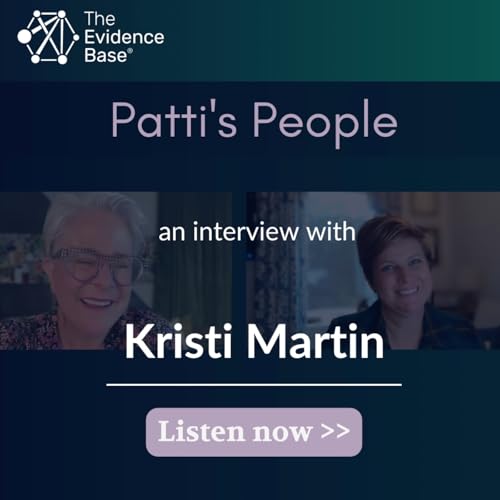
  • Patti's People - Patti Peeples speaks with Kristi Martin
    Dec 2 2025

    Questions:


    01:08: How have your personal experiences shaped your understanding of evidence, access, and impact in health policy?

    03:24: What core principles have remained constant throughout your work across advocacy, government, and consulting in health policy?

    05:20: Can you share an example of a well-designed policy that failed at the implementation stage, and what you learned from it?

    06:26: What lessons from implementing the ACA have shaped your approach to structuring practical, workable health policy frameworks today?

    08:45: If you were designing a US HTA framework today, what would you build differently to make it work in practice?

    11:28: What are your reflections on ICER’s current assessment process, and how could it be improved to make its findings more useful and actionable across the healthcare system?

    14:25: Why does the US continue to struggle to fully integrate evidence generation into its pricing and access frameworks?

    16:35: If you could design an incentive structure to encourage pharmaceutical companies to share their data, what would it look like and how would you make it work in practice?

    20:03: What do you see as the most effective way to align FDA and CMS around patient-centered access?

    25:11: If you could design a structured communication process between CMS and industry, what would it look like?

    27:28: Can you share an example of how stakeholder feedback directly improved CMS implementation efforts?

    35:06: What emerging policy and regulatory trends will most influence pharma market access and RWE over the next decade, and which are still being underestimated?

    39:57: Amid rising costs and solvency challenges, what gives you confidence that the US can bend the healthcare cost curve without stifling innovation?


    Kristi Martin

    Director, Camber Collective


    Kristi Martin brings over 20 years of experience shaping health policy through practical, impactful solutions. Currently a Director at Camber Collective, she pairs analytic rigor with a human-centered approach to advance strategies that improve health and well-being. She guides mission-driven organizations through complex health policy landscapes through her own firm, Highway 136 Consulting, which was founded in 2020.


    Kristi’s career spans government, philanthropy, and consulting – always focused on making healthcare better and fairer. Most recently, she served as Chief of Staff for Medicare at the Centers for Medicare & Medicaid Services (CMS), where she led strategy and execution for major initiatives under the Inflation Reduction Act, including Medicare drug price negotiations.


    Previously, Kristi was Vice President for Health Care at Arnold Ventures, managing their portfolio to lower prescription drug costs. As Managing Director at Waxman Strategies, she provided strategic counsel to foundations and advocacy organizations on issues ranging from prescription drug pricing to women’s health. Earlier, she played a key role in implementing provisions of the Affordable Care Act, advising senior officials, and coordinating policy across federal agencies at the Department of Health and Human Services, CMS, and the Office of Personnel Management. Her federal service across these agencies as well as Government Accountability Office and National Institutes of Health gave her a strong foundation in policy development and implementation. Her roots in DC are in patient advocacy as she started her career with Easter Seals and the American Cancer Society.


    Known for turning bold ideas into action, Kristi has advised the White House, represented US interests internationally, and built consensus among diverse stakeholders. She holds a Master of Public Administration from George Washington University and earned both a master’s and bachelor’s degree from the University of Kentucky.

    Hosted on Acast. See acast.com/privacy for more information.

    Show More Show Less
    49 mins
  • Patti's People - Patti Peeples speaks with Jason Shafrin
    Oct 9 2025

    In this ‘Patti’s People’ episode, Patti Peeples of the The Peeples Collaborative speaks with Jason Shafrin, Senior Managing Director, Center for Health Economics and Policy, FTI Consulting.


    Questions:


    00:00: Introduction

    01:15: You’ve worked across government, pharma, consulting, NGOs, and academia. What ties it all together, and what are you trying to solve now?

    03:35: Was there a moment that drew you to health economics, or was it a gradual pull?

    05:47: You’ve written on value frameworks and outcomes for reimbursement. If you could redesign HTA from scratch, what would you toss and what would you keep?

    09:53: You’ve said incentives drive behavior, and competing incentives are a constant challenge. What’s the most misaligned incentive in healthcare today – and who does it hurt most?

    15:19: With growing scrutiny of RWE and digital health, is oversight enabling or stifling innovation?

    17:54: What’s one policy or regulation you believe is well-intentioned, but has led to poor health or economic outcomes?

    22:31: On July 31, President Trump asked 17 pharma companies to match US drug prices to other developed nations. As a health economist, do you think this will work?

    27:14: Rapid Fire Questions


    Jason Shafrin

    Senior Managing Director, Center for Health Economics and Policy, FTI Consulting


    Jason Shafrin, PhD, is a Senior Managing Director at FTI Consulting's Center for Healthcare Economics and Policy. Dr Shafrin has over 20 years of health economics research experience serving as trusted advisor and expert to a wide variety of healthcare and life sciences companies, governments and non-governmental organizations (NGOs). Dr Shafrin is an Adjunct Professor at the University of Southern California, the former Director of Research at the Innovation and Value Initiative and the Founder and Editor of the Healthcare Economist blog. Dr Shafrin is an expert in applied economics with a specialty in health economics research. Over his career, he has developed novel methodological approaches, advanced quantitative analyses and innovative modeling to address some of the most difficult health economics problems and provide evidence-based solutions for clients across the healthcare industry. His work has assisted clients in addressing policy changes, navigating regulatory processes, evaluating pricing, value and outcomes and supporting innovation and transformative change. Dr Shafrin’s extensive experience includes projects on value assessment, alternative payment model design, discrete choice experiment survey, real-world data analysis, and digital medicine.

    Hosted on Acast. See acast.com/privacy for more information.

    Show More Show Less
    39 mins
No reviews yet