Episodes

  • A Little Taste of What's to Come
    Feb 21 2025

    We see the magic. We hear the stories. But do we really know how it all comes together?

    Pixel Puzzle is a limited podcast series that opens the doors to the world of visual effects—not just for VFX insiders, but for everyone who’s ever been captivated by the screen.


    💡 What to Expect:

    🎥 The untold stories behind iconic films and TV shows

    🔥 Honest conversations about the craft, the challenges, and the future of VFX

    🎭 A journey designed for everyone—whether you work in film, dream of it, or just love great storytelling

    This isn’t just another podcast about how movies are made. This is VFX, unfiltered.


    🔹 EPISODE 01 & 02 DROP: Tuesday, 25th February

    📅 New episodes every two weeks

    🎧 Subscribe now & join the conversation.


    #VFX #Filmmaking #BehindTheScenes #MovieMagic #CGI #FilmIndustry #Hollywood #VisualEffects #FilmPodcast #PixelPuzzlePodcast

    Hosted on Acast. See acast.com/privacy for more information.

    Show More Show Less
    1 min
  • Episode 02 - The History of Visual Effects
    Feb 25 2025

    From the magical trick photography of Georges Méliès to the groundbreaking innovations of films like Jurassic Park and The Matrix, we unravel the milestones that shaped the industry.


    Discover the pioneers who redefined what was possible on screen, the ingenious techniques that brought fantastical worlds to life, and the evolution of tools that made the impossible a reality.


    Whether you’re a seasoned pro or simply curious about the magic behind the movies, this episode is packed with fascinating insights, heartwarming anecdotes, and plenty of nostalgia.


    Here is where to find us: https://linktr.ee/pixelpuzzlepodcast


    Pivotal Moments in VFX History

    During the episode, Ian and David discussed several landmark films that revolutionised the industry. Here’s a closer look at some of these films, along with curated resources to explore further:

    • “Tron” (1982) – One of the first films to use extensive CGI, even though it was disqualified from the Best Visual Effects category at the Oscars for “cheating.”
    • Full Documentary: The Making of Tron
    • “Jurassic Park” (1993) – Pioneered the seamless blend of practical and digital effects, setting a new standard for realism.
    • The Making of Jurassic Park
    • “The Matrix” (1999) – Introduced bullet-time photography and elevated digital compositing.
    • How The Matrix Changed Cinema

    A Brief History of CGI

    During the conversation, David mentioned sharing more on the evolution of CGI. Here’s a quick overview:

    • The early use of CGI in Westworld (1973) and Futureworld (1976).
    • How Star Wars (1977) utilised computer-generated imagery for wireframe models in the trench run sequence.
    • The transition from wireframe to photorealistic CGI with The Abyss (1989) and Terminator 2 (1991).

    For those interested in diving deeper:

    • The Full History of CGI


    Bonus Content: Hidden Gems of VFX

    For those eager to explore more, here are a few lesser-known but influential films that utilised VFX in innovative ways:

    • “The Fountain” (2006) – Used micro-photography instead of CGI to create cosmic visuals.
    • “Children of Men” (2006) – Masterful blending of practical effects and CGI to create seamless long takes.
    • “Ex Machina” (2014) – Subtle and effective use of digital effects to enhance character design and environment.

    Additional Learning Resources
    Books:
    • “The Invisible Art: The Legends of Movie Matte Painting” by Mark Cotta Vaz
    • “CG 101: A Computer Graphics Industry Reference” by Terrence Masson

    Podcasts:
    • The VFX Show – Insightful discussions on visual effects in current films and TV shows.
    • Befores & Afters – Hosted by Ian Failes, offering behind-the-scenes insights from industry professionals.

    Hosted on Acast. See acast.com/privacy for more information.

    Show More Show Less
    1 hr and 7 mins
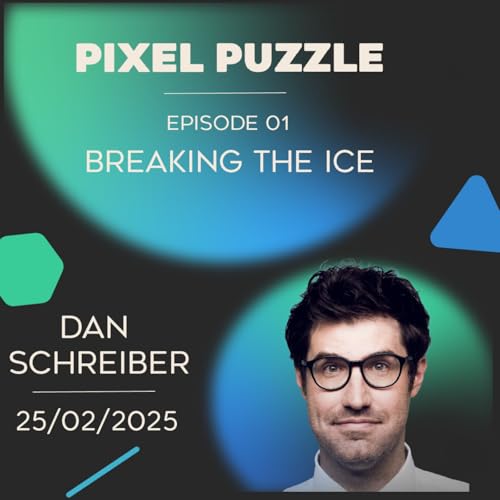
  • Episode 01 - Breaking the Ice
    Feb 25 2025

    Chapters


    00:00 Introduction to Pixel Puzzle Podcast

    02:10 Meet the Host and Guest

    04:08 Common Misconceptions About VFX

    10:04 The Evolution of Visual Effects in Cinema

    18:06 The Ongoing Battle of VFX Perception

    20:18 VFX as a Storytelling Tool

    23:23 Recycling and Reusing VFX Assets

    29:04 Comparing VFX Across Generations

    30:33 The Evolution of Realism in Cinema

    32:16 The Intersection of Cinema and Conspiracy Theories

    34:30 Visual Effects: The Unsung Hero of Filmmaking

    37:42 AI's Impact on the Film Industry

    39:50 Navigating the Challenges of AI and Labor Strikes

    42:50 The Future of VFX and Virtual Production

    46:57 Exploring Interactive Cinema and Augmented Reality

    51:54 Fact Twist: A Fun Quiz on VFX

    01:08:54 Closing Thoughts and Future of Cinema


    👀 WHO SHOULD LISTEN?

    ✅ Film fans who want to learn what’s really on screen

    ✅ Creatives who say “fix it in post” (stop it)

    ✅ Industry newcomers confused by what VFX actually is

    ✅ Tech-curious folks wondering how AI is shifting the craft

    ✅ Directors & producers looking to collaborate smarter


    Directors Who Pushed the Boundaries of VFX

    In the episode, we talked about directors like Christopher Nolan, James Cameron, and Alfonso Cuarón. To provide more depth, here are additional directors who have made significant contributions to the art of VFX and storytelling:


    • David Fincher: Known for blending practical and digital effects seamlessly in films like The Curious Case of Benjamin Button and Gone Girl. His attention to detail and the invisible use of VFX are masterful.
    • Watch: Fincher’s Invisible VFX Techniques
    • Denis Villeneuve: In Blade Runner 2049 and Dune, Villeneuve used VFX not just for spectacle but to immerse the audience into meticulously crafted worlds.
    • Watch: The VFX of Dune
    • Peter Jackson: His work on The Lord of the Rings series pioneered many techniques still in use today, particularly in creating vast digital armies and the groundbreaking performance capture for Gollum.
    • Watch: How Gollum Was Brought to Life


    Essential Reads and Watchlist

    For those who want to dive even deeper into the world of visual effects, here are some handpicked resources:


    Books:

    • The Art of VFX by Ian Failes – A behind-the-scenes look at how iconic visual effects are created.


    Videos:

    • The Science of VFX: How It All Works
    • Famous Movies Without Visual Effects

    Articles:

    • The Evolution of VFX Over the Decades
    • Why Invisible VFX is Changing Hollywood

    Hosted on Acast. See acast.com/privacy for more information.

    Show More Show Less
    1 hr and 10 mins
  • Episode 03 - How Talent Acquisition and Development Drive Succes
    Mar 11 2025
    Description


    In this episode, we sit down with Sophie Maydon to explore the human element behind the stunning visuals in film and television. Sophie shares her journey into talent acquisition and development within the VFX industry, offering insights into the qualities that make a successful VFX artist and the importance of mentorship. We delve into the challenges of maintaining a healthy work-life balance in a demanding field and discuss strategies for fostering a sustainable and inclusive work culture.


    Key Takeaways


    1. What is Culture in VFX, Really?


    Culture in the workplace isn’t just about perks, ping-pong tables, or a set of company values framed on a wall. True culture is an ecosystem—it includes:


    ✅ Defined career paths

    ✅ Clear expectations & measurable progress

    ✅ Infrastructure that enables development

    ✅ Open and honest communication

    ✅ Systems that reward skills & contributions

    ✅ A sustainable work-life balance


    Without these, “culture” is just a vague promise—something that exists in theory but rarely in action.


    Question for You:

    • Do you feel your company’s culture is something you can see and measure in your daily work? If not, is it even real?


    2. The Hiring Paradox in VFX


    VFX hiring is a high-stakes game:


    🔄 Studios often need specialists yesterday, but the right talent isn’t always instantly available.

    💼 Artists are hired for a project, not a career, making long-term growth unstable.

    ⚖️ Studios want consistency, yet the industry thrives on fluctuations—boom-and-bust cycles make stability nearly impossible.

    What does this mean?

    🛑 The underbidding war forces companies into unsustainable practices, where talent acquisition is often reactive instead of strategic.

    🛑 The freelance-heavy model creates instability, yet it’s become the industry norm.

    🛑 Talent retention isn’t just about salaries—it’s about growth opportunities, mentorship, and a sense of purpose.


    Question for You:

    • If hiring in VFX is such a struggle, are we asking the wrong questions? Instead of ‘Who do we need now?’ should we ask ‘How do we keep the best people long-term?’


    3. The Skills That Matter Most


    According to Sophie, the best VFX professionals aren’t just technical experts—they also have:


    🧠 Curiosity – A hunger to learn and adapt to new technologies

    🎨 Creativity – Not just artistic, but creative problem-solving

    🌊 Calmness – The ability to manage high-pressure situations

    🤝 Collaboration – Knowing how to work with people, not just around them

    🛠️ Resilience – A long project cycle means endurance is key


    But here’s the challenge: How do we define these things? How do we measure them? Right now, hiring is still based on gut feeling and portfolios, but if we truly want a fairer industry, shouldn’t we develop better ways to evaluate talent beyond what’s on a CV?


    Question for You:

    • If you could add one skill to your own ‘essential traits for success’ list, what would it be and why?

    Hosted on Acast. See acast.com/privacy for more information.

    Show More Show Less
    59 mins
  • Episode 04 - Let's Talk Business
    Mar 25 2025

    In this episode, we sit down with Scott Ross to pull back the curtain on the economics of VFX, the struggles of running a studio in Hollywood, and why, despite the industry’s undeniable growth, many VFX companies still operate on razor-thin margins.


    🔍 Key Takeaways from the Episode


    1. Why Does the VFX Business Model Fail?

    The visual effects industry produces some of the most incredible images in cinema history, yet it struggles financially due to a fundamentally flawed business model. Scott Ross highlights key reasons why:


    Fixed Bids – Studios demand fixed-price contracts for work that often expands significantly in scope.

    Limited Clients – There are only about eight major studios commissioning VFX, putting extreme power in their hands.

    Cash flow management becomes critical, often leading to unsustainable practices. 💸 Studios constantly push for lower prices, forcing vendors into risky financial positions.


    Question for You: If the current model isn’t sustainable, what could a fairer, healthier business structure look like?


    2. The Human Cost of Visual Effects


    Scott highlights that the real cost of VFX isn’t just financial:


    ⏰ Long hours (often 15-16 hour days, 7 days a week) 🧍 Burnout due to relentless pressure, tight deadlines, and limited resources.

    ⚠️ All responsibility, no authority: Vendors must absorb constant creative changes with little negotiation power.


    Question for You: Have you ever considered the hidden human cost behind your favourite blockbuster?


    3. The AI Revolution & Its Impact on VFX


    Artificial intelligence is poised to dramatically change the VFX landscape, automating repetitive tasks and even replacing many artists. According to Scott:


    🤖 AI is not just a tool—it's an agent capable of autonomous decisions.

    🌎 Geographical distribution will shift dramatically, potentially removing traditional cost-saving advantages (e.g., outsourcing to India).

    🔮 AI could even evolve to automate higher-level creative and supervisory roles.


    Question for You: How do you envision your role changing with the rise of AI? Are you preparing for it, or waiting to react?


    3. Leadership Lessons from an Industry Titan


    Scott Ross shares personal insights gained from decades leading some of Hollywood's top studios:


    • Ego Check: Keep your ego in check—strong enough to lead but never overwhelming your judgment.
    • Creative vs. Strategic Balance: Effective leaders must blend creativity with strategic business thinking.
    • Empowering Others: True leadership means delegating effectively and enabling others to succeed.


    Question for You: As a creative leader, how do you balance vision and practicality without compromising your values?


    🔗 Additional Resources to Deepen the Conversation


    • 📚 Scott’s book: Upstart: The Digital Film Revolution
    • 📽️ AI & Creativity: TED Talk: Can AI Enhance Our Creativity?
    • 💡 Understanding Hollywood’s Business Model:The Economics of Blockbusters

    Hosted on Acast. See acast.com/privacy for more information.

    Show More Show Less
    1 hr and 29 mins
  • Episode 05 - Technology: The Backbone of Visual Effects
    Apr 8 2025
    Chapters


    00:00 Introduction to Visual Effects and Guest Introduction

    01:35 Hao Li's Journey into Visual Effects

    03:45 Technology as a Creative Enabler in Filmmaking

    06:06 The Role of Technology in Storytelling

    09:41 Audience Perception of Technology in Film

    11:33 Challenges of Introducing New Technologies

    13:59 Understanding the Visual Effects Pipeline

    17:33 Integrating AI in Visual Effects Production

    20:40 Misconceptions About Visual Effects Creation

    24:39 Creating Realistic Digital Humans

    29:09 The Art of Digital Rendering

    32:37 Ethics and AI in Visual Effects

    39:18 AI's Impact on the Job Market

    46:18 Rotoscoping and the Future of VFX

    52:16 Navigating the Future of Visual Effects

    58:13 The Role of AI in Creativity

    01:01:33 Ethics and AI: A Double-Edged Sword

    01:06:50 Emerging Technologies in Visual Effects

    01:12:42 Virtual Production: Revolutionising Filmmaking

    01:16:57 Learning and Adapting in a Tech-Driven World


    📌 KEY TAKEAWAYS

    1. Digital Humans: The Next Frontier

    • Hao breaks down how we build realistic digital humans today — from traditional 3D modeling pipelines to AI-enhanced systems like GANs.
    • Legacy workflows (scanning, motion capture, manual sculpting) vs. emerging AI methods (Deepfakes, neural avatars).
    • Why digital resurrection (e.g. Paul Walker) is technically possible — but ethically thorny.

    2. AI as a Tool, Not the Villain

    • We discuss the fear around AI replacing creative jobs and how much of that fear is misplaced.
    • Instead of replacing humans, Hao sees AI as a tool to augment creativity and reduce waste — especially in revisualisation, concept art, and iteration cycles.

    3. The Ethics Behind the Code

    • The accessibility of AI tools brings huge power — and huge risks.
    • Deepfakes, misinformation, and trust erosion are serious concerns.
    • Hao advocates for responsible deployment, watermarking, and industry-wide ethical standards.

    4. The 80/20 Shift

    • Generative AI is good for 80% of a task — but that last 20% still needs artists.
    • Example: facial animation tools can handle performance capture… but emotional nuance still needs human refinement.

    5. Reframing the Job Market

    • AI isn't taking jobs. It’s creating new ones — just different from what we expected.
    • Roles are shifting from task-based execution to problem-solving, integration, and rapid prototyping.
    • Rotoscoping and repetitive VFX tasks are on the chopping block. But that’s not a tragedy — it’s evolution.


    🔗 MENTIONED TOOLS & CONCEPTS
    • Pinscreen – Hao’s company focusing on real-time digital humans
    • Generative AI – e.g. diffusion models, GANs, Runway, Sora
    • Traditional VFX Pipeline – modeling → texturing → lighting → animation → rendering → compositing
    • Motion Capture / Headcams – for facial and full-body performance
    • Virtual Production – LED walls, real-time game engines like Unreal
    • Previs with AI – using low-cost generative tools to validate creative ideas before major spend
    • PAGAN – Photoreal Avatar GAN (developed by Hao’s team)
    • Topaz / Adobe / Wonder Dynamics – new-gen tools increasing productivity


    Hosted on Acast. See acast.com/privacy for more information.

    Show More Show Less
    1 hr and 17 mins
  • Episode 06 - Software: Turning Imagination Into Reality
    Apr 22 2025
    Chapters


    00:00 Introduction to Visual Effects and Software's Role

    02:15 Kim Davidson's Journey in Computer Graphics

    08:43 The Evolution of Software in Storytelling

    11:32 User Feedback and Software Development

    15:01 Understanding Procedural Techniques

    18:27 Misconceptions About Software in Visual Effects

    22:07 Gaps in Software Capabilities and Artistic Vision

    25:08 The Developer's Mindset: Problem Solving and Creativity

    26:48 Challenges in VFX Software Development

    29:08 Categories of Visual Effects Software

    32:30 Understanding Character Effects in VFX

    34:53 The Role of Physics in Visual Effects

    35:30 Specialization vs. Generalization in VFX Skills

    36:49 Choosing Software for VFX Projects

    38:00 Collaboration in Visual Effects Production

    40:37 Universal Scene Description: A Game Changer

    45:25 The Future of VFX Software and AI Integration

    48:00 Fun Facts and Myths in VFX History

    50:07 The Evolution of CGI in Film

    53:46 Milestones in Visual Effects History

    56:44 Scientific Accuracy in Visual Effects

    01:01:21 Future of Visual Effects Software

    01:06:14 Understanding VR and AR Technologies

    01:10:41 The Role of AI in Creative Processes

    01:12:04 Reflections on Visual Effects in Film

    01:18:18 The Metaverse and Its Implications


    🧠 BIG IDEAS TO REMEMBER
    • You can do anything in post — but that doesn’t mean you should.
    • Developers are artists, too — just in another language.
    • Standards like USD matter because collaboration is still chaos.
    • Real-time tools aren't just for speed — they're for iteration, creativity, and feedback.
    • Progress in VFX doesn't replace jobs. It evolves them.

    🔗 MENTIONED TOOLS & CONCEPTS
    • Houdini – Procedural 3D animation & VFX software by SideFX
    • USD (Universal Scene Description) – A Pixar-developed format revolutionising collaboration
    • Character FX (CFX) – Hair, fur, cloth, muscles
    • Real-Time Compositing – In-viewport feedback for faster iteration
    • Virtual Production – LED stages, camera tracking, and Unreal Engine workflows
    • Proceduralism – Building VFX with flexible, reconfigurable steps
    • AR/VR/XR – Augmented, virtual, and extended reality interfaces

    📢 QUOTABLES

    🎯 “We’ve been able to fix everything — but at such a cost to human mental health.”

    🧩 “If you don’t understand the world you’re building for, you can’t build the right tools.”

    🔧 “Procedural doesn’t mean magic. It means flexibility.”

    📚 “There’s no limit to what VFX can do — until you ask it to do it fast, cheap, and invisible.”


    🛠️ RELATED RESOURCES
    • SideFX – Houdini
    • Pixar’s USD Overview
    • Corridor Crew – VFX Artists React
    • No CGI is Really Just Invisible CGI – Jonas Ussing
    • The Art of VFX
    • Befores and Afters


    Hosted on Acast. See acast.com/privacy for more information.

    Show More Show Less
    1 hr and 23 mins
  • Episode 07 - How VFX Supervisors Transform Films
    May 6 2025

    00:00 - Introduction to Visual Effects and Journey Recap

    06:26 - Understanding VFX Roles and Responsibilities

    11:42 - Transitioning to Leadership in VFX

    15:19 - Key Skills for a Visual Effects Supervisor

    22:18 - Observational Skills in Visual Effects

    24:12 - Experiences with Different VFX Supervisors

    26:47 - Reflections on Personal Growth and Leadership

    29:09 - Essential Skills for a VFX Supervisor

    30:31 - Problem Solving in Visual Effects

    35:30 - The Importance of Collaboration

    36:28 - Working with Directors

    39:08 - Unexpected Creative Directions

    41:15 - Fostering Collaboration Across Departments

    43:08 - Building Trust with Creative Teams

    47:09 - Exceptional Outcomes from Collaboration

    49:52 - Advice for New Directors

    52:29 - Misconceptions About Visual Effects

    54:38 - The VFX Supervisor and Producer Partnership

    56:53 - The Role of Visual Effects in Production

    57:02 - Workflow from Concept to Delivery

    01:03:33 - Challenges in Post-Production

    01:06:29 - Embracing AI in Visual Effects

    01:10:05 - Staying Calm Under Pressure

    01:13:43 - Lessons from Failed Projects

    01:16:09 - Transitioning from DJ to Visual Effects

    01:20:22 - The Importance of Mentorship

    01:24:39 - Preparing for Leadership in Visual Effects

    01:25:58 - Imagining Changes in Iconic Characters

    01:28:58 - The Rewarding Role of Visual Effects Supervisors


    👀 WHO SHOULD LISTEN?

    ✅ Aspiring and current VFX supervisors

    ✅ Artists trying to understand “the other side”

    ✅ Directors who want to collaborate better with VFX

    ✅ Production leaders aiming to improve morale without losing control

    ✅ Anyone curious how a Star Wars superfan ended up making Star Wars


    📌 KEY TAKEAWAYS

    1. The Unlikely Journey: DJ to VFX Supervisor Julian’s first career was in music, touring the world as a successful DJ and record producer. But when the gigs dried up, he pivoted — and started again from scratch in visual effects. What followed was a rise from junior artist to ILM supervisor on Star Wars, Marvel, and more.
    2. Leadership Isn’t a Promotion — It’s a Responsibility Julian shares the honest truth about supervising: it’s less about control, and more about protection. Protecting your artists, your schedule, and your relationships. His golden rule? “Never punch down.”
    3. Making the Call — Even When It’s Tough From supervising a scene for Rogue One with Steven Spielberg looking over his shoulder to leading the team on The Acolyte, Julian reveals how problem-solving under pressure becomes second nature — and why being adaptable is the most underrated superpower in VFX.
    4. Artist First, Always Julian doesn’t just give notes. He mentors, uplifts, and makes space for others. From calling out quiet brilliance in dailies to explaining why artists should see the mistakes when things don’t work — this episode is a masterclass in people-first supervision.


    🧠 BIG IDEAS TO REMEMBER

    • You don’t need to reinvent the wheel — just roll it better.
    • Trust is everything — and you earn it by listening.
    • Artists do their best work when they feel seen.
    • Collaboration starts before the first shot is filmed.
    • Not all heroes wear mocap suits — some just carry spreadsheets and empathy.


    🔗 MENTIONED TOOLS & CONCEPTS

    • Machine Learning for Face Replacement
    • Matchmoving, Modeling, Texturing, and LookDev
    • Dailies & Feedback Culture
    • On-Set Supervision
    • ILM’s Visual Effects Pipeline
    • Jedi Wisdom (and Jar Jar redemption?)


    Hosted on Acast. See acast.com/privacy for more information.

    Show More Show Less
    1 hr and 30 mins